Saudi Arabia strategic Projects: news, discussions & updates

The effects of Trump's policies

The markets are afraid of Trump's policies on the American and global economies, especially with his threat to his neighbors and his largest commercial partners by imposing customs duties on most imports, foremost of which is 25% fees on cars, chips and medicines in April.

These policies would produce winners and losers in the United States and around the world, according to Tim Kalin, a visiting researcher at the "Arab Gulf States Institute" in Washington. But he saw in a statement to Al -Sharq that Saudi investments in the United States "will undoubtedly rise" regardless of Trump's commercial policies and its effects, especially with the Kingdom's endeavor to transfer technology and knowledge to it, considering the Saudi announcement of the increase in investment, "as evidence of the depth of economic relations Finance "between the two countries, which can be strengthened more through the conference.

Where will the new investments go?

Pierre Fadul, the administrative director of "Square Associated" in Singapore, expects, in a statement to "Al Sharq", that the new Saudi investments will go to sectors such as technology, defense and energy, with the aim of ensuring the achievement of the Kingdom's investment goals.

The conference agenda reveals a clear focus on specific sectors. Technology and innovation at the forefront of these sectors, where conference sessions are looking at developments in innovative technologies such as artificial intelligence, biotechnology, nanoparticles and quantum computing, and how these technologies are used to transform industries and create new opportunities for economic growth.

In addition, the energy sector will be among the main items on the agenda, as the conference will focus on sustainable energy solutions, green transformation, and the broader effects of energy policies on global markets.

Although the size of the Saudi economy exceeds the trillion dollars, the Kingdom's investment in the American market by 600 billion dollars in 4 years is not easy. Therefore, "the private sector and family offices may play a major role in reaching this amount in the coming years," according to curiosity.

Interest in the private sector is clearly evident in the conference, as it will address its sessions the importance of cooperation between companies and the public sector, with a focus on how these partnerships contribute to addressing societal challenges and promoting prosperity in the long term.
 

Saudi Investment Initiative, Saudi Arabia, focuses on artificial intelligence as an engine for the economy

Artificial intelligence is able to add about 20 trillion dollars to the global economy by 2030
1740131746959.jpeg


  • Al -Rumayan: Saudi Arabia has a very good position to become a global center in the field of artificial intelligence
  • Al -Falih: The Kingdom aims to establish an integrated business environment to embrace artificial intelligence companies, algorithms and data centers
  • Musk: robots expected to exceed the number of humans in 2040

Artificial intelligence companies, their investments, and the speed of the development of their products have formed a milestone in the financial markets since the beginning of the year. However, the potential role of this technology as an engine of the economy, and the opportunities to benefit from it, its image has not been fully clear yet, which shed light on the discussions of the first day of the activities of the eighth edition of the "Investment Future Initiative" in Saudi Arabia.

The Governor of the Public Investment Fund, Yasser Al -Ramyan, saw that Saudi Arabia has a very good position to become a global center, and not only regional, in the field of artificial intelligence for several reasons, including effective exploitation and low energy cost, along with vast lands, and its possession of most technologies in the field of renewable energy as well as fuel Al -Ahfour, noting that the Kingdom is trying to attract 10% of the global demand for the necessary data centers To run artificial intelligence systems.

Al -Ramyan added that by 2027, artificial intelligence will become an economic engine as a standard for national power. Artificial general intelligence represents the next new thing, as it is considered to be able to solve problems and push productivity, which will affect all sectors of health care to energy.

Al -Rumayan indicated that artificial intelligence is able to add nearly $ 20 trillion to the global economy by 2030, while plays a role in transforming industries, promoting productivity and addressing critical challenges.

As for the Saudi Minister of Investment Khaled Al -Falih, he pointed out during his speech that Saudi Arabia aims to "establish an integrated business environment to embrace artificial intelligence companies, algorithms and data centers, and provide everything it needs to develop its business."

The New York Times reported in a recent report that Saudi Arabia is considering establishing an artificial intelligence investment fund with a value of up to 40 billion dollars. The Kingdom's government announced its intention to invest $ 20 billion in artificial intelligence by 2030.

Also, the "Promising ventures" fund was created to invest in the bold capital, which is fully owned by Aramco, a few days ago, 100 million dollars to invest in emerging international companies in the field of artificial intelligence.

Musk is optimistic

For his part, billionaire Elon Musk sees during a distance broadcast dialogue that artificial intelligence improves 10 times a year, which means that within four years from now, it will be 100,000 times better. "

Musk, who founded the "Xai" artificial intelligence company, tries to collect funding for it by rating $ 40 billion, expressed an optimistic look at the speed of artificial intelligence, expecting to be able to do what humans can do in a community and in a society "perhaps after only about 3 years of this Point. But at the same time, he believes that artificial intelligence represents a "great existential threat", to which "we must pay close attention", considering that the possibility that matters worsen because of this technology may reach 20%.
 
To view this content we will need your consent to set third party cookies.
For more detailed information, see our cookies page.
 
The athletic path project is a major qualitative shift for the city of Riyadh

To view this content we will need your consent to set third party cookies.
For more detailed information, see our cookies page.


The aesthetic and addition of the athletic path in the evening for the streets of Riyadh

To view this content we will need your consent to set third party cookies.
For more detailed information, see our cookies page.

Really nice. Riyadh is developing into a world class city in terms of infrastructure, as well as cultural/entertainment/sporting/culinary/banking/various industries and sectors.

Would be great if Jeddah would follow suit in the same tempo. As well as other large/big cities across the country.


Riyadh’s silent ballistic-missile surge​

While the details surrounding Saudi Arabia’s missile capabilities remain largely elusive, recent satellite imagery indicates the country may be quietly modernising or expanding its ballistic-missile force.


Fabian Hinz @fab_hinz
Research Fellow for Defence and Military Analysis
About Fabian Hinz

Missile Dialogue Initiative
20th February 2025

Riyadh’s silent ballistic-missile surge​

While the details surrounding Saudi Arabia’s missile capabilities remain largely elusive, recent satellite imagery indicates the country may be quietly modernising or expanding its ballistic-missile force.

thumbnail_-saudi-missile-infrastructure_886x486.png
 
Continued as only 6 photos per post are allowed:


Saudi Arabia established its long-range surface-to-surface missile capability in the 1980s in response to regional missile proliferation and use, particularly during the Iran–Iraq War, as well as Israel’s demonstrated ability to conduct highly effective long-range aerial strikes. In 1988, Riyadh acquired DF-3 (CH-SS-2) intermediate-range ballistic missiles from China. To support the deployment of these systems, the Royal Saudi Strategic Missile Force (RSSMF) constructed four underground bases at al-Hariq, al-Sulayyil, Raniyah and al-Watah.

While the liquid-propellant DF-3 missiles provided substantial range, their operational limitations were readily apparent even at the time of purchase. The DF-3 required complex and time-consuming launch preparations and its inaccuracy further diminished its operational value. By the 2000s, various sources suggested that Saudi Arabia was seeking to procure more-accurate solid-propellant missiles from China, with later reporting claiming that Saudi Arabia had purchased the DF-21 (CH-SS-5) in 2007. Memorabilia (missile models) associated with the RSSMF also suggest that the country may have acquired missile systems other than the DF-3.

In 2014, Saudia Arabia displayed the DF-3 in public for the first time, sparking speculation that Riyadh might adopt a more open posture regarding its ballistic-missile capabilities. While no such increased openness has followed, geospatial analysis points towards significant development activity related to the RSSMF since the late 2010s.
map-1_rssmf-facilities_866x770px.png


A suspected new missile base​

Most notably, Saudi Arabia appears to have constructed an underground missile base near the town of al-Nabhaniyah, marking the first new facility built since the 1980s. Construction began in 2019 and appeared to be largely completed by the beginning of 2024, although some tunnel work continued.
mb-satellite-image-1_saudi-missile-infrastructure_866x598px.png


Multiple indicators point to the site’s function as a missile base. The style of the administrative buildings aligns with other known RSSMF facilities, as does the geographical separation between the underground complex and the overground residential and administrative areas. Tunnel entrances follow the same design seen at the RSSMF base at al-Sulayyil, and contractor records confirm the project falls under the purview of the Ministry of Defense. Additionally, RSSMF commander Jarallah Alaluwayt was reported to be in al-Nabhaniyah (engaged in charitable activities) shortly before construction began.
mb-satellite-image-2_saudi-missile-infrastructure_866x630px.png


New facilities at the RSSMF Center and School​

New construction is also visible at the RSSMF Center and School in Wadi al-Dawasir. The site includes an approximately 29 metre-tall high-bay building, likely built in the late 1980s to support the DF-3 force, possibly as a training or maintenance facility. In the early 2000s, an approximately 17 metre-tall high-bay building was added, likely linked to the reported acquisition of a newer, more compact missile system. Most recently, between 2019 and 2021, a third large high-bay building was constructed at the site. While its exact function remains unclear, its design and placement suggest it serves an operational or support role within the RSSMF infrastructure.
mb-satellite-image-3_saudi-missile-infrastructure_866x630px.png


Further activities​

Similar signs of modernisation or expansion are visible at other RSSMF sites. Two new annexes were constructed at the RSSMF headquarters in Riyadh between 2017 and 2019. In the same time span, the number of covered parking spaces at the headquarters increased from around 511 to 688.
mb-satellite-image-4_saudi-missile-infrastructure_866x630px.png


In the second half of the 2010s, new tunnels were constructed at the RSSMF missile bases in al-Hariq and Raniyah. An additional underground section was also constructed at the al-Sulayyil base between 2019 and 2023.
mb-satellite-image-5_saudi-missile-infrastructure_866x630px.png


Unanswered questions​

While the above activities point towards a potential modernisation or expansion of RSSMF capabilities, details about the nature and scope of these developments remain largely elusive. One exception to the general secrecy surrounding the Saudi missile programme was a 2022 report by Intercept. Citing a United States intelligence source, the article claimed that Saudi Arabia was planning new imports of Chinese ballistic missiles under a programme named ‘Crocodile’. While these plans reportedly raised concerns in Washington, their specifics – including whether they were eventually implemented – remain unclear.

Similar uncertainty surrounds Saudi Arabia’s ambitions for the local assembly or manufacturing of ballistic missiles. As part of its broader Vision 2030 agenda, Riyadh has prioritised the development of a domestic defence-industrial base. Crown Prince Muhammad bin Salman Al Saud has stressed that at least partial local production will become a binding requirement for all purchases of military hardware. This approach also appears to extend to missile systems. Saudi Arabia is known to have established a solid-propellant motor-production facility at the al-Watah missile base, and US intelligence assessments indicate that it is now producing ballistic missiles with Chinese assistance. Yet details about the specific systems it plans to assemble or manufacture remain unknown.

The secrecy surrounding Saudi Arabia’s ballistic-missile force will likely remain in place unless Riyadh alters its information policy or new information emerges, potentially from the US. The apparent absence of ballistic-missile use in Saudi Arabia’s campaign against Ansarullah (the Houthis) indicates that these systems might serve more as a strategic deterrent than a war-fighting capability. As such, their true role may only come to light in crisis.


Very positive developments as discussed in the "Royal Saudi Arabian Strategic Missile Force" thread.


@The SC can you change the name to the "Royal Saudi Arabian Strategic Missile Force" btw?
 
To view this content we will need your consent to set third party cookies.
For more detailed information, see our cookies page.


To view this content we will need your consent to set third party cookies.
For more detailed information, see our cookies page.


To view this content we will need your consent to set third party cookies.
For more detailed information, see our cookies page.


Too many photos to post. For another 300 years.

To view this content we will need your consent to set third party cookies.
For more detailed information, see our cookies page.
 

Saudi minister holds high-level talks at FII Miami to boost AI, tech, and space partnerships​


February 22, 2025

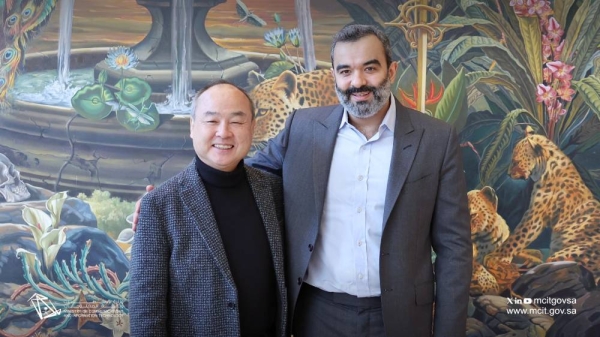
Minister of Communications and Information Technology Abdullah Alswaha met with SoftBank Group CEO Masayoshi Son to discuss expanding investment partnerships in AI and emerging technologies.

Minister of Communications and Information Technology Abdullah Alswaha met with SoftBank Group CEO Masayoshi Son to discuss expanding investment partnerships in AI and emerging technologies.


Saudi Gazette report

MIAMI —
Minister of Communications and Information Technology Abdullah Alswaha held a series of high-level meetings with senior executives from global technology and investment firms at the FII PRIORITY Miami 2025, focusing on strengthening partnerships in artificial intelligence (AI), technology, investment, and the space sector while fostering entrepreneurship in Saudi Arabia.

During his discussions with NEA CEO Tony Florence, Alswaha explored strategies to support tech entrepreneurs and expand startup investments, aiming to enhance the Kingdom’s innovation ecosystem.

In a meeting with Oracle CEO Safra Catz, he examined opportunities to deepen collaboration in cloud computing and AI, emphasizing efforts to advance Saudi Arabia’s digital infrastructure and digital economy.

To accelerate Saudi ambitions in the space sector, the minister engaged with SpaceX President and COO Gwynne Shotwell on potential partnerships in space exploration and rocket technology.

Alswaha also met with SoftBank Group CEO Masayoshi Son to discuss expanding investment partnerships in AI and emerging technologies, reinforcing the Kingdom’s position as a global leader in digital economic growth.

Additionally, he conferred with Vista Equity Partners CEO Robert F. Smith to explore ways to enhance technology investments, asset management, and startup support, positioning Saudi Arabia as a leading hub for tech-driven investment.


To view this content we will need your consent to set third party cookies.
For more detailed information, see our cookies page.


To view this content we will need your consent to set third party cookies.
For more detailed information, see our cookies page.


To view this content we will need your consent to set third party cookies.
For more detailed information, see our cookies page.


To view this content we will need your consent to set third party cookies.
For more detailed information, see our cookies page.


Amazing:

To view this content we will need your consent to set third party cookies.
For more detailed information, see our cookies page.
 
Last edited:
Black Rock President 🇺🇸 The largest asset management company in the world
Saudi Arabia 🇸🇦 The ideal opportunity for the investment that I saw in my career

To view this content we will need your consent to set third party cookies.
For more detailed information, see our cookies page.
 
The Foundations work began 90 meters deep in the LINE at #NEOM, with great progress in infrastructure.

To view this content we will need your consent to set third party cookies.
For more detailed information, see our cookies page.
 
The Foundations work began 90 meters deep in the LINE at #NEOM, with great progress in infrastructure.

To view this content we will need your consent to set third party cookies.
For more detailed information, see our cookies page.

I like the boldness and vision behind NEOM as well as some of the pioneering goals but I am not sure if the project is feasible or if it will be profitable.

To me it seems like a great waste of energy, time, money etc. to create a straight line through 150 km of desert, mountains and pristine coastline.

I honestly believe that somebody needs to tell MbS that the project should be scaled down or changed if that has not already occurred.

There are far more important projects that we discussed in the other thread, for example the establishment of 8-10 nuclear power plants and the establishment of a potent civil (and military) nuclear sector.

I would prefer focus on AI, STEM subjects, renewable energy, other infrastructure projects, the Saudi Green Initiative, gas and green hydrogen sector, tourism overall etc. Already the case on all of those fronts but the speed of the projects in some of those fields (renewable energy and the gas sector in particular) could increase.

Anyway I am not making any final judgements in regards to NEOM as time will tell. However I think the project has already been scaled down (a reasonable thing) and it might change further in the future.
 
Speaking of projects, the Red Sea Project ( https://en.wikipedia.org/wiki/The_Red_Sea_Project ) is incredibly well-done and of a incredibly high standard. On par with the best and most luxurious tropical island resorts anywhere in the world from French Polynesia to Maldives to the Caribbean.

I have posted the video before.

To view this content we will need your consent to set third party cookies.
For more detailed information, see our cookies page.


1740432268877.png

1740432294111.png

1740432321091.png


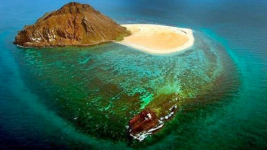
فرسان by Jazan Know, on Flickr

486406971_e6598b2c2b_o.jpg

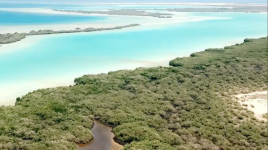
Tabuk area منطقة تبوك by tabuk تبوك, on Flickr

To view this content we will need your consent to set third party cookies.
For more detailed information, see our cookies page.


In general the Red Sea is a gem. The world's second biggest coral reefs, incredible diverse marine life. 15% of the marine life is endemic to the Red Sea for instance.

The region that NEOM lies in is also very rich in history, geography etc. Not far from NEOM we have the only region of KSA where annual snowfall and potential natural ski resort can be created. Very pristine area in general in terms of desert, coastline and mountains. The project should be carefully and realistically be developed with all of that in mind. Use the Red Sea Project as the benchmark and scale the project down and make it more realistic and sustainable.

Nobody has built a 150 km long (!) and 500 meter tall linear city for a reason anywhere regardless of geography. Let alone through mountains and desert + coastline. Not even 1% of such a project has ever been created anywhere on the planet. Yes, one can say, that somebody has to do it first but at least make it more realistic and start with 15 km at the most and see how feasible it will be, the interest of people to inhabit it, the costs versus profits etc.
 
Last edited:
Another relevant topic is that of desertification and the reversal of it.

To view this content we will need your consent to set third party cookies.
For more detailed information, see our cookies page.


United for Land: Saudi Arabia's Local Heroes Combat Desertification​


14 June 2024

A man in a white dress and red headscarf holds the twigs of a dry desert plant in his hands.

Caption: Local community leaders in Saudi Arabia are helping drive the country's ambitious agenda on sustainable land management and biodiversity conservation.

Photo: © UNEP/ Duncan Moore

In Saudi Arabia, land stewardship is an indispensable part of economy and identity. Over the years, rapid development and overgrazing, combined with rising temperatures have threatened soil quality and biodiversity, and exacerbated water scarcity.

Combating desertification has fast become a pressing concern for the country. With the aim of restoring 200 million hectares of degraded land at home and abroad, Saudi Arabia has extended safeguards for 18 per cent of its land, up from 4 per cent earlier, and has steadily increased the number of national parks.

In December this year, the country is all set to host the 16th Conference of Parties for the UN Convention to Combat Desertification in Riyadh. This conference will convene global leaders to address the urgent need to halt and reverse land degradation, with a goal to restore 1.5 billion hectares of degraded land, globally, by 2030.

Under the leadership of UN Resident Coordinator Mohamed El Zarkani, UN entities are joining hands to bolster the Kingdom’s initiatives to promote land restoration and climate resilient practices. Collaborations among diverse stakeholders and the United Nations Environment Programme (UNEP), the Food and Agriculture Organization (FAO), and the United Nations Convention to Combat Desertification (UNCCD) are ensuring that there is a united commitment to sustainable land management.

“I applaud Saudi Arabia's regional and global leadership on land restoration and drought resilience," said the Resident Coordinator. "We witnessed this leadership in initiatives such as the Saudi Green Initiative, Middle East Green Initiative, and G20 Global Land Initiative - all Saudi driven efforts built on international cooperation and partnership and culminating towards key global commitments to protect and restore lands. Hosting COP16 in Riyadh this year will be another key milestone in Saudi Arabia’s inspiring journey to combat desertification. Collaboration between the Saudi government, local communities, and UN Agencies, Funds, and Programmes, is a central feature to drive the land agenda forward while exemplifying the power of partnerships."

A few weeks ago, Saudi Arabia hosted World Environment Day, focusing on land restoration, desertification, and drought resilience. UNEP Executive Director Inger Andersen emphasized: “Land degradation, desertification and drought are not only arid nation problems. They are global problems,” underscoring the necessity of collective action.

The government, represented by the Ministry of Environment, Water, and Agriculture, is working closely with community leaders to implement nature-based solutions that combat desertification and drought, restoring the land.

Saudi Arabia's Local Heroes in Land Restoration​

Abdullah Ibrahim Alissa: Reviving Thadiq National Park

Abdullah Ibrahim Alissa stands on a rocky outcrop in Thadiq National Park, a sprawling expanse of arid land north of Riyadh. As the park’s manager, Alissa has overseen the transformation of this area from desert to a thriving nature spot. Beneath him, steep terraces lined with carefully cultivated shrubs and small trees flourish, a testament to the successful afforestation projects he has spearheaded.

"I grew up in this area, and since childhood, I have seen it deteriorate and become a desert," Alissa shares. Through dedicated efforts under the Saudi Green Initiative, involving planting 250,000 trees and 1 million shrubs, the park has steadily been rejuvenated. Alissa’s work highlights the significant impact of community-driven restoration efforts and showcases the potential for reversing desertification through local action. Focusing on nature-based solutions to restore degraded land, the park has continued to grow trees in nurseries, planting mostly native species. Initiatives like these are marking the UN Decade on Ecosystem Restoration. Read more about Alissa’s story and Saudi Arabia’s trajectory to regreening here.

Sidr Al-Jawf Community: Resilience and Innovation in Al-Adhraa National Park

“Our strong bond with the land weaves us together, creating timeless connections that breathe life into our past, present, and future,” says a member of the Sidr Al-Jawf Community.
Situated near desert terrain, Al-Adhraa national park has a deep connection with the community influencing both recreational activities and the villagers' sense of identity. Observing the gradual decline of vegetation due to desertification, the community undertook a rehabilitation project in 2017. Despite initial setbacks due to insufficient support and technical knowledge, the group persisted.

“We never gave up! Drawing lessons from past setbacks, we formed a volunteer environmental team and set up the 'Al-Adhraa National Park' in a new location closer to the village,” shared a community member from Sidr Al-Jawf. Inspired by their resilience, FAO and Saudi Arabia’s National Center for Vegetation Development and Combating Desertification (NCVC) collaborated to support the larger Al-Adhraa community.


A man in a white dress and red headscarf plants a little shoot with two small boys.


Caption: Revitalizing Al-Adhraa national park for future generations.

Photo: © FAO Saudi Arabia


The FAO and NCVC provided expertise, technical guidance, and a distance training course, significantly improving the skill and knowledge of community members and the efficiency of work in the park. “

The community's significant increase in awareness led them to officially register the “Sidr Al-Jawf Association” as the “Sidr Wild Trees Association” with the status of a National Center for the Non-Profit Sector. A study trip to China to learn similar practices, organized by FAO and NCVC, has further motivated the community.

Naif Ahmed Alhanwsh: Guardianship of Saudi Biodiversity

It was Naif Ahmed Alhanwsh’s childhood dream to become a veterinarian. However, he never imagined he would play a pivotal role in safeguarding Saudi Arabia’s biodiversity. Now the veterinarian and director of the King Khalid Centre for Wildlife Research, located around 70 kilometers north of Riyadh, Alhanwsh is at the forefront of breeding, rearing, and releasing endangered native species.

To view this content we will need your consent to set third party cookies.
For more detailed information, see our cookies page.


“It is an indescribable feeling to release animals into their natural habitat. It is so beautiful,” says Alhanwsh. The King Khalid Centre, established on what was a royal farm in 1987, is home to some of the most iconic wild animals in the Arabian Peninsula, including large-hooved mammals like the oryx. Alhanwsh's efforts are part of an ambitious national plan to rewild Saudi Arabia and prevent further land degradation, demonstrating how individual dedication can contribute to broader environmental goals. Learn more about his story here.

Similar UN initiatives are helping promote innovative and resilient agricultural practices, ecotourism and more, empowering local farmers, cooperatives and communities.

Towards a Sustainable Future​

As the world gathers under the banner of “United for Land,” marking the World Day to Combat Drought and Desertification on June 17th, Saudi Arabia’s local heroes and collaborative efforts serve as powerful examples of what can be achieved through dedication, collaboration, and community engagement. The road to restoring our planet’s lands is challenging, but these initiatives demonstrate the journey is worthwhile.

As we look towards COP16, this spirit of unity and resilience will be crucial in securing a sustainable legacy for future generations.


For more information about the UN's work in Saudi Arabia, visit saudiarabia.un.org


06 May 2024 Story Nature Action

Saudi Arabia strives to regreen deserts to tackle drought and land degradation​

Photo by UNEP/Duncan Moore

Abdullah Ibrahim Alissa is standing on a rocky outcrop in Thadiq National Park, a sprawling expanse of arid land north of Riyadh, capital of the Kingdom of Saudi Arabia.

Beneath Alissa, the park’s manager, are steep terraces lined with carefully cultivated shrubs and small trees, a flourish of greenery that has turned this place from a desert to a desired nature spot.

“I grew up in this area, and since childhood I have seen it deteriorate and become desertified,” Alissa says. “[But] through afforestation projects, protection and care, the area has completely changed.”

Rehabilitating this 600-square kilometre-park, known for its sweeping valleys, involved planting 250,000 trees and 1 million shrubs. Crews also constructed terraced dams to catch the area’s sparse rainwater.

Restoring Thadiq National Park is part of Saudi Arabia’s wider plan to regreen huge swathes of desert at home and abroad. The push is designed to tackle drought, desertification, and land degradation, which are threatening countries across West Asia and North Africa.

Three-quarters of the arable land in the region is already degraded, and 60 per cent of the population is already experiencing water scarcity, a number set to increase by 2050.  

"Land is a fundamental pillar of life, and together with the ocean and the climate, is vital for sustaining life on this Earth,” says Osama Ibrahim Faqeeha, Saudi Arabia's Deputy Minister of Environment. 

To view this content we will need your consent to set third party cookies.
For more detailed information, see our cookies page.


On 5 June, Saudi Arabia will host World Environment Day 2024, an annual celebration of the planet which this year focuses on desertification, land degradation and drought resilience.

More than 2 billion hectares of the world’s land is degraded, affecting half the global population, and threatening countless species.

Faced with more severe and prolonged droughts, sandstorms and rising temperatures, finding ways to stop dry land from becoming desert, fresh water sources from evaporating, and fertile soil from turning to dust, is now crucial, say experts.

Saudi Arabia, where rapid development and an increase in cattle grazing has led to land degradation, has made countering desertification a priority.

Launched in March 2021, the Saudi Green Initiative aims to turn 30 percent of Saudi Arabia’s land into nature reserves, plant 10 billion trees and restore 40 million hectares of degraded land.

“The country's goal is to plant 400 million trees by 2030,” says Khaled Alabdulkader, the CEO of Saudi Arabia’s National Center for Vegetation Cover Development and Combating Desertification.


Saplings growing in a tree nursery at Thadiq National Park in central Saudi Arabia, where desert regreening efforts have involved planting 250,000 trees
Saplings growing in a tree nursery at Thadiq National Park in central Saudi Arabia, where desert regreening efforts have involved planting 250,000 trees. Photo by UNEP/Duncan Moore

“The Saudi Green Initiative demonstrates the immense potential of cultural capital and traditional wisdom for managing the natural environment,” says Susan Gardner, the Director of the Ecosystems Division at the United Nations Environment Programme (UNEP). “Such approaches, grounded in tradition and tailored to the local context, are vitally important in a region that faces multiple stressors leading to land degradation and desertification.”


Man tends to saplings at a tree nursery
Thadiq National Park manager Abdullah Ibrahim Alissa surveys saplings at a tree nursery in a desert area of central Saudi Arabia that is being regreened to combat land degradation, desertification and drought. Photo by UNEP/Duncan Moore

Through the Middle East Green Initiative, Saudi Arabia is leading efforts to plant an additional 40 billion trees across the region with the aim of reducing soil erosion, protecting biodiversity, and mitigating the impacts of climate change. The combined 50 billion trees target represents five per cent of the global afforestation target, and the equivalent of restoring 200 million hectares of degraded land.


Saudi Arabia has also partnered with the Group of 20 nations and United Nations Convention to Combat Desertification (UNCCD) to launch the G20 Global Land Initiative, which aims to cut degradation by 50 per cent by 2040. As well, Saudi Arabia will host the 16th Conference of Parties for the UNCCD, widely seen as a pivotal moment in the global effort to end land degradation.

Globally, countries have pledged to restore one billion hectares of land – an area larger than China, under the UN Decade on Ecosystem Restoration. But if current trends persist, 1.5 billion hectares would need restoring to meet 2030 land degradation neutrality goals.

“Land protection and restoration activities deliver positive biodiversity outcomes as well as multiple benefits for people, including water and food security, public health and wellbeing, climate mitigation and adaptation,” says UNEP’s Gardner.

Shrubs dotting Thadiq National Park in central Saudi Arabia as part of afforestation efforts
Community members and conservationists have planted more than a million shrubs in Thadiq National Park to restore degraded land and tackle drought and desertification. Photo by UNEP/Duncan Moore

Back in Thadiq National Park, Alissa and other conservationists have been buoyed by the return of birds to the area, which had seen an exodus of animals as desertification intensified.

Some 100 walled water terraces, extending like steps to the bottom of valleys, capture rainwater to sustain shrubs and saplings through sweltering summers. They also stop heavy winter rains from washing productive soils away.

“We inherited water terraces from our ancestors about 400 years ago,” says Alissa. “We used this technique in the park, and it is doing an excellent job at increasing the surface water.”

Man surveys shrubs planted as part of desert regreening efforts
Thadiq National Park manager Abdullah Ibrahim Alissa and other community conservationists in central Saudi Arabia are proud of the afforestation work that has turned this desert area into a desired nature spot. Photo by UNEP/Duncan Moore

Focusing on nature-based solutions to restore degraded land, the park has continued to grow trees in nurseries, planting mostly native species.

“I hope we can double our work and results, increasing afforestation and replicating the achievement in other locations,” Alissa says.

World Environment Day on 5 June is the biggest international day for the environment. Led by the United Nations Environment Programme (UNEP) and held annually since 1973, the event has grown to be the largest global platform for environmental outreach, with millions of people from across the world engaging to protect the planet. World Environment Day in 2024 focuses on land restoration, desertification and drought resilience.

https://www.unep.org/topics/sustain...-sustainable-development-goals-matter/goal-11
 
Speaking of projects, the Red Sea Project ( https://en.wikipedia.org/wiki/The_Red_Sea_Project ) is incredibly well-done and of a incredibly high standard. On par with the best and most luxurious tropical island resorts anywhere in the world from French Polynesia to Maldives to the Caribbean.

I have posted the video before.

To view this content we will need your consent to set third party cookies.
For more detailed information, see our cookies page.


View attachment 103804

View attachment 103805

View attachment 103806


فرسان by Jazan Know, on Flickr

486406971_e6598b2c2b_o.jpg

Tabuk area منطقة تبوك by tabuk تبوك, on Flickr

To view this content we will need your consent to set third party cookies.
For more detailed information, see our cookies page.


In general the Red Sea is a gem. The world's second biggest coral reefs, incredible diverse marine life. 15% of the marine life is endemic to the Red Sea for instance.

The region that NEOM lies in is also very rich in history, geography etc. Not far from NEOM we have the only region of KSA where annual snowfall and potential natural ski resort can be created. Very pristine area in general in terms of desert, coastline and mountains. The project should be carefully and realistically be developed with all of that in mind. Use the Red Sea Project as the benchmark and scale the project down and make it more realistic and sustainable.

Nobody has built a 150 km long (!) and 500 meter tall linear city for a reason anywhere regardless of geography. Let alone through mountains and desert + coastline. Not even 1% of such a project has ever been created anywhere on the planet. Yes, one can say, that somebody has to do it first but at least make it more realistic and start with 15 km at the most and see how feasible it will be, the interest of people to inhabit it, the costs versus profits etc.

Da LINE has phases to it..this is just part 1..
 
Da LINE has phases to it..this is just part 1..
Of course but have the remaining phases changed at all or is it still the overly ambitious and quite frankly unrealistic 170 km long (across desert and mountains and coastline) and 500 meter tall (!!!) line?


Rumours of it being scaled down to 2.4 km. Makes much more sense economically and in every other way. Start small, see if profitable and working and afterwards you will always be able to increase the length and size.

Honestly, as I wrote earlier, I would prefer the money spent on NEOM to be spent on nuclear energy, renewable energy, combating desertification and the Saudi Green Initiative, AI, arms industry, STEM subjects and fields, energy sector (gas and hydrogen), general infrastructure, other huge projects in the country, establishment of new trade routes and improvement of existing ones, Makkah and Madinah expansion projects, tourist resorts, restoration of old architecture, old historical artifacts, more exploration, agriculture, semiconductor industry etc. to mention a few fields.

I am aware that KSA is focusing on all of those fields and that NEOM is supposed to be interconnected with many of those fields.
 
Last edited:
Of course but have the remaining phases changed at all or is it still the overly ambitious and quite frankly unrealistic 170 km long (across desert and mountains and coastline) and 500 meter tall (!!!) line?


Rumours of it being scaled down to 2.4 km. Makes much more sense economically and in every other way. Start small, see if profitable and working and afterwards you will always be able to increase the length and size.

Honestly, as I wrote earlier, I would prefer the money spent on NEOM to be spent on nuclear energy, renewable energy, combating desertification and the Saudi Green Initiative, AI, arms industry, STEM subjects and fields, energy sector (gas and hydrogen), general infrastructure, other huge projects in the country, establishment of new trade routes and improvement of existing ones, Makkah and Madinah expansion projects, tourist resorts, restoration of old architecture, old historical artifacts, more exploration, agriculture, semiconductor industry etc. to mention a few fields.

I am aware that KSA is focusing on all of those fields and that NEOM is supposed to be interconnected with many of those fields.
Yes they did some prioritization between the projects..some are delayed..some going ahead..
 

Users who are viewing this thread

Back
Top