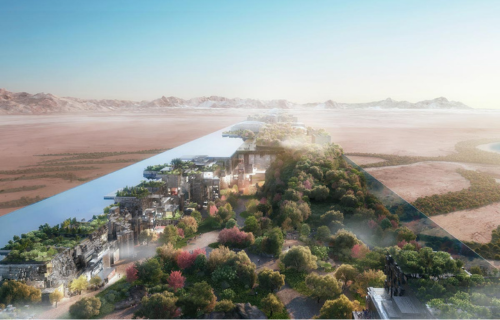
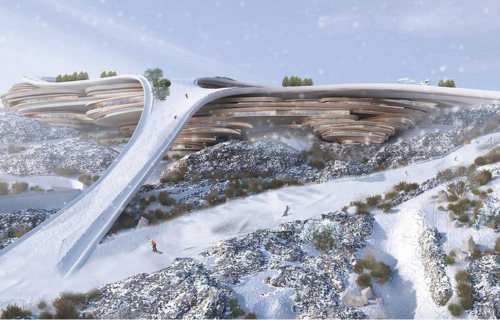
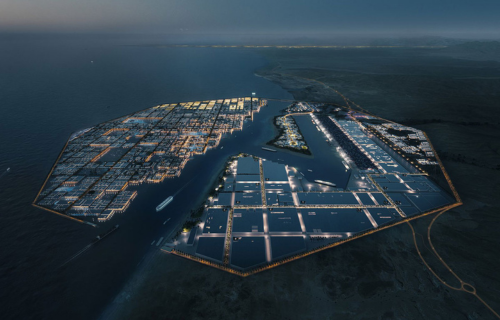
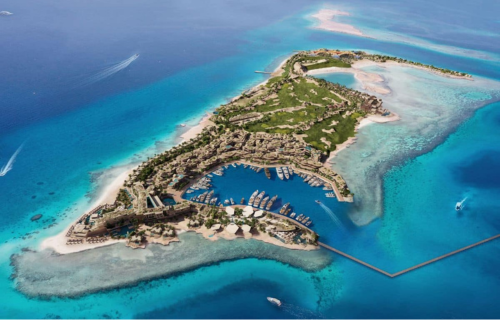
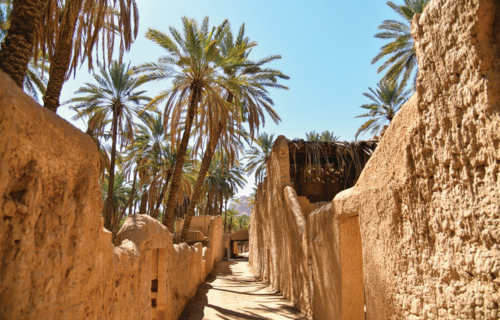
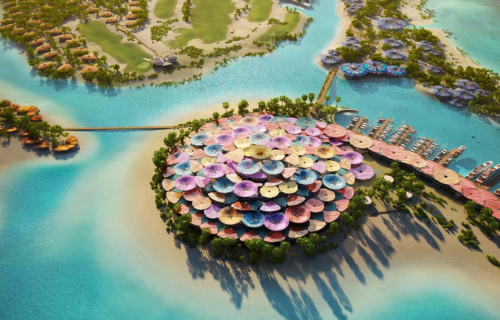
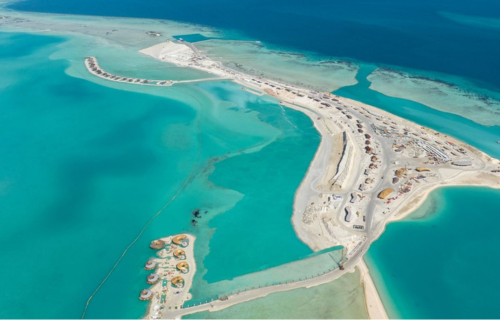
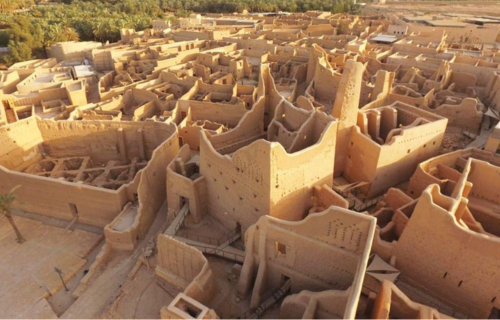
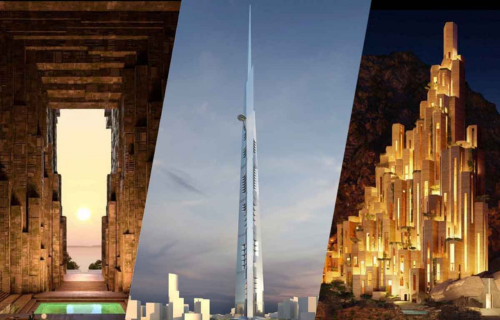
Saudi Arabia strategic Projects: news, discussions & updates

First Saudi Computer

#Horizon_Pro from #Humain company, a device with global specifications and performance, announced by the company owned by the Public Investment Fund, and it has started receiving interest requests to purchase the deviceTo order the device:https://humain.ai/en/AI-PC/?utm_

To view this content we will need your consent to set third party cookies.
For more detailed information, see our cookies page.
 
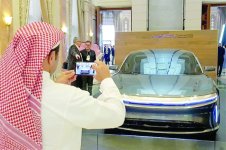
Based on its new identity, #CEER @ceer consolidates its leading position in strengthening the industrial sector as the first Saudi brand to manufacture electric cars, presenting modern cars manufactured in the Kingdom by Saudi hands, to keep pace with the future and enhance national leadership globally..

To view this content we will need your consent to set third party cookies.
For more detailed information, see our cookies page.


1759447410500.webp

1759447541205.jpeg

1759447575070.jpeg

1759447618199.jpeg

1759447698050.jpeg
 
Great recent updates @The SC

To view this content we will need your consent to set third party cookies.
For more detailed information, see our cookies page.


Al-Ahsa Governorate enters the Guinness World Records with the largest palm oasis in the world.

Asir Region enters the Guinness World Records with the largest sustainable farm in the world, where several types of vegetables and fruits are grown.

Al-Jouf Region enters the Guinness World Records with the largest olive farm in the world, and Al-Jouf olive oil won the Tokyo OOP international competition for the best organic olive oil in the world.

To view this content we will need your consent to set third party cookies.
For more detailed information, see our cookies page.


To view this content we will need your consent to set third party cookies.
For more detailed information, see our cookies page.


The appearance of a new armored vehicle for the Royal Saudi Naval Forces during the Saudi National Day Parade produced by Saudi hands by the Qudra Industrial Company.

Any more information?

To view this content we will need your consent to set third party cookies.
For more detailed information, see our cookies page.


The "Wakb" drone with Saudi arms. It operates for surveillance, and it can be used for military purposes such as converting it into a suicide drone and adding better optics. Drone range: 300km kilometers
Altitude: 5km kilometers
Speed: 150 kilometers per hour "can be increased"
Drone flight duration: 6h hours "can be increased"

To view this content we will need your consent to set third party cookies.
For more detailed information, see our cookies page.


The factory of Desert Technologies Company for producing solar panels in the city of Jeddah, considered the first of its kind in the Kingdom with fully automated operation. It exports solar panels to:- Germany- Egypt - Jordan - North Africa - Greece - the United States of America
 
Last edited:

Saudi Arabia launches second phase of design guidelines for national architecture in seven cities

October 03, 2025

Saudi Arabia launches second phase of design guidelines for national architecture in seven cities


Saudi Gazette report


RIYADH — Saudi Arabia has begun the second phase of implementing its national architectural design guidelines, extending the initiative to major government projects and commercial buildings in seven cities: Dammam, Khobar, Qatif, Hail, Baha, Madinah, and Najran.


The first phase was rolled out earlier in Abha, Taif, and Al-Ahsa.


The initiative is part of the “Saudi Architecture Map,” launched in March by Crown Prince and Prime Minister Mohammed bin Salman, chairman of the Supreme Committee for the Design Guidelines.


The map outlines 19 architectural styles inspired by the Kingdom’s diverse geographic and cultural characteristics. It aims to strengthen national architectural identity, enhance quality of life, and improve the urban landscape.


To support the rollout, specialized design studios have been established under development authorities, strategic offices, and regional municipalities. These studios play a key role in guiding design processes and ensuring alignment with the national vision.


The 19 styles featured in the Saudi Architecture Map were defined based on urban and historical studies reflecting traditional building patterns passed down through generations. They include Najdi, Northern Najdi, Tabuk Coast, Madinah, Madinah Countryside, Coastal Hijazi, Taif, Sarawat Mountains, Asir Highlands, Tihama Foothills, Tihama Coast, Abha Highlands, Farasan Islands, Bisha Desert, Najran, Al-Ahsa Oasis, Qatif, Eastern Coast, and Eastern Najdi.


Good but a bit too late as so much heritage has been left rotting or been destroyed (a general theme across the world, West, East, Muslim etc.) as a whole. All for the sake of modernity or due to lack of hindsight.

In this case, for various factors (one of them lack of industrialization and urban development), Yemen is a living architectural jewel on a global scale and to a degree Oman as well. Bahrain has done well as well considering size which 3 World UNESCO Heritage Sites confirm.

Anyway it is good that most of what was destroyed is being actively rebuilt in KSA but a lot was lost permanently. I mean goes for much of the world as I wrote, for instance, how many buildings in each country are still standing 1000 + years later? Only a tiny fraction. Probably one of the few exceptions is Yemen but even there we are talking about a minority and who knows if this will continue in the future with the probable economic growth of Yemen and future industrialization and demographic boom.

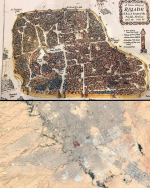
Not realistic, given the current size and ongoing and future projects, but if this could be rebuilt


To view this content we will need your consent to set third party cookies.
For more detailed information, see our cookies page.


1759524360309.png

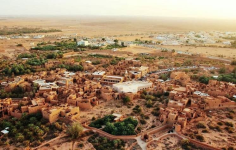
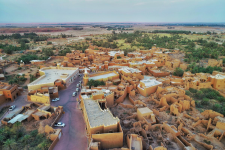
we could have another Ushaiger.

1759523740028.png

1759523787154.png

1759523813897.png

1759523834961.png

1759523756737.png

How Riyadh, a small town in Najd, would develop into the capital and largest city in KSA, leaving (eventually behind) far larger and older Najdi towns, is also quite a strange development and coincident when looking back in time and history.

Of course the average Hejazi and southern village (as well as Northern, the very old ones) are well-kept, as well as many Najdi villages, but in the Eastern Province (where some of the oldest inhabited cities/villages on the planet are located) much was destroyed in particular the coastal ones outside of the Al-Ahsa Oasis.

Anyway, rebuilt as much as possible and keep the regional differences (architectural) alive and most importantly use those old native architectural styles with a modern twist when doing new projects as done in quite a few modern day projects.

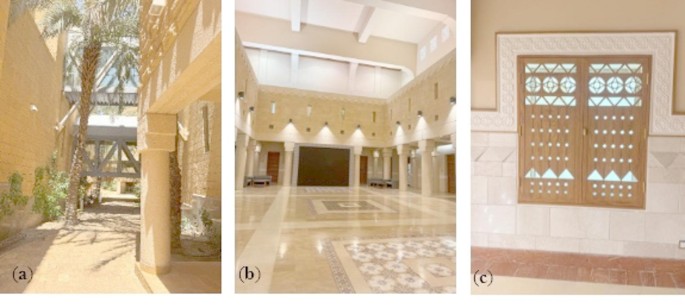
Great scholarly article (very recent too) about the Najdi architectural style being implemented in modern-day buildings and works.

 
Last edited:
Those are some truly stunning tourist resorts on a global scale. I would never have imagined seeing this in KSA just 10 years ago. Easily rivals the best such resorts in places like the Maldives, French Polynesia etc.

To view this content we will need your consent to set third party cookies.
For more detailed information, see our cookies page.


To view this content we will need your consent to set third party cookies.
For more detailed information, see our cookies page.


To view this content we will need your consent to set third party cookies.
For more detailed information, see our cookies page.


The scale of such tourist resorts (not just Red Sea islands resorts but mountain and desert resorts etc.) is amazing within such a short timespan with much more to come.

To view this content we will need your consent to set third party cookies.
For more detailed information, see our cookies page.


To view this content we will need your consent to set third party cookies.
For more detailed information, see our cookies page.


Love the fact that they are all sustainable as well and many of them are built with traditional architecture in mind and nature.

It will be stunning to see the infrastructure projects and the state of the country when the World Cup in 2034 begins. Some 9 years from now will probably ensure that most of the giga-projects will be completed or close to completion.

Given all this development across the board and the money required, yet there are still trolls here or elsewhere that believe that KSA is looking to start wars or conflicts for fun. Truly "amazing".
 

World Bank raises Saudi Arabia’s 2025 growth forecast to 3.2%

World Bank raises Saudi Arabia’s 2025 growth forecast to 3.2%

The World Bank’s latest outlook aligns with projections from other institutions. Shutterstock


NIRMAL NARAYANAN
October 07, 2025 13:52

IYADH: The World Bank has raised Saudi Arabia’s 2025 economic growth forecast to 3.2 percent, citing stronger oil output and robust non-oil activity, marking a notable upgrade from the 2.8 percent projected in April.

The Washington-based lender said in its latest Middle East, North Africa, Afghanistan, and Pakistan Economic Update that the Kingdom’s economy expanded 3.9 percent in the first half of 2025, buoyed by increased oil production and sustained growth in services.

The pace is set to quicken further, with growth expected to reach 4.3 percent in 2026 and 4.4 percent in 2027.

The World Bank’s latest outlook aligns with projections from other institutions. The International Monetary Fund in July forecast Saudi Arabia’s economy to grow 3.6 percent this year and 3.9 percent in 2026, while the Organization for Economic Cooperation and Development in September raised its 2026 estimate for the Kingdom to 3.9 percent, from 2.5 percent previously.

“In Saudi Arabia, real GDP grew by 3.9 percent during the first half of 2025 and is forecast to grow by 3.2 percent for all of 2025. This is a major increase from the 2 percent growth rate of 2024 — driven by oil production expansion and strong non-oil sector growth, particularly for services,” said the World Bank in the latest report.

Regional outlook

Economic growth in the Middle East region is projected to expand by 2.8 percent this year, 0.2 percentage points higher than the forecast made in April.

Across the Gulf Cooperation Council region, overall growth is expected to reach 3.5 percent in 2025, 0.3 percentage points higher than the previous estimate. The bloc’s economy is projected to expand by 4.4 percent in 2026 and 4.7 percent in 2027.

The World Bank noted that GCC countries will benefit from the gradual phasing out of voluntary oil production cuts and continued growth in non-oil industries.


“Oil-importing countries are also expected to see economic improvements, thanks to private spending and investments as well as a rebound in agriculture and tourism,” the report added.

In September, Saudi Arabia’s Ministry of Tourism announced that the Saudi Summer program welcomed more than 32 million domestic and international tourists, up 26 percent from the 2024 season. Tourist spending reached SR53.2 billion ($14.2 billion), marking a 15 percent year-on-year increase.

The report also projected the UAE’s GDP to grow by 4.8 percent this year, accelerating to 5 percent in 2026 and 5.1 percent in 2027.

Qatar’s economy is forecast to expand by 2.8 percent in 2025, while Bahrain and Kuwait are expected to grow 3.5 percent and 2.3 percent, respectively. Oman’s GDP is set to rise 3.1 percent in 2025 and 3.6 percent in 2026.

Saudi Arabia is also expected to maintain a healthy inflation rate of 2.3 percent in 2025 and 2.2 percent in 2026. Inflation in the wider Middle East and North Africa region is projected to remain contained at 2.3 percent in both years.

Labor market and reforms

The World Bank emphasized that countries in the MENAAP region could enhance living standards by tapping into the full potential of their workforce, particularly through greater female labor force participation.

Saudi Arabia has made notable strides in this area, steadily diversifying its workforce. In October 2024, Finance Minister Mohammed Al-Jadaan said the Kingdom aims to achieve 40 percent female workforce participation by the end of the decade, having already surpassed its Vision 2030 target of 30 percent.

The report noted that Saudi Arabia has recorded one of the world’s fastest gains in women’s workforce participation, rising nearly 14 percentage points between 2017 and 2023.


The surge was evident across all age groups, and gains were especially pronounced among groups of women who historically had low participation and represented a small share of the labor force,” the World Bank noted.


Great news.

To view this content we will need your consent to set third party cookies.
For more detailed information, see our cookies page.


I have honestly lost track of all the many projects. I think that KSA is in the top 3 in the world in terms of ongoing infrastructure projects and their costs and scale. It is basically insane and the country has turned into one giant infrastructure project.

To view this content we will need your consent to set third party cookies.
For more detailed information, see our cookies page.


Great initiative, should be implemented everywhere whenever possible and also fits into the "Green Arabia" project of planting billions of trees.

To view this content we will need your consent to set third party cookies.
For more detailed information, see our cookies page.


To view this content we will need your consent to set third party cookies.
For more detailed information, see our cookies page.


Also fits into the traditional design of Arabian/Arab cities. The huge roads and spaces are all mostly a modern US-inspired construct and have their positives in certain places but in urban areas it is not always the best idea.

Nice traditional hotels using the beautiful ancient Hejazi architecture:

To view this content we will need your consent to set third party cookies.
For more detailed information, see our cookies page.
 
Last edited:
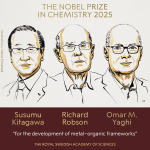
Saudi scientist Omar bin Younis Yaghi wins Nobel Prize in Chemistry

1759926175988.png

The Royal Swedish Academy of Sciences announced today that Saudi scientist Omar bin Younis Yaghi, Japanese scientist Susumu Kitagawa, and Australian Richard Robson have won the 2025 Nobel Prize in Chemistry, in recognition of their pioneering efforts in developing metal-organic frameworks (MOFs), which are revolutionary materials that combine metallic and organic elements in fine structures with wide pores.

This victory is a new Saudi and Arab achievement added to the record of Arab scientists in the field of science, as scientist Omar Yaghi contributed with his research to developing materials capable of extracting water from the air in dry areas, purifying water from pollutants, capturing carbon dioxide gas, and storing hydrogen, which made his innovations a focus in the fields of sustainable energy and modern environmental technologies.

The Academy emphasized that the discovery of these metal-organic frameworks opened broad horizons for industrial and scientific applications and contributed to a qualitative shift in materials science and synthetic chemistry.

It is noteworthy that the Egyptian scientist Ahmed Zewail is the first Arab to win the Nobel Prize in Chemistry in 1999, in recognition of his discovery of femtochemistry, which allowed the study of chemical reactions in an extremely short time, which brought about a scientific revolution in understanding the movement of atoms and molecules.

Zewail devoted his life to developing scientific research, and founded the Zewail City of Science and Technology in Egypt to support innovation and advanced research.

1759926362496.png
 
Saudi scientist Omar bin Younis Yaghi wins Nobel Prize in Chemistry

View attachment 152372

The Royal Swedish Academy of Sciences announced today that Saudi scientist Omar bin Younis Yaghi, Japanese scientist Susumu Kitagawa, and Australian Richard Robson have won the 2025 Nobel Prize in Chemistry, in recognition of their pioneering efforts in developing metal-organic frameworks (MOFs), which are revolutionary materials that combine metallic and organic elements in fine structures with wide pores.

This victory is a new Saudi and Arab achievement added to the record of Arab scientists in the field of science, as scientist Omar Yaghi contributed with his research to developing materials capable of extracting water from the air in dry areas, purifying water from pollutants, capturing carbon dioxide gas, and storing hydrogen, which made his innovations a focus in the fields of sustainable energy and modern environmental technologies.

The Academy emphasized that the discovery of these metal-organic frameworks opened broad horizons for industrial and scientific applications and contributed to a qualitative shift in materials science and synthetic chemistry.

It is noteworthy that the Egyptian scientist Ahmed Zewail is the first Arab to win the Nobel Prize in Chemistry in 1999, in recognition of his discovery of femtochemistry, which allowed the study of chemical reactions in an extremely short time, which brought about a scientific revolution in understanding the movement of atoms and molecules.

Zewail devoted his life to developing scientific research, and founded the Zewail City of Science and Technology in Egypt to support innovation and advanced research.

View attachment 152373
congrats thats a huge news for country and it will guidance to youth
 
congrats thats a huge news for country and it will guidance to youth
The Noble Prizes are heavily biased in favor of the West.

Also the person In question is a Jordanian of Palestinian origins with some recent Saudi Arabian ancestry as well hence his Saudi Arabian citizenship that he gained in 2021. Anyway it is good news that an Arab won but hardly news in the sense that Arabs/ancestors of Arabs have contributed to science for millennia, probably longer than any other (recorded in history that is) region in the world given that the Arab world is home to the oldest civilizations on the planet. However for various reasons the scientific output has been laughable (overall) in the modern era but things are changing for the better rather quickly and there could be another "Islamic Golden Age" in the making not far from now given demographics and the large focus on STEM by many wealthy Arab states. Part of the challenge is also that AI will revolutionize traditional science.

A fairly good overview of some of the largest megaprojects.

Saudi Arabia megaprojects: 24 massive developments in the making

Here are 24 upcoming mega projects that will play a key role in ensuring Saudi Arabia’s massive transformation

Saudi Arabia has announced several ambitious plans to build a series of large-scale projects aimed at reshaping the country into a prominent global economic force, over the past few years.

These initiatives, which involve substantial investments amounting to billions of dollars, seek to diversify the nation’s economy beyond oil, generate employment opportunities, and enhance its reputation as a premier destination for trade and tourism.

That said, here are 24 upcoming megaprojects that will play a key role in ensuring the Kingdom’s massive transformation:

1. Norlana

Norlana is a new ultra-modern residential community being developed in northwest Saudi Arabia as part of NEOM.

Situated on the coast of the Gulf of Aqaba, Norlana will consist of 711 properties including mansions, apartments and beach villas integrated with the surrounding natural dunes.

It will offer luxurious living and cater to active lifestyles, with amenities like a 120-berth marina, 18-hole golf course, equestrian centre and facilities for water sports and sailing.

Sustainability is a top priority for Norlana. It is being designed and built to preserve the coastal and marine environments.

Norlana

While providing ultra-luxury living, residents will be able to experience the beauty of the location and immerse themselves in sports, wellness and passion pursuits.

Norlana aims to set a new standard for contemporary sustainable communities and complements other tourism destinations announced recently in the Gulf of Aqaba as part of NEOM’s regional development plans.

2. Utamo

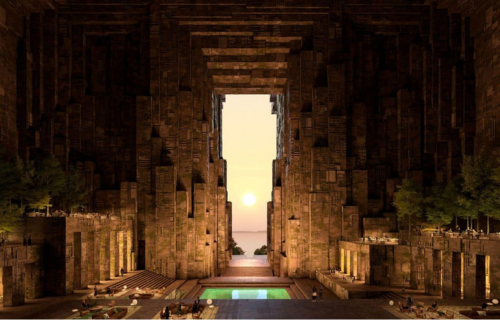
NEOM recently unveiled Utamo, a new immersive destination for art and entertainment located along the Gulf of Aqaba coastline in northwest Saudi Arabia.

Utamo will be housed within a mountain cocoon and designed to seamlessly blend architecture with the surrounding natural beauty.

It will serve as a one-of-a-kind venue hosting music, art and cultural events through advanced audio-visual systems that promise to deliver sensory experiences.

Guests will be able to arrive via a landscaped garden pathway and enter through a towering 64-metre-high entrance hall.

Sustainability is a top priority, with cutting-edge construction techniques used to minimize environmental impact. Utamo aims to redefine entertainment through productions that converge reality with the digital realm.
Utamo

It will provide a place for the world’s greatest artists to showcase their talents within exclusive performance spaces, VIP lounges and signature restaurants.

In line with NEOM’s regional development goals, Utamo complements recently announced sustainable tourism destinations like Leyja, Epicon and Siranna along the Gulf of Aqaba coastline.

3. Siranna

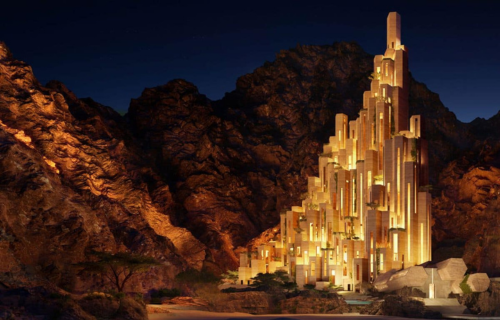
NEOM also announced Siranna, a new exclusive tourism destination located along the Gulf of Aqaba coastline in northwest Saudi Arabia.

Siranna will consist of a 65-key luxury hotel and 35 high-end residential properties, taking advantage of uninterrupted views of the Red Sea. The destination’s hexagonal pillar architecture will seamlessly blend into the rugged mountains and flora.

Guests will arrive by boat to the secluded bay and journey through natural rock formations to reach the enchanting entrance. Siranna aims to offer an escape for relaxation and original thinking through amenities like a beach club, spas, wellness facilities, and dining options.

Sustainability is a core focus during Siranna’s development, with techniques used to preserve the surrounding landscape and heritage. Trails through the connecting sea, mountain and wadi ecosystem will provide exploration opportunities.
Siranna

In line with NEOM’s regional vision, Siranna will deliver an ultra-luxurious hospitality experience while supporting future sustainable living.

It complements other tourism destinations recently announced in the Gulf of Aqaba, to create spaces in nature that nurture creativity through conservation-centered development.

4. Epicon

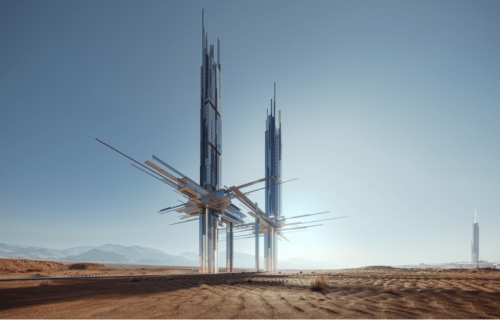
NEOM’s Epicon, a new luxury coastal tourism destination located on the Gulf of Aqaba, will feature two striking towers up to 275 meters tall housing a 41-key ultra-premium hotel and luxury residences.

It will also include a 120-room resort and 45 beachfront villas situated near the hotel. The development aims to set new standards for hospitality and architecture through indulgent amenities and experiences for guests and residents to escape everyday stresses.

These include a beach club, spa, watersports, and destination dining overlooking spectacular shorelines. Cutting-edge innovations and world-class services and facilities within the luxurious residences and villas seek to deliver iconic living.

Epicon aims to position itself as a benchmark destination through unrestricted access to state-of-the-art amenities within spectacular Gulf views.
Epicon

In line with objectives to strengthen NEOM’s ecotourism sector, it follows the recent announcement of the sustainable tourism development Leyja within a natural valley setting. Epicon and Leyja will enrich the experience offerings in NEOM and the broader Saudi tourism industry, aligned with the Kingdom’s vision.

5. Leyja

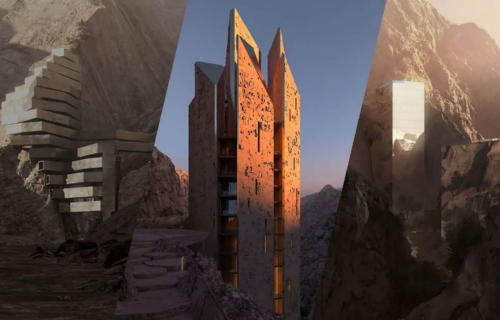
Leyja is a new tourism destination being developed in NEOM, Saudi Arabia’s mega-project located in the country’s northwest corner.

Leyja will be centred around a natural valley surrounded by 400-metre-high mountains, located along the coast of the Gulf of Aqaba. It aims to preserve 95 per cent of its land for nature, with three designed hotels that blend into the landscape.

The hotels will each have 40 rooms and offer distinct experiences catering to activities like adventure, relaxation, and wellness.

Once complete, Leyja will provide a variety of experiences for visitors centred around sustainability and nature.
Leyja

These will include fine dining options from world-renowned chefs, wellness facilities like infinity pools, and guided activities in the stunning mountain scenery such as hiking trails and rock-climbing.

The goal is to develop eco-friendly tourism that supports Saudi Arabia’s Vision 2030 plans while protecting the natural environment of the unique valley setting.

6. The Line

The Line is a linear city project within NEOM, an ambitious mega-city development in northwestern Saudi Arabia.

Stretching over 170 kilometers, The Line is envisioned as a carbon-neutral vertical city that would avoid the use of cars through its walkable, dense design.

It would contain all necessities of city living including homes, schools, workspaces and parks directly accessible by foot, public transport or through a high-speed rail network.

With nature and green spaces integrated throughout, The Line aims to maximize resource efficiency while offering a high quality of life for its anticipated 9 million residents.

The Line’s vertical design is planned to minimize land and energy usage while connecting residents through social spaces.
The Line

Towering structures up to 500 meters tall will contain modular mixed-use pods organized to foster constant social interaction and access to the outdoors.

Cutting-edge technology like autonomous transport will further enhance sustainable living. When open, The Line could fundamentally transform urban design and connectivity while reducing Saudi Arabia’s environmental footprint as the country works to diversify its economy as part of Vision 2030.
 

7. Trojena

Trojena, located in NEOM in the kingdom’s northwest, covers 60 square kilometres with elevations ranging from 1,500 to 2,600 meters above sea level.

It is expected to be completed by 2026 and will have skiing and other winter sports facilities to host the 2029 Asian Winter Games.

The project aims to develop mountain tourism in Saudi Arabia by taking advantage of the region’s winter temperatures which can dip below zero degrees.

In addition to hosting the Games, Trojena will include residential areas for up to 7,000 people as well as hotels, restaurants and other amenities.
Trojena

Some key attractions will be a ski village, wildlife reserve, and luxury mansions. The goal is for Trojena to attract 700,000 annual visitors and contribute $800 million annually to Saudi Arabia’s GDP by 2030, as part of the country’s Vision 2030 plan to diversify its economy away from oil.

The mountain destination is expected to create over 10,000 jobs and establish Saudi Arabia as a center for winter sports tourism.

8. Oxagon

Saudi Arabia’s NEOM is developing the floating city of Oxagon in the Red Sea near the Suez Canal.

Oxagon has a unique oxagon shape and will primarily consist of factories, manufacturing facilities, and logistics sites to serve as a major new logistics and industrial centre.

It will focus on sectors like renewable energy, food production, and digital technologies. Oxagon is planned as a fully sustainable, zero-carbon city and will include the world’s first fully integrated port and supply chain ecosystem. It has already attracted major corporate tenants and will generate around 90,000 jobs by 2030.

In addition to industrial areas, Oxagon will feature waterfront residential communities that are integrated with nature.

The communities will use ocean cooling and be resilient to rising sea levels. Residents will be able to commute around the city through hydrogen-powered transport or walking.
Oxagon

Oxagon will also have an innovation campus to drive research and help create a circular economy.

While some initial logistics facilities may be ready by 2025, Oxagon’s full development is planned to be completed by 2030, cementing Saudi Arabia’s NEOM region as a global hub for advanced manufacturing and innovation.

9. Sindalah

Saudi Arabia’s NEOM megaproject will open a new luxury island destination called Sindalah in 2024.

Situated off NEOM’s coast, Sindalah will cover over 840,000 square meters and consists of a group of islands.

It will feature three luxury resorts, a yacht club, over 50 luxury brands, and 86 piers. The island is expected to create 3,500 jobs in tourism and hospitality.

Sindalah will act as a gateway to the Red Sea, offering visitors customized boating experiences. It aims to attract over 2,400 visitors per day by 2028.
Sindalah

Sindalah is planned to be fully pedestrian-friendly, with no roads or cars on the island. The public areas will be designed to encourage social interaction and allow amazing views. Facilities will be within a five-minute walk of each other.

NEOM’s chief planner described Sindalah as a frontier for leisure, exploration and fulfilment, providing new experiences with sustainability, connectivity and enjoyment in mind. The luxurious island destination is meant to showcase NEOM and Saudi Arabia’s potential for Red Sea tourism under Vision 2030.

10. New Murabba

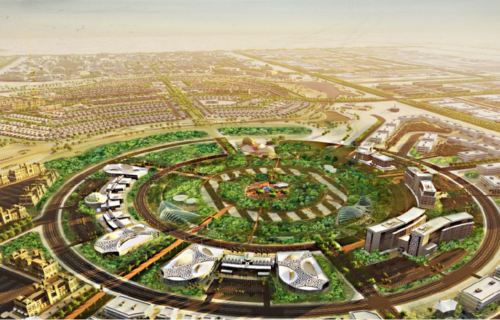
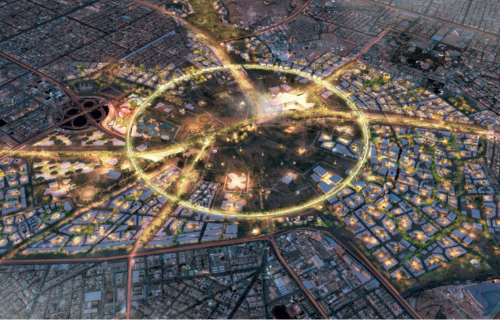
Saudi Arabia is developing a new downtown district called New Murabba near Riyadh, with completion targeted for 2030.

Spread over 19 square kilometres, it will include over 25 million square metres of built space to accommodate hundreds of thousands of residents.

In addition to new homes, New Murabba will feature commercial and cultural attractions, along with 15 minutes of walking access to amenities and 20 minutes from the airport.

Sustainability is also a priority, with green spaces and cycling/walking paths promoting healthy living. The project is projected to contribute $48 billion to the non-oil GDP and create over 300,000 jobs.

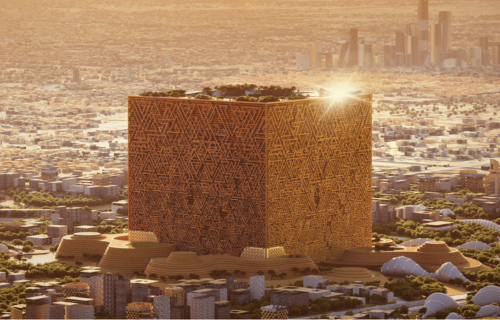
At the center of New Murabba will be The Mukaab, one of the world’s largest structures shaped like a 400-metre cube. It will serve as an immersive cultural destination brought to life with digital technology.
New Murabba

The skyscraper’s intricately carved façade will pay homage to Islamic heritage. Rising atop a spiral base, The Mukaab will offer 2 million square meters of space for attractions, residences, hotels, retail and recreation.

Holograms will also be used to allow visitors to experience different environments at the site.

11. Jeddah Tower

The Jeddah Economic Company has resumed construction on the Jeddah Tower project in Saudi Arabia.

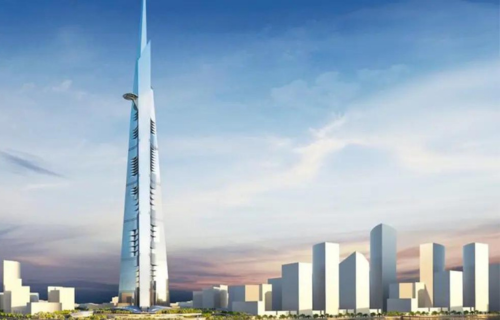
The tower is set to surpass 1,000 meters in height and become the world’s tallest building, topping Dubai’s Burj Khalifa by over 172 meters.

JEC has initiated the bidding process for contractors to complete the record-breaking structure.

Major companies from Saudi Arabia, South Korea, China and elsewhere have been invited to bid, with joint ventures between local and international partners expected to be formed.

Contractors have already conducted initial site visits in preparation for their proposals.
Jeddah Tower

Dubbed Kingdom Tower, it will serve as the centerpiece of the massive Jeddah Economic City development spanning 1.5 square kilometers.

When complete, it will include luxury residential units from 2-6 bedrooms to accommodate a variety of living needs.

Residents will have access to extensive amenities such as shopping malls, boutiques, gourmet restaurants, tennis courts and the world’s highest observation deck offering panoramic views.

Offices, hotels like the Four Seasons, and condominiums will also be incorporated into the towering skyscraper development.

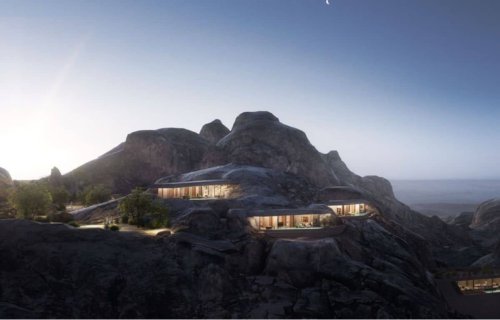
12. Desert Rock Resort

Desert Rock Resort is located in a hidden valley nestled between the mountains of one of the most dramatic desert landscapes in the kingdom.

The resort has 60 guest rooms that have been carefully integrated into the mountainside to preserve its natural silhouette.

Guests can choose from villas on the ground level, crevice suites built midway up the ridge, and excavated rooms constructed within the rock itself to take in unspoiled views of the desert valley below.

The resort offers state-of-the-art amenities like a world-class spa and fitness center, Aside from this, guests at the resort can take advantage of activities that include hiking across the stunning scenery, dune buggy rides, and stargazing.

Sustainable practices are prioritized in the design and construction, such as using local materials, regenerating native vegetation, and optimizing energy efficiency.
Desert Rock Resort
 

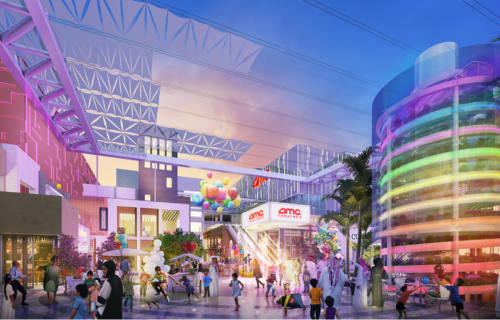
13. SEVEN Abha

SEVEN, a subsidiary of Saudi Arabia’s Public Investment Fund (PIF), has announced the establishment of its fifth entertainment destination located in Abha, Aseer region.

With an investment of over SAR1.3 billion, the 64,000 square meter development will feature a diverse array of attractions for families and people of all ages across 79,000 square meters of indoor space.

Inspired by the region’s ancient stone architecture, the design seamlessly integrates with the local urban code to preserve cultural identity.

Expected to generate SAR4 billion GDP and over 5 million visitors annually by 2030, the theme park will create hundreds of jobs and support the Vision 2030 goal of developing a world-class entertainment sector.

The destination will include eight unique attractions from an indoor golf facility and e-karting to a 10-screen cinema and Play-Doh-themed zone.
Seven Abha

Partnerships with global brands like Warner Bros., Hasbro, and AMC will deliver high-quality experiences. Modern Building Leaders was appointed as the main contractor to execute the project sustainably using advanced technology.

Covering over 14 cities, SEVEN’s 50 billion SAR investment plan aims to establish 21 entertainment destinations nationwide.

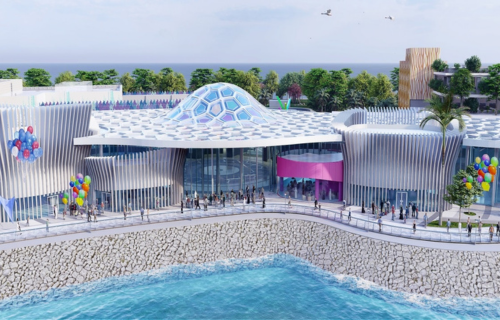
14. SEVEN Yanbu

Saudi Entertainment Ventures (SEVEN) has announced a new SAR1.1 billion ($292 million) entertainment centre coming to Yanbu.

Located along the seafront promenade on Al Nawras Island, the destination will feature carnival rides, a 10-screen cinema, a bowling alley, indoor golf, and a climbing facility.

Inspired by Yanbu’s heritage as one of Saudi Arabia’s oldest ports, the design celebrates the city’s coastal history.

AL BAWANI and UCC Saudi were awarded the construction contract to deliver this project, which will offer residents and visitors a variety of engaging experiences.

The new destination is anticipated to support Yanbu’s rapidly developing entertainment sector by meeting the needs of the growing population.
Seven Yanbu

SEVEN’s overall SAR50 billion investment plan aims to establish 21 world-class entertainment destinations across 14 cities nationwide by 2030.

Partnering with global sector leaders, SEVEN strives to create a sustainable industry and enrich community life through innovative experiences at destinations like the upcoming facility in Yanbu.

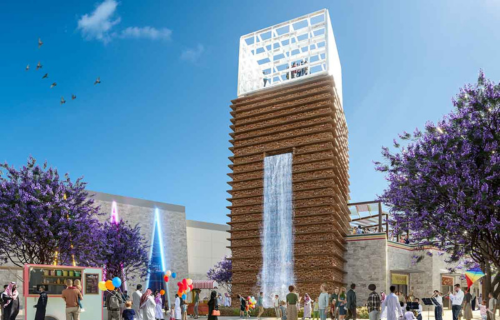
15. SEVEN Tabuk

Saudi Entertainment Ventures (SEVEN) has announced the construction of a new entertainment destination in Tabuk, located in northwestern Saudi Arabia.

With an investment value of over SAR1 billion, the destination will span 72,500 square metres of built space on 40,000 square metres of land near King Faisal Road.

Drawing inspiration from Tabuk’s culture and traditions, the design features a glass canopy and hydroponic tower paying tribute to the city’s heritage.

The development will feature attractions like a 4,000 square meter family entertainment center, junior entertainment center, and Discovery Adventures center developed with Warner Bros. Discovery.

It will also include facilities like an e-karting track, an indoor adventure golf course, futuristic bowling alley, and 10-screen cinema.
Seven Tabuk

SEVEN aims to support Tabuk’s local economy by creating job opportunities and enriching community life.

Partners like Albawani Holding will help deliver world-class entertainment. As part of SEVEN’s overall SAR50 billion investment, the Tabuk destination is one of 21 entertainment complexes being established across Saudi cities to develop a thriving domestic entertainment sector in line with Vision 2030 goals.

The facilities will offer innovative experiences through global sector partnerships.

16. AlUla

Saudi Arabia’s AlUla is an ancient heritage site with over 200,000 years of history. It contains important cultural sites, sandstone mountains and oases.

The kingdom is transforming AlUla into an international tourism destination through an ambitious master plan led by Crown Prince Mohammed bin Salman.

The plan aims to increase visitation and economic growth in the region. It will develop AlUla into five historic districts connected by trails and a new tram system.

Significant infrastructure and hotels will be built to accommodate tourists, with a target of 9,400 hotel rooms by 2035.

The goal of the multi-billion dollar project is to contribute greatly to Saudi Arabia’s economy and diversify revenues away from oil dependence. It aims to create 38,000 new jobs and add $32 billion annually to GDP by 2035.
AlUla

AlUla will feature new museums, cultural centers, and eco-tourism resorts carved into the sandstone mountains.

The project launched a new development company backed by Saudi Arabia’s huge sovereign wealth fund to transform AlUla into a global tourism destination and preserve its important ancient cultural heritage.

17. Amaala

Amaala is a major luxury tourism development project located in northwest Saudi Arabia along the Red Sea.

Spanning 3,800 square kilometers, it will offer a variety of high-end resorts, residences, retail, dining, and entertainment options centered around wellness, culture, and sports. Some key aspects will include 14 top hotel brands, over 800 villas and homes, 200 fashion boutiques, an arts academy, and world-class marinas.

A unique “mirage-inspired” airport is also being built to serve the development.

The project aims to establish Saudi Arabia as a global luxury wellness and lifestyle destination.

It is focused on preserving the natural environment within the UNESCO Prince Mohammed bin Salman Natural Reserve where it resides.
Amaala

As a standalone company now, Amaala will independently implement strategies to realize this ambitious vision sustainably.

If successful, it hopes to become an icon for high-end sustainable tourism development in the Middle East and generate significant economic benefits for the country.

18. Red Sea Project

The Red Sea Project is an ambitious 30,000-square-kilometre sustainable tourism development located between Umluj and Al Wajh in Saudi Arabia.

Spanning pristine islands, desert landscapes, mountains and archaeological sites along 200 kilometres of untouched Red Sea coastline, the project will feature 8,000 luxury hotel rooms once completed by 2030.

It aims to be the first fully integrated mixed-use resort in the region while serving as a model for sustainable tourism through its zero waste, carbon neutral and single-use plastic ban policies.

The Red Sea Project aims to offer visitors a unique experience combining the natural beauty of the region with its rich cultural heritage.
Red Sea Project

In addition to enjoying world-class accommodations near precious coastal and inland sites, guests will be able to explore the historical and archaeological treasures dotted throughout the vast desert setting.

With a focus on heritage, culture and environmental stewardship, the resort is positioned to become one of the most exciting new tourism developments in the Middle East region, providing an unforgettable luxury escape for travellers worldwide.
 

19. Diriyah

Diriyah, located just outside of Riyadh, is undergoing an ambitious transformation project to become Saudi Arabia’s new cultural capital.

At the heart of the project is the preservation of the At-Turaif heritage site, the historic mud-brick city where the original House of Saud was founded.

By 2030, the goal is for Diriyah to receive 27 million visitors annually and establish itself as a world-renowned destination for culture, heritage, hospitality, retail, education and residential living.

The development aims to honour Saudi Arabia’s traditions while providing modern lifestyle amenities.

The Diriyah project supports Saudi Arabia’s Vision 2030 economic reform plan by growing the tourism industry to welcome 100 million visitors each year.
Diriyah

Diriyah will reconnect people with their roots through its cultural experiences and celebrate the origins of modern Saudi society.

It seeks to become a global gathering place through its mix of shopping, entertainment, dining and world-class homes, all within an urban center designed with Najdi architectural styles.

20. King Salman Energy Park

The King Salman Energy Park (SPARK) is a new industrial city under development in Saudi Arabia that aims to be a global hub for the energy sector.

Located strategically near ports and transport links, SPARK will provide tenants and investors unparalleled access to regional and global energy markets.

With its world-class infrastructure and services, SPARK hopes to attract energy companies to expand their operations and take advantage of the efficiencies offered by the integrated ecosystem.

SPARK is a major project that aligns with Saudi Arabia’s Vision 2030 economic diversification plan.
King Salman Energy Park

It is projected to contribute significantly to GDP and job creation. With sustainability as a core focus, SPARK envisions serving as an innovative platform to propel the energy industry forward.

By providing an excellent business environment and bringing value to communities, SPARK prepares for its grand opening and encourages energy sector stakeholders to seize the opportunities on offer to grow their businesses.

21. King Salman Park

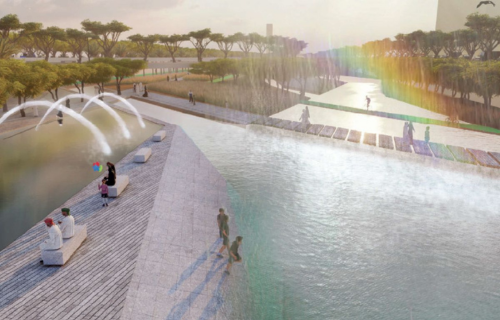
King Salman Park in Riyadh, Saudi Arabia will be the largest urban park in the world once completed.

At over 16 square kilometres in size, the expansive park is part of Vision 2030, Saudi Arabia’s plan to improve life in the cities.

The park will offer a variety of cultural, recreational, and sports activities for both residents and visitors. It will feature open green spaces like gardens as well as cultural attractions like museums and theatres housed in the 400,000 square metre Royal Arts Complex.

In addition to entertainment venues, the park will include residential and commercial facilities.

There will be 12,000 housing units and 16 hotels with over 2,300 rooms. Retail, medical, educational and social center covering over 500,000 square meters will also be built.
King Salman Park

Comprehensive transportation links like five metro stations and ten bus stations will ensure the park is easily accessible.

Extensive walking trails and other amenities like a golf course and amusement park mean King Salman Park will be a vibrant destination for all in Riyadh once completed.

22. Qiddiya

Qiddiya is a massive new entertainment city being built near Riyadh, Saudi Arabia.

It is part of Saudi Arabia’s Vision 2030 economic diversification plan led by Crown Prince Mohammed bin Salman.

Qiddiya will feature theme parks, sports facilities, arts venues, and attractions focused on sports, nature, mobility, and culture.

It aims to create jobs, empower the local population, especially youth and women, and attract both domestic and international visitors.

A major groundbreaking ceremony attended by King Salman underscored the enormous scale of the project.

Once completed, Qiddiya is envisioned as a global destination that will transform Saudi Arabia’s economy, society and culture.
Qiddiya

It has already created opportunities for investors, contractors and partners during the construction phase.

Qiddiya represents an ambitious new era for the Kingdom as it develops sectors beyond oil.

Its success could significantly boost domestic spending and investment while enhancing Saudi Arabia’s image internationally through entertainment, sports, arts and tourism.

23. Riyadh Sports Boulevard

The Sports Boulevard project in Riyadh, Saudi Arabia aims to promote healthy living through sports and exercise.

Stretching 135 kilometres through the city, it will connect Hanifah Valley in the west to Al Salai Valley in the east.

The boulevard provides over 4 million square metres of open green space, including a 20-square-kilometre desert park with event venues, outdoor museums, and movie theatres. It is divided into seven zones catering to different activities like cycling, arts and culture, environmental sustainability, and more.

The project aligns with Saudi Arabia’s Vision 2030 initiative to transform the economy and put Riyadh among the top 100 cities globally.
Riyadh Sports Boulevard

It seeks to encourage physical activity and a healthier lifestyle for Riyadh residents by providing spaces to walk, cycle, and ride horses.

The Sports Boulevard will also attract investors and drive the city’s growth by enriching its cultural offerings and recreational activities. With over 60 sports facilities, it aims to make sports more accessible for the people of Riyadh.

24. Riyadh Metro

The Riyadh Metro in Saudi Arabia is slated to become the largest public transport network project in the world upon completion.

The metro will consist of 176 kilometres of railway lines on which electric trains will operate autonomously.

Over 40 per cent of the train routes will be underground lines. The network is being developed as part of the King Abdulaziz Public Transport Project, which is valued at a massive $22.5 billion.

The first phase of the Riyadh Metro is expected to begin operations as early as March of this year, according to Fahd Al-Rasheed, CEO of the Royal Commission for Riyadh City. Al-Rasheed stated that subsequent phases will launch shortly after the first phase debuts.
Riyadh Metro

The goal is to have the full Riyadh Metro network up and running before the end of the year. Once completed, it will be the largest single-phase public transport undertaking ever developed.

Source: Arabian Business


Some of the projects have already been finished, most notably the Riyadh Metro, and some are very close to completion.

To view this content we will need your consent to set third party cookies.
For more detailed information, see our cookies page.


To view this content we will need your consent to set third party cookies.
For more detailed information, see our cookies page.


To view this content we will need your consent to set third party cookies.
For more detailed information, see our cookies page.


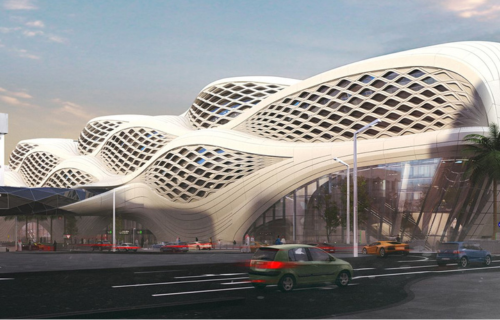
The Riyadh Metro is probably the most beautiful metro in the world. It is stunning.
 
The Noble Prizes are heavily biased in favor of the West.

Also the person In question is a Jordanian of Palestinian origins with some recent Saudi Arabian ancestry as well hence his Saudi Arabian citizenship that he gained in 2021. Anyway it is good news that an Arab won but hardly news in the sense that Arabs/ancestors of Arabs have contributed to science for millennia, probably longer than any other (recorded in history that is) region in the world given that the Arab world is home to the oldest civilizations on the planet. However for various reasons the scientific output has been laughable (overall) in the modern era but things are changing for the better rather quickly and there could be another "Islamic Golden Age" in the making not far from now given demographics and the large focus on STEM by many wealthy Arab states. Part of the challenge is also that AI will revolutionize traditional science.

A fairly good overview of some of the largest megaprojects.

Saudi Arabia megaprojects: 24 massive developments in the making

Here are 24 upcoming mega projects that will play a key role in ensuring Saudi Arabia’s massive transformation

Saudi Arabia has announced several ambitious plans to build a series of large-scale projects aimed at reshaping the country into a prominent global economic force, over the past few years.

These initiatives, which involve substantial investments amounting to billions of dollars, seek to diversify the nation’s economy beyond oil, generate employment opportunities, and enhance its reputation as a premier destination for trade and tourism.

That said, here are 24 upcoming megaprojects that will play a key role in ensuring the Kingdom’s massive transformation:

1. Norlana

Norlana is a new ultra-modern residential community being developed in northwest Saudi Arabia as part of NEOM.

Situated on the coast of the Gulf of Aqaba, Norlana will consist of 711 properties including mansions, apartments and beach villas integrated with the surrounding natural dunes.

It will offer luxurious living and cater to active lifestyles, with amenities like a 120-berth marina, 18-hole golf course, equestrian centre and facilities for water sports and sailing.

Sustainability is a top priority for Norlana. It is being designed and built to preserve the coastal and marine environments.

Norlana

While providing ultra-luxury living, residents will be able to experience the beauty of the location and immerse themselves in sports, wellness and passion pursuits.

Norlana aims to set a new standard for contemporary sustainable communities and complements other tourism destinations announced recently in the Gulf of Aqaba as part of NEOM’s regional development plans.

2. Utamo

NEOM recently unveiled Utamo, a new immersive destination for art and entertainment located along the Gulf of Aqaba coastline in northwest Saudi Arabia.

Utamo will be housed within a mountain cocoon and designed to seamlessly blend architecture with the surrounding natural beauty.

It will serve as a one-of-a-kind venue hosting music, art and cultural events through advanced audio-visual systems that promise to deliver sensory experiences.

Guests will be able to arrive via a landscaped garden pathway and enter through a towering 64-metre-high entrance hall.

Sustainability is a top priority, with cutting-edge construction techniques used to minimize environmental impact. Utamo aims to redefine entertainment through productions that converge reality with the digital realm.
Utamo

It will provide a place for the world’s greatest artists to showcase their talents within exclusive performance spaces, VIP lounges and signature restaurants.

In line with NEOM’s regional development goals, Utamo complements recently announced sustainable tourism destinations like Leyja, Epicon and Siranna along the Gulf of Aqaba coastline.

3. Siranna

NEOM also announced Siranna, a new exclusive tourism destination located along the Gulf of Aqaba coastline in northwest Saudi Arabia.

Siranna will consist of a 65-key luxury hotel and 35 high-end residential properties, taking advantage of uninterrupted views of the Red Sea. The destination’s hexagonal pillar architecture will seamlessly blend into the rugged mountains and flora.

Guests will arrive by boat to the secluded bay and journey through natural rock formations to reach the enchanting entrance. Siranna aims to offer an escape for relaxation and original thinking through amenities like a beach club, spas, wellness facilities, and dining options.

Sustainability is a core focus during Siranna’s development, with techniques used to preserve the surrounding landscape and heritage. Trails through the connecting sea, mountain and wadi ecosystem will provide exploration opportunities.
Siranna

In line with NEOM’s regional vision, Siranna will deliver an ultra-luxurious hospitality experience while supporting future sustainable living.

It complements other tourism destinations recently announced in the Gulf of Aqaba, to create spaces in nature that nurture creativity through conservation-centered development.

4. Epicon

NEOM’s Epicon, a new luxury coastal tourism destination located on the Gulf of Aqaba, will feature two striking towers up to 275 meters tall housing a 41-key ultra-premium hotel and luxury residences.

It will also include a 120-room resort and 45 beachfront villas situated near the hotel. The development aims to set new standards for hospitality and architecture through indulgent amenities and experiences for guests and residents to escape everyday stresses.

These include a beach club, spa, watersports, and destination dining overlooking spectacular shorelines. Cutting-edge innovations and world-class services and facilities within the luxurious residences and villas seek to deliver iconic living.

Epicon aims to position itself as a benchmark destination through unrestricted access to state-of-the-art amenities within spectacular Gulf views.
Epicon

In line with objectives to strengthen NEOM’s ecotourism sector, it follows the recent announcement of the sustainable tourism development Leyja within a natural valley setting. Epicon and Leyja will enrich the experience offerings in NEOM and the broader Saudi tourism industry, aligned with the Kingdom’s vision.

5. Leyja

Leyja is a new tourism destination being developed in NEOM, Saudi Arabia’s mega-project located in the country’s northwest corner.

Leyja will be centred around a natural valley surrounded by 400-metre-high mountains, located along the coast of the Gulf of Aqaba. It aims to preserve 95 per cent of its land for nature, with three designed hotels that blend into the landscape.

The hotels will each have 40 rooms and offer distinct experiences catering to activities like adventure, relaxation, and wellness.

Once complete, Leyja will provide a variety of experiences for visitors centred around sustainability and nature.
Leyja

These will include fine dining options from world-renowned chefs, wellness facilities like infinity pools, and guided activities in the stunning mountain scenery such as hiking trails and rock-climbing.

The goal is to develop eco-friendly tourism that supports Saudi Arabia’s Vision 2030 plans while protecting the natural environment of the unique valley setting.

6. The Line

The Line is a linear city project within NEOM, an ambitious mega-city development in northwestern Saudi Arabia.

Stretching over 170 kilometers, The Line is envisioned as a carbon-neutral vertical city that would avoid the use of cars through its walkable, dense design.

It would contain all necessities of city living including homes, schools, workspaces and parks directly accessible by foot, public transport or through a high-speed rail network.

With nature and green spaces integrated throughout, The Line aims to maximize resource efficiency while offering a high quality of life for its anticipated 9 million residents.

The Line’s vertical design is planned to minimize land and energy usage while connecting residents through social spaces.
The Line

Towering structures up to 500 meters tall will contain modular mixed-use pods organized to foster constant social interaction and access to the outdoors.

Cutting-edge technology like autonomous transport will further enhance sustainable living. When open, The Line could fundamentally transform urban design and connectivity while reducing Saudi Arabia’s environmental footprint as the country works to diversify its economy as part of Vision 2030.
man is it real? it looks some mystical fantsasy type .
 
man is it real? it looks some mystical fantsasy type .
Architectural rendering tends to do that. The mega-projects that have been constructed or are close to completion look very much like the original rendering. See my post 935 in this thread. The Riyadh Metro looks better in real life than many of the project illustrations prior to construction starting.

Anyway photos by themselves don't really matter, it is all about the projects themselves.

Over 151m trees planted under Saudi Green Initiative

Over 151m trees planted under Saudi Green Initiative

The minister announced the kingdom is building 1,000 rainwater harvesting dams with an annual capacity of 4 million cubic meters. (SPA)


TAMARA ABOALSAUD
July 31, 2025

  • 5 new projects, funding announced by environment minister
  • Aim to increase produce and protect water, land, air, wildlife
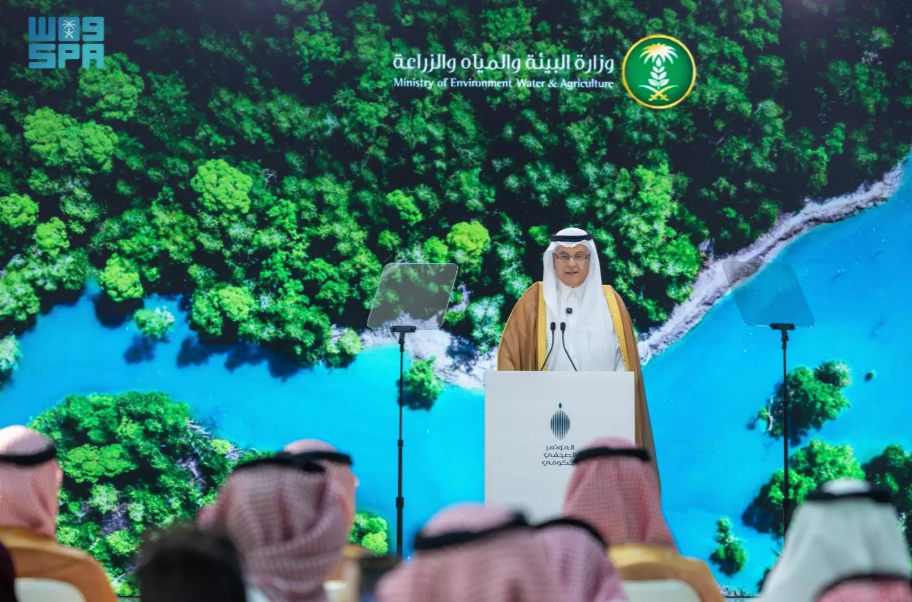
RIYADH: More than 151 million trees have been planted and 500,000 hectares of land rehabilitated under the Saudi Green Initiative, which aims to plant 10 billion in total, the Kingdom’s environment minister said on Wednesday.

The Kingdom has made significant progress under the National Environment Strategy, en-route to achieving Saudi Arabia’s Vision 2030 goals in conservation, water sustainability and food security, said Environment, Water and Agriculture Minister Abdulrahman Al-Fadley.

During a press briefing, Al-Fadley also announced the establishment of five specialized environmental centers, including the Middle East’s first Regional Center for Climate Change Studies and the world’s fourth Regional Center for Sand and Dust Storms.

“The Kingdom has (also) established an environmental fund that is the largest of its kind in the region, reflecting a serious commitment to supporting environmental initiatives,” the minister added.

Protected terrestrial areas went from covering 4.5 percent of the Kingdom’s territory to 18.1 percent, and the number of national parks has increased from 18 to 500.

Since the establishment of the National Center for Environmental Compliance in 2020, more than 40,000 permits have been issued, an increase of 660 percent.
Over 8,000 endangered species have been reintroduced into their natural marine habitats since 2016 as protected zones have grown by 260 percent.

Monitoring services have expanded in all sectors across the Kingdom. There are now 240 air-quality monitoring stations, a new marine program to detect and respond to oil spills, and advanced meteorological sensing and prediction systems.

“We conducted 711 cloud‑seeding flights across regions and increased strategic (water) storage capacity by 600 percent,” increasing rainfall by 6.4 million cubic meters to encourage vegetation and nourish water resources, he said.


New developments have been made in city-level waste management as well, with 21 strategic management plans, and the identification of 330 investment opportunities worth SR450 billion ($119.9 billion).

A number of grants, incentives and environmental funds have been created to support academic collaboration and private sector innovation on mechanisms to divert 90 percent of waste from landfills by 2040.

Al-Fadley also confirmed that water projects worth over SR230 billion have been completed, which includes public and private sector investments for infrastructure and reuse systems.

“Saudi Arabia was chosen by the UN Water Committee as a global model for water sustainability,” he said.

The minister announced that the Kingdom was building 1,000 rainwater-harvesting dams with an annual capacity of 4 million cubic meters.

The Kingdom is the world’s top producer of desalinated water with production capacity reaching 16.6 million cubic meters per day in late 2024, an increase of nearly 100 percent compared to 2016.

And strategic water storage capacity has jumped to 600 percent, with most cities having an average supply coverage of three days rather than one.

In addition to being a large producer, Saudi Arabia also delivers water to 22,000 population centers through an 18,000-km pipeline network.

Reused water now makes up 32 percent of total usage
.

The National Center for Water Efficiency and Conservation saves 120,000 cubic meters of water daily, with plans to increase it to 300,000, the minister added.

Over 65 percent of those working in the water sector are citizens, and Saudi Arabia engineers make up 97 percent of engineering roles, marking an emphasis on self-reliance.


The minister said 25 public–private partnership agreements were signed involving SR100 billion in investments.

Energy reduction is also a big focus for the country. Since 2016, the amount of electricity consumed has been cut by half.

The agricultural sector now makes up SR118 billion of the nation’s gross domestic product, an 8 percent increase from the previous year, and food production increased to 12 million tonnes.

Al-Fadley said a major economic and cultural achievement was that the Kingdom was now the world’s top date exporter, completely self-sufficient in date production and distribution, as well as in milk and eggs.

For key vegetables self-sufficiency was between 70 to 100 percent, and poultry and seafood exports were growing, he added.


Greening the Kingdom: Saudi Arabia Revives 750,000 Hectares in Royal Reserve

Sakaka – Saudi Arabia’s King Salman bin Abdulaziz Royal Reserve Development Authority announced on Friday that 750,000 hectares of previously degraded land have been successfully rehabilitated under its ongoing restoration and greening programs.

According to a report by the Saudi Press Agency (SPA) on the occasion of World Agriculture Day, the authority has also planted nearly 4 million seedlings across the reserve, which spans 130,700 square kilometers. To support natural regeneration of forests and rangelands, teams have dispersed 7,500 kilograms of local seeds, including yarrow, artemisia, and haloxylon.

These efforts are part of the broader Saudi Green Initiative, launched by Crown Prince Mohammed bin Salman on March 27, 2021. The initiative aligns with the goals of Saudi Vision 2030, focusing on combating climate change, reducing carbon emissions, increasing afforestation, and protecting land and marine ecosystems.

The reserve, established by royal order in June 2018 and named after King Salman, consolidates protected areas across the Kingdom’s northern provinces of Tabuk, Northern Borders, Al-Jouf, and Hail. Restoration projects aim to reclaim lands affected by desertification and overgrazing, allowing native plant life to return and thrive.

The reserve hosts over 550 plant species and has relocated 1,235 wildlife species, including Arabian oryx, sand gazelles, Arabian gazelles, and Arabian leopards. It is also a crucial stopover for migratory birds, serving as their first station in the Kingdom from Asia and Europe in the fall, and the last before departing to Africa in spring.

These achievements reflect Saudi Arabia’s commitment to environmental preservation, biodiversity protection, and sustainable development, ensuring natural resources are safeguarded for future generations.


1760092319896.png

1760092353921.png

1760092353560.png

1760092587102.png

1760092657926.png

1760092705022.png


Really a privilege to have this many nature reserves and for them to be some of the largest in the world as well and with every landscape imaginable almost!
 
Last edited:
Ramal Computer Manufacturing Project in Saudi Arabia in partnership with HP and Foxconn

To view this content we will need your consent to set third party cookies.
For more detailed information, see our cookies page.
 

Users who are viewing this thread

Pakistan Defence Latest

Country Watch Latest

Latest Posts

Back
Top