Saudi Arabia to build 1,000 rainwater harvesting dams with 4 million m³ annual capacity
July 30, 2025
Minister of Environment, Water and Agriculture Abdulrahman Al-Fadley speaking at the press confrence in Riyadh on Wednesday.
Saudi Gazette report
RIYADH — Saudi Arabia has made major strides in environmental conservation, water sustainability, and food security as part of its Vision 2030 goals, according to Minister of Environment, Water and Agriculture Abdulrahman Al-Fadley.
In a press briefing on Wednesday, Al-Fadley highlighted the implementation progress of the National Environment Strategy, including the establishment of five specialized environmental centers and the region’s largest environmental fund to support green initiatives.
The Kingdom has introduced new regulatory frameworks for environmental protection, meteorology, and waste management, two of which are being implemented for the first time in Saudi Arabia.
Under the Saudi Green Initiative, over 500,000 hectares of degraded land have been rehabilitated and 151 million trees planted.
The target is to restore 2.5 million hectares and plant over 215 million trees by 2030. Ultimately, the Kingdom aims to plant 10 billion trees across 40 million hectares.
The number of national parks has surged from 18 to 500, while protected terrestrial areas now cover 18% of the Kingdom’s territory, a fourfold increase.
Marine protected areas have grown by 260% since 2016. Over 8,000 endangered species have been reintroduced into their natural habitats.
In enforcement, more than 40,000 environmental permits have been issued, a 660% increase since the creation of the National Center for Environmental Compliance.
More than 173,000 inspections were carried out, and 456 licenses were granted to environmental service providers.
Air quality monitoring has also expanded, with 240 stations operating across the Kingdom. The ministry launched a national marine monitoring program and bolstered its capacity to respond to oil spills.
Meteorological services now cover 100% of Saudi Arabia, aided by advanced sensing and prediction systems.
The cloud-seeding program, led by skilled Saudi pilots using cutting-edge aircraft, has conducted over 711 sorties, increasing rainfall by 6.4 million cubic meters to support water resources and vegetation.
The Kingdom also launched two pioneering centers, the Regional Center for Climate Change Studies, the first of its kind in the Middle East, and the Regional Center for Sand and Dust Storms, one of only four worldwide.
Saudi Arabia has developed 21 strategic city-level waste management plans and identified more than 330 investment opportunities worth SR450 billion. The goal is to divert 90% of waste from landfills by 2040. A suite of incentives, grants, and a new environmental fund has been launched to support private sector innovation and academic partnerships.
Al-Fadley announced that the UN Water Conference has named Saudi Arabia a global model for sustainable water practices, with significant progress under Sustainable Development Goal 6.
Completed water projects now exceed SR230 billion in value, including SR10 billion in public infrastructure and over SR45 billion through private sector collaboration. The developments cover water production, transport pipelines, storage facilities, and wastewater treatment.
Since 2016, water production has doubled to 16.6 million cubic meters per day — 75% of which is desalinated seawater — making the Kingdom the world’s top producer of desalinated water. Strategic water storage capacity has increased by 600%, with the average supply coverage rising from one to three days in most cities.
Efforts to reduce energy use have halved electricity consumption in the sector compared to 2016. The Kingdom now delivers water to more than 22,000 population centers, reaching elevations up to 3,000 meters through an 18,000-kilometer pipeline network.
Reused water volume has risen from 251 million to 550 million cubic meters, now representing 32% of total usage. Saudi Arabia is building 1,000 rainwater harvesting dams with an annual capacity of 4 million cubic meters.
With over 65% local content in the water sector and 97% of engineering roles held by Saudi nationals, the Kingdom is increasingly self-reliant. The National Center for Water Efficiency and Conservation has saved 120,000 cubic meters daily and aims to reach 300,000 soon.
Agricultural GDP reached SR118 billion, up 8% from last year and 39% from 2020. Food production rose to 12 million tons due to supportive policies and Saudi Agricultural Development Fund initiatives.
The Kingdom has achieved full self-sufficiency in dates, milk, and eggs, and between 70%–100% in various vegetables and over 70% in poultry. Exports of fish and shrimp have expanded, along with global competitiveness in select agricultural sectors.
Saudi Arabia remains the world’s top date exporter. The General Food Security Authority ensures the availability of 11 key staples, with an early warning system for essential goods to be launched soon.
Al-Fadley also praised the role of the Saudi Agricultural and Livestock Investment Company (SALIC), which supplies 30% of the Kingdom’s wheat imports through overseas projects.
Saudi Arabia has launched sweeping reforms and landmark projects in environmental protection, sustainable water management, and food security as part of Vision 2030.

saudigazette.com.sa
Saudi Arabia protects rare marine ecosystems with 2 new reserves
1 / 3
The blue holes are ecological systems and natural formations that are rich in biodiversity and marine life, including turtles, fish, marine mammals, and invertebrates. (Supplied/NCW)
2 / 3
The Red Sea is known for its high salinity and warm temperatures, making it a haven for marine biodiversity. (Supplied/NCW)
3 / 3
The Council of Ministers of Saudi Arabia has announced the inclusion of Ras Hatiba and the Blue Holes marine reserves in the list of national reserves in the Kingdom. (Supplied/NCW)
Updated 19 sec ago
ARAB NEWS
November 12, 2025
- Aim to protect 30% of Saudi by 2030
- Unique biodiversity and tourism value
RIYADH: Saudi Arabia’s Council of Ministers has included the Ras Hatiba and Blue Holes marine areas on the Kingdom’s national list of reserves, the Saudi Press Agency reported recently.
The move reflects Saudi Arabia’s commitment to protecting biodiversity and advancing sustainable development goals under Vision 2030, the SPA reported.
Mohammed Qurban, CEO of the National Center for Wildlife, said the decision followed extensive biological, natural, and social studies confirming the two reserves’ unique biodiversity, and economic and tourism value.
Located northwest of Jeddah, Ras Hatiba covers 5,715 sq. km and features coral reefs, mangroves, and seagrass beds — key habitats for green turtles, dugongs, whales, dolphins, and sharks.
The Blue Holes areas are rich in marine life, including turtles, fish, mammals, and invertebrates. Their discovery was first announced in 2022 after 20 such formations were found along the southern Red Sea coast.
With the addition of these two protected areas,
the Kingdom’s nature reserves now cover 16.1 percent of its territory, up from 6.5 percent, and moving closer to the national goal of 30 percent by 2030.
RIYADH: Saudi Arabia’s Council of Ministers has included the Ras Hatiba and Blue Holes marine areas on the Kingdom’s national list of reserves, the Saudi Press Agency reported recently. The move reflects Saudi Arabia’s commitment to protecting biodiversity and advancing sustainable development...

www.arabnews.com
ocal agriculture booming:
Achieving Self-Sufficiency in Key Food Products:
Vision 2030 aims to achieve high levels of self-sufficiency in dairy, eggs, and other essential commodities by 2030, ensuring that local production meets 100% of domestic demand. This goal has already been surpassed for dairy and eggs, with production exceeding 100% of local needs. Targets also include gradually achieving full self-sufficiency in poultry and seafood production over the coming years.
Increasing the Agriculture Sector’s Contribution to the Economy:
Vision 2030 seeks to raise the agriculture sector’s contribution to the Kingdom’s GDP and enhance its role in diversifying the non-oil economy. The goal is to double agricultural output by 2030 compared to the early years of the Vision. Notably, Saudi Arabia’s agricultural GDP reached approximately SAR 114 billion in 2024, setting a record and surpassing interim expectations.
Enhancing Food Security and Reducing Waste:
The Vision aims to ensure the availability and price stability of food supplies across the Kingdom, while reducing food loss and waste by around 50% by 2030. Currently, food waste is estimated at more than 33% of total food, costing around SAR 40 billion annually. National programs aim to cut this rate to approximately 15% through awareness campaigns and supply chain improvements. The Vision also targets improving Saudi Arabia’s ranking in the Global Food Security Index.
Global Leadership in Select Agricultural Products:
The Kingdom seeks to enhance its global competitiveness in the export of Saudi food products. For example, Saudi Arabia maintains a leading position in the global date sector, aiming to preserve its leadership in both production and exports. Additionally, broader goals include raising the overall value of food exports, with initiatives like the Jeddah Food Cluster aiming to contribute SAR 8 billion annually to national exports over the next decade.
Sustainable Agricultural Development and Resource Protection:
Vision 2030 emphasizes the sustainable use of natural resources in agriculture by improving water efficiency for irrigation and expanding the use of modern agricultural technologies, such as smart and vertical farming, to boost productivity without depleting resources. The Vision also includes plans to enhance vegetation cover and combat desertification under the Saudi Green Initiative, with a long-term goal of planting 10 billion trees and rehabilitating degraded lands to increase arable areas.
Summary of Achievements and Opportunities in the Food and Agriculture Sector (2024)
The Saudi food and agriculture sector achieved remarkable milestones in 2024 on its path toward Vision 2030.
The sector’s contribution to GDP reached a historic record of SAR 114 billion, reflecting the growing economic significance of agriculture in the Kingdom.
Saudi Arabia has achieved unprecedented levels of food self-sufficiency. Local dairy production covers 109% of domestic demand, while egg production meets 116% — meaning the Kingdom produces a surplus available for export. Other key products also witnessed significant improvements: poultry self-sufficiency increased to 60% (up from 40% in 2016), and seafood self-sufficiency reached approximately 55% of local demand.
In terms of food quality and health, Saudi Arabia made major strides, ranking among the top five countries globally for the absence of harmful trans fats in its food products.
This achievement reflects the success of Saudi regulatory bodies (such as the Saudi Food and Drug Authority) in raising food safety standards and improving product quality.
On the environmental sustainability front, more than 115 million trees have been planted across the Kingdom by the end of 2024 as part of the Saudi Green Initiative. These efforts have contributed to the rehabilitation of 118,000 hectares of degraded land and enriched the Kingdom’s biodiversity, including the reintroduction of over 7,800 endangered animals into their natural habitats.
These initiatives not only enhance the environment and climate resilience but also support agriculture by preserving soil health and improving water resources in the long term.
In sustainable water solutions, 2024 saw the launch of the world’s first solar-powered desalination plant in Saudi Arabia, providing a new, eco-friendly water source for irrigation and agricultural use at reduced costs.
Collectively, these outstanding achievements in food production, food safety, and environmental sustainability demonstrate the Kingdom’s rapid progress toward realizing the Vision 2030 goals for this sector.
Investment Opportunities and Entrepreneurial Prospects in the Food and Agriculture Sector
The Saudi food and agriculture sector is witnessing strong momentum, making it an attractive destination for local and international entrepreneurs and investors.
Several initiatives have been launched to stimulate investment and maximize value in this vital sector.
One major development is the establishment of the
Jeddah Food Cluster in 2024, the largest food industrial cluster in the region, aimed at advancing food manufacturing, expanding production and storage capacities, and attracting SAR 20 billion in private sector investments.
This ambitious project is expected to boost national food exports by around SAR 8 billion annually and generate an estimated SAR 7 billion contribution to GDP over the next decade.
It represents a cornerstone opportunity for scaling local food production and positioning Saudi Arabia as a regional leader in food industries, opening up new horizons for Saudi companies and international partnerships.
Additionally, the Saudi agricultural sector is attracting global agricultural technology companies seeking to invest and transfer knowledge. In 2024, leading international companies from Europe and Asia opened regional offices in Saudi Arabia. Companies from countries such as the Netherlands, Spain, and China are now providing advanced technology solutions in smart farming and water conservation.
This international presence offers Saudi farmers and entrepreneurs a golden opportunity to collaborate, benefit from global expertise, and adopt cutting-edge agricultural innovations — including advanced aquaculture systems, high-tech greenhouses, and smart irrigation solutions using remote sensing technologies.
Investors also benefit from supportive government financing programs (such as loans from the Agricultural Development Fund) and national strategies like the Sustainable Agricultural Rural Development Program, which provides incentives for expanding organic and livestock food production projects.
Collectively, these developments are shaping a dynamic, rapidly evolving sector that combines economic growth with sustainability, offering wide-ranging opportunities for innovation, partnerships, and ensuring the Kingdom’s food security for the future.
Saudi Arabia – April 2025 As part of Saudi FoodTech’s commitment to tracking major developments in the food and agriculture sectors, this report highlights the most significant achievements in 2024 along the journey toward realizing Saudi Vision 2030. It also sheds light on key milestones...

saudifoodtech.sa
Saudi Arabia’s agriculture: growth, self-sufficiency & agri-tech
by Haitham AbuGhazaleh
Strategic Account Manager, Agri, Food & Nutrition
Growth Advisory, Frost & Sullivan
by Jad Haj Chahine
Senior Consultant, Agri, Food & Nutrition Growth
Advisory, Frost & Sullivan
Saudi Arabia remains the largest agricultural market in the GCC region, with the gross production value projected to amount to USD 15.98 bn in 2025 and USD 17.68 bn in 2029 (Statista).
Agriculture accounted for 4.3% of non-oil GDP in 2023, employing approximately 350,000 people, leading the government to invest USD 24 billion in environment, water, and agriculture to enhance self-sufficiency and reduce reliance on imports.
Currently, the import value in agriculture market is projected to amount to US$11.1bn in 2025 with a CAGR of 5% till 2029. With the Vision 2030 initiative, the government is prioritizing agricultural sustainability and food security, leading to increased funding and support for local farmers.
In terms of the end use industries of agriculture, Saudi Arabia’s food retail sales were estimated at more than $51 billion in 2023 (CAGR 5%) and foodservices around USD 29 Bn (CAGR 10%) as per USDA estimates, largely driven by population growth, rapid urbanization, and changing consumer shopping habits.
However, the sector faces arid climatic conditions and water constraints, with only 1.5% of land being arable and agriculture consuming 80% of the country’s water supply ranking 8th globally in water scarcity, with non-renewable groundwater use in agriculture dropping from 19 million m³ in 2015 to 10 million m³ in 2022. (MEWA, Innovation in the Agriculture Sector in KSA, 2023).
Self-sufficiency progress & vision 2030
Saudi Arabia is making significant strides in food security, achieving high self-sufficiency levels in key agricultural products in 2024: (GASTAT, Self-Sufficiency).
• Dairy Products: 129% self-sufficiency, with a target of 150% by 2030.
• Dates: 119% self-sufficiency, targeted to reach 150% by 2030.
• Table Eggs: 100% self-sufficiency, expected to increase to 150%.
• Poultry Meat: 71% self-sufficiency, with a goal of 100%.
• Red Meat: 61% self-sufficiency, targeted to reach 100%.
• Fish: 48% self-sufficiency, set to reach 70%.
• Tomatoes: 76% self-sufficiency, with a goal of 100% by 2030.
• Onions: 51% self-sufficiency, targeted for 80% by 2030.
The government’s strategic interventions aim to increase local agricultural production by 60% and plant 14 million trees by 2030 with commitment to restoring 1.6 million hectares through the Saudi Green Initiative (SGI).
The role of agri-tech in transforming saudi agriculture: key priority technologies
To overcome water scarcity and optimize production, Saudi Arabia is aggressively adopting Agri-Tech innovations as a first wave of implementation in 2025:
•
Irrigation and Water Management: Drip irrigation, smart irrigation systems, and advanced irrigation technologies.
• Integrated Aquaculture Farm Management: Sustainable aquaculture with expected growth from 0.14 MMT in 2022 to 0.5 MMT by 2030.
• Protected Agriculture & Controlled Environment: Greenhouses, hydroponics, aeroponics, and vertical farming.
• Food Preservation & Waste Valorization: Smart packaging, edible coatings, anaerobic digestion, and composting.
•
Unmanned Aerial Vehicles (Drones) & Satellite Imagery: Crop monitoring, soil analysis, and precision spraying. (KSA Agriculture Innovation Roadmap, MEWA).
Major government initiatives & investments
The Government is implementing multi-billion-dollar initiatives to boost food security and agricultural sustainability:
• USD 9.8 Billion in Private Investments: The Ministry of Environment, Water, and Agriculture has secured SAR 37 billion (approximately USD 9.8 billion) in private investments to advance the Kingdom’s agriculture and food sectors, focusing on crop production, livestock, fisheries, and infrastructure development (ESG News, KSA investment in Sustainable Agriculture Projects, 2024)
•
Saudi Agri-Food Tech Alliance: Aims to foster innovation and public-private partnerships for agricultural technology development.
•
Strategic Acquisitions: The Saudi Agricultural & Livestock Investment Company (SALIC) acquired Olam Agri for USD 1.78 billion, securing access to global grain and food supply chains.
•
Agricultural Development Fund (ADF): Provides low-interest loans and financial incentives to farmers and Agri-Tech startups.
Outlook: a path toward sustainable agriculture
Saudi Arabia is rapidly advancing towards its Vision 2030 goals, positioning itself as a regional leader in food security and AgriTech innovation. With strong government support, foreign investments, and cutting edge Agri-Tech adoption, the Kingdom is set to achieve greater self-sufficiency, reduce import dependency, and lead the GCC in sustainable agriculture.
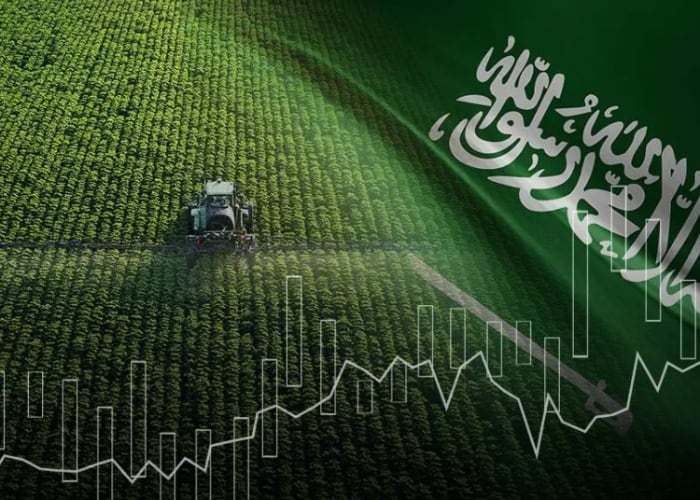
A Booming Agricultural Market Driving Self-Sufficiency Saudi Arabia remains the largest agricultural market in the GCC region, with the gross production value projected to amount to USD 15.98 bn in 2025 and USD 17.68 bn in 2029 (Statista). Agriculture accounted for 4.3% of non-oil GDP in 2023...

foodtechgulf.ae
 Download the Agricultural Sector Market Report in Saudi Arabia (PDF) here.
There is no doubt that the agricultural sector in Saudi Arabia is a fundamental pillar of the national economy, not only due to its direct contribution to the GDP but also as a key driver of the food value chain. It provides raw materials and production inputs for more than 1,000 food and beverage factories, representing about 14% of all factories in the Kingdom, reflecting the strong organic link between agriculture and the food industry. Over time, this sector has shifted from traditional production methods to a modern model based on innovation, resource optimization, and advanced technologies.
Saudi Arabia’s Vision 2030 has played a pivotal role in driving this transformation, through programs supporting local production, diversifying income sources, and enhancing food security. The adoption of the National Environment and Water Strategy, alongside the Food Security Strategy, has established a comprehensive framework that balances agricultural development with sustainable natural resource management, particularly amid increasing climate challenges. As a result, the agricultural sector in Saudi Arabia is no longer just a source of food but a cornerstone of economic and social stability, and a central element in building a sustainable knowledge-based national economy.
The agricultural sector in Saudi Arabia possesses unique competitive advantages, including advanced infrastructure, geographic and climatic diversity that allows year-round agricultural production, and increasing reliance on modern technologies that enhance production efficiency and open wide investment and export opportunities, such as:
- High capacity for self-sufficiency in key products, notably dates, dairy, and table eggs.
- An integrated logistics network of roads, ports, and airports that ensures efficient internal and external transportation and distribution.
- Climatic and geographic diversity enabling the cultivation of various crops year-round, enhancing sector flexibility and competitiveness in local and international markets.
- Strategic regional diversity, such as Al-Qassim’s fertile soils and water abundance, making it a leading agricultural hub.
- Hail region as a center for high-quality grains and fruits, reinforcing its position in the national agricultural landscape.
- Medina’s global recognition for dates, particularly “Ajwa,” marking a signature of Saudi agricultural quality.
- Jazan’s contribution to agricultural diversity with tropical fruits like mango and banana, as well as coffee cultivation.
- The Eastern Province’s rich production of dates and citrus, supporting local supply chains and food availability.
This harmonious geographic distribution provides a clear comparative advantage for each region, supporting national food security and creating specialized investment opportunities aligned with each production environment.
The agricultural sector is a vital economic pillar, contributing 2.5% of GDP, with a value exceeding SAR 117 billion in 2024. Beyond direct contribution, it forms the backbone of the country’s food value chains, supplying roughly 1,000 food and beverage factories (over 14% of total factories) with essential inputs. This strategic integration between agriculture, industry, and trade stimulates growth across multiple economic sectors. The sector also diversifies national income sources, reduces the non-oil trade deficit, generates employment, and supports rural development, with over 300,000 small farmers depending on it as a primary source of income. The close link between economic and social dimensions underscores agriculture as a key developmental lever, driving Saudi Arabia toward a more diversified, sustainable, and inclusive economy.
The agricultural sector is advancing confidently to become a cornerstone for economic diversification and food security, with strategies focused on sustainability and production efficiency. Expansion in modern technologies such as hydroponics, vertical farming, and greenhouses has already increased production capacity to over 11 million tons annually while reducing water consumption by up to 98% through smart irrigation systems.
The rapid shift toward organic farming, specialized agricultural cities, and converting waste into fertilizers opens new avenues for value addition, enhancing competitiveness locally and globally, making Saudi Arabia a model for smart and sustainable agriculture.
- Population: ~35.3 million, with an annual growth rate of 3.3%, generating sustained demand for agricultural products.
- Total land area: 2.15 million km² across 13 administrative regions, offering unique geographic and climatic diversity for smart and sustainable farming.
- Contribution to GDP: SAR 117.9 billion (2.5% of the economy), reflecting its strategic role in economic diversification.
- Annual growth: 5.2%, with agricultural exports exceeding SAR 3.1 billion.
- Production achievements: ~392.3 thousand tons of open-field tomatoes, ~313.5 thousand tons of onions, 10.7 thousand tons of bell peppers.
- Total open-field production: >2.5 million tons; modern technologies including greenhouses and hydroponics raised total agricultural production to over 11 million tons.
Read here: Fish Farming Project – A Promising Investment Opportunity in 2025
- Aquaculture Projects in Inland Waters: Strategic investment to boost marine protein production, supported by government funding, engineering studies, technical guidance, and sustainable aquaculture practices.
- Organic and Sustainable Farming: Saudi Arabia has 23.3 thousand hectares of certified organic land, producing 95.3 thousand tons. Government incentives, regulations, inspection systems, and research centers support growth aligned with Vision 2030 goals.
- Dates and Palm Products Export: Saudi date production reaches ~1.9 million tons, achieving 119% self-sufficiency. Value-added chains from cultivation to processing and export enhance global presence and economic returns.
- Organic Fertilizer Production: Transforming natural waste into organic fertilizers supports organic farming, reduces reliance on chemical fertilizers, and aligns with environmental sustainability and food security goals.
- Greenhouses: Provide controlled environments for year-round crop cultivation, increase water use efficiency, improve productivity and quality, and enhance local supply and export capacity.
Read here: Discover the 7 Most Profitable Agricultural Projects
Read here: Why Mushroom Farming is One of the Most Successful Agricultural Projects in 2025
For more agricultural production investment opportunities,
click here.
- Infrastructure Development: In 2024, opportunities for specialized agricultural cities were launched, covering 4.5 million m², alongside 48 agreements for inland aquaculture farms, with technical studies and financing support.
- Farmer Support and Financing: Programs via the Agricultural Development Fund, provision of equipped lands, irrigation resources, and partnerships with private and cooperative sectors.
- Digital and Technological Transformation: Smart solutions like “Your Agricultural Guide” app and “Nama AI” for pest monitoring, alongside global partnerships for cloud computing and AI implementation.
- Sustainable Agriculture and Resource Management: Initiatives such as algae-based local feed production, and regulated land distribution, ensuring sustainable farming and water resource protection.
- Food Security and Local Production Expansion: Planting wheat, seasonal fodder, and diversified crops via the “Reef” program; open-field vegetable production exceeded 2.5 million tons; rehabilitation of large areas with millions of fruit trees.
- Water Efficiency and Smart Irrigation: Drip and smart irrigation systems and intelligent water management reduce waste, increase productivity, and secure long-term agricultural growth.
The agricultural sector in Saudi Arabia possesses unique competitive advantages, characterized by advanced infrastructure and diverse climatic and geograp

mashroo3k.com
Saudi Arabia Secures $9.8B in Private Investments for Sustainable Agriculture Projects
by
ESG News • October 24, 2024
Key Impact Points:
- $9.8 Billion in Investments: Saudi Arabia attracts significant private sector investments to enhance its agriculture and food sectors.
- Vision 2030 Alignment: Projects focus on crop production, livestock, fisheries, and infrastructure development to support Saudi Vision 2030.
- Incentives for Growth: The Ministry of Environment, Water, and Agriculture is offering various incentives, including agricultural loans and modern technology adoption, to boost investment.
Saudi Arabia’s Ministry of Environment, Water, and Agriculture has secured
SAR 37 billion ($9.8 billion) in private investments to advance the kingdom’s agriculture and food sectors. These investments cover a wide range of projects, from
crop production and
livestock to
fisheries,
processing, and
infrastructure development. All initiatives are in alignment with
Saudi Vision 2030.
During the
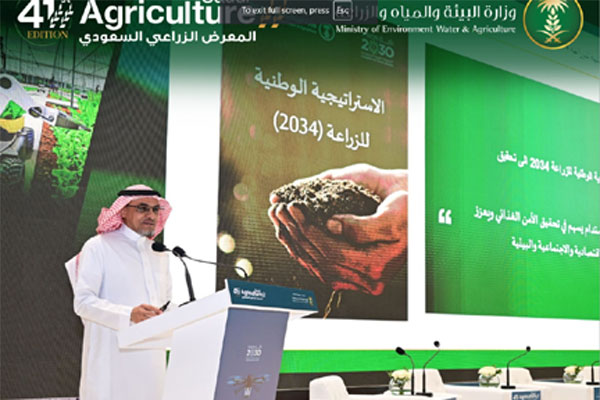
41st Saudi Agricultural Exhibition in Riyadh, the ministry emphasized the importance of the private sector in driving economic growth and sustainability.
Dr. Sulaiman Al Khateeb, Assistant Deputy Minister for Agriculture, led the panel discussion on
Vision 2030and the
National Food Strategy.
He highlighted that private investments are crucial for achieving food security, economic development, and environmental sustainability. The ministry is also focusing on
cold chain infrastructure to improve the transportation of agricultural products and establishing
marketing centers throughout the kingdom.
“These investments will drive economic growth, increase agricultural output, and strengthen food security while advancing sustainability goals in line with Vision 2030,” said Dr. Al Khateeb.
Dr. Sulaiman Al Khateeb, Assistant Deputy Minister for Agriculture
To further support these projects, the ministry has introduced a variety of
incentives and
enablers aimed at enhancing the sector’s efficiency and attracting more private capital. These include:
- Agricultural loans through the Agricultural Development Fund.
- Promotion of modern agricultural technologies.
- Affordable land leases for investors.
- Streamlining of licensing procedures for agricultural projects.
- Offering technical and advisory support to farmers.
These initiatives align with the
National Agriculture Strategy 2034, which focuses on
natural resource sustainability, innovation, pest prevention, and fostering a thriving agricultural community.
With the government’s strong backing and private sector investments, Saudi Arabia is advancing toward its
Vision 2030 goal of achieving a sustainable and self-reliant agricultural sector.
Key Impact Points: $9.8 Billion in Investments: Saudi Arabia attracts significant private sector investments to enhance its agriculture and food sectors.

esgnews.com
KSA is one of the few countries in the region that can grow most of the world's crops (fruits, vegetables, cereal/grain, legume/pulse, oilseed crops, spices, coffee, tea) locally.
Including tropical fruits like mangoes, papayas, bananas, figs, guavas, pineapples, starfruit etc.


 www.thearabweekly.com

 www.upstreamonline.com
 oilprice.com

:max_bytes(150000):strip_icc()/GettyImages-1323151704-53b2c793e93f4e4988a4002c955f48c0.jpg)