Saudi Arabia strategic Projects: news, discussions & updates

Next page:

Saudi Aramco’s $100 billion Jafurah shale gas project begins production​


Aramco CEO Amin Nasser has called Jafurah a crown jewel in the company’s portfolio.

RIYADH

The first phase of oil giant Aramco’s Jafurah gas plant is complete and production has begun with a capacity of 450 million cubic feet per day, the Saudi finance ministry said on Tuesday.

In its 2026 budget statement, the ministry listed the milestone as an achievement reached in 2025.

Jafurah is potentially the biggest shale gas project outside the US and is expected to reach sustainable production of two billion cubic feet per day by 2030.

Aramco CEO Amin Nasser, who has called Jafurah a crown jewel in the company’s portfolio, said during an earnings call last month the first phase was on track for completion by the end of this year.

Aramco earlier this year raised $11 billion from a lease and leaseback agreement of its Jafurah gas processing facilities with a consortium led by Global Infrastructure Partners, part of BlackRock.

The $100 billion Jafurah project, estimated to contain 229 trillion standard cubic feet of raw gas, is central to Aramco’s ambitions to become a major global player in natural gas and boost its gas production capacity.

Its output will help free up crude for export that is currently used for domestic power generation.


Aramco's Jafurah gas plant begins output, Saudi finance ministry says​

By Reuters

December 3, 2025 3:05 PM GMT+1 Updated December 3, 2025

View attachment 163556
FILE PHOTO: The Saudi Aramco logo is pictured at Hyvolution exhibition in Paris, France, February 1, 2024. REUTERS/Benoit Tessier/File Photo Purchase Licensing Rights

DUBAI, Dec 2 (Reuters) - The first phase of oil giant Aramco's (2222.SE), opens new tab Jafurah gas plant is complete and production has begun with a capacity of 450 million cubic feet per day, the Saudi finance ministry said on Tuesday.
J
afurah is potentially the biggest shale gas project outside the U.S. and is expected to reach sustainable production of 2 billion cubic feet per day by 2030. The finance ministry, in its 2026 budget statement, listed the milestone as an achievement reached in 2025.

Jafurah's gas output will be used for domestic power generation, freeing up crude for export that is currently used for power in the kingdom. Aramco has said its unconventional gas programme at peak production is expected to generate electricity equivalent to displacing 500,000 barrels per day of oil.

The $100 billion Jafurah project, estimated to contain 229 trillion standard cubic feet of raw gas, is central to Aramco's ambitions to become a major global player in natural gas and boost its gas production capacity.

Aramco's gas production was 12.6 billion cubic feet per day at the end of September, up from 12 bcfd a year earlier. Aramco last month said it was boosting its gas growth target to 80% above 2021 levels from a previous targeted growth of 60%. In its 2021 annual report, Aramco said it reached a single-day record gas output at the time of 10.8 bcfd.

Aramco CEO Amin Nasser, who has called Jafurah a crown jewel in the company's portfolio, said during an earnings call last month the first phase was on track for completion by the end of this year.

Aramco earlier this year raised $11 billion from a lease and leaseback agreement of its Jafurah gas processing facilities with a consortium led by Global Infrastructure Partners, part of BlackRock (BLK.N), opens new tab.

Aramco declined to comment.


Saudi Arabia kicks off gas production from $100 billion-plus megaproject​

Aramco carrying out phased development of $100 billion-plus Jafurah project

View attachment 163557Aramco chief executive Amin Nasser.Photo: AFP/SCANPIX


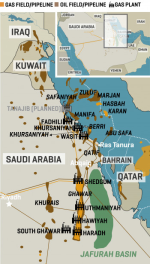
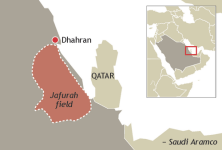
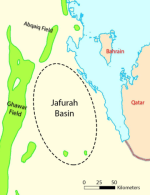
Location:

1767537126482.png

1767537145619.png

1767537164151.png

With the EU banning Russian gas at the latest by the end of 2027, KSA will definitely replace some of the Russian gas to EU. The surplus that is not used for local consumption.

Even though KSA has some of the largest gas reserves on the planet, with much exploration yet to be done and new gas findings being found on an yearly basis, KSA has only used gas for local energy consumption.

With the growth of local renewables (solar, wind, hydropower) which is some of the cheapest in the world, if not the cheapest, there should be a lot of room for exporting LNG, CNG and HGL's.

Saudi Arabia Awards Five Renewables Projects Worth $2.4 Billion​

By Charles Kennedy - Oct 28, 2025, 11:30 AM CDT

Saudi Arabia has awarded one wind power and four solar power projects in the country worth a total estimated investment of $2.4 billion (9 billion Saudi riyals), the official Saudi Press Agency reports.

Saudi Power Procurement Company, the principal buyer of the projects, awarded the five projects with a total capacity of 4.5 gigawatts (GW), as part of the sixth phase of the Kingdom’s National Renewable Energy Program.

Saudi Arabia, the world’s biggest crude oil exporter, aims to hike the share of renewable electricity generation as part of its Vision 2030 economic development program.

The Kingdom’s National Renewable Energy Program is aimed at diversifying the energy mix used in electricity production by increasing the shares of gas and renewables in it.

“The kingdom aims at have the energy mix that is optimal, most efficient, and least costly, by replacing liquid fuel with natural gas, in addition to renewables, which are going to make up around 50% of the energy mix used to produce electricity by 2030,” the Energy Ministry says.

Of course, replacing liquid fuels and direct crude burn with wind and solar electricity would help Saudi Arabia free up more crude oil for exports, the pillar of its economy and budget revenues.

In the latest $2.4-billion renewable energy tender, Saudi Power Procurement Company awarded a project for the Dawadmi Wind IPP Plant in the province of Riyadh with a capacity of 1.5 GW. The winning bid from a consortium comprising Korea Electric Power Corporation (KEPCO), Nesma Renewable Energy Company Ltd, and Etihad Water and Electricity Company, has a levelized cost of electricity (LCOE) of 1.33803 U.S. cents per kWh. This is a new world record for the lowest LCOE of wind power generation, Saudi Arabia says.

The 1.4-GW Najran Solar Energy Project in the Najran region will be developed in partnership with Abu Dhabi Future Energy Company (Masdar), with an LCOE of 1.09682 U.S cents per kWh. This is the second-lowest in the world for the cost of electricity generation from solar energy, following the Shuaiba 1 Project, which is also located in the Kingdom.

Saudi Arabia expects its total tendered renewable energy generation capacity to reach 64 GW by the end of 2025.

By Charles Kennedy for Oilprice.com


To view this content we will need your consent to set third party cookies.
For more detailed information, see our cookies page.


The largest solar energy projects in the world, the Shuaibah Station in Makkah Al-Mukarramah:
* More than 5 million solar panels.
* Production of 2600 megawatts.
* The location with the most radiation throughout the year.
* Project area of 55 square kilometers.

This is one of the fruits of our blessed vision #رؤية_السعودية_2030 (Saudi Vision 2030) led by our inspiring prince #محمد_بن_سلمان (MbS)

A little reminder why KSA could/should be a world leader in renewables.
 

Saudi Arabia’s AMAK claims finding 11 million tonnes of gold, other mineral resources​

AMAK has drilled more than 27,000 meters as part of an intensive programme that began in February 2025.

Sakina Fatima Follow on Twitter| Published: 30th November 2025 9:18 pm IST| Updated: 30th November 2025 10:03 pm IST

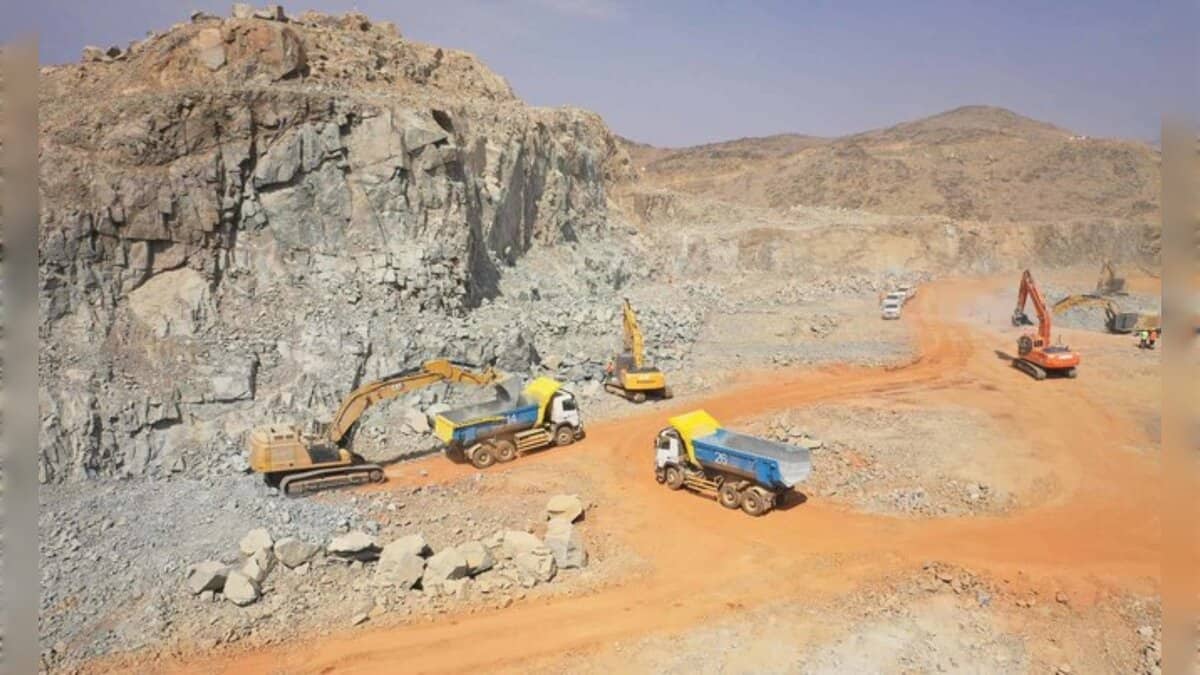
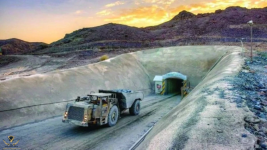
Aerial view of heavy machinery and trucks operating at a mining site in a rocky desert area in Saudi Arabia

Heavy machinery and trucks operate at a mining site in Saudi Arabia’s Najran region. Photo: AMAK/X

Almasane Alkobra Mining Company (AMAK), one of Saudi Arabia’s leading mining operators, has claimed the identification of around 11 million tonnes of potential economic mineral resources within one of its exploration licences in the Najran region.

The resources include gold, copper, zinc and silver ores, according to a disclosure published on Saudi Stock Exchange (Tadawul) website and an update shared on the official LinkedIn page.

Source: Saudi Stock Exchange

AMAK began exploration immediately after receiving the licence in September 2024. An intensive drilling programme launched in February 2025 has covered less than 10 percent of the licensed area so far, with more than 27,000 metres drilled. The company said early assessments indicate strong potential for additional resources as exploration continues.

In an interview with Al Arabiya Business, Chief Executive Officer (CEO) Jeffrey MacDonald-Day said the discovery aligns with AMAK’s long-term strategy to expand its contribution to the Kingdom’s mining sector.

He continued,“We have started exploring a small part of these resources, and this confirms that the resources will continue to increase to reach about 20 million tonnes. This also confirms our investment plan and gives sustainability to our operations in the near and distant future as well.”

To view this content we will need your consent to set third party cookies.
For more detailed information, see our cookies page.


MacDonald-Day added that the expected growth in resources will lead to increased company investment and expansion of AMAK’s factories to significantly boost production. He noted that only 10 percent of the licensed area has been excavated, highlighting substantial opportunities to advance development work and uncover additional mineral resources.

The exploration site lies roughly 100 kilometres from AMAK’s existing processing complex, a distance the company says will enhance future operational efficiency through shared infrastructure.

These developments come as the global mining industry faces mounting pressure from rising costs, commodity price volatility, and stricter environmental and regulatory demands. According to an S&P report, Saudi Arabia is bucking the international slowdown by positioning mining as a central pillar of Vision 2030, continuing to accelerate sector growth despite challenges affecting other markets.

New gold exploitation licence​

In a statement on Sunday, November 30, AMAK also announced that it has been granted a 10-year mining exploitation licence for the Katina site in Najran by the Ministry of Industry and Mineral Resources.

The licence covers 9.84 square kilometres and focuses on the extraction of gold ore—an expansion AMAK says reinforces its growth strategy and supports the momentum of Saudi Arabia’s rapidly developing mining sector.

Next steps​

Further geophysical surveys and additional drilling are planned throughout 2026, with a JORC-compliant mineral resources report expected in the second half of the year. AMAK has also begun studies to convert the exploration licence into a mining licence, with findings due next year.

Established in 2008 and listed on Tadawul, AMAK is licensed by the Ministry of Industry and Mineral Resources and is regarded as one of Saudi Arabia’s key players in the mining sector.


Absolutely amazing but not that surprising.

Just a little reminder:

1767537183010.png


And this part of Western KSA/Hijaz/Western Arabian Shield is one of the richest areas in the world in terms of mineral wealth.

To view this content we will need your consent to set third party cookies.
For more detailed information, see our cookies page.


In fact one of the oldest recorded gold mines in the world was/is located in Hijaz. Operating for over 5.000 years.


To view this content we will need your consent to set third party cookies.
For more detailed information, see our cookies page.
 
To view this content we will need your consent to set third party cookies.
For more detailed information, see our cookies page.


To view this content we will need your consent to set third party cookies.
For more detailed information, see our cookies page.


To view this content we will need your consent to set third party cookies.
For more detailed information, see our cookies page.


Some interesting reports about gold mines and mines in KSA, among them the famous and ancient Mahd Al-Dhahab mine that I briefly mentioned earlier. Run by the state mining company Maaden.


To view this content we will need your consent to set third party cookies.
For more detailed information, see our cookies page.


To view this content we will need your consent to set third party cookies.
For more detailed information, see our cookies page.


The entire Arabian Shield in Hijaz and Western KSA is literally a gold mine.

But it is a challenging geography to mine in given the size and overall geography which varies from enormous volcanic areas the size of Missouri (some of the largest and highest concentration of volcanoes in the world), mountains (most of the territory), 1000's of valleys, desert etc.

1764858661441.png


1764858720265.png


1764858741925.png


1764858755030.png


1764858858656.png


1764858822199.png


It is not cheap to build the required infrastructure etc. and some areas are quite isolated to put it mildly.
 

Saudi Arabia to build 1,000 rainwater harvesting dams with 4 million m³ annual capacity​

July 30, 2025

Minister of Environment, Water and Agriculture Abdulrahman Al-Fadley speaking at the press confrence in Riyadh on Wednesday.


Minister of Environment, Water and Agriculture Abdulrahman Al-Fadley speaking at the press confrence in Riyadh on Wednesday.

Saudi Gazette report


RIYADH —
Saudi Arabia has made major strides in environmental conservation, water sustainability, and food security as part of its Vision 2030 goals, according to Minister of Environment, Water and Agriculture Abdulrahman Al-Fadley.

In a press briefing on Wednesday, Al-Fadley highlighted the implementation progress of the National Environment Strategy, including the establishment of five specialized environmental centers and the region’s largest environmental fund to support green initiatives.

The Kingdom has introduced new regulatory frameworks for environmental protection, meteorology, and waste management, two of which are being implemented for the first time in Saudi Arabia.

Under the Saudi Green Initiative, over 500,000 hectares of degraded land have been rehabilitated and 151 million trees planted.

The target is to restore 2.5 million hectares and plant over 215 million trees by 2030. Ultimately, the Kingdom aims to plant 10 billion trees across 40 million hectares.

The number of national parks has surged from 18 to 500, while protected terrestrial areas now cover 18% of the Kingdom’s territory, a fourfold increase.

Marine protected areas have grown by 260% since 2016. Over 8,000 endangered species have been reintroduced into their natural habitats.

In enforcement, more than 40,000 environmental permits have been issued, a 660% increase since the creation of the National Center for Environmental Compliance.

More than 173,000 inspections were carried out, and 456 licenses were granted to environmental service providers.

Air quality monitoring has also expanded, with 240 stations operating across the Kingdom. The ministry launched a national marine monitoring program and bolstered its capacity to respond to oil spills.

Meteorological services now cover 100% of Saudi Arabia, aided by advanced sensing and prediction systems.

The cloud-seeding program, led by skilled Saudi pilots using cutting-edge aircraft, has conducted over 711 sorties, increasing rainfall by 6.4 million cubic meters to support water resources and vegetation.

The Kingdom also launched two pioneering centers, the Regional Center for Climate Change Studies, the first of its kind in the Middle East, and the Regional Center for Sand and Dust Storms, one of only four worldwide
.

Saudi Arabia has developed 21 strategic city-level waste management plans and identified more than 330 investment opportunities worth SR450 billion. The goal is to divert 90% of waste from landfills by 2040. A suite of incentives, grants, and a new environmental fund has been launched to support private sector innovation and academic partnerships.

Al-Fadley announced that the UN Water Conference has named Saudi Arabia a global model for sustainable water practices, with significant progress under Sustainable Development Goal 6.

Completed water projects now exceed SR230 billion in value, including SR10 billion in public infrastructure and over SR45 billion through private sector collaboration. The developments cover water production, transport pipelines, storage facilities, and wastewater treatment.

Since 2016, water production has doubled to 16.6 million cubic meters per day — 75% of which is desalinated seawater — making the Kingdom the world’s top producer of desalinated water. Strategic water storage capacity has increased by 600%, with the average supply coverage rising from one to three days in most cities.

Efforts to reduce energy use have halved electricity consumption in the sector compared to 2016. The Kingdom now delivers water to more than 22,000 population centers, reaching elevations up to 3,000 meters through an 18,000-kilometer pipeline network.

Reused water volume has risen from 251 million to 550 million cubic meters, now representing 32% of total usage. Saudi Arabia is building 1,000 rainwater harvesting dams with an annual capacity of 4 million cubic meters.

With over 65% local content in the water sector and 97% of engineering roles held by Saudi nationals, the Kingdom is increasingly self-reliant. The National Center for Water Efficiency and Conservation has saved 120,000 cubic meters daily and aims to reach 300,000 soon.

Agricultural GDP reached SR118 billion, up 8% from last year and 39% from 2020. Food production rose to 12 million tons due to supportive policies and Saudi Agricultural Development Fund initiatives.

The Kingdom has achieved full self-sufficiency in dates, milk, and eggs, and between 70%–100% in various vegetables and over 70% in poultry. Exports of fish and shrimp have expanded, along with global competitiveness in select agricultural sectors.

Saudi Arabia remains the world’s top date exporter. The General Food Security Authority ensures the availability of 11 key staples, with an early warning system for essential goods to be launched soon.


Al-Fadley also praised the role of the Saudi Agricultural and Livestock Investment Company (SALIC), which supplies 30% of the Kingdom’s wheat imports through overseas projects.


Saudi Arabia protects rare marine ecosystems with 2 new reserves

Saudi Arabia protects rare marine ecosystems with 2 new reserves


1 / 3
The blue holes are ecological systems and natural formations that are rich in biodiversity and marine life, including turtles, fish, marine mammals, and invertebrates. (Supplied/NCW)
Saudi Arabia protects rare marine ecosystems with 2 new reserves


2 / 3
The Red Sea is known for its high salinity and warm temperatures, making it a haven for marine biodiversity. (Supplied/NCW)
Saudi Arabia protects rare marine ecosystems with 2 new reserves


3 / 3
The Council of Ministers of Saudi Arabia has announced the inclusion of Ras Hatiba and the Blue Holes marine reserves in the list of national reserves in the Kingdom. (Supplied/NCW)

Updated 19 sec ago
ARAB NEWS
November 12, 2025

  • Aim to protect 30% of Saudi by 2030
  • Unique biodiversity and tourism value
RIYADH: Saudi Arabia’s Council of Ministers has included the Ras Hatiba and Blue Holes marine areas on the Kingdom’s national list of reserves, the Saudi Press Agency reported recently.

The move reflects Saudi Arabia’s commitment to protecting biodiversity and advancing sustainable development goals under Vision 2030, the SPA reported.

Mohammed Qurban, CEO of the National Center for Wildlife, said the decision followed extensive biological, natural, and social studies confirming the two reserves’ unique biodiversity, and economic and tourism value.

Located northwest of Jeddah, Ras Hatiba covers 5,715 sq. km and features coral reefs, mangroves, and seagrass beds — key habitats for green turtles, dugongs, whales, dolphins, and sharks.

The Blue Holes areas are rich in marine life, including turtles, fish, mammals, and invertebrates. Their discovery was first announced in 2022 after 20 such formations were found along the southern Red Sea coast.


With the addition of these two protected areas, the Kingdom’s nature reserves now cover 16.1 percent of its territory, up from 6.5 percent, and moving closer to the national goal of 30 percent by 2030.

ocal agriculture booming:


Achieving Self-Sufficiency in Key Food Products:
Vision 2030 aims to achieve high levels of self-sufficiency in dairy, eggs, and other essential commodities by 2030, ensuring that local production meets 100% of domestic demand. This goal has already been surpassed for dairy and eggs, with production exceeding 100% of local needs. Targets also include gradually achieving full self-sufficiency in poultry and seafood production over the coming years.

Increasing the Agriculture Sector’s Contribution to the Economy:
Vision 2030 seeks to raise the agriculture sector’s contribution to the Kingdom’s GDP and enhance its role in diversifying the non-oil economy. The goal is to double agricultural output by 2030 compared to the early years of the Vision. Notably, Saudi Arabia’s agricultural GDP reached approximately SAR 114 billion in 2024, setting a record and surpassing interim expectations.

Enhancing Food Security and Reducing Waste:
The Vision aims to ensure the availability and price stability of food supplies across the Kingdom, while reducing food loss and waste by around 50% by 2030. Currently, food waste is estimated at more than 33% of total food, costing around SAR 40 billion annually. National programs aim to cut this rate to approximately 15% through awareness campaigns and supply chain improvements. The Vision also targets improving Saudi Arabia’s ranking in the Global Food Security Index.

Global Leadership in Select Agricultural Products:
The Kingdom seeks to enhance its global competitiveness in the export of Saudi food products. For example, Saudi Arabia maintains a leading position in the global date sector, aiming to preserve its leadership in both production and exports. Additionally, broader goals include raising the overall value of food exports, with initiatives like the Jeddah Food Cluster aiming to contribute SAR 8 billion annually to national exports over the next decade.

Sustainable Agricultural Development and Resource Protection:
Vision 2030 emphasizes the sustainable use of natural resources in agriculture by improving water efficiency for irrigation and expanding the use of modern agricultural technologies, such as smart and vertical farming, to boost productivity without depleting resources. The Vision also includes plans to enhance vegetation cover and combat desertification under the Saudi Green Initiative, with a long-term goal of planting 10 billion trees and rehabilitating degraded lands to increase arable areas.

Summary of Achievements and Opportunities in the Food and Agriculture Sector (2024)

The Saudi food and agriculture sector achieved remarkable milestones in 2024 on its path toward Vision 2030.
The sector’s contribution to GDP reached a historic record of SAR 114 billion, reflecting the growing economic significance of agriculture in the Kingdom.

Saudi Arabia has achieved unprecedented levels of food self-sufficiency. Local dairy production covers 109% of domestic demand, while egg production meets 116% — meaning the Kingdom produces a surplus available for export. Other key products also witnessed significant improvements: poultry self-sufficiency increased to 60% (up from 40% in 2016), and seafood self-sufficiency reached approximately 55% of local demand.

In terms of food quality and health, Saudi Arabia made major strides, ranking among the top five countries globally for the absence of harmful trans fats in its food products.
This achievement reflects the success of Saudi regulatory bodies (such as the Saudi Food and Drug Authority) in raising food safety standards and improving product quality.

On the environmental sustainability front, more than 115 million trees have been planted across the Kingdom by the end of 2024 as part of the Saudi Green Initiative. These efforts have contributed to the rehabilitation of 118,000 hectares of degraded land and enriched the Kingdom’s biodiversity, including the reintroduction of over 7,800 endangered animals into their natural habitats.
These initiatives not only enhance the environment and climate resilience but also support agriculture by preserving soil health and improving water resources in the long term.

In sustainable water solutions, 2024 saw the launch of the world’s first solar-powered desalination plant in Saudi Arabia, providing a new, eco-friendly water source for irrigation and agricultural use at reduced costs.

Collectively, these outstanding achievements in food production, food safety, and environmental sustainability demonstrate the Kingdom’s rapid progress toward realizing the Vision 2030 goals for this sector.

Investment Opportunities and Entrepreneurial Prospects in the Food and Agriculture Sector

The Saudi food and agriculture sector is witnessing strong momentum, making it an attractive destination for local and international entrepreneurs and investors.
Several initiatives have been launched to stimulate investment and maximize value in this vital sector.

One major development is the establishment of the Jeddah Food Cluster in 2024, the largest food industrial cluster in the region, aimed at advancing food manufacturing, expanding production and storage capacities, and attracting SAR 20 billion in private sector investments.
This ambitious project is expected to boost national food exports by around SAR 8 billion annually and generate an estimated SAR 7 billion contribution to GDP over the next decade.
It represents a cornerstone opportunity for scaling local food production and positioning Saudi Arabia as a regional leader in food industries, opening up new horizons for Saudi companies and international partnerships.

Additionally, the Saudi agricultural sector is attracting global agricultural technology companies seeking to invest and transfer knowledge. In 2024, leading international companies from Europe and Asia opened regional offices in Saudi Arabia. Companies from countries such as the Netherlands, Spain, and China are now providing advanced technology solutions in smart farming and water conservation.

This international presence offers Saudi farmers and entrepreneurs a golden opportunity to collaborate, benefit from global expertise, and adopt cutting-edge agricultural innovations — including advanced aquaculture systems, high-tech greenhouses, and smart irrigation solutions using remote sensing technologies.

Investors also benefit from supportive government financing programs (such as loans from the Agricultural Development Fund) and national strategies like the Sustainable Agricultural Rural Development Program, which provides incentives for expanding organic and livestock food production projects.

Collectively, these developments are shaping a dynamic, rapidly evolving sector that combines economic growth with sustainability, offering wide-ranging opportunities for innovation, partnerships, and ensuring the Kingdom’s food security for the future.


Saudi Arabia’s agriculture: growth, self-sufficiency & agri-tech​


by Haitham AbuGhazaleh
Strategic Account Manager, Agri, Food & Nutrition
Growth Advisory, Frost & Sullivan

by Jad Haj Chahine
Senior Consultant, Agri, Food & Nutrition Growth
Advisory, Frost & Sullivan

Saudi Arabia remains the largest agricultural market in the GCC region, with the gross production value projected to amount to USD 15.98 bn in 2025 and USD 17.68 bn in 2029 (Statista). Agriculture accounted for 4.3% of non-oil GDP in 2023, employing approximately 350,000 people, leading the government to invest USD 24 billion in environment, water, and agriculture to enhance self-sufficiency and reduce reliance on imports.

Currently, the import value in agriculture market is projected to amount to US$11.1bn in 2025 with a CAGR of 5% till 2029. With the Vision 2030 initiative, the government is prioritizing agricultural sustainability and food security, leading to increased funding and support for local farmers.

In terms of the end use industries of agriculture, Saudi Arabia’s food retail sales were estimated at more than $51 billion in 2023 (CAGR 5%) and foodservices around USD 29 Bn (CAGR 10%) as per USDA estimates, largely driven by population growth, rapid urbanization, and changing consumer shopping habits.

However, the sector faces arid climatic conditions and water constraints, with only 1.5% of land being arable and agriculture consuming 80% of the country’s water supply ranking 8th globally in water scarcity, with non-renewable groundwater use in agriculture dropping from 19 million m³ in 2015 to 10 million m³ in 2022. (MEWA, Innovation in the Agriculture Sector in KSA, 2023).

Self-sufficiency progress & vision 2030

Saudi Arabia is making significant strides in food security, achieving high self-sufficiency levels in key agricultural products in 2024: (GASTAT, Self-Sufficiency).

• Dairy Products: 129% self-sufficiency, with a target of 150% by 2030.

• Dates: 119% self-sufficiency, targeted to reach 150% by 2030.

• Table Eggs: 100% self-sufficiency, expected to increase to 150%.

• Poultry Meat: 71% self-sufficiency, with a goal of 100%.

• Red Meat: 61% self-sufficiency, targeted to reach 100%.

• Fish: 48% self-sufficiency, set to reach 70%.

• Tomatoes: 76% self-sufficiency, with a goal of 100% by 2030.

• Onions: 51% self-sufficiency, targeted for 80% by 2030.

The government’s strategic interventions aim to increase local agricultural production by 60% and plant 14 million trees by 2030 with commitment to restoring 1.6 million hectares through the Saudi Green Initiative (SGI).

The role of agri-tech in transforming saudi agriculture: key priority technologies

To overcome water scarcity and optimize production, Saudi Arabia is aggressively adopting Agri-Tech innovations as a first wave of implementation in 2025:

Irrigation and Water Management: Drip irrigation, smart irrigation systems, and advanced irrigation technologies.

• Integrated Aquaculture Farm Management: Sustainable aquaculture with expected growth from 0.14 MMT in 2022 to 0.5 MMT by 2030.

• Protected Agriculture & Controlled Environment: Greenhouses, hydroponics, aeroponics, and vertical farming.

• Food Preservation & Waste Valorization: Smart packaging, edible coatings, anaerobic digestion, and composting.

Unmanned Aerial Vehicles (Drones) & Satellite Imagery: Crop monitoring, soil analysis, and precision spraying. (KSA Agriculture Innovation Roadmap, MEWA).

Major government initiatives & investments

The Government is implementing multi-billion-dollar initiatives to boost food security and agricultural sustainability:

• USD 9.8 Billion in Private Investments: The Ministry of Environment, Water, and Agriculture has secured SAR 37 billion (approximately USD 9.8 billion) in private investments to advance the Kingdom’s agriculture and food sectors, focusing on crop production, livestock, fisheries, and infrastructure development (ESG News, KSA investment in Sustainable Agriculture Projects, 2024)

Saudi Agri-Food Tech Alliance: Aims to foster innovation and public-private partnerships for agricultural technology development.

Strategic Acquisitions: The Saudi Agricultural & Livestock Investment Company (SALIC) acquired Olam Agri for USD 1.78 billion, securing access to global grain and food supply chains.

Agricultural Development Fund (ADF): Provides low-interest loans and financial incentives to farmers and Agri-Tech startups.

Outlook: a path toward sustainable agriculture

Saudi Arabia is rapidly advancing towards its Vision 2030 goals, positioning itself as a regional leader in food security and AgriTech innovation. With strong government support, foreign investments, and cutting edge Agri-Tech adoption, the Kingdom is set to achieve greater self-sufficiency, reduce import dependency, and lead the GCC in sustainable agriculture.


1767537938495.png

Download the Agricultural Sector Market Report in Saudi Arabia (PDF) here.
There is no doubt that the agricultural sector in Saudi Arabia is a fundamental pillar of the national economy, not only due to its direct contribution to the GDP but also as a key driver of the food value chain. It provides raw materials and production inputs for more than 1,000 food and beverage factories, representing about 14% of all factories in the Kingdom, reflecting the strong organic link between agriculture and the food industry. Over time, this sector has shifted from traditional production methods to a modern model based on innovation, resource optimization, and advanced technologies.

Saudi Arabia’s Vision 2030 has played a pivotal role in driving this transformation, through programs supporting local production, diversifying income sources, and enhancing food security. The adoption of the National Environment and Water Strategy, alongside the Food Security Strategy, has established a comprehensive framework that balances agricultural development with sustainable natural resource management, particularly amid increasing climate challenges. As a result, the agricultural sector in Saudi Arabia is no longer just a source of food but a cornerstone of economic and social stability, and a central element in building a sustainable knowledge-based national economy.

The agricultural sector in Saudi Arabia possesses unique competitive advantages, including advanced infrastructure, geographic and climatic diversity that allows year-round agricultural production, and increasing reliance on modern technologies that enhance production efficiency and open wide investment and export opportunities, such as:

  • High capacity for self-sufficiency in key products, notably dates, dairy, and table eggs.
  • An integrated logistics network of roads, ports, and airports that ensures efficient internal and external transportation and distribution.
  • Climatic and geographic diversity enabling the cultivation of various crops year-round, enhancing sector flexibility and competitiveness in local and international markets.
  • Strategic regional diversity, such as Al-Qassim’s fertile soils and water abundance, making it a leading agricultural hub.
  • Hail region as a center for high-quality grains and fruits, reinforcing its position in the national agricultural landscape.
  • Medina’s global recognition for dates, particularly “Ajwa,” marking a signature of Saudi agricultural quality.
  • Jazan’s contribution to agricultural diversity with tropical fruits like mango and banana, as well as coffee cultivation.
  • The Eastern Province’s rich production of dates and citrus, supporting local supply chains and food availability.
This harmonious geographic distribution provides a clear comparative advantage for each region, supporting national food security and creating specialized investment opportunities aligned with each production environment.

The agricultural sector is a vital economic pillar, contributing 2.5% of GDP, with a value exceeding SAR 117 billion in 2024. Beyond direct contribution, it forms the backbone of the country’s food value chains, supplying roughly 1,000 food and beverage factories (over 14% of total factories) with essential inputs. This strategic integration between agriculture, industry, and trade stimulates growth across multiple economic sectors. The sector also diversifies national income sources, reduces the non-oil trade deficit, generates employment, and supports rural development, with over 300,000 small farmers depending on it as a primary source of income. The close link between economic and social dimensions underscores agriculture as a key developmental lever, driving Saudi Arabia toward a more diversified, sustainable, and inclusive economy.

The agricultural sector is advancing confidently to become a cornerstone for economic diversification and food security, with strategies focused on sustainability and production efficiency. Expansion in modern technologies such as hydroponics, vertical farming, and greenhouses has already increased production capacity to over 11 million tons annually while reducing water consumption by up to 98% through smart irrigation systems.

The rapid shift toward organic farming, specialized agricultural cities, and converting waste into fertilizers opens new avenues for value addition, enhancing competitiveness locally and globally, making Saudi Arabia a model for smart and sustainable agriculture.

  • Population: ~35.3 million, with an annual growth rate of 3.3%, generating sustained demand for agricultural products.
  • Total land area: 2.15 million km² across 13 administrative regions, offering unique geographic and climatic diversity for smart and sustainable farming.
  • Contribution to GDP: SAR 117.9 billion (2.5% of the economy), reflecting its strategic role in economic diversification.
  • Annual growth: 5.2%, with agricultural exports exceeding SAR 3.1 billion.
  • Production achievements: ~392.3 thousand tons of open-field tomatoes, ~313.5 thousand tons of onions, 10.7 thousand tons of bell peppers.
  • Total open-field production: >2.5 million tons; modern technologies including greenhouses and hydroponics raised total agricultural production to over 11 million tons.
Read here: Fish Farming Project – A Promising Investment Opportunity in 2025

  1. Aquaculture Projects in Inland Waters: Strategic investment to boost marine protein production, supported by government funding, engineering studies, technical guidance, and sustainable aquaculture practices.
  2. Organic and Sustainable Farming: Saudi Arabia has 23.3 thousand hectares of certified organic land, producing 95.3 thousand tons. Government incentives, regulations, inspection systems, and research centers support growth aligned with Vision 2030 goals.
  3. Dates and Palm Products Export: Saudi date production reaches ~1.9 million tons, achieving 119% self-sufficiency. Value-added chains from cultivation to processing and export enhance global presence and economic returns.
  4. Organic Fertilizer Production: Transforming natural waste into organic fertilizers supports organic farming, reduces reliance on chemical fertilizers, and aligns with environmental sustainability and food security goals.
  5. Greenhouses: Provide controlled environments for year-round crop cultivation, increase water use efficiency, improve productivity and quality, and enhance local supply and export capacity.
Read here: Discover the 7 Most Profitable Agricultural Projects

Read here: Why Mushroom Farming is One of the Most Successful Agricultural Projects in 2025

For more agricultural production investment opportunities, click here.

  • Infrastructure Development: In 2024, opportunities for specialized agricultural cities were launched, covering 4.5 million m², alongside 48 agreements for inland aquaculture farms, with technical studies and financing support.
  • Farmer Support and Financing: Programs via the Agricultural Development Fund, provision of equipped lands, irrigation resources, and partnerships with private and cooperative sectors.
  • Digital and Technological Transformation: Smart solutions like “Your Agricultural Guide” app and “Nama AI” for pest monitoring, alongside global partnerships for cloud computing and AI implementation.
  • Sustainable Agriculture and Resource Management: Initiatives such as algae-based local feed production, and regulated land distribution, ensuring sustainable farming and water resource protection.
  • Food Security and Local Production Expansion: Planting wheat, seasonal fodder, and diversified crops via the “Reef” program; open-field vegetable production exceeded 2.5 million tons; rehabilitation of large areas with millions of fruit trees.
  • Water Efficiency and Smart Irrigation: Drip and smart irrigation systems and intelligent water management reduce waste, increase productivity, and secure long-term agricultural growth.

Saudi Arabia Secures $9.8B in Private Investments for Sustainable Agriculture Projects​

by ESG News • October 24, 2024


Saudi Arabia Secures $9.8B in Private Investments for Sustainable Agriculture Projects


Key Impact Points:

  • $9.8 Billion in Investments: Saudi Arabia attracts significant private sector investments to enhance its agriculture and food sectors.
  • Vision 2030 Alignment: Projects focus on crop production, livestock, fisheries, and infrastructure development to support Saudi Vision 2030.
  • Incentives for Growth: The Ministry of Environment, Water, and Agriculture is offering various incentives, including agricultural loans and modern technology adoption, to boost investment.
Saudi Arabia’s Ministry of Environment, Water, and Agriculture has secured SAR 37 billion ($9.8 billion) in private investments to advance the kingdom’s agriculture and food sectors. These investments cover a wide range of projects, from crop production and livestock to fisheries, processing, and infrastructure development. All initiatives are in alignment with Saudi Vision 2030.

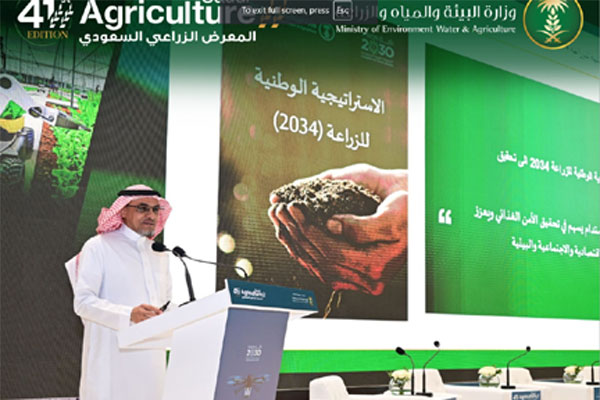
During the 41st Saudi Agricultural Exhibition in Riyadh, the ministry emphasized the importance of the private sector in driving economic growth and sustainability. Dr. Sulaiman Al Khateeb, Assistant Deputy Minister for Agriculture, led the panel discussion on Vision 2030and the National Food Strategy.

He highlighted that private investments are crucial for achieving food security, economic development, and environmental sustainability. The ministry is also focusing on cold chain infrastructure to improve the transportation of agricultural products and establishing marketing centers throughout the kingdom.

These investments will drive economic growth, increase agricultural output, and strengthen food security while advancing sustainability goals in line with Vision 2030,” said Dr. Al Khateeb.
image-50.png

Dr. Sulaiman Al Khateeb, Assistant Deputy Minister for Agriculture

To further support these projects, the ministry has introduced a variety of incentives and enablers aimed at enhancing the sector’s efficiency and attracting more private capital. These include:

  • Agricultural loans through the Agricultural Development Fund.
  • Promotion of modern agricultural technologies.
  • Affordable land leases for investors.
  • Streamlining of licensing procedures for agricultural projects.
  • Offering technical and advisory support to farmers.
These initiatives align with the National Agriculture Strategy 2034, which focuses on natural resource sustainability, innovation, pest prevention, and fostering a thriving agricultural community.

With the government’s strong backing and private sector investments, Saudi Arabia is advancing toward its Vision 2030 goal of achieving a sustainable and self-reliant agricultural sector.


To view this content we will need your consent to set third party cookies.
For more detailed information, see our cookies page.


KSA is one of the few countries in the region that can grow most of the world's crops (fruits, vegetables, cereal/grain, legume/pulse, oilseed crops, spices, coffee, tea) locally.

Including tropical fruits like mangoes, papayas, bananas, figs, guavas, pineapples, starfruit etc.
 

  • November 15, 2025
Saudi Arabia Deepens Its Heritage Story with 1,516 Newly Registered Sites


Saudi Arabia just added 1,516 new archaeological sites to its National Antiquities Register. That brings the total number of documented locations to 11,577, showing how much history still lives beneath the Kingdom’s sand and stone. But numbers alone don’t tell the story. What’s unfolding here is a deeper connection between land, people, and time. Every new site mapped, scanned, and preserved adds another verse to the story of where Arabia began.

Most of these new sites sit in the heart of the Kingdom. Riyadh tops the list with 1,174 discoveries, followed by Al Baha with 184, Tabuk with 85, and the Northern Borders with 70. Even Jeddah, known for its sea breeze, added three. Each region contributes something different like traces of tools, engravings, structures, but together they show how wide and alive Saudi archaeology has become.

These discoveries come from years of surveys, mapping, and collaboration led by the Saudi Heritage Commission. What’s taking shape is a living archive that connects the dots between early human settlements, ancient trade, and the landscapes that once linked tribes and civilizations.

Among the most remarkable discoveries are life-sized rock engravings in the Al Nafud Desert. Scientists date them between 11,400 and 12,800 years old, some of the earliest known rock art in the Kingdom. The carvings show camels, ibexes, horses, and gazelles, captured in motion by artists who lived long before writing existed.

At a time when Arabia’s climate was greener, these carvings likely marked water paths and migration trails. They were messages meant to endure. Standing where those artists once stood, seeing their world through a chisel’s edge, feels like a meeting across time.

Just northwest of Tabuk, archaeologists uncovered an ancient human settlement in Wadi Damm’s Masyoun area. Dating back roughly 10,300 to 11,000 years, it shows early signs of people learning to stay — to build, to plant, to form communities.

Researchers found stone-built homes, storage spaces, fireplaces, and everyday tools. There were arrowheads and grinding stones, ornaments made from quartz and shells, and even traces of food preparation. Each find adds a layer of understanding about how early societies lived and worked. It shows that Saudi Arabia was always a place where life found a way to take root.

Recording these sites is as much about care as it is about discovery. The Heritage Commission now uses digital tools like LiDAR, 3D scanning, and satellite mapping to preserve sites without disturbing them. Every location added to the National Antiquities Register is carefully documented with coordinates, images, and field data to ensure it remains part of the Kingdom’s shared memory.

The Heritage Commission enforces the Antiquities, Museums, and Urban Heritage Law, which safeguards heritage across all regions. Penalties exist to prevent any harm to archaeological sites, showing how deeply Saudi Arabia values its history and cultural legacy.

The most powerful part of this story is how people are becoming involved. Citizens and residents can now report new finds through the Heritage Commission’s online portal or social media. This makes heritage a shared effort, turning discovery into something collective and proud.

The Commission also works with schools and communities, helping young Saudis understand how archaeology connects to their identity. It’s about pride, belonging, and learning how the stories of the past shape the future.

This expansion ties directly into Vision 2030, where heritage is seen as a living part of the economy. The plan aims to grow UNESCO World Heritage sites, strengthen cultural tourism, and create jobs across the heritage sector.

Saudi Arabia already counts eight UNESCO sites, including Al-Hijr, At-Turaif in Diriyah, and the Hail Rock Art region. With each new registration, the Kingdom continues building bridges between ancient civilization and modern development, showing how culture fuels progress.

Behind these achievements stands a network of global partnerships. The Heritage Commission collaborates with King Saud University, the French CNRS, Ghent University, and UNESCO, among others. Their research helps preserve Saudi Arabia’s ancient landscapes while developing new generations of Saudi archaeologists.

Programs like the Heritage Horizon, developed with SOAS University of London, train professionals in archaeology, cultural heritage, and urban preservation. These partnerships strengthen expertise and ensure Saudi archaeology grows with both local insight and global perspective.

The Royal Commission for AlUla continues to lead Saudi archaeology into the future. In the 2025–26 fieldwork season, over 100 researchers are studying ancient villages, inscriptions, and early Islamic settlements across AlUla and Khaybar.

Sites like Dadan, Hegra, and the Khaybar Oasis are helping rewrite what we know about Arabia’s early civilizations. Here, archaeology is a part of the present, not the past.

When 1,516 new archaeological sites are added to the record, it speaks to how deeply Saudi Arabia is exploring its history. Each registration connects the present with how civilizations once built, traded, and thrived across this land.

Quick look at the growth:

  • 8,788 sites documented in 2023
  • 9,317 sites documented in 2024
  • 10,061 sites recorded in June 2025
  • 11,577 sites recorded in October 2025
Saudi Arabia’s archaeological work is only gaining momentum. New surveys are underway, digital mapping is expanding, and training programs are preparing the next generation of researchers. Each discovery adds knowledge, context, and clarity to how the Kingdom evolved.

The work ahead feels steady and purposeful. It reflects a country that values its past as much as its progress. A future built with care for the ground it stands on.

What is the National Antiquities Register in Saudi Arabia?
It’s a digital database managed by the Heritage Commission that records, maps, and protects archaeological sites through advanced technology and field documentation.

Where are the new archaeological sites in Saudi Arabia located?
Most are in the Riyadh region, followed by Al Baha, Tabuk, and the Northern Borders, with a few added in Jeddah.

What are the most important archaeological discoveries in Saudi Arabia this year?
Life-sized rock engravings in the Al Nafud Desert and the ancient human settlement in Wadi Damm are among the most significant finds, offering a glimpse into Arabia’s earliest human history.


  • November 16, 2025
Green Initiative Saudi Arabia: Building a Greener Future for the Kingdom


Saudi Arabia is reshaping how the world views climate action. Through the Green Initiative Saudi Arabia, the Kingdom is tackling environmental challenges head-on, setting clear goals to reduce emissions, plant 10 billion trees, and protect 30 percent of its land and marine areas. It’s a national movement built on science, long-term planning, and genuine commitment to restoring balance between growth and nature.

Launched in 2021 by Crown Prince Mohammed bin Salman, the Saudi Green Initiative (SGI) sits at the heart of Vision 2030. It unites government, private sector, and community efforts to drive real environmental progress. The initiative focuses on three priorities:

  • Lowering carbon emissions
  • Increasing vegetation
  • Conserving biodiversity on land and sea
Across these areas, SGI supports over 80 projects with investments crossing $180 billion. These projects range from renewable energy and tree-planting to wildlife conservation and marine protection. Every goal under the Green Initiative Saudi Arabia aims to make Saudi Arabia a leader in sustainable living across the Middle East.

Saudi Arabia plans to reach net-zero emissions by 2060 through what it calls a Circular Carbon Economy, a model that focuses on reducing, reusing, recycling, and removing emissions. The near-term target is to cut 278 million tons of carbon annually by 2030.

Half of the Kingdom’s electricity will come from renewable energy by 2030. Projects like the Sudair Solar Power Plant, which powers 185,000 homes, and the Dumat Al Jandal Wind Farm, the country’s first utility-scale wind project, are already showing progress. Combined with dozens of solar and wind projects, the total renewable energy capacity under development exceeds 40 GW, which is enough to power millions of homes.

The Green Hydrogen Project in NEOM represents another major step. Once operational, it will produce up to 600 tonnes of carbon-free hydrogen per day, avoiding 5 million tonnes of emissions every year. Alongside this, new carbon capture facilities in Jubail and Uthmaniyah are being built to remove millions of tonnes of CO₂ from the atmosphere annually.

All these efforts place the Green Initiative Saudi Arabia among the world’s leading national programs for clean energy transition.

Perhaps the most symbolic part of the Saudi tree-planting campaign is its scale: 10 billion trees grown across the country. It’s an ambitious goal, but it’s backed by data and careful mapping.

The Ministry of Environment, Water, and Agriculture, together with the National Center for Vegetation Development, studied soil and water conditions across more than a thousand sites. This was done to identify areas suitable for planting with the aim is to rehabilitate about 75 million hectares of land, starting with the restoration of 3.8 million hectares by 2030.

Over 100 million trees and shrubs have already been planted, with degraded land restored to productive ecosystems. Programs like Green Riyadh, which will plant 7.5 million trees in the capital, are transforming urban areas and improving air quality. The results are visible with greener parks, lower urban temperatures, and cleaner air for city residents.

Tree planting also opens new opportunities for work. The Green Initiative Saudi Arabia will create over a million jobs in fields such as forestry, landscaping, and environmental services.

A key goal of the Saudi Arabia biodiversity protection plan is to safeguard 30 percent of the Kingdom’s land and marine zones by 2030. Already, 18 percent of land and 6 percent of marine areas are under protection.

The country now manages nearly 80 protected sites. These include King Salman Royal Nature Reserve, Sharaan Nature Reserve, and the newly listed Uruq Bani Ma’arid World Heritage site. Each of these areas supports endangered species and helps balance fragile ecosystems.

Since 2021, more than 7,000 endangered animals have been reintroduced to the wild, including Arabian oryx, gazelles, and ostriches. The Arabian Leopard Breeding Center in Taif recently welcomed leopard triplets.

The Kingdom’s marine protection programs are also expanding. By 2030, 100 million mangrove trees will be planted along the Red Sea and Arabian Gulf. Over 6 million mangrove seedlings are already in place, restoring shorelines and providing habitats for fish and coral. Coral reef restoration projects near NEOM and KAUST’s Reefscape Initiative at Shushah Island are strengthening Saudi Arabia’s marine biodiversity for generations ahead.

Reducing waste is another pillar of the Green Initiative Saudi Arabia. The Kingdom is building a national system to recycle up to 95 percent of its waste by 2040. The Riyadh Integrated Waste Management Project is leading this shift by recycling construction debris, reusing materials, and turning waste into energy.

The Saudi Investment Recycling Company (SIRC) is driving this transformation, aiming to eliminate the country’s dependence on landfills and create a thriving circular economy. Waste management reforms are expected to contribute $30 billion to GDP by 2040, showing how sustainability can support economic growth.

Transportation and energy use are central to reducing emissions. The Saudi Energy Efficiency Program has already saved over half a million barrels of oil equivalent per day through smarter energy practices in industry, housing, and transport.

Electric mobility is another focus. Riyadh aims for 30 percent of all vehicles to be electric by 2030. Charging networks are expanding in major cities, and logistics companies are adopting electric trucks and vans to decarbonize fleet operations.

The transition is steady and practical, built on real infrastructure, skilled workers, and long-term investment in renewable power to support cleaner transport.

The Middle East Green Initiative, also launched by Saudi Arabia, extends these goals to the wider region. It brings together more than 50 countries to coordinate carbon reduction, tree planting, and land restoration. The regional plan includes 50 billion trees, with 10 billion planted in Saudi Arabia and 40 billion across neighboring countries.

Saudi Arabia has committed $2.5 billion to support these efforts. While also continuing to establish regional hubs for carbon capture, storm monitoring, and sustainable fisheries. The goal is to share solutions that work and help the region face climate challenges together.

The Green Initiative Saudi Arabia is not a slogan. It’s a complete framework that changes how the country manages energy, land, and life itself. It connects every part of society, from engineers building solar plants to communities restoring mangroves along the Red Sea.

Each tree, each solar panel, and each conservation site tells the same story. A country determined to protect what it has and rebuild what it lost.

By 2030, Saudi Arabia aims to generate half of its electricity from renewables, plant hundreds of millions of trees, restore millions of hectares of land, and safeguard its seas and wildlife. By 2060, it seeks to reach net-zero emissions, a milestone that places the Kingdom among the world’s leading climate action nations.

What is the goal of the Green Initiative Saudi Arabia?
The Green Initiative Saudi Arabia aims to make the Kingdom a global leader in environmental sustainability. Its main goals are to reduce carbon emissions. As well as plant 10 billion trees, and protect 30 percent of Saudi Arabia’s land and marine areas by 2030.

How does Saudi Arabia plan to plant 10 billion trees?
The Ministry of Environment, Water, and Agriculture has mapped areas suitable for tree planting based on soil, water, and climate studies. The plan combines modern irrigation systems, seed-scattering techniques, and partnerships with the private sector to restore nearly 75 million hectares of land across Saudi Arabia.

What is Saudi Arabia doing to reduce carbon emissions?
Saudi Arabia is shifting toward renewable energy. It aims for 50 percent of its electricity to come from clean sources by 2030. The Kingdom is also developing carbon capture projects and investing in green hydrogen to achieve net-zero emissions by 2060.

How is Saudi Arabia protecting its marine and coastal environments?
The initiative includes planting 100 million mangrove trees along the coast restoring coral reefs, and establishing new marine protected areas. These efforts help preserve biodiversity and strengthen natural defenses against erosion and rising sea levels.


  • September 15, 2025

Saudi Arabia’s $155B Entertainment Industry Investment: How the Kingdom is Building a Global Creative Powerhouse?

Saudi Arabia’s $155B Entertainment Industry Investment: How the Kingdom is Building a Global Creative Powerhouse?

Saudi Arabia’s ambitions have already ignited a global conversation. Industry reports note that the Kingdom is channeling over $155 billion into its entertainment sector, showcasing the massive scale of this transformation and its pivotal role in shaping the Kingdom’s creative economy.
Saudi Arabia is entering a new era where creativity and culture hold as much weight as commerce and industry. At the center of this shift is a historic $155 billion Saudi Arabia entertainment industry investment, an ambitious plan designed to diversify the economy, take tourism to new heights, and establish the Kingdom as a producer of global culture.
This is not simply a matter of staging world-class events; it is the deliberate construction of a new creative economy that carries the spirit of Vision 2030.

The Force Behind the $155B Push​

For decades, the Kingdom has been defined by energy and oil wealth. Today, leaders are channeling that legacy into an entertainment sector that is reshaping Saudi identity on the world stage. The Saudi Arabia entertainment industry investment is creating thousands of jobs, attracting global partnerships, and building a thriving economy powered by creativity and cultural expression.
This monumental decision aligns with Vision 2030’s pillars of a thriving economy, a vibrant society, and an ambitious nation. It reflects a future where Saudi Arabia is not only a global player in trade but also in storytelling, music, film, and live experiences.​

A Strategic Push​

Saudi Arabia’s entertainment momentum is not a collection of isolated headlines. It is a strategic wave of announcements that together reflect how the Kingdom is shifting from hosting big events to building a fully-fledged creative economy. Here are some of the latest highlights shaping the Saudi Arabia entertainment industry investment story.​

Sports & Entertainment Initiatives

InitiativeDetailsPage/Website
Riyadh SeasonMulti-year spectacle expanded with a four-fight deal featuring Canelo Álvarez through October 2026, debuting in Riyadh on May 25.Riyadh Season
WrestleMania 43 in Riyadh 2027First WrestleMania outside the US, part of a long-term WWEpartnership.WrestleMania 43 Saudi Arabia
Six Flags Qiddiya CityMultibillion-dollar theme park and waterpark set to open in late 2025.Qiddiya Official
Riyadh Esports World Cup 2025Record-setting event with 750M viewers and the largest prize pools worldwide.Esports World Cup
Qsas (PIF Company)Building immersive cultural experiences and exhibitions, creating 11,000+ jobs by 2030.Qsas PIF Initiative
AWSN Women’s Sports NetworkA 24-hour women’s sports channel powered by MBC Shahid.MBC Shahid
SRMG Thmanyah Rights DealExclusive coverage of SPL, King Cup, and First Division until 2030–31.SRMG

Media & Cultural Initiatives

InitiativeDetailsPage/Website
Marvels of the Saudi OrchestraGlobal tour with shows in Paris, New York, London, Tokyo, Sydney, and Mexico City.Saudi National Orchestra
NEOM Film ProductionHakawati Entertainmentto co-produce 9 feature films, launch production services and training programs.NEOM Media Industries
New York Metropolitan Opera PartnershipExpanding Saudi Arabia’s global arts diplomacy through co-productions.Met Opera
Naif Alrajhi & Skyscale Media ServicesSaudi Arabia’s first international media representation service with Condé Nast, NBCUniversal, Sky.Naif Alrajhi Investment
SRMG + Naif Alrajhi OOH ExpansionDeveloping premium cross-platform advertising ecosystems.SRMG OOH
SCAI & SMG CollaborationLaunching an AI-powered digital advertising firm for audience analytics and personalization.SCAI
Snap Inc. Saudi OfficeFirst local office with AR tools, monetization programs, and 25M+ users in KSA.Snap Inc. Saudi
Warner Music + Rotana MusicWarner acquired a stake in Rotana, securing global distribution rights for its catalogues.Warner Music / Rotana Music

From One-Off Spectacles to Permanent Ecosystems​

The early years of entertainment reform in the Kingdom were marked by unforgettable concerts, iconic sporting spectacles, and celebrity-driven events. These moments were symbolic but temporary. Today, the focus is on permanence. The Saudi Arabia entertainment industry investment is building an ecosystem that supports studios, training institutes, esports arenas, and immersive cultural centers.
The Global AI Show Riyadh 2026 is a glimpse into this future, merging technology, creativity, and knowledge-sharing. AI, gaming, and digital platforms are intertwined with entertainment, shaping an infrastructure that outlives any one event. Riyadh is positioning itself as both a stage and a studio, capable of producing, hosting, and exporting culture at scale.​

The Power of International Partnerships​

Saudi Arabia has strategically aligned with international powerhouses to accelerate its cultural ambitions. Partnerships with Warner Music, Condé Nast, and Snap bring global expertise to local platforms. Among the most significant announcements isWrestleMania 2027 Saudi Arabia, which will bring WWE’s most iconic showpiece to Riyadh Season.
This collaboration demonstrates how the Kingdom is embedding international brands into its entertainment calendar while simultaneously amplifying Saudi Arabia’s own cultural voice.Such partnerships are not superficial. They create frameworks for talent development, local production, and knowledge transfer.
As Turki Al-Sheikh, the Visionary Powering Saudi Arabia’s Entertainment Rise highlights: leadership within the entertainment sector is intentional, curating events and collaborations that reinforce the Kingdom’s vision rather than merely importing talent.

Cultural Diplomacy & Global Soft Power​

Every nation seeks influence, and culture has become the most potent form of diplomacy. Saudi Arabia is leveraging its entertainment platforms to reintroduce itself to the world. The Marvels of Saudi Orchestra, the rise of local film production in NEOM, and major esports tournaments position the Kingdom not only as a host but as a producer of creativity.
Through the Saudi Arabia entertainment industry investment, the Kingdom is telling its own story on its own terms, exporting culture rather than waiting for it to arrive. This shift establishes Saudi Arabia as a creative hub where global and local narratives meet, reinforcing national identity while reaching international audiences.​

Tourism & The Inclusive Society Vision​

Entertainment is deeply tied to tourism, and Saudi Arabia is shaping experiences that encourage travelers to stay longer and explore deeper. Riyadh Season has already become a global calendar highlight, blending concerts, theater, sporting events, and cultural showcases.
The Saudi Arabia entertainment industry investment expands this model with permanent districts, luxury theme parks, and cultural tourism projects designed for both locals and international visitors.
The Unreal Calendar of Saudi Arabia reflects how nonstop programming is making Saudi Arabia a country that never sleeps. Entertainment is no longer seasonal; it is year-round, establishing Saudi Arabia as a bucket-list destination for global travelers seeking unforgettable experiences.​

Sports as Identity & Entertainment​

Saudi Arabia’s entertainment investment extends well beyond concerts and film. Sports play a central role in shaping identity, unity, and international recognition. The Kingdom has become home to Formula 1, international boxing, global football matches, and now the largest esports World Cup ever staged.
As explored in Saudi Arabia’s Sporting Transformation Under Vision 2030, sport is both entertainment and cultural power. By hosting and creating mega-events, Saudi Arabia is building pride at home while asserting global influence. This makes the sports sector one of the most visible beneficiaries of the Saudi Arabia entertainment industry investment.​

The Cultural Rebrand of a Nation​

The Kingdom is deliberately shifting its global image. Once defined primarily by oil exports, Saudi Arabia now aspires to export culture, talent, and creative excellence. The Saudi Arabia entertainment industry investment embodies this rebrand, positioning the Kingdom as a hub for film, music, esports, and cultural diplomacy.
The shift is not only external. Within Saudi society, entertainment is redefining how communities connect and how identities are expressed.​

Looking Ahead: 2030 and Beyond​

The Saudi Arabia entertainment industry investment is not a short-term play. It lays the foundation for a future where Riyadh competes with Los Angeles, London, and Dubai as a global entertainment capital.
Vision 2030 ensures that these developments are not isolated. They are part of a broader framework where entertainment, technology, culture, and tourism converge. Saudi Arabia is building an economy that thrives not only on resources but on imagination.​

FAQs​

Why is Saudi Arabia investing $155B in entertainment and media?
The goal is to diversify the economy, create jobs, attract global investment, and establish Saudi Arabia as a cultural powerhouse in line with Vision 2030.
What sectors are included in the Saudi Arabia entertainment industry investment?
The investment spans film production, esports, concerts, cultural tourism, sports, music, and immersive experiences, alongside permanent infrastructure like studios and training centers.
How will this investment impact tourism in Saudi Arabia?
Tourism will benefit from year-round entertainment, luxury theme parks, and global events, making Saudi Arabia a must-visit destination.
Which global companies are partnering with Saudi Arabia in media and entertainment?
Partners include Warner Music, WWE, Condé Nast, Snap, and others, bringing international expertise while fostering local development.
How does this investment tie into Vision 2030?
It aligns with the Vision 2030 pillars of a thriving economy, a vibrant society, and an ambitious nation, placing entertainment at the center of national transformation.
What makes Saudi Arabia’s approach different from other entertainment hubs?
Saudi Arabia is building a holistic ecosystem combining global partnerships with local cultural exports, creating not just events but a long-term entertainment economy.

 
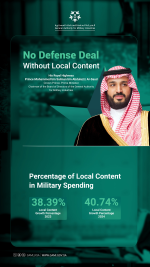
The Military Industries Sector @GAMI_KSA achieved a remarkable growth at View attachment 163540:
— The Numbers:
• Contribution exceeding 6.5 billion riyals
• Increase in local spending from 4% in 2018 to 25% by the end of 2024
• Development of +140 industrial capabilities including drones and land and naval equipment
• 344 licensed companies and 34 thousand workers with 64% localization

To view this content we will need your consent to set third party cookies.
For more detailed information, see our cookies page.


View attachment 163541

The development going in the right direction.

To view this content we will need your consent to set third party cookies.
For more detailed information, see our cookies page.


The Global "The Spectator Index":

The Saudi economy continues its steady progress, driven by a 9.3% year-on-year increase in industrial production, signaling the strength of the industrial transformation within Saudi Vision 2030.

To view this content we will need your consent to set third party cookies.
For more detailed information, see our cookies page.


"Dreaming of entering the military industries field?
Well, listen up, you might not know this, but the Saudi National Academy for Military Industries was actually established.

The Academy was announced in 2022, and today it's become a reality on the ground, with its location in Riyadh spanning over 80,000 square meters, accommodating around 2,000 male and female students every year.

And its current specializations are distributed across four key tracks:

• Electronics Technology in Defense
• Mechanical Technology in Defense

• Electrical Technology in Defense
• Chemical Technology in Defense

And the great thing is that the General Authority for Military Industries GAMI has focused on developing the capabilities of our young men and women “civilians in the technical and scientific fields related to military industries.

And this thing actually raises their awareness and skills in a field that, unfortunately, many people were ignorant of before 2016, but today the situation is starting to change, because the goal is to enhance true awareness of the importance of military industries, so that the new generation knows exactly what it means to manufacture defense systems, and how electronics and mechanics and electricity and chemistry work within this sensitive sector.

And more important than awareness?
Enhancing localization.

Having an academy like this creates a generation that's understanding, qualified, and trained in a scientific way, and this is exactly what supports the state's direction in localizing military industries by 50% and more, because without trained and aware local cadres, there won't be a real industry, nor technology transfer, nor internal development.

And this is a big step because it doesn't just raise the level of individuals

— it raises the level of the entire sector and supports the Kingdom's independence in manufacturing, reduces our reliance on the outside, and opens up massive opportunities for the coming generation.

Official account of the Academy for more info:
@theadiksa

To view this content we will need your consent to set third party cookies.
For more detailed information, see our cookies page.


"There are countries that establish military companies within their territories, then recruit foreign engineers and experts from multiple countries to manufacture their products, and afterward describe these products as “national industry”.It is true that manufacturing within the country contributes to supportingits economy, but the reality is entirely different in the Kingdom of Saudi Arabia. Here, when we say “national industry”, we mean it literally:
Industry by the hands of the sons of the homeland, with their expertise, and with their capabilities that are being developed and empowered to become an actual part of the national defense system"

1767538580948.png

1767538590679.png
 
To view this content we will need your consent to set third party cookies.
For more detailed information, see our cookies page.


Key figures of the electric train project that will connect Riyadh to Doha:

-The high-speed train extends over a distance of 785 kilometers, connecting the two capitals Riyadh and Doha, passing through major stations including the cities of Al-Hofuf and Dammam.

-It connects King Salman International Airport and Hamad International Airport.

-The train's speed exceeds 300 kilometers per hour, contributing to reducing travel time to approximately two hours between the two capitals.

-The high-speed train will serve more than 10 million passengers annually.

-The project will contribute to providing more than 30 thousand direct and indirect jobs.

-The economic impact of the project is estimated at approximately 115 billion riyals for the gross domestic product of the two countries.

-Project implementation duration is six years.


To view this content we will need your consent to set third party cookies.
For more detailed information, see our cookies page.


Great step.

To view this content we will need your consent to set third party cookies.
For more detailed information, see our cookies page.


"Lucid Motors CEO:
Lucid's factory facilities in #SaudiArabia have been completed and production will begin before the end of 2026, while the company's vehicles will be developed using artificial intelligence technologies through the research and development center in Riyadh, with the participation of Saudi expertise."

To view this content we will need your consent to set third party cookies.
For more detailed information, see our cookies page.


"Chinese Vice Minister of Foreign Affairs "Miao Dei":Saudi-Chinese relations have witnessed rapid development in recent years, and we are ready to begin implementing the important joint understandings reached by the leaders of the two countries, and to elevate the comprehensive strategic partnership between China and the Kingdom to a higher level

To view this content we will need your consent to set third party cookies.
For more detailed information, see our cookies page.


The American website "War on The Rocks":

Saudi Arabia owns the Jabal "Sayyid" mine, which is believed to contain the world's fourth largest reserve of rare earth elements.
 
To view this content we will need your consent to set third party cookies.
For more detailed information, see our cookies page.


#Goldman_Sachs Group, the first Wall Street bank, inaugurates its regional headquarters at the King Abdullah Financial District #KAFD in Riyadh

To view this content we will need your consent to set third party cookies.
For more detailed information, see our cookies page.


Asir Emir:
Bisha will host the world's largest renewable energy farm after China

To view this content we will need your consent to set third party cookies.
For more detailed information, see our cookies page.


Prominent works of Norman Foster's office:
- Shura Island
- Red Sea International Airport
- St. Regis Ritz-Carlton Resort
- Six Senses Desert Resort
- Amala Yacht Club and Marina Village

To view this content we will need your consent to set third party cookies.
For more detailed information, see our cookies page.


Officially

- #Aramco company announces its readiness to begin gas production from the #Jafurah field by the end of this December

- The announcement comes after the launch of actual operating procedures for the first phase last week
- Aramco is working on building a global portfolio of liquefied natural gas supplies reaching 20 million tons

Saudi Telecom Company headquarters in Riyadh almost finished:

View attachment 164841

View attachment 164842

To view this content we will need your consent to set third party cookies.
For more detailed information, see our cookies page.


The Ministry of Interior celebrates the graduation of (66) male and female graduates from KAUST University, representing the first cohort of the Artificial Intelligence Master's program to develop the competencies of the ministry's employees in artificial intelligence, data science, and cybersecurity.

Mashallah.
 

Saudi Arabia reveals plans for 12,000km water project longer than Nile river​


https://www.constructionweekonline....ch-12000km-water-project-longer-than-the-nile

To view this content we will need your consent to set third party cookies.
For more detailed information, see our cookies page.


1767539043655.png

1767539056727.png

To view this content we will need your consent to set third party cookies.
For more detailed information, see our cookies page.


The majority in the European Parliament votes in favor of a report deepening relations with Saudi Arabia, which calls for:

- Strengthening political and security cooperation between the European Union and Saudi Arabia

- Starting strategic partnership negotiations to regulate and expand bilateral relations

- Expanding economic cooperation, particularly in sustainable energy, critical minerals, and technology

To view this content we will need your consent to set third party cookies.
For more detailed information, see our cookies page.


To view this content we will need your consent to set third party cookies.
For more detailed information, see our cookies page.


1767539168786.png
 
To view this content we will need your consent to set third party cookies.
For more detailed information, see our cookies page.


Official Opening of One of the World's Top Entertainment Destinations

Qiddiya City is gearing up to open Six Flags Qiddiya City on December 31 as the first park of its kind outside North America, and a pivotal pillar in a city built entirely on the Power of Play concept in the heart of the Tuwaiq Mountains

Why does this opening represent a significant milestone?

Entertainment-wise

- The park features 28 rides and experiences, including a collection of record-breaking games, most notably

- Falcon’s Flight: The world's fastest, longest, and tallest roller coaster

- Iron Rattler: The world's steepest roller coaster

- Spitfire: The tallest triple-launch roller coaster

- The park offers 18 family and children's experiences across six entertainment worlds that include exclusive restaurants and shops

Economically and Development-wise


-The park forms one of Qiddiya's major destinations and a primary contributor to the entertainment sector within Vision 2030

- It boosts the experience economy, increases tourism spending, and contributes to creating quality job opportunities

- It reflects the ongoing progress in the Qiddiya project, the city that combines sports, entertainment, and culture in an integrated urban environment

Visitor Experience and Ticket Prices

- Adult: 325 SAR

- Child: 275 SAR

- Under 4 years: Free

- GoFast option allows priority entry and reduces wait times

- Discounted category for people with disabilities, seniors, and their assistants starting from 75 SAR inside the park

1767564194540.png

1767564205262.png

1767564215986.png

1767564231171.png

1767564239457.png

1767564245621.png

Looks amazing. Will definitely visit with family and children once fully ready and when in Riyadh.

Opened a few days ago:

Opening ceremony:

To view this content we will need your consent to set third party cookies.
For more detailed information, see our cookies page.


Impressive.

To view this content we will need your consent to set third party cookies.
For more detailed information, see our cookies page.


To view this content we will need your consent to set third party cookies.
For more detailed information, see our cookies page.
 
So many talented compatriots excelling abroad. Hopefully most of them will return back home to contribute.

To view this content we will need your consent to set third party cookies.
For more detailed information, see our cookies page.


"With immense pride and honor, the sons of the homeland continue to etch their names with letters of light in the world's most prestigious academic institutions, raising the Kingdom's flag proudly fluttering in the fields of science and innovation.
An unprecedented Saudi achievement at the University of Colorado Boulder in the United States, where the scholarship recipient Faisal Darwish Al-Ghamdi, faculty member at King Abdulaziz University, has won the "Larson Lab Award" as the first Saudi student in the department's history to receive this prestigious recognition, crowned with the title of Outstanding Graduate Student.This honor comes as a culmination of pioneering research efforts in employing artificial intelligence and digital twin technologies (Digital Twins) to enhance energy efficiency and building performance, affirming to the world that Saudi minds are not only participating in shaping the future, but are an essential part of leading its technological transformations toward smarter and more efficient sustainability.

To view this content we will need your consent to set third party cookies.
For more detailed information, see our cookies page.


"While the world competes in the fields of innovation, Saudi minds shine to seize the gold and prove that creativity is a language we master with excellence .From the heart of South Korea, the innovator Sally Al-Harbi snatched the gold medal and first place globally at the Korea International Exhibition of Inventions and Innovations, excelling with her innovation in the field of medicine and biomedical engineering amid fierce global competition that included 600 inventors from 30 countries .This crowning achievement is not just an individual victory, but a message to the world that the Saudi mind is present and strong in the most precise and complex scientific fields. Sally's accomplishment reflects the quality of our national outputs and the ability of our youth and young women to provide medical and engineering solutions that serve humanity, enhancing the Kingdom's position as a beacon for science and future innovation."

To view this content we will need your consent to set third party cookies.
For more detailed information, see our cookies page.


"Dr. Mariam Al-Doghmi, Professor of Chemistry at King Faisal University and Assistant to the Chief Executive for the Innovation Region at the University, has obtained a patent from the United States Patent Office for her invention of a natural herbal extract that contributes to the treatment of arthritis.This extract is based on a carefully studied blend of several medicinal herbs, where studies and laboratory experiments have demonstrated its effectiveness in reducing inflammation and swelling and improving joint mobility in a safe manner, with no significant side effects recorded.This invention represents an important scientific step toward developing safe natural treatments that combine the methodology of modern medicine with the benefits of herbal medicine, thereby enhancing research trends in sustainable health fields.This achievement also registers a qualitative addition to the record of Saudi research competencies and reflects the role of King Faisal University in supporting medical innovation and developing therapeutic solutions based on scientific research and modern technologies."

To view this content we will need your consent to set third party cookies.
For more detailed information, see our cookies page.


"Mashallah, Alhamdulillah… Among my greatest global achievements for the year 2025:

- My recognition at the Asian Forum for Young Researchers
- Award at the Global STEM Conference as the youngest inventor
- Grand Prize from the British Invention Organization
- The Gold Medal at the International Exhibition
- The Gold Medal at the Korea International Exhibition"

To view this content we will need your consent to set third party cookies.
For more detailed information, see our cookies page.


"First Rare Heart Procedure of Its Kind in the Kingdom.. Performed by Saudi Hands Mastering the Challenge.

In a scene embodying medical pioneering, a specialized Saudi team led by Consultant Dr. Seraj Abu Al-Naja at Kings College Hospital London – Jeddah, succeeded in managing a medical case of extreme complexity and global rarity, where the patient presented with challenges of "right-sided heart" (Dextrocardia) combined with a bicuspid aortic valve and severe calcification.

Instead of high-risk traditional surgery, the team employed transcatheter aortic valve replacement (TAVR) technology, skillfully navigating the sharp bends of the aortic artery and the complex anatomical variations, culminating in this precise intervention with complete success and the patient discharged from the hospital in just two days, in good health and recovery.

This achievement is not merely a successful procedure, but a shining testament that national expertise is capable of taming the most complex medical cases with the highest standards of precision and safety."


1767568708480.png

"From the heart of China, and specifically from the city of Wuhan, the name of the Kingdom rises high in a prestigious scientific forum, where the Saudi researcher proved his academic excellence by securing the first place globally.

In an achievement that reflects the depth of scientific research and the excellence of national cadres, "Abdulrahman Al-Omari" from Prince Mohammad bin Fahd University was crowned with the award for the best presentation at the IEEE MEPE Conference, surpassing more than 100 international researchers and participants, for his innovative scientific paper on designing a smart fire suppression system for oil tanks in collaboration with his colleagues "Khalid Al-Ruwaili, Saud Al-Qahtani, Omar Al-Zahrani"

This innovation, which will be published on the global IEEE Proceedings platform, does not represent just an individual success, but is a living testament to the quality of our educational outputs and the ability of Saudi minds to provide engineering solutions that serve the global industry, affirming that Saudi ambition knows no bounds."

Just 5-6 examples from the past 2 weeks.

Saudi Arabia enters global race for hyperscale data centers with launch of ‘Hexagon’ in Riyadh

January 02, 2026
Hexagon boasts a capacity of up to 480 megawatts, spans more than 30 million square feet. (SPA)

Hexagon boasts a capacity of up to 480 megawatts, spans more than 30 million square feet. (SPA)


Saudi Gazette report


RIYADH — Saudi Arabia has formally entered the global race to build hyperscale data centers with the launch of Hexagon, the world’s largest Tier IV government data center, marking a major milestone in the Kingdom’s ambition to lead the data- and AI-driven economy.

The Hexagon data center, unveiled in Riyadh, reflects Saudi Arabia’s strategic push to harness data as a core engine of national development, as digital infrastructure becomes central to economic growth in the age of artificial intelligence.

The project is driven by the national data and AI strategy led by Saudi Data and Artificial Intelligence Authority (SDAIA) and aligned with the objectives of Vision 2030.

A strategic asset for data sovereignty and economic diversification

The launch reflects the vision of Mohammed bin Salman, Crown Prince and Prime Minister, and Chairman of SDAIA, to position Saudi Arabia as a global hub for advanced technologies.

Building robust national digital infrastructure has become a strategic necessity to ensure data sovereignty, strengthen non-oil economic diversification, and secure long-term competitiveness.

These efforts have helped Saudi Arabia rank first globally in several international indicators, including the Government AI Strategy Index, underscoring the Kingdom’s rapid progress in the digital domain.

From early computing to the AI era

While the concept of data centers dates back to the 1950s, when early mainframe computers required climate-controlled rooms, their strategic importance accelerated with the rise of the internet in the late 1990s.

The launch of cloud computing in 2006 elevated data centers into a global priority, while the emergence of artificial intelligence after 2020 — particularly generative AI — transformed them into critical national assets requiring massive processing power.

In this context, data has evolved from a finite natural resource to an unlimited digital flow, reshaping how economic value is created.

Since its establishment in 2019, SDAIA has led Saudi Arabia’s data and AI agenda as the national authority responsible for regulation, development, and governance, including big data.

Within just six years, these efforts have positioned the Kingdom as a key player in the global digital economy and a leading destination in the Middle East for major international technology firms.

A foundation built on regulation and trust

SDAIA’s role has extended beyond technical development to building a comprehensive regulatory environment for data and AI. This includes the Personal Data Protection Law and its executive regulations, as well as national principles and standards for generative AI, AI adoption frameworks, and the management of the National Data Controllers Registry.

These measures are designed to safeguard privacy, enhance trust in digital systems, and ensure that advanced technologies contribute to sustainable development.

Hexagon: scale, sustainability, and reliability

Hexagon is the cornerstone of a broader expansion plan that will see additional data centers developed across the Kingdom to meet rapidly growing demand for national digital infrastructure and ensure maximum system availability.

The facility has been designed to meet the LEED Gold standards of the U.S. Green Building Council, reflecting a balance between high-performance computing and environmental responsibility. It serves as a model for next-generation green data centers.

Hexagon boasts a capacity of up to 480 megawatts, spans more than 30 million square feet, and incorporates advanced energy-efficiency solutions, including smart cooling systems, direct liquid cooling, and hybrid cooling technologies. These innovations enable extremely low power usage effectiveness while integrating renewable energy as a sustainable power source.

Global certifications and unmatched reliability

The center complies with the TIA-942 global engineering standard, which ensures dual independent systems and pathways to maintain operational reliability under all conditions. It has also achieved the Tier IV certification, the highest global standard for data centers, guaranteeing 99.995% availability and full fault tolerance.

In addition, Hexagon has received the ISO/IEC 22237 certification, a global benchmark for infrastructure availability and protection against technical and environmental risks, ensuring a secure and stable operating environment for government digital services.

Economic impact and quality of life gains

SDAIA’s data center strategy targets a cumulative local economic impact exceeding SR10 billion, alongside annual financial savings of more than SR1.8 billion, contributing to non-oil revenues and strengthening the national economy.

Beyond financial returns, the initiative is expected to significantly enhance the quality of life by raising the maturity of digital government services provided to citizens and residents, reinforcing Saudi Arabia’s position at the forefront of the global digital transformation.

 
Saudi Foreign Minister Prince Faisal bin Farhan arrives in the Arab Republic of Egypt..

His Highness Prince Faisal bin Farhan bin Abdullah, Minister of Foreign Affairs, arrived this Sunday evening in Cairo, the capital of the Arab Republic of Egypt, on an official visit.

His Highness is scheduled to meet tomorrow, Monday, with His Excellency President Abdel Fattah El-Sisi, President of the Arab Republic of Egypt, and His Excellency the Minister of Foreign Affairs, Immigration and Egyptians Abroad Affairs, Dr. Badr Abdel-Ati. During the visit, His Highness will discuss Saudi-Egyptian relations and ways to strengthen them in various fields to serve the interests of the two brotherly countries, in addition to discussing developments in the region.

1767584028933.png
 
Saudi Foreign Minister Prince Faisal bin Farhan arrives in the Arab Republic of Egypt..

His Highness Prince Faisal bin Farhan bin Abdullah, Minister of Foreign Affairs, arrived this Sunday evening in Cairo, the capital of the Arab Republic of Egypt, on an official visit.

His Highness is scheduled to meet tomorrow, Monday, with His Excellency President Abdel Fattah El-Sisi, President of the Arab Republic of Egypt, and His Excellency the Minister of Foreign Affairs, Immigration and Egyptians Abroad Affairs, Dr. Badr Abdel-Ati. During the visit, His Highness will discuss Saudi-Egyptian relations and ways to strengthen them in various fields to serve the interests of the two brotherly countries, in addition to discussing developments in the region.

View attachment 170066
To view this content we will need your consent to set third party cookies.
For more detailed information, see our cookies page.


The news is more fitting for an KSA/Arab world policy thread. No such thread that I can see though.

To view this content we will need your consent to set third party cookies.
For more detailed information, see our cookies page.


Travel and Tour World website:

Saudi Arabia is reshaping coastal tourism through mandatory regulations for safety and environmental protection, and the Red Sea is heading to become a leading global destination

-Details:

The Travel and Tour World website revealed that the Kingdom of Saudi Arabia has launched a package of new mandatory regulations for beach tourism, led by the Saudi Red Sea Authority, aimed at elevating safety standards and protecting the marine environment, while enhancing the appeal of the Saudi coast as a global tourism destination

The measures include a comprehensive digital guide outlining rules for visitors and operators, with requirements for beaches to have professional lifeguards, integrated safety equipment, regulation of marine activities, and protection of coral reefs

The report confirmed that this step represents a fundamental pillar within Saudi Vision 2030, supporting sustainability, attracting investments, and creating job opportunities, thereby establishing the Red Sea's position as a global model for safe and sustainable coastal tourism

To view this content we will need your consent to set third party cookies.
For more detailed information, see our cookies page.


To view this content we will need your consent to set third party cookies.
For more detailed information, see our cookies page.


Saudi Gifted Students Excel Globally with 129 Awards in 2025​


To view this content we will need your consent to set third party cookies.
For more detailed information, see our cookies page.

  • October 19, 2025

King Salman Gate Project Makkah: Reimagining The Sustainable Development of the Holy City​

King Salman Gate Project Makkah: Reimagining The Sustainable Development of the Holy City

Saudi Arabia is once again redefining the pilgrim experience with the launch of the King Salman Gate project Makkah. The project is part of a mega-development in the Makkah region led by HRH Crown Prince Mohammed bin Salman.

Strategically located near the Grand Mosque, this ambitious project promises to transform Makkah’s urban landscape, elevate pilgrimage services, and set a global benchmark. For pilgrims and residents alike, the King Salman Gate project in Makkah is a step towards a more accessible, comfortable, and spiritually enriching journey.

A New Era for Makkah’s Pilgrimage Infrastructure

The King Salman Gate project Makkah spans an impressive 12 million square metres. This makes it one of the largest mixed-use developments in the Kingdom.

The project will provide around 900,000 indoor and outdoor prayer spaces, accommodating the growing visitors attending Hajj/Umrah annually.

According to the RUA AlHaram AlMakki Company, this development aims to improve access to the Grand Mosque for pilgrims.

The development aligns closely with the Pilgrim Experience Programme under Saudi Vision 2030, reflecting the Kingdom’s commitment to enhancing spiritual and cultural journeys. By integrating residential, cultural, and service facilities, the King Salman Gate project in Makkah ensures a holistic experience for everyone.

Combining Heritage Preservation with Modern Design

One of the most remarkable aspects of the King Salman Gate project Makkah is its emphasis on heritage preservation.

Around 19,000 square metres of heritage and cultural sites will be restored, allowing visitors to experience Makkah’s rich historical identity with a new modern infrastructure. The architectural design blends traditional Islamic aesthetics with innovative urban planning.

Public transportation networks will be integrated into the development, connecting the King Salman Gate project directly to the Grand Mosque. This will significantly reduce travel time for pilgrims and improve accessibility to the heart of the city.

Economic Impact, Scale, & Job Creation

The project is also expected to become a key economic driver for Saudi Arabia. The King Salman Gate project Makkah will create more than 300,000 jobs by 2036, spanning construction, hospitality, cultural management, and retail services. This initiative reflects the Kingdom’s broader Vision 2030 goals to diversify the economy, reduce dependency on oil revenues.

The development is managed by the Rou’a Al-Haram Al-Makki Company, a subsidiary of the Public Investment Fund (PIF). The company focuses on sustainable resource management and innovative real estate solutions. By adhering to global sustainability standards, the company ensures that Makkah’s urban transformation is both environmentally responsible and socially beneficial.

Residential, Cultural, & Commercial Facilities

The King Salman Gate project will feature a comprehensive mix of facilities:

  • Residential complexes for pilgrims, staff, and residents, ensuring convenience and comfort.
  • Cultural centers highlighting Makkah’s history and Islamic heritage.
  • Hospitality spaces, including hotels and guest accommodations, designed to meet international standards.
    Commercial zones with shopping, dining, and service amenities for visitors and residents.
This integrated approach will transform the central Makkah area into a vibrant, accessible, and sustainable urban hub while maintaining the sanctity of the Grand Mosque surroundings.

Reimagining The Pilgrim Experience

The development is a pivotal part of the Kingdom’s efforts to improve the pilgrim experience in Saudi Arabia. From streamlined access to the Grand Mosque to additional prayer spaces and cultural facilities, the King Salman Gate project in Makkah is designed for comfort and safety.

Pilgrims will also benefit from modern amenities, clear navigation paths, and organized public spaces, reducing overcrowding during peak pilgrimage seasons.

These enhancements complement other initiatives in the region, including the Qiblatain Mosque in Madinah, which offers 24-hour access for pilgrims.

Vision 2030 & Saudi Mega Projects

The King Salman Gate project Makkah is part of a broader suite of giga-projects under Saudi Vision 2030. With $196 billion in contract awards in 2025 alone, Saudi Arabia continues to invest heavily in infrastructure, tourism, and urban development.

Projects like these aim to accommodate a projected 30 million pilgrims annually by 2030, creating a sustainable and globally recognized urban model.

Other Vision 2030 initiatives include new transportation networks, hospitality expansions, and cultural hubs. All these are contributing to Saudi Arabia’s goal of positioning Makkah as a leading destination for spiritual, cultural, and heritage tourism.

For readers interested in exploring more about Saudi Arabia’s holy sites and urban developments, check out the Winter Umrah Tips for best practices during seasonal peaks.

Discover planning tools in
the Free Nusuk App Access Without Data Usage for a seamless pilgrimage experience.

Strategic Importance

By developing mixed-use areas, improving transport connectivity, and restoring heritage sites, the King Salman Gate project Makkah strengthens Makkah’s global significance. This project exemplifies the Kingdom’s approach to urban development: combining modernity with tradition, supporting economic growth while preserving culture.

Residents and pilgrims can also explore complementary experiences in the region. Such as discovering historic Islamic sites and learning about the Saudi approach to sustainable urban design through programs like the Pilgrim Experience Program.

Stay informed on updated regulations with the New Umrah Visa Rule 2025 and practical guidance in Umrah Tips 2025 to maximize your spiritual journey.

The Soul Of The Kingdom

The King Salman Gate project Makkah stands as a testament to Saudi Arabia’s commitment to elevating the spiritual and practical dimensions of pilgrimage.

With modern infrastructure, cultural preservation, and enhanced public spaces, this development sets the stage for an unprecedented era of convenience, accessibility, and spiritual enrichment.

For those planning Hajj or Umrah in the coming years, keeping updated with this evolving project. It will provide valuable insights into the improved infrastructure and enhanced pilgrim facilities.

FAQs

What is the King Salman Gate project Makkah?
It’s a 12-million sqm mixed-use development near the Grand Mosque, providing 900,000 prayer spaces and modern facilities.

Who is developing the King Salman Gate project?
Rou’a Al-Haram Al-Makki Company, a subsidiary of the Public Investment Fund (PIF), leads the project.

How does the project align with Vision 2030?
It supports economic diversification, job creation, sustainable urban development, and enhances the pilgrim experience.

How many jobs will the King Salman Gate project create?
The project is expected to generate more than 300,000 jobs by 2036 across construction, hospitality, cultural management, and retail sectors.

Will the King Salman Gate improve access to the Grand Mosque?
Yes, the project integrates public transport networks and pedestrian-friendly pathways, ensuring smooth access for pilgrims.

Are heritage and cultural sites preserved in this development?
Approximately 19,000 sqm of heritage and cultural zones will be restored to maintain Makkah’s historical identity while enhancing visitor experience.

How can pilgrims stay updated about the development and facilities?
Pilgrims can follow official updates through sources like the RUA AlHaram AlMakki Company, Saudi Press Agency, and relevant Soul of Saudi blogs.


Makkah will look completely differently in 10-15 years time and this process will be ongoing constantly in the future giving the supply and demand of visitors. After the illegally constructed slum quarters inhabited by illegal migrants were razed to the ground (after 30-50 years of this nonsense) finally greater projects can start being constructed. However the challenges given the Makkah geography are enormous as is the climate (hottest city in KSA by far). Hopefully a good job will be done. Much of the previous expansion projects are finished or almost there and before they finish new ones are starting. It is a never ending process almost.
 
To view this content we will need your consent to set third party cookies.
For more detailed information, see our cookies page.


Deputy Minister of Industry and Mineral Resources for Mining Affairs:

We have issued 59 licenses for mining projects within the advanced industry sector, representing nearly a quarter of the operating mines in the Kingdom, with investments amounting to nearly 45 billion riyals, and there are new mining discoveries currently being worked on in the Arabian Shield.

To view this content we will need your consent to set third party cookies.
For more detailed information, see our cookies page.


New regulations and systems related to foreign investors in 2026:

- Allowing the ownership of residential, commercial, industrial, and agricultural real estate within designated areas of the Kingdom

- Allowing all non-resident foreign investors from any country in the world to enter the Saudi financial market

To view this content we will need your consent to set third party cookies.
For more detailed information, see our cookies page.


Developments in the construction works in Trojena Village, one of the areas of #Trojena in #NEOM, which will include world-class ski slopes, indoor sports facilities, and hotels and restaurants connected by a cable car network, in preparation for hosting the 2029 Asian Winter Games.

To view this content we will need your consent to set third party cookies.
For more detailed information, see our cookies page.


The CEO of Qiddiya Company reveals the timeline for completing #QiddiyaCity across 3 phases:

Phase One 2025 – 2028:

- Six Flags Theme Park
- Aquarabia Water Park
- Speed Track
- National Tennis Center
- Golf Courses
- 15 Hotels

Phase Two 2028 – 2030:

- Mohammed bin Salman Stadium
- Performing Arts Center
- Dragon Ball Theme Park
- Esports Arena
- A collection of hotels and residences

Final Phase 2030 – 2034:
- Completion of most sports facilities such as sports halls and swimming facilities
- Completion of the gaming and esports area
- Additional theme parks
- Additional hotels

Six Flags from Phase 1 has just been finished. See post 1135 in this thread.

To view this content we will need your consent to set third party cookies.
For more detailed information, see our cookies page.


The CEO of #Qiddiya Company:
#Aquarabia Water Park will be inaugurated during the upcoming Eid al-Fitr, with specific days allocated exclusively for women, while the remaining days will be available to everyone.


Chief Executive Officer of Qiddiya Company:
Among the areas planned for development within Qiddiya City is the #Qiddiya_Beach district, which is a project based on artificial lagoons and lakes that embrace resorts and fully integrated recreational facilities, designed to provide visitors with an experience that mimics the atmosphere of the sea.

1767742694267.png

On Thursday the annual Al-Jouf Olive Festival in the ancient city of Sakaka will start and last 9 days.

Jouf olive presses start annual production season​

ARAB NEWS
21 October 2025

  • Every year, the region celebrates production through the Jouf International Olive Festival
RIYADH: Olive presses in the Jouf region have begun production, supplying olive oil and pressed olives to local and international markets, marking the start of a busy season for agricultural holdings and projects.

Mohammed Al-Fadel, chairman of a local multipurpose cooperative association, highlighted his organization’s efforts to meet the region’s growing production.

He said the association recently upgraded its press with the latest Italian technology, increasing capacity from 18 to 60 tonnes per 24 hours, the Saudi Press Agency reported.

Al-Fadel added that the press, serving farmers since the 1990s, now operates around the clock during the season, which typically runs until January.

Last year, it processed the produce of 215 farmers, ensuring product safety through laboratory testing in cooperation with the Ministry of Environment, Water and Agriculture.

Bassam Al-Owaiesh, associate professor of environment and agriculture at Jouf University’s biology department, said the region has more than 25 million olive trees, with production starting in early October.

The region cultivates numerous varieties, including Arbequina and Picual, valued for their oil content and fruit size, he added.

Every year, the region celebrates production through the Jouf International Olive Festival. Organized by the regional municipality, the event showcases the region’s olive oil and table olives, as well as related industries like olive soap, pickles and cosmetic products.


AL-JOUF OLIVE PRESSES EXPAND TO MEET RISING FARMER DEMAND​

Oct 21, 2025 | Agriculture, Industry, Manufacturing

SPA — Olive presses in Al-Jouf have begun operating at full capacity for the 2025 harvest season. They are processing olives from local farms and large-scale agricultural projects. The presses produce olive oil and table olives for markets in Saudi Arabia and abroad. This signals a strong season for the region’s expanding olive industry.

TECHNOLOGICAL UPGRADES DRIVE PRODUCTION GROWTH​

Mohammed Al-Fadel, the chairman of the Al-Jouf Multi-Purpose Cooperative Society, said the olive press has been upgraded. This upgrade is to keep pace with the region’s rising production and meet local farmers’ demand. Since its establishment in 1416 AH, its daily capacity has grown from 18 to 60 tons. The introduction of advanced Italian olive oil extraction systems supports this growth.

The cooperative’s imported presses, launched last year, operate continuously throughout the harvest period, which extends until January. In the previous season, the cooperative processed olives from 215 farmers and carried out comprehensive quality and safety testing with the Ministry of Environment, Water, and Agriculture.

A REGIONAL HUB FOR OLIVE CULTIVATION​

According to Dr. Bassam Al-Owaish, Associate Professor of Environment and Agriculture at Al-Jouf University, the region is home to more than 25 million olive trees. These trees are cultivated across both smallholdings and large farms. Annual production typically begins in early October. Popular varieties include Arbequina, Koroneiki, Arbosana, Sourani, Zayti, and Picual. Each cultivar offers distinct characteristics in oil yield and fruit size, reflecting the region’s agricultural diversity.

FESTIVAL SHOWCASES OLIVE-BASED INDUSTRIES​

Al-Jouf’s olive economy extends beyond farming and pressing. The International Olive Festival, held annually by the Al-Jouf Municipality, has become a major platform for promoting Saudi olive products and their derivatives. The festival highlights olive-based industries such as soap, pickles, cosmetics, olive tea, and salads. It also encourages innovation through competitions, with awards reaching SAR 500,000.

With its advanced technology, agricultural expertise, and growing market appeal, Al-Jouf continues strengthening its position as Saudi Arabia’s leading olive production hub.

THE SAUDI STANDARD’S VIEW: AL-JOUF’S EXPANDING OLIVE INDUSTRY STRENGTHENS SAUDI AGRICULTURAL INNOVATION​

The expansion of olive presses in Al-Jouf signals a new phase of Saudi Arabia’s agricultural modernization. Tradition and technology combine to enhance food security, economic diversification, and rural prosperity. With upgraded production capacity and international-standard processing systems, Al-Jouf continues establishing itself as the Kingdom’s capital of olive cultivation. This sector is increasingly aligned with Vision 2030’s sustainability and agri-innovation goals.

• TECHNOLOGICAL MODERNIZATION ANCHORING GROWTH​

The Al-Jouf Multi-Purpose Cooperative Society’s upgrade to advanced Italian extraction systems marks a significant leap. It improves production efficiency and quality assurance. Expanding daily capacity from 18 to 60 tons reflects the Kingdom’s commitment to integrating cutting-edge technology into traditional agricultural industries. This ensures global competitiveness and sustainability.

• EMPOWERING LOCAL FARMERS AND COOPERATIVE MODELS​

The cooperative model reinforces inclusive growth and community participation by supporting over 200 local farmers and maintaining continuous harvest operations. This framework enhances rural livelihoods and promotes cooperative entrepreneurship. It exemplifies Vision 2030’s objective of strengthening non-oil sectors through local empowerment.

• DIVERSIFIED AGRICULTURAL ECOSYSTEM​

Home to over 25 million olive trees and multiple high-yield cultivars, Al-Jouf represents a model of agricultural diversification. The region’s ability to produce world-class olive varieties such as Arbequina and Picual highlights Saudi Arabia’s growing sophistication. They are managing crop diversity, water efficiency, and land productivity.

• VALUE-ADDED INDUSTRIES AND CULTURAL PROMOTION​

The International Olive Festival amplifies the region’s economic potential by integrating tourism, industry, and innovation. The festival showcases how local agriculture can evolve by promoting olive-based products — from cosmetics to culinary goods. It can turn into a full value chain of creative and sustainable industries.

• STRATEGIC ROLE IN VISION 2030’S FOOD AND RURAL ECONOMY AGENDA​

Al-Jouf’s olive sector reflects the Kingdom’s broader pursuit of agricultural self-sufficiency, export competitiveness, and rural revitalization. Its success embodies the national vision to transform Saudi Arabia into a leader in sustainable agri-innovation and environmental stewardship.

Al-Jouf’s olive press expansion is more than an operational milestone. It is a symbol of Saudi Arabia’s agricultural evolution. The region stands as a living example through modernization, local empowerment, and sustainable innovation. Vision 2030 is transforming Saudi agriculture from heritage to high-tech excellence.


Largest olive farm in the world is located in the ancient Al-Jawf province in KSA.

7,713 hectares.


1767742708595.png

1767742722829.png

1767742736115.png

1767742771006.png

1767742778185.png

 
Saudi Arabia announces mining surprises outside the belts and discoveries exceeding 9 trillion riyals (2.4 trillion US dollars)..

1767819987287.png

Companies announced major discoveries that exceeded previous expectations linked to estimates of 9 trillion riyals with the results of the geological and geophysical survey in the Arabian Shield, according to what was mentioned to Al-Eqtisadiah by Engineer Khaled Al-Mudaifer, Deputy Minister of Industry and Mineral Resources for Mining Affairs.

Al-Mudaifer pointed out that the companies revealed important surprises
It consisted of the discovery of mineral sites in areas that were not previously expected, outside the scope of traditional mineralized belts.

He said, "Current estimates of the size of mineral wealth indicate 9 trillion riyals, with the possibility that the actual numbers are higher, in light of the results of the Arab Shield survey."“Which was fully completed for the first time at levels that are among the most accurate in the world and with investments of one billion riyals, which included integrated databases that were made available to investors.”

The value of the estimated mineral wealth in Saudi Arabia increased by 90% to reach the equivalent of 9.375 trillion riyals.. This is compared to the estimates announced in 2016, which amounted to 5 trillion riyals at that time.

This increase is considered additional quantities, including new discoveries of rare earth elements and transition metals in addition to huge increases in phosphate ore, and other minerals such as copper, zinc, gold and other metals, the increase also includes a reassessment of fair prices.

Surprises outside the traditional belts

Al-Mudaifer explained that the results of the survey revealed important surprises, which were the discovery of mineral sites in areas that were not previously expected, outside the scope of the traditional mineralized belts in the Arabian Shield, which has an area of about 600 thousand square kilometers, in addition to the surrounding areas of 700 thousand square kilometers.

@SaudiNews50
 

Users who are viewing this thread

Country Watch Latest

Back
Top