Navigation
Install the app
How to install the app on iOS
Follow along with the video below to see how to install our site as a web app on your home screen.
Note: This feature may not be available in some browsers.
More options
Style variation
You are using an out of date browser. It may not display this or other websites correctly.
You should upgrade or use an alternative browser.
You should upgrade or use an alternative browser.
Saudi Arabia strategic Projects: news, discussions & updates
- Thread starter The SC
- Start date
More options
Who Replied?

The SC
INT'L MOD

- Thread starter
- #1,292
The US Secretary of State confirmed that imposing fees in the Strait of Hormuz is unacceptable
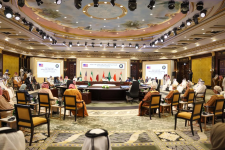
The meeting discussed opportunities to enhance cooperation in the fields of investment, trade, energy and new technologies, in addition to supporting initiatives aimed at achieving sustainable development and promoting economic prosperity.
The participants stressed the importance of teamwork to confront common challenges and adopt diplomatic solutions to address crises, thus enhancing security and peace in the region and the world.
For his part, US Secretary of State Marco Rubio announced that any agreement reached with Iran will not conflict with the interests of the Gulf states and the region.
Rubio said in his speech that “the interests of our partners in the region should be taken into account in any agreement,” stressing that “any decisions taken in the talks with Iran will guarantee the interests of our allies in the region,” pointing out that “US President Donald Trump affirms his openness to peace that guarantees the security and prosperity of the United States and the Gulf states.”
Regarding the Strait of Hormuz, Rubio said: “No country has the right to impose traffic fees on the Strait of Hormuz,” noting that “it is a waterway that no country owns, and that imposing fees in the Strait of Hormuz is unacceptable and will lead to chaos.” He also stressed that Iran will not possess a nuclear weapon.
He added: “If Iran wants to stop exporting its ideology and focus on the well-being of its people, the United States is ready to help it do that.”
The meeting comes within the framework of the extended strategic partnership between the GCC countries and the United States, which constitutes one of the important pillars of cooperation in the fields of security, energy, trade and investment, in addition to supporting efforts aimed at achieving stability and development in the region.
The meeting discussed opportunities to enhance cooperation in the fields of investment, trade, energy and new technologies, in addition to supporting initiatives aimed at achieving sustainable development and promoting economic prosperity.
The participants stressed the importance of teamwork to confront common challenges and adopt diplomatic solutions to address crises, thus enhancing security and peace in the region and the world.
For his part, US Secretary of State Marco Rubio announced that any agreement reached with Iran will not conflict with the interests of the Gulf states and the region.
Rubio said in his speech that “the interests of our partners in the region should be taken into account in any agreement,” stressing that “any decisions taken in the talks with Iran will guarantee the interests of our allies in the region,” pointing out that “US President Donald Trump affirms his openness to peace that guarantees the security and prosperity of the United States and the Gulf states.”
Regarding the Strait of Hormuz, Rubio said: “No country has the right to impose traffic fees on the Strait of Hormuz,” noting that “it is a waterway that no country owns, and that imposing fees in the Strait of Hormuz is unacceptable and will lead to chaos.” He also stressed that Iran will not possess a nuclear weapon.
He added: “If Iran wants to stop exporting its ideology and focus on the well-being of its people, the United States is ready to help it do that.”
The meeting comes within the framework of the extended strategic partnership between the GCC countries and the United States, which constitutes one of the important pillars of cooperation in the fields of security, energy, trade and investment, in addition to supporting efforts aimed at achieving stability and development in the region.
The SC
INT'L MOD
- Thread starter
- #1,293
Egypt and Saudi Arabia agree to build the first joint satellite
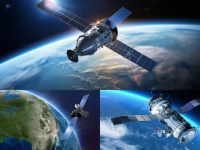
In a move that reflects the growing strategic partnership between Cairo and Riyadh in the fields of technology and space, the Saudi Council of Ministers approved an initiative aimed at designing and building the first joint satellite between the Kingdom of Saudi Arabia and Egypt, in a project expected to enhance scientific and technical cooperation between the two countries and open new horizons in the space industries sector.
The approval came during the session chaired by the Custodian of the Two Holy Mosques King Salman bin Abdulaziz Al Saud in the city of Jeddah, where the Council discussed a number of files and decisions related to development, cultural and administrative affairs.
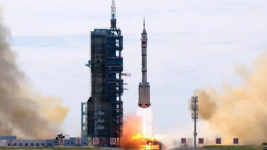
The satellite sector in both Egypt and Saudi Arabia has witnessed rapid development in recent years, but each country takes a different path that suits its strategic priorities and technical and economic capabilities. Egypt focused on building a local space industrial base and localizing technology related to the design, assembly, and testing of satellites, while Saudi Arabia moved toward building an integrated space economy based on investment, international partnerships, and the development of commercial space services.
In Egypt, the establishment of the Egyptian Space Agency and the Egyptian Space City represented an important step towards establishing a national space industry. Cairo was able to achieve tangible progress by launching the MisrSat-2 satellite, which is the first satellite to be assembled and tested inside Egypt with the participation of Egyptian cadres, which gave the country practical experience in the stages of manufacturing, integration, and space tests. Egypt also owns a number of remote sensing satellites dedicated to imaging and monitoring natural resources, agriculture, and urban expansion, in addition to hosting the headquarters of the African Space Agency, which strengthens its position as a regional space center in Africa.
As for Saudi Arabia, it has made the space sector one of the promising sectors within Vision 2030, and established the Saudi Space Agency to develop national programs in this field. It also launched the Neo Space Group company, supported by the Public Investment Fund, with the aim of building an integrated system for satellite services, space communications and remote sensing. The Kingdom has accumulated experience in operating satellites through the “Saudi Sat” series of satellites, in addition to increasing investments in communications services, satellite Internet, and Earth observation technologies.

_Arabia_
Trusted Member
Saudi tourism hits new high with 123 million visitors and SR304b in spending
Non-religious travel now accounts for more than half of inbound visitors.
Last updated: June 19, 2026 | 18:22
Huda Ata, Special to Gulf News
"Economy Middle East - Bloomberg" Agency:
Saudi Arabia's re-export shipments record the highest level since the start of monthly data publication in 2017, after reaching 15.5 billion riyals during April 2026, in a leap that reflects the acceleration of the Kingdom's role as a regional hub for trade and logistics services.
"Economy Middle East - Bloomberg" Agency:
Saudi Arabia prepares to launch the Riyadh Cooling Project next year, in an initiative considered one of the most ambitious globally for reshaping the urban environment and lowering temperatures, thereby enhancing quality of life and establishing the capital's position as a global destination for living and investment.-Details:The project aims to reduce asphalt and surrounding wall temperatures by 8 to 15 degrees Celsius through advanced urban cooling techniques, as part of a comprehensive vision to address the urban heat island phenomenon across various Riyadh neighborhoods.The plan includes studying the neighborhoods most affected by heat according to precise scientific standards, addressing the impact of materials used in facades, buildings, and open spaces, up to the integrated redesign of the city's thermal conditions. The project is viewed as the first of its kind globally on the scale of an entire city, and a strategic step to enhance Riyadh's sustainability and its economic and urban attractiveness.
Such initiatives should be copied across the entire country whenever needed.
Saudi Press Agency "SPA":
More than 500 local and international companies have expressed interest in participating in FOMEX 2027 in Riyadh, in a new confirmation of the Kingdom's rising status as a global destination for the media, technology, and innovation industries.-Details:Riyadh continues to solidify its presence as a global hub for media and technology, after the Future of Media Expo FOMEX 2027 attracted interest from more than 500 local and international companies seeking to participate in the anticipated event as part of the Saudi Media Forum's activities.This growing interest reflects the increasing international confidence in Saudi Arabia's media and investment environment, especially following the exceptional success of the previous edition, which drew more than 65,000 visitors and set a world record in the Guinness Book of Records, with participation from 200 companies representing more than 50 nationalities and digital impressions exceeding 116 million. FOMEX 2027 is expected to serve as a global platform bringing together major media and technology companies, artificial intelligence firms, content creators, and innovation pioneers to showcase the latest solutions and technologies and outline the future contours of the sector, thereby enhancing the Kingdom's position as a regional and international center for the media industry and advanced technologies, in line with the objectives of Saudi Vision 2030.
Non-religious travel now accounts for more than half of inbound visitors.
Last updated: June 19, 2026 | 18:22
Huda Ata, Special to Gulf News
"Economy Middle East - Bloomberg" Agency:
Saudi Arabia's re-export shipments record the highest level since the start of monthly data publication in 2017, after reaching 15.5 billion riyals during April 2026, in a leap that reflects the acceleration of the Kingdom's role as a regional hub for trade and logistics services.
"Economy Middle East - Bloomberg" Agency:
Saudi Arabia prepares to launch the Riyadh Cooling Project next year, in an initiative considered one of the most ambitious globally for reshaping the urban environment and lowering temperatures, thereby enhancing quality of life and establishing the capital's position as a global destination for living and investment.-Details:The project aims to reduce asphalt and surrounding wall temperatures by 8 to 15 degrees Celsius through advanced urban cooling techniques, as part of a comprehensive vision to address the urban heat island phenomenon across various Riyadh neighborhoods.The plan includes studying the neighborhoods most affected by heat according to precise scientific standards, addressing the impact of materials used in facades, buildings, and open spaces, up to the integrated redesign of the city's thermal conditions. The project is viewed as the first of its kind globally on the scale of an entire city, and a strategic step to enhance Riyadh's sustainability and its economic and urban attractiveness.
Such initiatives should be copied across the entire country whenever needed.
Saudi Press Agency "SPA":
More than 500 local and international companies have expressed interest in participating in FOMEX 2027 in Riyadh, in a new confirmation of the Kingdom's rising status as a global destination for the media, technology, and innovation industries.-Details:Riyadh continues to solidify its presence as a global hub for media and technology, after the Future of Media Expo FOMEX 2027 attracted interest from more than 500 local and international companies seeking to participate in the anticipated event as part of the Saudi Media Forum's activities.This growing interest reflects the increasing international confidence in Saudi Arabia's media and investment environment, especially following the exceptional success of the previous edition, which drew more than 65,000 visitors and set a world record in the Guinness Book of Records, with participation from 200 companies representing more than 50 nationalities and digital impressions exceeding 116 million. FOMEX 2027 is expected to serve as a global platform bringing together major media and technology companies, artificial intelligence firms, content creators, and innovation pioneers to showcase the latest solutions and technologies and outline the future contours of the sector, thereby enhancing the Kingdom's position as a regional and international center for the media industry and advanced technologies, in line with the objectives of Saudi Vision 2030.
_Arabia_
Trusted Member
Very interesting observations by our friend Naser al-Tamimi:
China and the Gulf Economy: Influence Without Protection
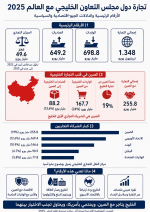
Trade figures for the Gulf Cooperation Council (GCC) countries in 2025 reveal a clear strategy: The Gulf has become economically closer to China, yet it remains securely under the American umbrella.
China is no longer just a buyer of Gulf oil and gas; it has become part of the daily fabric of the Gulf economy: goods, technology, equipment, manufacturing inputs, and supply chains.
Most importantly, the Gulf's trade with China now exceeds its trade with the United States and the European Union combined.
This is not a passing commercial observation, but evidence of a shift in the Gulf's economic center of gravity to the East.
But the economy alone does not create a security system. China entered the Gulf through ports, markets, and companies, not through military bases or defense alliances. Herein lies the paradox: the Gulf's economy is heading East, while its armament/security remains Western. This is the essence of geo-economic centrality without security ownership:
China gains influence without bearing the cost of protection, and the United States shoulders the security burden without monopolizing the economic returns.
The war on Iran has exposed the fragility of this equation. Beijing is highly exposed to Gulf energy, trade, infrastructure, and technology networks, but it lacks the tools to protect the system it relies on. Thus, China may appear to be a relative geopolitical winner, but it is a direct economic loser. It has held out so far and can leverage the crisis to underscore the limits of the American umbrella and bolster its narrative of declining Western hegemony. But in the end, it pays the cost of disruptions it cannot prevent—and perhaps does not wish to—while lacking the ability to manage them securely.
In conclusion: The war serves the Chinese narrative, but it reveals the limits of Chinese power.
Not completely related to KSA at the slighest but nevertheless interesting.
Three industrial companies planning to list on the Saudi stock market

China and the Gulf Economy: Influence Without Protection
Trade figures for the Gulf Cooperation Council (GCC) countries in 2025 reveal a clear strategy: The Gulf has become economically closer to China, yet it remains securely under the American umbrella.
China is no longer just a buyer of Gulf oil and gas; it has become part of the daily fabric of the Gulf economy: goods, technology, equipment, manufacturing inputs, and supply chains.
Most importantly, the Gulf's trade with China now exceeds its trade with the United States and the European Union combined.
This is not a passing commercial observation, but evidence of a shift in the Gulf's economic center of gravity to the East.
But the economy alone does not create a security system. China entered the Gulf through ports, markets, and companies, not through military bases or defense alliances. Herein lies the paradox: the Gulf's economy is heading East, while its armament/security remains Western. This is the essence of geo-economic centrality without security ownership:
China gains influence without bearing the cost of protection, and the United States shoulders the security burden without monopolizing the economic returns.
The war on Iran has exposed the fragility of this equation. Beijing is highly exposed to Gulf energy, trade, infrastructure, and technology networks, but it lacks the tools to protect the system it relies on. Thus, China may appear to be a relative geopolitical winner, but it is a direct economic loser. It has held out so far and can leverage the crisis to underscore the limits of the American umbrella and bolster its narrative of declining Western hegemony. But in the end, it pays the cost of disruptions it cannot prevent—and perhaps does not wish to—while lacking the ability to manage them securely.
In conclusion: The war serves the Chinese narrative, but it reveals the limits of Chinese power.
Not completely related to KSA at the slighest but nevertheless interesting.
Three industrial companies planning to list on the Saudi stock market
Inside Saudi Arabia’s female economic revolution: leadership, innovation, and SME dominance
Saudi Arabia bets on ‘red gold’ for agricultural growth
Saudi Arabia’s trade surplus more than doubles in April to $6.8bn
The SC
INT'L MOD
- Thread starter
- #1,297
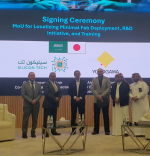
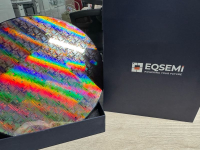
SILICON TECH was founded in 2024. The company works in the field of design and manufacturing of semiconductors.
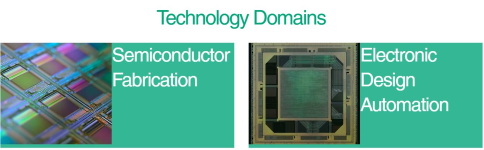
It is a project between SILICON TECH (Saudi Arabia) and Yokogawa (Japan) to cooperate in spreading Minimal Fab (MF) technology in the Kingdom.
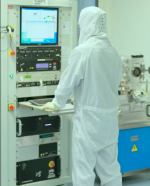
Minimal Fab Lab: This lab enables rapid prototyping of semiconductors, MEMS systems, and other specialized devices of diverse, limited production. With its compact and scalable design that does not require clean rooms, the laboratory provides cost-effective production of small and medium quantities, with a manufacturing cycle speed up to 10 times faster than traditional manufacturing methods.
Developing a skilled workforce: Joint industrial training programs and knowledge exchange initiatives will contribute to empowering the next generation of semiconductor manufacturing engineers in Saudi Arabia.
Advancing research and innovation: We will work to explore new applications and technical developments in the field of “micro-manufacturing technology” (MF Technology) to support the growth of the semiconductor sector in the Kingdom.
It is a project between SILICON TECH (Saudi Arabia) and Yokogawa (Japan) to cooperate in spreading Minimal Fab (MF) technology in the Kingdom.
Minimal Fab Lab: This lab enables rapid prototyping of semiconductors, MEMS systems, and other specialized devices of diverse, limited production. With its compact and scalable design that does not require clean rooms, the laboratory provides cost-effective production of small and medium quantities, with a manufacturing cycle speed up to 10 times faster than traditional manufacturing methods.
Developing a skilled workforce: Joint industrial training programs and knowledge exchange initiatives will contribute to empowering the next generation of semiconductor manufacturing engineers in Saudi Arabia.
Advancing research and innovation: We will work to explore new applications and technical developments in the field of “micro-manufacturing technology” (MF Technology) to support the growth of the semiconductor sector in the Kingdom.
The SC
INT'L MOD
- Thread starter
- #1,299

Saudi Electronic Materials Company (SEMC) is a pioneering semiconductor company driving innovation across Saudi Arabia, the MENA region, and beyond. With expertise in MEMS, infrared (IR), and CMOS technologies, we deliver end-to-end solutions covering design, fabrication, packaging, and testing. Equipped with a state-of-the-art cleanroom and advanced facilities, SEMC works alongside leading global research institutions and equipment providers to shape the next generation of semiconductor technologies that support national priorities and meet international standards. Guided by Saudi Vision 2030, we are building a sustainable semiconductor ecosystem that fuels innovation, accelerates industrial growth, and strengthens the Kingdom’s role as a competitive force in the global semiconductor industry.
Technologies
At SEMC, technology is at the core of our mission to build Saudi Arabia’s semiconductor future. Our technology combines advanced expertise with strategic applications that Serves national priorities and global markets. SEMC has the ability and the know-how to tackle various technologies.
Micro-Electromechanical Systems (MEMS)
SEMC has extensive expertise in designing, fabricating, characterizing and packaging MEMS technology, where it has the capability to manufacture a variety of MEMS sensors, such as accelerometers, vibratory gyroscopes, and pressure sensors. By advancing MEMS technologies, we provide solutions that enhance precision, efficiency and reliability across various industrial applications.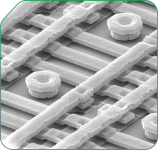
Complementary Metal-Oxide- Semiconductor (CMOS)
As the foundation of modern electronics, CMOS processes drive everything from integrated circuits to advanced processors and memory solutions. SEMC has expertise in designing, fabricating, characterizing and packaging in CMOS technology to enable scalable and energy-efficient applications.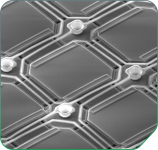
Monolithic Integration
Part of the technology portfolio at SEMC is the integration of both MEMS and CMOS which allows for enhanced integration capabilities, and improved performance, customizability, and scalability. This is achieved at all appropriate levels- including the designing, fabrication, and packaging of complete, integrated solutions.Products:
Gyroscope
A gyroscope measures angular velocity for navigation, stabilization, and control in advanced systems. SEMC’s MEMS gyroscope offers ±500°/s range, 120 Hz bandwidth, and excellent bias stability with low noise. Fully designed and manufactured in-house — from MEMS transducer to ASIC and packaging — it demonstrates SEMC’s complete capability in inertial sensing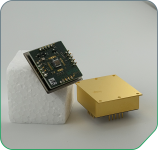
Accelerometer
SEMC’s Two-Axis Accelerometer is a miniaturized MEMS inertial sensor that precisely measures acceleration along two orthogonal axes. By integrating the silicon sensor element with dedicated on-chip signal processing electronics, it delivers compact, reliable motion data for system stabilization, navigation, or vibration monitoring. The accelerometer’s wide measurement range (±5 g) and high resolution enable accurate tilt and acceleration sensing in harsh environments, reflecting SEMC’s expertise in rugged MEMS design.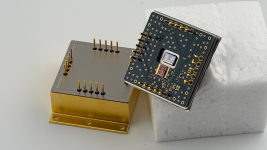
Microbolometer
SEMC’s Microbolometer detectors are uncooled infrared camera sensors built on vanadium- oxide technology. These focal-plane arrays capture IR heat radiation (8–12 μm) without the need for cooling, allowing thermal cameras to be compact and power-efficient. Offered in high resolutions, they provide detailed thermal imagery with very fine temperature sensitivity. SEMC technologies bring advanced sensing capabilities and high-definition thermal imaging into modern electronic systems, enhancing performance in cutting-edge applications.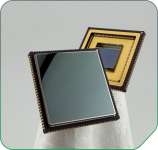
https://semc.sa/company.html
The SC
INT'L MOD
- Thread starter
- #1,300
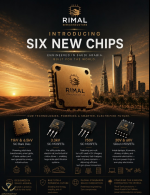
Rimal manufactures Gallium nitride (GaN) chips for defense radar system applications
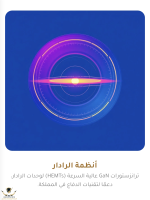
Rimal’s GaN chips revolutionize telecom and consumer electronics
Products:https://rimalsemiconductors.com/technology/compact-gan/
The SC
INT'L MOD
- Thread starter
- #1,301
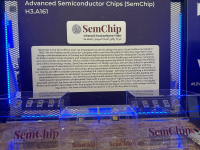
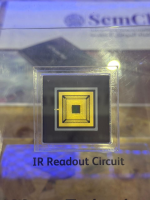
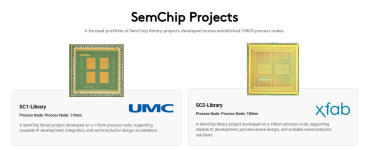
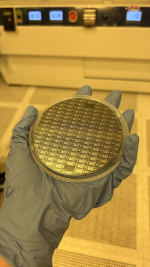
Advanced Semiconductor Chips Company is a leading company in designing integrated electronic circuits in the Kingdom of Saudi Arabia, founded in 2021. The company plays a major role in localizing the design of integrated electronic circuits by creating foundations for developing the field locally, which is one of the most prominent goals of the Kingdom of Saudi Arabia’s Vision 2030. As a leading company in the field of electronic chips, we are proud of our specialized team that includes national competencies and international expertise who possess more than 65 years of combined experience in designing integrated electronic circuits for various applications, including These are integrated electronic circuits for applications in various industries, such as healthcare, automotive, consumer electronics, and security.
The SC
INT'L MOD
- Thread starter
- #1,304
It has been announced that deep technology company Intelligent Machines has joined the Saudi National Semiconductor Center (NSH). Intelligent Machines is known for developing high-performance AI architectures based on leading-edge chips and open platforms, ideal for Edge AI and sensitive AI environments.
The SC
INT'L MOD
- Thread starter
- #1,305
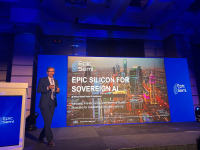
Epic Semi, a company specializing in designing semiconductor chips, announced that it has achieved a historic achievement by exceeding $100 million in revenues, becoming the first company in the Middle East and North Africa region to achieve this number.
This announcement came during a celebration in Riyadh, where the company confirmed that its goal is to localize the design of electronic chips in the Kingdom and contribute to achieving the goals of Vision 2030.
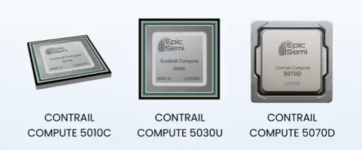
Epic Semi revealed the launch of three new main products within its “Contrail” range: enterprise flash memory, a server central processing unit (RISC-V CPU), and a cooling solution. The company intends to launch more products in the fields of artificial intelligence, the Internet of Things, and data centers, with a focus on deepening local content.
At the conclusion of the event, the company thanked its supporters, led by His Excellency the Minister of Communications and Information Technology, Engineer Abdullah Al-Sawaha, the National Semiconductor Team, and the main support partners such as NEOM and Al-Alat.
Epic Semi is a milestone in the Kingdom of Saudi Arabia's technological ambitions, as it is the first Saudi company specialized in designing electronic chips
The company was founded in 2023 and is headquartered in Riyadh, and is led by global expert Naveed Sherwani. The company aims to achieve “technical sovereignty” for the Kingdom by designing processors capable of running the latest artificial intelligence and cloud computing technologies.
Company domains
The company works to localize advanced microchips and intellectual property (IP) across four critical domains.
- Edge AI
- Physical AI
- IoT
- Cloud AI
Users who are viewing this thread
Total: 2 (members: 0, guests: 2)
Pakistan Defence Latest


Country Watch Latest
-
-
Trump orders military base mass shooter to be executed by firing squad (6 Viewers)
- Latest: j_hungary
-

-
-
Latest Posts
-

-

-
-
 Makkah Defence Alliance: Turkey, Saudi Arabia, and Pakistan, news & updates (40 Viewers)
- Latest: Starlord
-