Saudi Arabia strategic Projects: news, discussions & updates

To view this content we will need your consent to set third party cookies.
For more detailed information, see our cookies page.


To view this content we will need your consent to set third party cookies.
For more detailed information, see our cookies page.


1783272824521.png

1783272807452.png


King Salman Park in Riyadh progress (will be 5 times as large as Central Park in New York City):

To view this content we will need your consent to set third party cookies.
For more detailed information, see our cookies page.


To view this content we will need your consent to set third party cookies.
For more detailed information, see our cookies page.


To view this content we will need your consent to set third party cookies.
For more detailed information, see our cookies page.


John Pagano, CEO of Red Sea International Company:
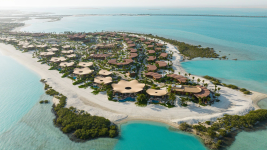
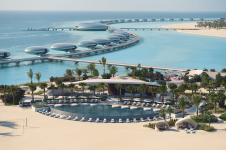
The domestic demand for our resorts has exceeded our expectations in an unprecedented manner, and it is greater than we could have wished for, with our reputation spreading rapidly due to the increasing awareness of people about the destination!

1783272474680.png

1783272491870.png

1783272498542.png

1783272530272.png
 
Last edited:
One of the most luxurious resorts in the world:

To view this content we will need your consent to set third party cookies.
For more detailed information, see our cookies page.


To view this content we will need your consent to set third party cookies.
For more detailed information, see our cookies page.


10 million views just from those 2 videos above.

To view this content we will need your consent to set third party cookies.
For more detailed information, see our cookies page.


To view this content we will need your consent to set third party cookies.
For more detailed information, see our cookies page.


To view this content we will need your consent to set third party cookies.
For more detailed information, see our cookies page.


1783273296577.png

1783273325475.png
 
To view this content we will need your consent to set third party cookies.
For more detailed information, see our cookies page.


Saudi agriculture sector adds $31.5bn to GDP​


AI helps Saudi mango farm boost flowering rate to 98%​


Foreign investment in Saudi private markets hits SR20 billion in 2025​


Saudi unemployment falls to 6.4% as women's jobless rate drops to 9%​


Saudi, China reaffirm commitment to deepen economic and investment ties​


Saudi Arabia's trade surplus surges 60% to over SR90 billion in Q1 2026​


Public Investment Fund’s profits soar 152% to SR65 billion in 2025​


Saudi Arabia’s non-oil economy surges as tourism spending reaches $81bn​

Saudi Arabia’s non-oil economy accelerated in late June as tourism spending reached $81bn, exports grew and Vision 2030 reforms gained momentum

Will Milner Wed 1 Jul 2026

https://www.arabianbusiness.com/fin...onomy-surges-as-tourism-spending-reaches-81bn

To view this content we will need your consent to set third party cookies.
For more detailed information, see our cookies page.


Saudi Arabia’s non-oil sectors contribute $278.6bn to economy as exports hit record $166.1bn​


Saudi Arabia’s NIDLP sectors contributed SR1.05tn to non-oil GDP in 2025 as exports rose 14 per cent and mining entered the global top 10

Will Milner Fri 19 Jun 2026

https://www.arabianbusiness.com/finance/economy/saudi-arabia-non-oil-economy

Saudi tourism hits new high with 123 million visitors and SR304b in spending

Non-religious travel now accounts for more than half of inbound visitors.

Last updated: June 19, 2026 | 18:22
Huda Ata, Special to Gulf News

https://gulfnews.com/business/touri...n-visitors-and-sr304b-in-spending-1.500580283
 
Last edited:

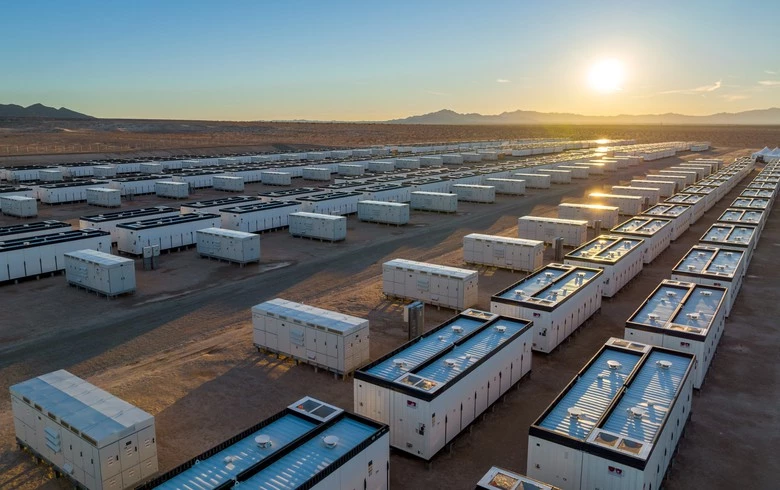
Saudi Arabia qualifies 27 bidders in 12 GWh battery tender​


Jul 2, 2026, 1:47:57 PMArticle by Anna Vassileva

Saudi Arabia has prequalified 27 developers which will compete for six 500 MW/2,000 MWh battery energy storage projects across the Kingdom to be awarded under the National Renewable Energy Programme (NREP).

The list of qualified bidders was unveiled by the Saudi Power Procurement Company (SPPC). It includes Masdar, ACWA Power, Al Jomaih Energy and Water Company Co, Alfanar, China Longyuan Power Group, China Southern Power Grid International (HK) Co.(CSGIHK), Cox Energy EPC, EDF, Envision Energy Co, Grupo Empresarial Enhol, Hefei Gotion High-Tech Power Energy Co., Ltd, International Power S.A (IPSA) acting through its Dubai branch, Korea Electric Power Corporation (KEPCO), Korea Western Power Co, Marubeni Corp., Nesma Renewable Energy, Nextgen, PowerChina, Pro-Power Investment, Saudi Energy Company, SPIC Shanghai Electric Power Co, Sumitomo Corp. Tesla Motors Netherlands, TNB Power Generation Sdn., TNB Renewables Sdn. Bhd., TotalEnergies Renewables SAS and WahajPeak Holdings.

The tender was launched in April and offers the Samha project in the Qassim region, Al-Leeth, Ashyrah and Khulis projects in the Makkah region, Al-Henakiyah in the Madinah region and Sadawi in the Eastern Province.


More information below:


LONGi and Saudi Water Authority Sign Strategic MoU to Advance Renewable Energy Integration and Digital Transformation of Saudi Water Sector​


World’s Biggest Green Hydrogen Project Blows Off Trump, Bigly​


1783273782583.png

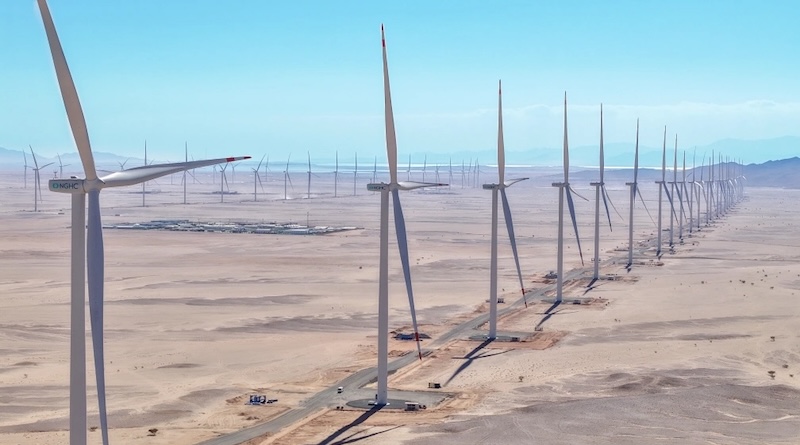
Two hundred and fifty-seven wind turbines and a solar farm the size of Manhattan will provide renewable energy to power the world's largest green hydrogen plant, located in Saudi Arabia (courtesy of NGHC).

The Intertubes are buzzing with news that US President Donald Trump has flushed more than $121 billion in renewable energy investments down the toilet, but here’s the thing. It’s a big world out there. Investors can pack up and take their business elsewhere, and they are doing just that. Take the global green hydrogen industry, for example. Trump can do nothing to stop the world’s biggest green hydrogen project from launching in Saudi Arabia, with a healthy assist from the US firm Air Products.

$121 Billion In Renewable Energy Projects, Down The Drain…​

For those of you new to the topic, green hydrogen is an emerging alternative to the current hydrogen supply chain, which consists of natural gas along with coal to a lesser extent. Among the alternatives under exploration, water electrolysis has attracted the most attention so far. Electrolysis systems jolt hydrogen gas from water, ideally with an electrical current supplied by wind, solar, or other renewable resources.

The US has renewable energy in abundance, and a Biden era program called Regional Clean Hydrogen Hubs aimed to stimulate activity in the green hydrogen field for export as well as domestic use. However, it sure looks like Trump did his friends in the Middle East a solid when he knocked the pins out from under the Hydrogen Hubs program last year.

Trump also put the brakes on two key supportive US industries, namely wind and solar. As a result, US green hydrogen stakeholders are sidelined while investors in the Middle East have a clear shot at supplying Europe and other regions around the globe.

Don’t just take my word for it. That figure of $121 billion in lost and at-risk investments comes from Wood Mackenzie. In a report issued earlier this week, the firm took note of 7 gigawatts in canceled or delayed renewable energy projects on federal property last year, with another 12 gigawatts also at risk, and much more — 80 gigawatts — at risk on private property.

Pennsylvania On The World Stage​

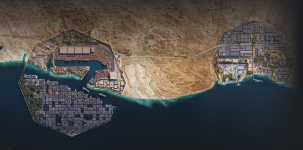
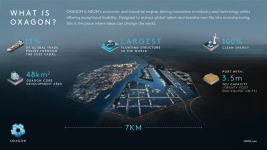
As for the world’s biggest green hydrogen project, that monster of an effort is located in the industrial city of Oxagon, located in Saudi Arabia’s ambitious technology development and lifestyle centerpiece NEOM. The NEOM region sprawls across northwestern Saudi Arabia to the coast of the Red Sea.

Ownership of the hydrogen project comes under the NEOM Green Hydrogen Company, which is a joint venture between NEOM, the Saudi firm ACWA Power, and Pennsylvania-headquartered Air Products.

Pennsylvania…who knew? Nevertheless, Air Products has been a leading US and global industrial gas producer for decades. The company re-affirmed its domestic roots in 2018, when it announced that its new global headquarters would be located in Pennsylvania, just about a mile from its old headquarters.

Good News For The World’s Biggest Green Hydrogen Project…​

The NEOM hydrogen project has largely flown under the CleanTechnica radar, so now would be a good time to catch up. Last year, NGHC reported that the project was 80% complete, listing wind turbines, hydrogen storage vessels, and electrolysers among the key elements completed, alongside a solar array and a transmission grid.

At the time, NGHC sounded confident that the project was on track with a total of 4 gigawatts’ worth of wind and solar power to run the electrolysers. If all goes according to plan, the turbines and solar panels should start generating electricity around the middle of 2026 — right about now, as a matter of fact — with electrolysers to be commissioned next year and distribution to follow right behind.

By distribution, NGHC includes green ammonia. Produced with green hydrogen and ambient nitrogen, green ammonia (chemical formula H3N) can be used as-is for fertilizer and other industrial products, or cracked to release hydrogen gas at the user end. The underlying idea is that ammonia is more economical to transport by ship, compared to hydrogen gas.

The new hydrogen facility is designed to produce 600 tonnes (about 661 US tons) of green ammonia per day. NGHC has not posted an update on its website since June of 2025, but Air Products has indicated that all is going to plan. Earlier this morning, the company announced that it is taking the final steps to nail down a marketing and distribution agreement with the Norway-based global firm Yara, as off-takers for ammonia produced by the green hydrogen project.


To view this content we will need your consent to set third party cookies.
For more detailed information, see our cookies page.


1783273793926.png

Interesting article from CNN from November 2025:

This oil-rich country has stood in the way of climate action. It’s quietly building a clean energy empire​

By Laura Paddison
NOV 17, 2025


Quite frankly, KSA should be (given the huge landmass, ideal conditions in many places, potential, investment power and political will) and likely will be a global renewables energy power.
 
To view this content we will need your consent to set third party cookies.
For more detailed information, see our cookies page.


1783274093438.png

To view this content we will need your consent to set third party cookies.
For more detailed information, see our cookies page.


"On a personal note, I'm in my early forties, and I genuinely believe that within my lifetime I may board a train in Riyadh and step off in Paris.It may sound almost unthinkable today, but it offers a glimpse of the scale of Saudi Arabia's logistical ambition. Crown Prince Mohammed bin Salman never thinks average. In less than a decade, he has strengthened Saudi Arabia's position as a bridge between three continents: Asia, Africa, and Europe, and as a hub in global logistics.From energy and petrochemicals to food, fertilizers, minerals, and more, global trade increasingly sees Saudi Arabia as indispensable. And the story has only just begun."

To view this content we will need your consent to set third party cookies.
For more detailed information, see our cookies page.


1783274082080.png

To view this content we will need your consent to set third party cookies.
For more detailed information, see our cookies page.


1783274072641.png

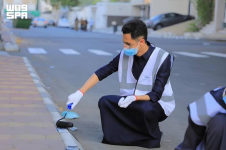
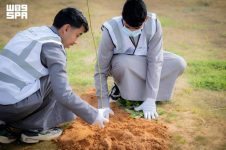
Over 10,000 volunteers help transform Saudi public spaces​

1783274062768.png
1 / 3
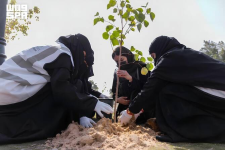
A total of 10,213 volunteers participated, contributing more than 50,000 volunteer hours across all regions of the Kingdom. (SPA)

1783274053531.png
2 / 3
A total of 10,213 volunteers participated, contributing more than 50,000 volunteer hours across all regions of the Kingdom. (SPA)

1783274043918.png
3 / 3
A total of 10,213 volunteers participated, contributing more than 50,000 volunteer hours across all regions of the Kingdom. (SPA)

RIYADH: The Ministry of Municipalities and Housing concluded its urban beautification volunteer initiative after achieving its field and public awareness goals.

A total of 10,213 volunteers participated, contributing more than 50,000 volunteer hours across all regions of the Kingdom.

The initiative also engaged public school students in field activities and awareness campaigns at public facilities, municipal sites, and schools.

The activities promoted social responsibility among young people and encouraged them to help preserve the urban environment and public facilities.

The initiative focused on three main areas: traffic safety, tree planting, and urban beautification through painting.

The ministry said the initiative aims to improve cities, enhance quality of life, and create more sustainable and vibrant urban environments.


As covered in previous pages, KSA has restored/regreened an area the size of Lebanon since 2016.


UNCCD (a UN branch)


I covered this milestone/achievement in a video a few months ago:

To view this content we will need your consent to set third party cookies.
For more detailed information, see our cookies page.
 
Last edited:
Future home of the most influential horse in human history (Arabian horse):

To view this content we will need your consent to set third party cookies.
For more detailed information, see our cookies page.


To view this content we will need your consent to set third party cookies.
For more detailed information, see our cookies page.


To view this content we will need your consent to set third party cookies.
For more detailed information, see our cookies page.


To view this content we will need your consent to set third party cookies.
For more detailed information, see our cookies page.


To view this content we will need your consent to set third party cookies.
For more detailed information, see our cookies page.


Amazing.
 
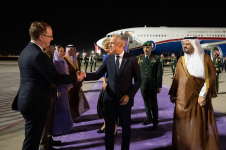
Canadian Prime Minister Mark Carney arrives in Jeddah

1783570189244.png

Strategic partnership.. Saudi Arabia and Canada explore trillion investment opportunities in infrastructure during the participating business forum held in Riyadh with the participation of more than 150 companies.

The visit is the first by a Canadian Prime Minister to the Kingdom in 26 years...The Prime Minister of Canada arrives in Jeddah, with the Deputy Governor of the Makkah Region at the forefront of those welcoming him

To view this content we will need your consent to set third party cookies.
For more detailed information, see our cookies page.


Prime Minister Carney's office said in a statement that he will hold discussions with Prince Mohammed bin Salman bin Abdulaziz, Crown Prince and Prime Minister of Saudi Arabia, on ways to strengthen bilateral relations, with a focus on the areas of energy, critical minerals, investment, infrastructure, and advanced technologies, in addition to defense cooperation.

The office added that the discussions will review the most prominent regional and international developments, most notably the situation in the Middle East, maritime navigation security, and files of common interest. They will also address opportunities to enhance political coordination between the two countries.

According to the Canadian government, the visit will focus on:

  • Promoting trade and investments with one of the largest economies in the Middle East.
  • Cooperation in the energy sector, whether oil and gas, clean energy and hydrogen.
  • Critical minerals needed by Canadian industries such as batteries and advanced technologies.
  • Artificial intelligence and modern technologies, benefiting from the large Saudi investments in this field.
  • Defense cooperation and military industries, within Canada's new policy to expand its defense partnerships.
  • Infrastructure, tourism, agriculture and health sciences, which are sectors that Ottawa announced would be among the priorities of the discussions.

From the Saudi side, the main goals appear to be:

  • Attracting Canadian investments to Vision 2030 projects.
  • Benefit from Canadian expertise in mining, artificial intelligence, and advanced technologies.
  • Diversifying international partners and not relying on traditional partners only.
  • Developing defense and technical cooperation if appropriate opportunities become available.
  • Strengthening the Kingdom’s diplomatic status as a key partner to major economic powers.
 
Saudi Arabia today tells the truth as it is and calls things by their names.
Iran does not protect Islam, but rather uses its name to achieve its ambitions. This position is not new, but today it is clearer and bolder.
Saudi Arabia sees reality as it is and speaks about it frankly to the world.

Saudi Arabia does not show compliments at the expense of the truth.

To view this content we will need your consent to set third party cookies.
For more detailed information, see our cookies page.
 
The Muslim World League expresses its strong condemnation and denunciation of the continuation of the sinful Iranian aggression against Kuwait, Bahrain, Qatar, the UAE, Oman, and Jordan, and the targeting of commercial ships- The Secretary-General of the League, President of the International Union of Muslim Scholars, Dr. Muhammad Al-Issa: These sinful aggressions violate all religious values, laws, international norms and customs, and humanitarian principles, and undermine efforts to restore security and stability in the region.

To view this content we will need your consent to set third party cookies.
For more detailed information, see our cookies page.
 
Microsoft President: Saudi Arabia is moving from exporting oil to exporting artificial intelligence

With the company preparing to operate the largest and most modern data center in Dammam in 2026 to meet local and global demand
1784134340104.png

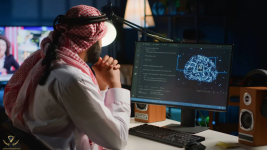
Saudi Arabia is witnessing a historic moment of transformation that is leading the region towards the age of artificial intelligence thanks to Vision 2030 and clear political will (Shutterstock)
As Saudi Arabia accelerates its national transformation under the umbrella of “Vision 2030,” the regional technology scene is witnessing a major inflection point. For the first time, “the region is not only participating in a global transformation, but is clearly at the forefront of it,” according to what Microsoft President for the Middle East and Africa, Naim Yazbek, said during an exclusive interview with Asharq Al-Awsat.

Yazbek believes that Saudi Arabia today stands at the forefront of a technological scene that is considered “a moment of historical transformation the likes of which we have not witnessed in the past hundred years,” a moment defined by sovereign cloud architectures, artificial intelligence, and national innovation capabilities.
1784134396627.png
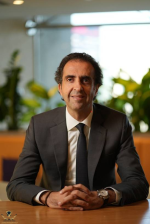
Naim Yazbek, President of Microsoft for the Middle East and Africa (Microsoft)

Saudi national transformation

Yazbek believes that the clear political will in the Kingdom is behind this acceleration. The country is not only seeking to modernize its infrastructure, but also views artificial intelligence as a strategic pillar that is historically equivalent to oil. If oil has formed the basis of the economy for decades, then artificial intelligence has become the new resource on which the Kingdom is betting in its economic future.

Yazbek notes that the recent visit of Prince Mohammed bin Salman, Crown Prince and Prime Minister of Saudi Arabia, to the United States carried an important significance, as the issue of artificial intelligence and advanced technologies came at the forefront of the talks, which reflects the seriousness of the Saudi approach towards building a knowledge-based economy with global influence.

This trend has opened the door to a new phase in which the Kingdom is not content with consuming artificial intelligence technologies from abroad, but rather developing its local capabilities and building a knowledge production system that can be exported, which strengthens the principle of technical sovereignty and establishes an economy based on innovation.

Advantages of the Saudi technology market

Yazbek confirms that the entire regional scene is witnessing a unique transformation, as the Gulf countries, especially Saudi Arabia, are no longer just adopting artificial intelligence technologies, but have also entered the stage of developing and re-exporting them to global markets. The Kingdom is working to build advanced infrastructure capable of running huge models and providing enormous computing capabilities, making it part of the global innovation equation for the first time in its modern history, and not just an importer of technology.

Yazbek conveys a common impression he heard during his multiple recent meetings in Riyadh with ministries, regulatory bodies, national institutions, and international companies, which is that everyone “wants to be at the forefront of artificial intelligence, not behind it.” It is considered that ambitions are no longer slogans, but rather have turned into clear executive decisions, manifested in rearranging budgets, raising expectations, and accelerating project timelines.

Yazbek also points out that Saudi institutions are now demanding that technology companies ensure the highest levels of data sovereignty, especially with the sensitivity of the financial, health, and educational sectors. At the same time, the legislative structure is developing very rapidly to keep pace with this transformation, as the Kingdom has modernized its cybersecurity, data governance, cloud computing, and artificial intelligence systems at a faster pace than many countries around the world, which has made the ability to amend legislation with high flexibility an important competitive advantage. Yazbek notes that the success of institutions is not measured by the number of artificial intelligence projects they implement, but rather by the extent to which these projects are related to major national challenges, as artificial intelligence must be at the heart of productivity, health care, education, and cybersecurity files, and not in small initiatives aimed at media appearance.
1784134588163.png
Saudi Arabia is one of the first countries to build advanced cloud and sovereign infrastructure, which enables it to develop and innovate new technologies and not just consume them (Getty)

Return on investment equation

Yazbek points out that building an economy based on artificial intelligence requires more than advanced data centers. It begins with planning for decades to come in energy production and expanding communications networks. The actual operation of huge models requires enormous electrical capacity and long-term stability, which is what the Kingdom is working on through strategic investments in renewable energy and communications infrastructure. These steps strengthen Saudi Arabia's position as a country capable of hosting advanced global computing operations over the coming years.

Yazbek explains that the question of return on investment has become one of the most important questions at this stage. At the national level, the return is measured by direct economic prosperity, increasing domestic product, creating new jobs, enhancing the ability to innovate, raising productivity, and consolidating the Kingdom’s global position. At the institutional level, the results have already begun to appear. Using tools like CoPilot, employees are able to perform their tasks more quickly and with greater quality, eliminating routine work and devoting time to innovation. Yazbek notes that the next phase will witness an expansion of gains to include developing new business models, improving customer experience, simplifying operational processes, and raising efficiency in various sectors.
1784134793909.png
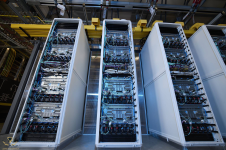
Microsoft will begin operating the new cloud region in Dammam in 2026, which constitutes a major transformation in the health, financial and government sectors (Microsoft)

2026...the major turning point

“Microsoft” is preparing to start operating a new cloud region in Dammam during the second half of 2026 and host all of its cloud services, including “Azure”, “Microsoft 365”, “Dynamics and Power Platform”, cybersecurity services, artificial intelligence, and “Copilot” solutions. This project is one of the largest and most modern data centers in the region, and construction has already been completed while testing and gradual deployment of services are currently underway in preparation for launch. Yazbek confirms that the demand for this cloud is very huge, not only from national institutions, but also from international companies that want to operate their services within the Kingdom, which was not previously possible with this capacity.

This cloud will have an immediate impact on regulated sectors such as health and finance, which will be able for the first time to use local cloud and artificial intelligence services compatible with Saudi systems. Yazbek points out that the services of “Azure” and “Copilot” will become widely available to all institutions, from small companies to the largest economic entities, and that the readiness of human and technical institutions will be the decisive factor in quickly benefiting from this qualitative shift.

Value beyond infrastructure


Yazbek confirms that operating the national cloud not only provides technical capabilities, but also opens the door to the entry of Microsoft's global partner system into the Kingdom. This means that thousands of advanced solutions, from business software to security and data analysis technologies, will become directly available to Saudi organizations. Yazbek considers this integrated system to be the most influential factor in accelerating innovation and building new services, as its value exceeds the value of the infrastructure itself.

Sovereignty and security

Yazbek told Asharq Al-Awsat that the concept of digital sovereignty has become an indispensable element in any national technical architecture. The Kingdom requires cloud service providers to adhere to the highest levels of accreditation to host sensitive national infrastructure, which is what Microsoft is working to achieve before the launch. With the start of operation of the cloud centers in Dammam, they will effectively become part of the Kingdom’s sovereign structure, which requires the highest levels of protection. The company invests billions of dollars annually in cybersecurity, and has been able to repel unprecedented cyberattacks, which reflects the level of threats that national structures face today. The company offers a broad system that includes data governance, sovereign cloud solutions, data classification tools, and hybrid options that give organizations flexibility in operation and expansion. Yazbek emphasizes that sovereignty is not a single concept, but rather a spectrum of requirements that includes data protection, legislative control, and the existence of structures within national borders.

Data...the next source of excellence

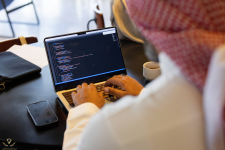
Yazbek considers that data is the decisive factor for the success of artificial intelligence, and that any artificial intelligence model that is not based on clean data turns into a source of hallucinations. Therefore, any strategic national discussion begins with a question about the readiness of national data. Today, the Kingdom is working in partnership with “Sdaya”, the Ministry of Communications, and national companies to build a huge data system organized according to the highest standards, making it a main pillar for developing Arabic language models capable of competing globally. Yazbek says the most effective approach is to fine-tune global models using local data that reflects dialects, cultural and industrial contexts, rather than building new models from scratch, which makes the process more sustainable and accurate. Yazbek also calls for adopting a clear framework for responsible artificial intelligence, stressing that speed alone is not enough, and that the safe and reliable use of technology must be built from the first moment. Microsoft is working with national authorities to develop policies that prevent misuse, ensure data protection, and build fair and transparent models. It is considered that these foundations will determine the future of trust between citizens and new technologies.
1784135061575.png

Skills training...a national advantage

Yazbek stresses that human skills are the real engine of national capacity. The Kingdom's possession of a strong infrastructure is not enough without the skills capable of operating and developing it. He believes that Saudi youth represent the Kingdom's major competitive advantage, as the new generation was born in a digital world that deals with modern technologies with spontaneity and flexibility. Microsoft has trained more than a million Saudis over the past two years through joint programs with Sdaya, the Ministry of Communications, the Ministry of Education, and the Misk Foundation. The Joint Artificial Intelligence Academy has also graduated thousands of students from more than forty universities, and has provided expanded programs to train teachers on artificial intelligence tools in education. The vision is that skills development is what transforms the digital infrastructure into national capacity that translates into innovation and productivity.

From adoption to leadership

Yazbek confirms that Microsoft is conducting careful assessments of the impact of the national cloud in the countries in which it operates. These assessments include job creation, contribution to the local product, growth of startup companies, expansion of the partner system, and increased knowledge production. When these indicators rise in conjunction with the spread of local applications of artificial intelligence, the company considers that the country has moved from the adoption stage to the leadership stage. Trends indicate that Saudi startups are rapidly moving towards building solutions based on artificial intelligence, benefiting from cloud grants and technical support that allows them to develop their products more quickly. With the availability of artificial intelligence capabilities locally, these companies will be able to enter the market at a faster pace and launch products that are fully compatible with national regulations.


https://aawsat.com
 
Moving from the oil era to the artificial intelligence era

In recent years, Saudi Arabia's transformation from an oil-based economy to one based on knowledge and innovation has become an essential part of Vision 2030. The phrase "Saudi Arabia is moving from exporting oil to exporting artificial intelligence" is not just a slogan; rather, it reflects a clear strategic direction that has begun to take shape through huge projects, advanced technical infrastructure, and global investments.

1784139321647.png

🇸🇦 How does Saudi Arabia move from exporting oil to exporting artificial intelligence?
1. Building a giant digital infrastructure

Saudi Arabia invests in:

  • Hyperscale Data Centers
  • Fifth generation 5G and experimentally sixth generation 6G networks
  • National cloud computing platforms
  • Hosting major international technology companies (Google Cloud, Oracle, Huawei Cloud).

This architecture is the “oil of the future” because it enables countries to operate and develop artificial intelligence models locally.

2. Launching national strategies for artificial intelligence
Saudi Arabia announced the National Strategy for Data and Artificial Intelligence (SDAIA), which aims to:

  • To be among the top 10 countries in the world in artificial intelligence by 2030.
  • Training more than 40,000 specialists in the fields of artificial intelligence.
  • Establishing a global research and industrial system in this field.

3. Exporting artificial intelligence solutions and products
Instead of exporting natural resources, Saudi Arabia is working on developing and exporting digital solutions such as:

Smart city systems
Cybersecurity
Education and healthcare platforms
Robotics and drone technologies
Artificial intelligence solutions for the financial, energy and transportation sectors

Some of these technologies have begun to be sold or transferred to other countries under cooperation agreements.

4. Special technical areas (NEOM - The Line - Oxagon).
NEOM projects are not traditional cities, but rather innovation areas:

The first city managed entirely by artificial intelligence
Autonomous factories and robots
Laboratories for advanced computing research

These regions will become technology export centers, not just their consumers.

5. Attracting international companies and talents
Saudi Arabia has become a regional technology center:

  • Companies such as OpenAI, Microsoft, and Google have begun cooperating with Saudi entities.
  • Huge programs to attract scientists and programmers (Talent Attraction Programs).
  • Supporting Saudi startups that offer international products.

6. Sovereign investments in artificial intelligence
The Public Investment Fund (PIF) invests in:

  • Global artificial intelligence companies
  • Design of advanced chips and processors
  • High Performance Computing

These investments mean that Saudi Arabia will become a producer and developer of technology and not just a consumer.

🎯Basic message

Saudi Arabia is not giving up oil, but it is transforming from a country dependent on oil to a country that leads the digital economy and exports artificial intelligence through technologies, services, digital infrastructure, and innovation.
 

Users who are viewing this thread

Latest Posts

Back
Top