Navigation
Install the app
How to install the app on iOS
Follow along with the video below to see how to install our site as a web app on your home screen.
Note: This feature may not be available in some browsers.
More options
Style variation
You are using an out of date browser. It may not display this or other websites correctly.
You should upgrade or use an alternative browser.
You should upgrade or use an alternative browser.
Saudi Arabia strategic Projects: news, discussions & updates
- Thread starter The SC
- Start date
More options
Who Replied?


The SC
INT'L MOD
- Thread starter
- #1,337
Kingdom of Saudi Arabia.. Political weight creates stability
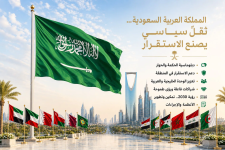
True leadership does not occur in times of calm, but rather in moments of crisis when countries test their ability to protect their interests, contain tensions, and prevent chaos from turning into a permanent reality. At every turning point that the region has witnessed over the past decades, the Kingdom of Saudi Arabia has been present as a country that creates stability more than it just talks about it.
The Kingdom has proven that strength does not lie in escalation, but rather in the ability to manage crises rationally, build consensus, and defend the security of the region without compromising its principles or interests. Therefore, it was not surprising that Riyadh turned into a platform for dialogue, a main station for mediations, and a capital where efforts are made to bring viewpoints closer together whenever crises intensify.
This position did not come out of nowhere, but rather is the result of a consistent policy that believes that Gulf security is a collective responsibility, and that the stability of the Arab world can only be achieved with unity of position, respect for the sovereignty of states, and rejection of all forms of interference or attempts to destabilize security and spread chaos.
His Royal Highness Prince Mohammed bin Salman, Crown Prince and Prime Minister, may God support him, has rebuilt the state system in a more comprehensive sense. The vision has contributed to developing systems, raising the efficiency of procedures, strengthening governance, empowering institutions, and accelerating decision-making, making the Kingdom more capable of dealing with regional and international changes efficiently and flexibly. When the internal front is strong, the state becomes more influential in its surroundings, more able to protect its interests, and contribute to the stability of the region. This transformation is a strategic vision that went beyond the traditional concept of reform, to establish a model for a modern state that combines development and readiness, economic ambition and political presence. Today, the Kingdom is no longer only an influential regional player, but has become an essential partner in addressing international issues, creating initiatives, and building partnerships that serve security and stability.
At the Gulf level, the Kingdom has continued to represent a safety valve for the GCC system, out of its belief that common challenges can only be faced with unity of ranks and integrated efforts. It has also continued to perform its historic role in the Arab world in supporting Arab solidarity, seeking to heal rifts, and elevating the language of dialogue over disagreement, based on a firm conviction that the future of the region is not built by conflicts, but by cooperation and integration.
Perhaps what distinguishes Saudi policy is that it combines firmness and responsibility, firmness in protecting national and regional security, and responsibility in sparing the region the scourge of conflicts, with continued humanitarian and relief support to affected countries and peoples, in a way that reflects the stability of principles before circumstances change.
Anyone who contemplates the regional scene realizes that the Kingdom was never a party seeking influence as much as it was a state seeking to establish stability. Therefore, whenever the crises intensified, attention turned to Riyadh, because it became a symbol of wisdom, a center of trust, and a reliable partner in creating solutions.
Perhaps the greatest thing that can be said today is that the Kingdom did not make its power a means to impose will, but rather made it a tool for protecting security, maintaining stability, and gathering the word, and this is the power that remains, because it is built on wisdom, rooted in trust, and is witnessed by reality before it is written by the pens.
The SC
INT'L MOD
- Thread starter
- #1,339
Important - Nuclear Program | The United States proposes the third generation + of nuclear energy with advanced reactors to Saudi Arabia.
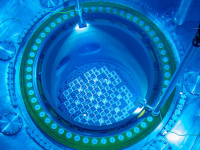
Saudi Arabia is witnessing tangible movement in the nuclear energy sector, with a focus on modern third-generation + reactors, as international companies compete to provide the latest technologies to the Kingdom within its ambitious nuclear project.
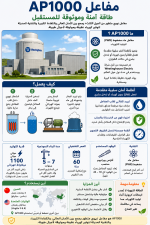
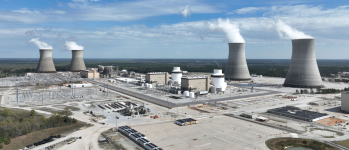
The most prominent applicant is the American Westinghouse AP1000 reactor, which features passive safety systems that reduce reliance on pumps and electricity in emergency situations with a design that increases operating reliability and extends the life of the reactor to about 60 years.
On the other hand, South Korea offers the APR1400 reactor, which is a third-generation reactor characterized by a higher production capacity of about 1,400 megawatts, with safety systems that rely more on traditional electric pumps.
Nuclear energy experts point out that choosing the appropriate technology depends on the balance between safety, production capacity and compatibility with international standards, while AP1000 remains the United States' choice to focus on technical safety and modern technology.
*The first nuclear technological statement - Business Korea | The United States is pushing South Korea to use an American reactor in the Saudi nuclear energy project!
Recent reports showed the United States' interest in the Saudi nuclear energy project, as it asked South Korea to adopt the Westinghouse AP1000 reactor model.
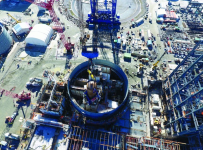
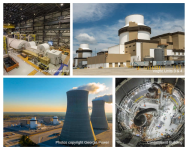
https://info.westinghousenuclear.co...e-u.s.-congress-in-support-of-ap1000-projects
Saudi Arabia is witnessing tangible movement in the nuclear energy sector, with a focus on modern third-generation + reactors, as international companies compete to provide the latest technologies to the Kingdom within its ambitious nuclear project.
The most prominent applicant is the American Westinghouse AP1000 reactor, which features passive safety systems that reduce reliance on pumps and electricity in emergency situations with a design that increases operating reliability and extends the life of the reactor to about 60 years.
On the other hand, South Korea offers the APR1400 reactor, which is a third-generation reactor characterized by a higher production capacity of about 1,400 megawatts, with safety systems that rely more on traditional electric pumps.
Nuclear energy experts point out that choosing the appropriate technology depends on the balance between safety, production capacity and compatibility with international standards, while AP1000 remains the United States' choice to focus on technical safety and modern technology.
*The first nuclear technological statement - Business Korea
| The United States is pushing South Korea to use an American reactor in the Saudi nuclear energy project!Recent reports showed the United States' interest in the Saudi nuclear energy project, as it asked South Korea to adopt the Westinghouse AP1000 reactor model.
Westinghouse Suppliers Meet with the U.S. Congress in Support of AP1000® Projects
https://info.westinghousenuclear.co...e-u.s.-congress-in-support-of-ap1000-projects

Feroze
Trusted Member

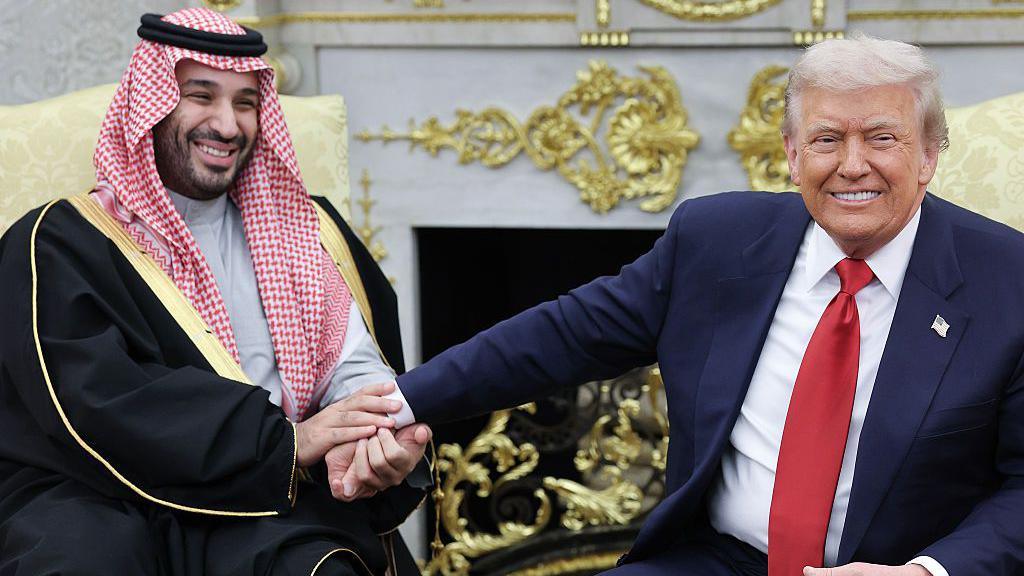
US to announce deal allowing Saudi Arabia to develop nuclear power
Advertisement
Summary
- The US is due to sign a deal that will allow Saudi Arabia to develop a civilian nuclear programme
- An announcement is expected from US President Donald Trump's administration, according to CBS News, the BBC's US partner
- The deal will reportedly allow US companies to run nuclear power for the Saudis on Saudi soil
- Nuclear experts and former officials in Israel - the US's top ally in the Middle East - have warned that such an agreement could lead to Saudi Arabia being able to develop a nuclear weapon
- The fear is that if Saudi Arabia starts enriching its own uranium, hardliners in Iran could be encouraged to secretly race to build a bomb, writes our security correspondent
- The deal follows years of stalled talks between the US and Saudi Arabia - a timeline
Live Reporting
Edited by Sakshi Venkatraman and Ben HattonUS President Donald Trump speaking at unrelated eventpublished at 15:36
15:36Image source,Reuters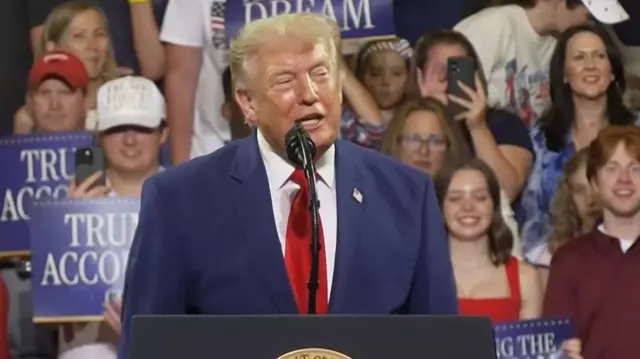
US President Donald Trump has just started speaking at a high school in Atlanta, Georgia.
We're listening in to see if he is speaks about the reported US-Saudi Arabia nuclear deal, and will bring you any relevant updates.
Share
US-Saudi nuclear deal still expected but no official confirmation yetpublished at 15:28
15:28Image source,Getty Images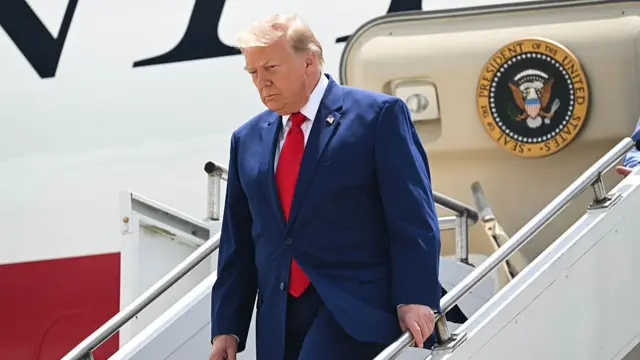
Image caption,
Trump attended Dover Air Force Base in Delaware earlier, before an appearance at a Georgia high school, this evening
If you're just joining us, we're still expecting the US and Saudi Arabia to announce an nuclear power deal.
US media has reported that the two countries have reached a commercial agreement for US companies to run nuclear power plants on Saudi Arabian soil, but we've not had anything yet on the matter from President Trump or Saudi officials.
Reports suggest the deal will potentially allow Saudi Arabia to enrich uranium itself.
It would be the latest milestone in a Saudi-US negotiations on nuclear that have been ongoing ever since the two nations signed an memorandum of understanding in 2008.
Back in the US, Democrat representative John Garamendi described the deal as "terrible, terrible policy", while Republican Marlin Stutzman said he had no "initial" concerns over the agreement.
The highly controversial agreement will need to be debated in congress but opponents are unlikely to be able to gather enough votes to defeat Trump's initiative, our North America editor Sarah Smith writes.
We expect Trump to soon be speaking at a high school in Atlanta, Georgia, for an unrelated event, but we will bring you any relevant lines.
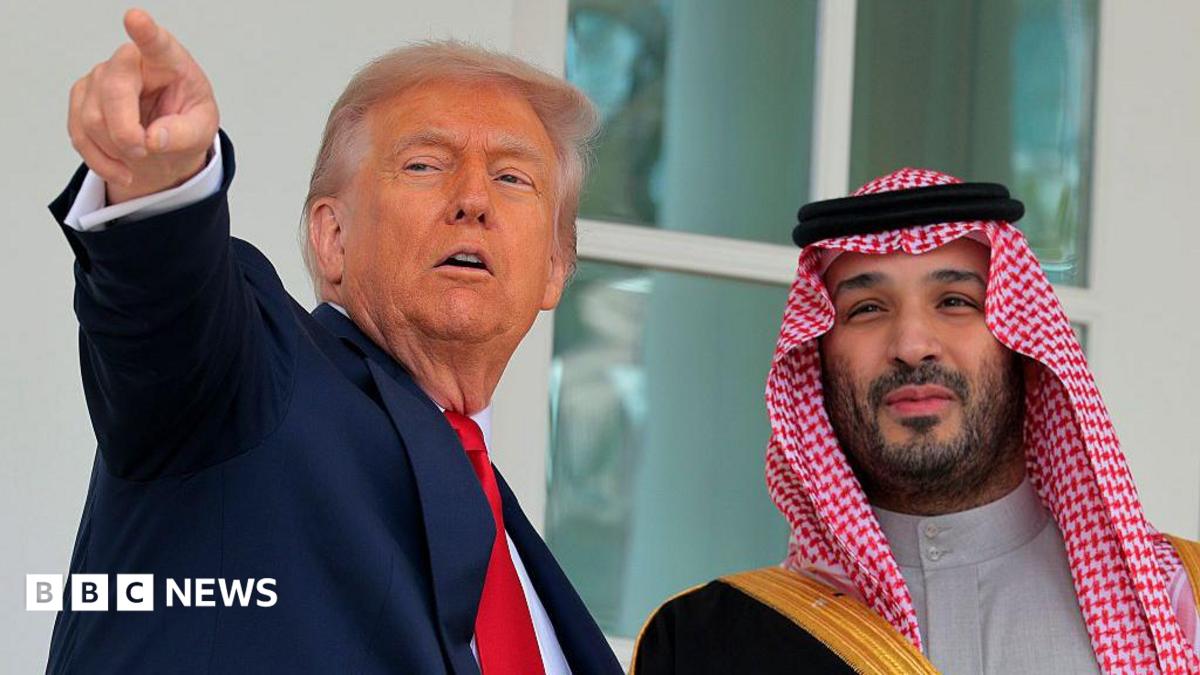
US to announce deal allowing Saudi Arabia to develop nuclear power
The agreement could be worth billions of dollars to the US, whose companies could be involved in building a facility to produce enriched uranium. www.bbc.com
The SC
INT'L MOD
- Thread starter
- #1,341
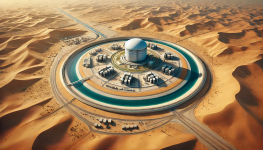
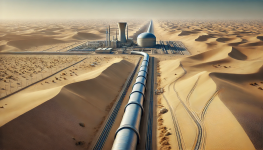
American Energy :
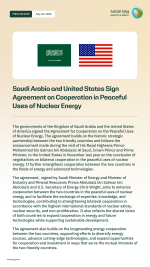
Today, the United States and the Kingdom of Saudi Arabia announced a historic agreement for peaceful nuclear cooperation And thanks to President Trump, this partnership will contribute to boosting prosperity within the United States and strengthening the security of our allies abroad.
@ksa_tsar
·
The SC
INT'L MOD
- Thread starter
- #1,342
The tube is underground, of course, but the best solution for Saudi Arabia for peace of mind is to build inside a mountain tunnel using the beloved
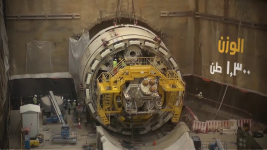
Tunnel inside the mountains + laying huge water pipes
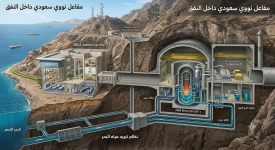
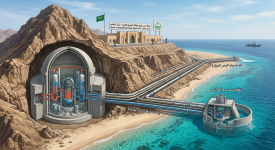
What is being circulated about the site on the Arabian Gulf is a site for the first project
A number of plants will be built in several locations in the future
The Saudi nuclear project will be built over a period of thirty years
It will consist of several types of reactors
Including the large reactor and the small one
It will not be limited only to American technology, as reactors will be built using technologies from other countries
The feasibility of shipborne marine reactor technology is also being studied, whether for water desalination or electricity generation
Tunnel inside the mountains + laying huge water pipes
What is being circulated about the site on the Arabian Gulf is a site for the first project
A number of plants will be built in several locations in the future
The Saudi nuclear project will be built over a period of thirty years
It will consist of several types of reactors
Including the large reactor and the small one
It will not be limited only to American technology, as reactors will be built using technologies from other countries
The feasibility of shipborne marine reactor technology is also being studied, whether for water desalination or electricity generation
The SC
INT'L MOD
- Thread starter
- #1,346
 The United States of America considers the Kingdom of Saudi Arabia a strategic and reliable partner.The nuclear agreement with Saudi Arabia will not only contribute to strengthening regional security, but it will also enhance American security.This historic agreement will open unprecedented economic and trade horizons in the history of the region.


PAKISTANFOREVER
Trusted Member

What is exactly going on here? Is the deal confirmed? Is the deal dependent on Saudi Arabia recognising israel? If the Saudis don't recognise israel will the deal become null and void? Will the americans then stop supplying the saudis with nuclear fuel?
Is this agreement the initiation of Saudi Arabia becoming a nuclear weapons state? If they do then Iran will follow suit. IF that happens, israel's plan for a greater israel is dead in the water.
Is this agreement the initiation of Saudi Arabia becoming a nuclear weapons state? If they do then Iran will follow suit. IF that happens, israel's plan for a greater israel is dead in the water.
The SC
INT'L MOD
- Thread starter
- #1,349
The deal confirmed and KSA does not have to adhere to the Abrahamic accord..What is exactly going on here? Is the deal confirmed? Is the deal dependent on Saudi Arabia recognising israel? If the Saudis don't recognise israel will the deal become null and void? Will the americans then stop supplying the saudis with nuclear fuel?
Is this agreement the initiation of Saudi Arabia becoming a nuclear weapons state? If they do then Iran will follow suit. IF that happens, israel's plan for a greater israel is dead in the water.
This deal is strictly for civilian nuclear technologies..
PAKISTANFOREVER
Trusted Member
The deal confirmed and KSA does not have to adhere to the Abrahamic accord..
This deal is strictly for civilian nuclear technologies..
Even if it's civilian, it could potentially be used for building nuclear weapons. Is this being done to give the Saudis a deterrent against the Iranians?
Users who are viewing this thread
Total: 2 (members: 0, guests: 2)
Pakistan Defence Latest
-

-

-
 KP govt backs out of counterterrorism commitments during talks: Naqvi (2 Viewers)
- Latest: Distant_Observer
-

-

Country Watch Latest
-

-
 Anduril to build Arsenal 2 manufacturing facility to expand Virginia class submarine production (9 Viewers)
- Latest: F-22Raptor
-

-
-
Latest Posts
-
 ‘Stand on the right side of history’: Starbucks urged to close stores in China’s Xinjiang (11 Viewers)
- Latest: PK781
-
-
-
-
Anduril to build Arsenal 2 manufacturing facility to expand Virginia class submarine production (9 Viewers)
- Latest: F-22Raptor