Navigation
Install the app
How to install the app on iOS
Follow along with the video below to see how to install our site as a web app on your home screen.
Note: This feature may not be available in some browsers.
More options
Style variation
You are using an out of date browser. It may not display this or other websites correctly.
You should upgrade or use an alternative browser.
You should upgrade or use an alternative browser.
Saudi Arabia strategic Projects: news, discussions & updates
- Thread starter The SC
- Start date
More options
Who Replied?


 is considered an attack against all of them.
The SC
INT'L MOD
- Thread starter
- #1,399
The ultimate goal of this agreement...
It is to build an industrial base (for ammunition) and weapons... away from blackmailing the West
In any confrontation against their interests in the Sunni Islamic region
Why do I say that..?
Because Saudi Arabia is capable of defending itself and has a huge military force...and a loyal people who love their country and its leadership.
Because Türkiye also has huge military and industrial power... and is capable of defending itself
Because Pakistan also has military power and nuclear deterrence
In other words, the three are militarily powerful.
All three also have military-industrial ambitions.
They have solid ground, and if they cooperated completely, it would be a blow to the death of Louarqa
Western blackmail regarding ammunition supplies at least
Therefore, this agreement is considered a historical agreement complementary to previous agreements between the same countries.
Some people do not understand that defense agreements only work in the event of an existential war, and the goal of the agreement is deterrence, not entering into multiple wars.. and I expect that the agreement will include building a huge industrial base with all available resources.
It is to build an industrial base (for ammunition) and weapons... away from blackmailing the West
In any confrontation against their interests in the Sunni Islamic region
Why do I say that..?
Because Saudi Arabia is capable of defending itself and has a huge military force...and a loyal people who love their country and its leadership.
Because Türkiye also has huge military and industrial power... and is capable of defending itself
Because Pakistan also has military power and nuclear deterrence
In other words, the three are militarily powerful.
All three also have military-industrial ambitions.
They have solid ground, and if they cooperated completely, it would be a blow to the death of Louarqa
Western blackmail regarding ammunition supplies at least
Therefore, this agreement is considered a historical agreement complementary to previous agreements between the same countries.
Some people do not understand that defense agreements only work in the event of an existential war, and the goal of the agreement is deterrence, not entering into multiple wars.. and I expect that the agreement will include building a huge industrial base with all available resources.


@The SC
I am quite frankly skeptical about the inclusion of Turkiye (NATO). It is not because we are really at odds with them nowadays but I struggle to see what that joint defense pact is truly about.
KSA and Pakistan relationship is historical and closer than any other Muslim relationship between countries. Arguably. That defense pact that was signed last year was just a confirmation of what everyone already knew.
As far as Turkiye goes, KSA is already investing in their most strategic military projects and in their economy. This is old news as well.
Most importantly, in terms of harassment of KSA by fifth column in the Arab world, Arabized Gypsy worshippers and traitors (Houthi terrorist cult, Iraqi Shia terrorist cult militias), will they (both of them) be anywhere to be seen during and after such attacks? As usual, like throughout the past 10 + years, KSA is dealing and solving those problems on our own.
If the pact is about mutual and growing economic, military, political etc. ties it is a good thing but many idiotic and stupid (mostly all of them Western "analysts") seem to think that KSA has now hired mercenaries in the form of Pakistan and Turkiye who are supposed to protect/save us (LOL) from some imaginary existential threats.
Anyway overall good news. Especially due to the crying of the Arabized Majoosi Gypsies. Always a good sign.
I am quite frankly skeptical about the inclusion of Turkiye (NATO). It is not because we are really at odds with them nowadays but I struggle to see what that joint defense pact is truly about.
KSA and Pakistan relationship is historical and closer than any other Muslim relationship between countries. Arguably. That defense pact that was signed last year was just a confirmation of what everyone already knew.
As far as Turkiye goes, KSA is already investing in their most strategic military projects and in their economy. This is old news as well.
Most importantly, in terms of harassment of KSA by fifth column in the Arab world, Arabized Gypsy worshippers and traitors (Houthi terrorist cult, Iraqi Shia terrorist cult militias), will they (both of them) be anywhere to be seen during and after such attacks? As usual, like throughout the past 10 + years, KSA is dealing and solving those problems on our own.
If the pact is about mutual and growing economic, military, political etc. ties it is a good thing but many idiotic and stupid (mostly all of them Western "analysts") seem to think that KSA has now hired mercenaries in the form of Pakistan and Turkiye who are supposed to protect/save us (LOL) from some imaginary existential threats.
Anyway overall good news. Especially due to the crying of the Arabized Majoosi Gypsies. Always a good sign.
Last edited:
The SC
INT'L MOD
- Thread starter
- #1,402
The Mecca Agreement from an international perspective: a transcontinental security architecture that redraws the map of alliances
A reading into the implications of the “Mecca Joint Defense Agreement”
Written by Advisor Dr. Faisal Al-Mutairi
President of the International Diplomatic Union
International Congress Ambassador
International law researcher, University of Cambridge
As a follower of European and international strategic affairs, I see the signing of the “Mecca Joint Defense Agreement” between the Kingdom of Saudi Arabia, the Republic of Turkey and the Islamic Republic of Pakistan - at Al-Safa Palace in Mecca on August 7 - as a turning point that redraws the map of security alliances regionally and globally. This strategic bloc's impact is not limited to the geographical scope of the three countries, but rather represents a new security architecture that imposes itself on international equations at a stage in which the world is reshaping its balances.
Strategic dimensions of the agreement
1- The comprehensive deterrence equation: The essence of the agreement stipulates that “any armed attack on any of the three countries is considered an attack on all of them” — a principle of collective defense that establishes a solid deterrence foundation, calling for comparison with Article 5 of the NATO Charter, and raises the cost of any hostile adventure in sensitive areas of tension. This equation gains additional solidity from the fact that it builds on the joint strategic defense agreement that Riyadh and Islamabad signed in 2025, expanding its umbrella with Ankara’s accession.
2- The meeting of major powers in the Islamic world: The agreement brings together three complementary pillars: The economic and spiritual weight of the Kingdom, the military and geopolitical power of Turkey with its Eurasian and Atlantic depth (as it has the second largest army in NATO), the nuclear capabilities and the population mass of Pakistan, the only nuclear power in the Islamic world. This integration results in an insurmountable regional and global force of stability.
3- Transition to self-security: The agreement reflects a growing international strategic direction toward building regional security systems capable of protecting their interests without relying solely on traditional security umbrellas, thus promoting sustainable stability within the vision of the countries concerned themselves.
Compatibility engineering...and the role of the Crown Prince
From a European diplomatic perspective, Saudi Crown Prince Mohammed bin Salman, as the actual architect of this consensus, is credited with his success in crystallizing its understandings and overcoming its geopolitical complexities over a long period, leading to its coronation in Mecca. This ingenuity was manifested in three paths:
A) Quiet, long-term diplomacy: building bridges of trust between capitals with different strategic weights, and directing them towards a common security goal that serves world peace - which can only be achieved through patient negotiations that have reportedly lasted nearly a year.
B) Political pragmatism: the ability to transform historical and fraternal ties into binding institutional and legal frameworks for common defense, not just moral understandings.
C) Proactive decision-making: anticipating security challenges with a vision that establishes deterrence systems that protect the region and the world from the shocks of successive unrest.
Conclusion
The “Mecca Joint Defense Agreement” is not just a traditional military treaty, but rather an international strategic document that heralds the birth of a new axis of stability, reformulates the concepts of regional and international security, and confirms that Riyadh has become a center for formulating major decisions that shape the future of security and peace in the region, with its global extensions and influences.
The SC
INT'L MOD
- Thread starter
- #1,403
Iran's Reaction to the Mecca Agreement for Joint DefenseHussam al-Din Askari, the former advisor to Hassan Rouhani, writes today with rare clarity:
"The tripartite agreement (Saudi Arabia – Turkey – Pakistan) changes the rules of war in the region."And he says that the direct impact of the Mecca Agreement is "reducing the effectiveness of threats directed against Gulf countries, and raising the cost of any escalation against Saudi Arabia."As for its strategic impact, Askari sees it as "establishing the nucleus of a new regional security system based on Riyadh, Ankara, and Islamabad."
This is not a passing comment. This is an admission from within the former Iranian circle that Iran's traditional tools — missiles, drones, proxies, and pressure on the Strait — have become less effective in the face of a collective regional deterrence system.
The Mecca Agreement for Joint Defense does not replace international partnerships, nor does it build a sectarian axis. But it shifts deterrence from unilateral reliance to a collective equation that possesses Saudi financial and political depth, Turkish industrial and military capabilities, and Pakistani nuclear deterrence.
When your adversary admits that his threats have become less effective, you are facing a structural shift, not just a diplomatic statement.
The rules are changing.And the region is writing a new security equation.
"The tripartite agreement (Saudi Arabia – Turkey – Pakistan) changes the rules of war in the region."And he says that the direct impact of the Mecca Agreement is "reducing the effectiveness of threats directed against Gulf countries, and raising the cost of any escalation against Saudi Arabia."As for its strategic impact, Askari sees it as "establishing the nucleus of a new regional security system based on Riyadh, Ankara, and Islamabad."
This is not a passing comment. This is an admission from within the former Iranian circle that Iran's traditional tools — missiles, drones, proxies, and pressure on the Strait — have become less effective in the face of a collective regional deterrence system.
The Mecca Agreement for Joint Defense does not replace international partnerships, nor does it build a sectarian axis. But it shifts deterrence from unilateral reliance to a collective equation that possesses Saudi financial and political depth, Turkish industrial and military capabilities, and Pakistani nuclear deterrence.
When your adversary admits that his threats have become less effective, you are facing a structural shift, not just a diplomatic statement.
The rules are changing.And the region is writing a new security equation.
Iran's Reaction to the Mecca Agreement for Joint DefenseHussam al-Din Askari, the former advisor to Hassan Rouhani, writes today with rare clarity:
"The tripartite agreement (Saudi Arabia – Turkey – Pakistan) changes the rules of war in the region."And he says that the direct impact of the Mecca Agreement is "reducing the effectiveness of threats directed against Gulf countries, and raising the cost of any escalation against Saudi Arabia."As for its strategic impact, Askari sees it as "establishing the nucleus of a new regional security system based on Riyadh, Ankara, and Islamabad."
This is not a passing comment. This is an admission from within the former Iranian circle that Iran's traditional tools — missiles, drones, proxies, and pressure on the Strait — have become less effective in the face of a collective regional deterrence system.
The Mecca Agreement for Joint Defense does not replace international partnerships, nor does it build a sectarian axis. But it shifts deterrence from unilateral reliance to a collective equation that possesses Saudi financial and political depth, Turkish industrial and military capabilities, and Pakistani nuclear deterrence.
When your adversary admits that his threats have become less effective, you are facing a structural shift, not just a diplomatic statement.
The rules are changing.And the region is writing a new security equation.
Does anyone think that KSA is in need of any pact (formal) in case of an existential threat to the holy land (Hejaz) and Makkah and Madinah? We will have most of the 2 billion Muslims and 600 million Arabs on our side.
The Houthi terrorist cult (that is only able to control small Northwestern Yemen - facing local uprisings and huge local discontent) cannot do anything to KSA other than useless (larger picture) harassment by using drones and missiles and only due to extremely close geographic proximity and highly challenging and difficult terrain (mountainous). Same story with the Iraqi terrorist cults (much less of a challenge). Same story when it comes to the Iranian regime.
Israel, similarly, does not have the manpower to threaten KSA existentially. However they have far more firepower than all of our other opponents/enemies combined due to their strong Air Force and nuclear weapons. But I consider it highly unlikely for Israel to ever attack KSA.
#Saudi Arabia records the largest contribution of the #travel and #tourism sector to the GDP during this year in the Arab world.
The sector’s contribution to the GDP in 2026 will reach about $163.7 billion.
That is actually insane. It was not long ago that access to KSA as a foreigner, unless you were visiting on a business visa, for Hajj or Umrah, for transit purposes or as a foreign worker (with a local sponsor - kafeel) was almost as difficult as entering North Korea.
Anyway I am not the least surprised. KSA offers the whole package. Tons of stunning ancient heritage sites, old (ancient in many cases) and well-kept historical cities, Makkah and Madinah as well as 1000's of early Islamic heritage sites, Arabian authenticity and unrivaled local generosity, well-established infrastructure, nowadays the tourism infrastructure is reaching a world class level on a global scale, every kind of landscape imaginable (from snowy mountain peaks in the north to tropical islands to forests, all types of desert (volcanic, mountainous, sandy (world's tallest sand dunes the size of skyscrapers), 100's of volcanoes, 1500 + islands, long beautiful coastlines and beaches, steppe, huge mountainous areas the size of several regional countries combined, well-kept medieval villages, large modern cities, unspoiled nature, wild places where no humans have set foot (Rub' al-Khali), steppes, lakes, 100's of wadis (seasonal rivers), largest palm forests in the world, great weather all year long (expect for the 3-4 summer months where heat can be an issue in much of the country), central location in the world - you are only a few hours away by plight from most European, Asian and African capitals etc. Even public transportation (once lacking outside of roads) has improved massively with top modern high-speed trains, massive metros etc.
What is even better the type of tourism in KSA is not cheap and the country (so far) does not suffer from cheap mass tourism like many other countries, regional ones included.
KSA does not really have that many skyscrapers but it would be good if this project could be finalized. Funded entirely by private means.

Jeddah Tower - Wikipedia

CIC Saudi Arabia (@CICSaudi) on X
The Saudi economy has proven its resilience in the face of geopolitical tensions & uncertainties, leading the IMF’s 2026 Article IV to praise the Kingdom’s long-term planning & adoption of AI. @MOFKSA
The SC
INT'L MOD
- Thread starter
- #1,407
Three days ago, Saudi Arabia announced that it had intelligence information indicating that there was an attempt by a terrorist militia affiliated with Iran to plan an attack on the Kingdom.
The next day, the head of Saudi General Intelligence went to Iraq and handed over his information to the Iraqi Prime Minister.
After that, one of the terrorist cells that were planning to launch drones towards the Kingdom was dismantled.
A remarkable move by the Iraqi government towards the information provided by Saudi intelligence, after months of denials regarding the launch of marches from Iraqi territory towards the Gulf states.
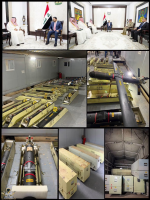
The next day, the head of Saudi General Intelligence went to Iraq and handed over his information to the Iraqi Prime Minister.
After that, one of the terrorist cells that were planning to launch drones towards the Kingdom was dismantled.
A remarkable move by the Iraqi government towards the information provided by Saudi intelligence, after months of denials regarding the launch of marches from Iraqi territory towards the Gulf states.
The SC
INT'L MOD
- Thread starter
- #1,410
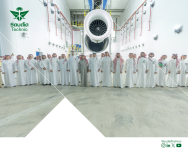
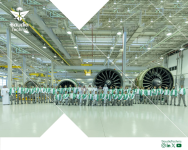
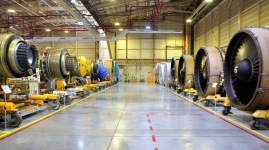
Inauguration of the largest aircraft engine maintenance center in the Middle East and North Africa
His Excellency the Minister of Transport and Logistics inaugurated the completion of the construction phase of the Jet Propulsion Engine Center, which will begin operating at full capacity by the second quarter of 2024 AD, where 1,700 technicians will work. It will be equipped to deal with new engines such as (GEnx and LEAP) and will serve 300 engines and 500 support power units annually.
Users who are viewing this thread
Total: 3 (members: 0, guests: 3)


