SBP - Banking Sector / Federal Board of Revenue

Pakistan’s central bank reserves hit 3.9-year high on IMF inflow

  • State Bank of Pakistan received $1.2bn tranche from International Monetary Fund last week
Rehan Ayub
The foreign exchange reserves held by the State Bank of Pakistan (SBP) surged by $1.3 billion in a single week to reach a 3.9-year high, buoyed by the recent loan tranche disbursed by the International Monetary Fund (IMF), data from the central bank showed on Thursday.

The SBP reserves jumped to $15.89 billion as of December 12, 2025, after the central received $1.2 billion from the IMF under the Extended Fund Facility (EFF) and the Resilience and Sustainability Facility (RSF).

The central bank’s FX reserves stood above $15 billion last time during the week ended on March 11, 2022. During this time, the reserves fell to an alarming level of $2.9 billion in February 2023.

Meanwhile, the country’s total reserves stood at $21.09 during the week ended December 12, 2025. The reserves held by the commercial banks were recorded at $5.20 billion.
 
IMG-20251226-WA0025.jpg

The Federal Tax Ombudsman (FTO) has uncovered a major cybercrime network operating within the Federal Board of Revenue (FBR) and Pakistan Revenue Automation Limited (PRAL), involved in filing fraudulent sales tax returns using fake and flying invoices.

According to the FTO’s order, hackers misused taxpayers’ credentials to introduce fictitious supplies through Annexure C, creating serious compliance issues and financial loss. The case has exposed alarming weaknesses in FBR’s IT security, including poor internal controls, data manipulation risks, and unauthorized profile changes.

The FTO has directed FBR to initiate legal proceedings against identified beneficiaries, trace others down the supply chain, and take strict action under existing SOPs on fake invoicing. PRAL has also been instructed to remove suspicious system links facilitating misuse.

This development highlights the urgent need for stronger digital security and accountability within Pakistan’s tax system.
 

Pakistan govt raised record Rs2trn via Sukuk in 2025, says official

  • Highest annual volume since introduction of Islamic bonds in 2008
BR Web Desk
December 29, 2025

Pakistan government raised record Rs2 trillion through domestic Sukuk issuances in 2025, marking the highest annual volume since the introduction of Islamic bonds in 2008.

The development was shared by Finance minister’s advisor Khurram Schehzad in a post on X.

“In 2025, the Ministry of Finance (MoF) through its Debt Management Office, together with its Joint Financial Advisors (JFAs), successfully issued over PKR 2 trillion in Sukuk - the highest-ever Sukuk issuance in a single calendar year since 2008 by Pakistan,” he wrote.
 
Sukuk and Green Sukuk

Sukuk is an Islamic financial product, a Shariah compliant alternative to a conventional bond, based on Islamic principles. Unlike traditional bonds that pay interest - which is prohibited in Islam as “Riba” - sukuk works differently.

The issuer sells certificates to investors, using the funds to invest in tangible assets, such as infrastructure or property, in which investors gain partial ownership. The issuer promises to buy back these certificates at their original value after a set period, linking returns to the asset’s income in the form of rental and ensuring adherence to Islamic principles.

Since its introduction in Malaysia in 2000, followed by Bahrain in 2001, sukuk has gained global traction. Today, Islamic firms and governments widely use sukuk, contributing significantly to the international fixed-income market.

By tying investments to tangible assets, sukuk aligns with Islamic financial ethics, offering investors ownership stakes rather than debt claims.

Green Sukuk takes this concept further, directing Islamic investments into renewable energy and other environmentally focused projects.

It reflects Shariah’s emphasis on environmental care, with funds used for initiatives like building solar plants, retiring construction debt, or supporting green subsidies approved by the government. Often, it involves securing future income from specific eco-friendly assets or projects.

In May this year, Pakistan launched its first Sovereign Domestic Green Sukuk worth Rs30 billion at the Pakistan Stock Exchange (PSX), pushing the share of Shariah-compliant financing in the country’s total domestic debt to 14%, announced Finance Minister Muhammad Aurangzeb then.
 
Sukuk Certificates represent proportionate beneficial ownership and may be described as an Islamic Bond for a defined period the risk and return on which is associated with cash flows generated by a particular asset belonging to the investors i.e. Sukuk holders.
 
To view this content we will need your consent to set third party cookies.
For more detailed information, see our cookies page.
 

UBL enters four-billion-dollar club, becomes Pakistan’s largest-listed company

  • The bank's market capitalisation has crossed $4.5 billion
Ali Ahmed
January 6, 2026

United Bank Limited (UBL) has emerged as the largest listed company in Pakistan, with its market capitalisation reaching Rs1.28 trillion (USD 4.6 billion) on Tuesday, overtaking Oil & Gas Development Company (OGDC), which now holds the second spot with a market cap of Rs1.26 trillion (USD 4.53 billion).

The milestone marks an impressive run for UBL, reflecting strong investor confidence and robust performance in the banking sector, said market analysts.

In the last month alone, the share price of UBL has increased by an impressive 37%, from Rs375.57 on December 8, 2025, to Rs514.49 at the time of filing this report on Tuesday.

The rising profitability comes “on the back of effectively utilising the interest rate scenario,” Samiullah Tariq, Head of Research at Pak-Kuwait Investment Company Limited, told Business Recorder.

The interest rate has come down from its peak of 22% in April 2024 to 10.5% in December 2025, reflecting a 1,150 basis points reduction.

UBL is a subsidiary of Bestway (Holdings) Limited, which is a wholly owned subsidiary of Bestway Group Limited.

As per the bank’s latest financial results, UBL reported a profit after tax of Rs34.7 billion for 9MCY25, up 36% year-on-year, with earnings per share rising to Rs13.86.

The bank declared another interim cash dividend of Rs8 per share, taking total payouts for the year to Rs27.5 per share — among the highest in the banking industry.

Meanwhile, OGDC, a long-time leader in Pakistan’s stock market, remains a close second, highlighting that the market remains dominated by the financial and energy sectors.
 
Federal cabinet approves printing of currency notes with new designs

New designs will be introduced for banknotes of Rs100, Rs500, Rs1,000 and Rs5,000 denomination

Khalid Mehmood
January 14, 2026

1768417456909.png

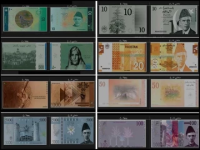
The federal government has decided to introduce newly-designed currency notes after the formal approval from the federal cabinet. The decision was taken during a cabinet meeting chaired by Prime Minister Shehbaz Sharif at the Prime Minister’s House in the federal capital on Wednesday.

The cabinet was briefed by the Ministry of Finance on the proposed design of banknotes, issued by the State Bank of Pakistan. Officials told the meeting that the new currency notes are being designed in line with the modern international standards, with the services of global experts engaged for the process. New designs will be introduced for the banknotes of Rs100, Rs500, Rs1,000 and Rs5,000 denomination.

According to the briefing, the redesigned notes will feature improved security threads to enhance protection against counterfeiting. The designs will also reflect Pakistan’s regional and geographical diversity, as well as its historical landmarks.
 

SBP allows exchange firms to use Raast​


People getting remittances through exchange companies will receive funds directly into bank accounts, digital wallets

Our Correspondent
January 16, 2026


tribune


KARACHI: Building an innovative and inclusive digital financial services ecosystem is a key objective of the State Bank of Pakistan (SBP) under its Strategic Plan 2023-28.

According to a statement issued on Thursday, the SBP has allowed exchange companies to utilise Raast, the instant payment system launched in 2021, to facilitate home remittances.

Under the new arrangement, beneficiaries receiving remittances through exchange companies will be able to receive funds directly into their bank accounts and digital wallets maintained with banks, microfinance banks and electronic money institutions.
 

What Pakistan’s digital banks can learn from neo/challenger banks like Monzo and Revolut


Mehr Shah
January 17, 2026

The evolution of neo/challenger banks over the last 15 years can be viewed in three distinct waves, each shaped by its historical, regulatory and technological context. From proof-of-concept, to building rapid scale with powerful niche products, to building a full-stack digital banking ecosystem, these earlier waves offer many lessons for Pakistan, where a new generation of digital banking is now coming online.

The three waves


The first wave, epitomised by Fidor Bank in Germany, opened the doors to the ‘brave new world’ of digital banking. Established in the aftermath of the global financial crisis of 2007/8, Fidor was radical for its time, with no branches and an API-driven infrastructure.

Although the bank successfully demonstrated that customers could be engaged digitally, its product offering was thin—current accounts, basic payments, and some minor financing.

Unsurprisingly, Fidor closed its doors in 2023. I say unsurprisingly because we have seen this before—with Nokia and Blackberry losing the smartphone market to Apple, and MySpace to Facebook, among numerous similar examples of first movers.

Nonetheless, Fidor did serve as the proof-of-concept for digital banking, and the 2nd wave followed in quick succession.
 
2012/13 brought players we are all now familiar with—Starling, Revolut, Monzo, Nu, WeBank, MyBank. These 2nd wave banks entered the market with a single, sharply defined product, solving a very real customer pain point.

Nu launched with a simple and transparent, no-fee credit card; Monzo launched with a prepaid card and instant spending notifications; Revolut debuted with an international card offering better exchange rates than incumbent banks.

This narrow focus enabled rapid customer acquisition while serving to ringfence the new entrants from deep-pocketed competitors—incumbents in the banking industry.

Once these ‘new kids on the block’ established a foothold, new products were introduced in quick succession. Within 2-3 years of launch many of these players added conventional banking products—saving accounts and features, credit cards, and investment options.

SME and business banking, in most cases, followed once scale was achieved with individual/consumer segments. Starling introduced business accounts in its fourth year, Monzo in the fifth, and Revolut, approximately two years after launch.

The pattern was clear: win customers first, then leverage technology, data and brand trust to move into SME, where margins and stickiness are often higher.
 
The 3rd wave of digital banks emerged in Asia in 2017/18, with fewer new entrants like Bunq in Europe. These banks (Kakao, SuperBank, Tyme, Bunq) varied from those in the 2nd wave primarily by offering a broad set of services (payments, deposits, lending, savings, investment); integrating into larger digital ecosystems such as messaging apps and e-commerce platforms; and reducing the gap between new product offers from years to mere months.

The difference in strategy was driven by several factors, including a maturing customer base where customers already familiar with digital financial services expected a minimum viable product offering at the get go; an enabling regulatory environment where many central banks had introduced bespoke regulations accommodating digital banks; and intensifying competition as incumbents started digitalising in earnest!

With this evolving strategy, banks like Kakao achieved exponential early growth, reaching 1 million clients in just 5 days, compared to the early stalwart Revolut, which hit the 1 million client mark one year after launching operations.
 
Lessons for Pakistan

For digital banks in Pakistan, the lessons are numerous. However, it is also necessary to filter these global lessons through local realities.

Central themes for Pakistan are its large unbanked population, its fragmented digital connectivity despite the ubiquity of mobile phone ownership, and the economy’s chronic and deep dependency on cash.

Within this context, the initial value proposition of any digital bank must revolve around simple, everyday use cases that replace cash.

These include services such as low-friction accounts, QR-based payments and reliable cash-in and cash-out networks. The rapidly evolving payments landscape due to infrastructure like Raast, further reinforces payments as the entry point product.

Thus, early and deep integration with Raast, aggressive QR adoption, and a strong focus on P2P, P2M, and bill payments will allow new digital banks to embed themselves quickly into the national payment fabric and achieve a degree of scale, while replacing cash in daily life.

Another reality in Pakistan is the uneven 3G/4G penetration, even as the government prepares to grant 5G licenses and regularly celebrates cell phone penetration. Given this reality, digital banks that design for constraint, rather than abundance, will forge a competitive advantage vis a vis scale and rural penetration.
 
Lightweight Android-first apps, offline-friendly features, low data usage, and even USSD support are not optional—they will be core to achieving scale, especially if rural Pakistan (home to 60% of the population) is on the cards.

The 3rd wave’s emphasis on full digitalization must therefore be adapted to local infrastructure realities, ensuring inclusion rather than exclusion. Banks that assume high-end devices, constant connectivity, or unlimited data will cap their own growth prematurely.

Finally, Pakistan is not a market where heavy customer acquisition costs or complex premium subscriptions (increasingly the case with the 2nd wave European banks) will scale sustainably.

Digital banks in Pakistan must design for thin margins, focusing on low-cost acquisition, micro-savings, and small-ticket credit products introduced gradually and responsibly.

SME financing, in particular, should emerge once transaction data and trust have been established—ideally within the first 12 to 24 months—rather than being bolted on years later. While data is a key constraint for enhanced lending to SMEs, waiting for high quality and comprehensive 3rd party data to emerge could mean endless delays given the quality of data currently being generated and the level of fragmentation.

Here digital banks must play a proactive role because SMEs in Pakistan, numbering more than 5 million, need working capital, payments, and cash flow visibility, a need that has long gone unmet, with approximately 200,000 SMEs receiving formal financial credit.

The earlier the digital banks start chipping at this problem, the earlier will they unlock long-term value (reduced churn, diversified revenue, and bigger margins).
 

Users who are viewing this thread

Pakistan Defence Latest

Latest Posts

Back
Top