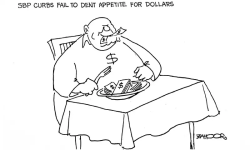
The hike is the first in almost three years, as rising oil prices from the US-Israel war on Iran threatened to push inflation higher in the import-dependent nation.
The decision was in line with market expectations that the interest rate was bound to see a rise in today’s announcement.
While there was consensus among most researchers, bankers and other stakeholders that the interest rate would rise, opinions had been divided over the size of the hike.
A higher interest rate will yield more money for exporters and remitters but create serious problems for importers. It will also increase the debt burden of the government, which borrows heavily from banks and corporates to accumulate liquidity needed to run the government.
“The risks in the Gulf war are unseen and so uncertain that nobody can claim that the economy of Pakistan and other countries like it would remain in the same shape as it is now,” a financial expert earlier told Dawn.
He added that inflation could entirely change the economy, with greater uncertainty, in the form of a sharp decline in manufacturing and a further increase in existing poverty.
The Pakistan Stock Exchange (PSX) mostly traded in the red ahead of the MPC announcement, closing with a decline of 1,174.69 points compared to the previous session.
The SBP has cut rates by a cumulative 1,150bps since June 2024, from a record high of 22pc.