Sea Port / Dry Port and Maritime Updates.

Chinese group to submit feasibility study for Sea-to-Steel Corridor at Port Qasim​

By Tahir Ali | Gwadar Pro
Feb 13, 2026

Chinese group to submit feasibility study for Sea-to-Steel Corridor at Port Qasim


Maritime Affairs Minister Junaid Anwar Chaudhry in meeting with Chinese officials. [Photo provided to Gwadar Pro]

ISLAMABAD - A Chinese industrial group will submit a comprehensive feasibility study for Pakistan’s proposed Sea-to-Steel Green Maritime Industrial Corridor at Port Qasim, Federal Minister for Maritime Affairs Junaid Anwar Chaudhry said Friday, as the government reviewed plans to accelerate the flagship initiative aimed at boosting domestic steel production.

According to an official statement, Anwar Chaudhry chaired a high-level review meeting on Friday focused on advancing the Integrated Maritime Industrial Complex (IMIC), a major project designed to modernize industrial operations through port infrastructure upgrades, shipbuilding and recycling facilities, and an integrated steel mill.

The Chinese group, which has shown keen interest in the initiative, will submit an unsolicited feasibility study covering financial impact assessments, structural and hydrographic analyses, and quantitative risk evaluations.
 
The IMIC includes three core components, including the revival and upgrading of the Iron Ore and Coal Berth (IOCB) jetty. The facility will support ship recycling and repair, with recycled scrap feeding an integrated steel mill to revive domestic production capacity.

Branded as the “Sea-to-Steel Green Maritime Industrial Corridor,” the project aims to connect ship recycling with steel manufacturing, reducing reliance on imported raw materials while leveraging recyclable scrap generated locally.

Minister Chaudhry positioned IMIC as a key driver of Pakistan’s blue economy by creating industrial value through maritime assets.

“Once submitted, the proposal will undergo thorough review before any decision,” Chaudhry said. “If approved, IMIC would rank among Pakistan’s largest recent maritime and industrial investments, cementing Port Qasim as a regional hub for heavy industry and logistics.”

Pakistan continues to seek foreign investment in ports and industrial infrastructure to boost exports, create jobs, and ease pressure on foreign exchange reserves. Chaudhry noted that integrated recycling, manufacturing, and logistics projects could reduce steel imports and strengthen domestic production.

The minister emphasized that any approval would depend on alignment with national priorities, including job creation, value addition, and adherence to sustainable development standards.
 

PNSC inducts Aframax tanker in fleet

  • Says new vessel, M.T Lahore, weighed 112,05 tonnes
Published 16 February 2026

View attachment 179195

Pakistan National Shipping Corporation (PNSC) announced on Monday that an Aframax tanker was successfully inducted into the PNSC-managed fleet.

The company disclosed in a notice to the Pakistan Stock Exchange (PSX) today.

The company shared that the new vessel, M.T Lahore, weighed 112,05 tonnes.

Pakistan National Shipping Corporation (PSX: PNSC) is a national carrier of Pakistan. It is engaged in the transportation of dry bulk and liquid cargoes across the globe.

The company manages a fleet of 12 ships with a carrying capacity of 938,876 tons of deadweight. Besides, PNSC also has a real estate business and a repair workshop.


PM approves NLC’s 30% stake in Pakistan National Shipping Corporation

  • PM also approved the transfer of management control and consolidation rights

BR Web Desk
February 24, 2026

Pakistan National Shipping Corporation (PNSC) said it had received official communication from the Ministry of Maritime Affairs confirming that Prime Minister Shehbaz Sharif has approved the National Logistic Corporation’s acquisition of a 30% shareholding in PNSC.

The company shared the development in a notice to the Pakistan Stock Exchange (PSX) today.

The PM has also approved the transfer of management control and consolidation rights, in accordance with applicable laws and by-laws.

“In pursuance of the above directions, vide its aforesaid letter, NLC formally conveyed its intent to proceed with the proposed acquisition of shareholding and management control in PNSC,” the notice read.

PNSC is a national carrier of Pakistan. It is engaged in the transportation of dry bulk and liquid cargoes across the globe. PNSC operates under the control ofthe Ministry of Maritime Affairs, Government of Pakistan.

The company manages a fleet of 12 ships with a carrying capacity of 938,876 tons of deadweight. Besides, PNSC also has a real estate business and a repair workshop.
 

Karachi port begins UAE cargo transhipment amid Strait of Hormuz disruption​


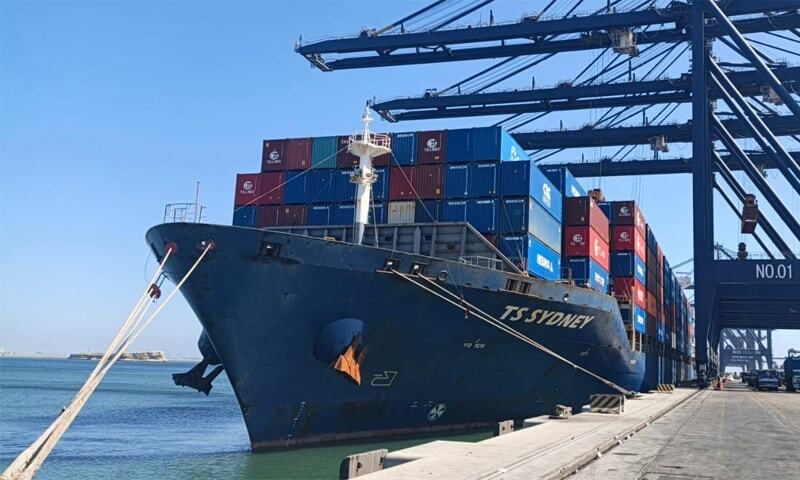
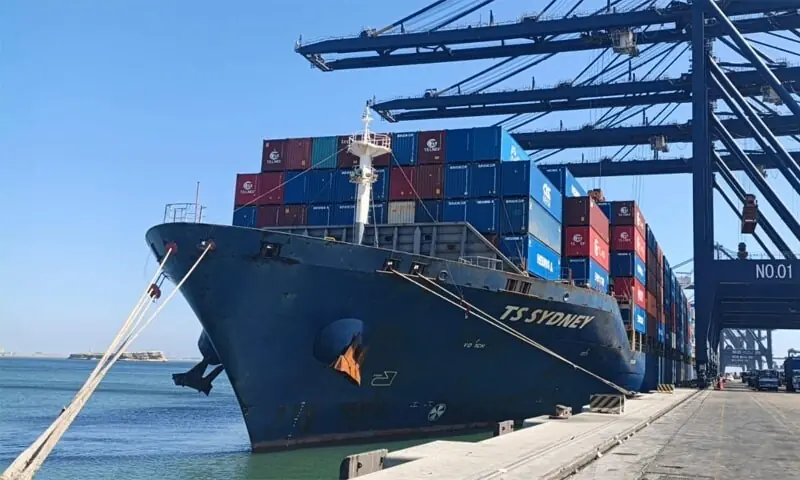
MV TS Tacoma and MV TS Sydney unload UAE-bound containers at Karachi for onward shipment to Jebel Ali via feeder vessels
By
Monitoring Desk


Karachi Port has begun handling transhipment cargo destined for the United Arab Emirates (UAE) after shipping disruptions in the Gulf linked to the ongoing conflict involving the United States, Israel and Iran.


According to port officials, large container vessels that typically use regional hub ports have started offloading UAE-bound cargo in Karachi following the closure of the Strait of Hormuz and heightened security risks in the region.

Under normal circumstances, major container ships unload cargo at hub ports such as those in the UAE, from where smaller feeder vessels distribute goods to nearby destinations including Pakistan, Central Asia, Afghanistan and parts of East Africa.

However, shipping lines have started diverting shipments to Karachi as a precautionary measure amid the regional crisis.

Two container vessels, MV TS Tacoma and MV TS Sydney, arrived at Karachi port on Friday and unloaded a large number of containers belonging to shipping lines including TS Line, Heung-A, Sinokor and several non-vessel operating common carriers.


The containers will later be shipped onward from Karachi to Jebel Ali in the UAE through feeder services.

Karachi Port Trust Chairman Shahid Ahmed said the port authority is committed to ensuring continuity of regional and international trade operations despite disruptions in the Middle East.

At present, the transhipment cargo is being stored at terminals within Karachi port limits. The Pakistan Ships Agents Association has requested the government to allow the cargo to be moved to off-dock terminals located at Hawkesbay, Mauripur and Port Qasim to manage the expected increase in shipments.

PSAA Chairman Muhammad Rajpar said the current situation suggests that the Strait of Hormuz may remain closed for some time and that the volume of transhipment cargo handled at Karachi port is likely to grow in the coming days.
 
Karachi Port is replacing Dubai Port, Can generate $1 - $2 billion in annual revenue

To view this content we will need your consent to set third party cookies.
For more detailed information, see our cookies page.
 

Pakistan turns Hormuz crisis into maritime opportunity


KARACHI: Pakistan has successfully secured alternative fuel supply routes as geopolitical tensions triggered the closure of the Strait of Hormuz, with four fuel vessels bypassing standard Middle Eastern chokepoints to deliver energy cargo to Karachi’s ports, simultaneously capitalising on regional shipping disruptions to cement its role as a rising transshipment hub.

Port Qasim Authority (PQA) confirmed Thursday that operations were proceeding efficiently across multiple berths and terminals, ensuring a steady flow of fuel products to domestic consumers and industry, despite the mounting regional crisis choking traditional maritime corridors.

According to online shipping tracking data, the tanker MT Nave Atropos, which is currently berthed at the FOTCO oil terminal and actively offloading 53,139 metric tons of gasoline, completed its voyage by navigating through the Indian Ocean into the Laccadive Sea before entering the Arabian Sea, entirely avoiding the now-inaccessible Strait of Hormuz. Two additional tankers - MT Spruce 2 and MT Sea Clipper are positioned at the outer anchorage of Port Qasim, awaiting their turn to berth. MT Spruce 2 is carrying 55,101 metric tons of Gas Oil, while MT Sea Clipper holds 40,229 metric tons of Mogas. Both vessels departed from anchorages in the Gulf region, navigated the Gulf of Oman, and charted a direct northeast course across the open Arabian Sea to Port Qasim. In the LPG sector, two carriers - Navigator Atlantic and Navigator Aries are currently berthed and actively discharging their cargoes at separate terminals.


Navigator Atlantic is anchored at the EVTL terminal, releasing 12,024 metric tons of LPG Mix. The vessel departed from the Port of Salalah on Oman’s southern coast, travelling entirely outside the Persian Gulf and Gulf of Oman, sailing northeast across the Arabian Sea, docking at the EVTL terminal, bypassing all current maritime chokepoints.

Navigator Aries, berthed at the SSGC Terminal, is offloading 11,196 metric tons of LPG Mix to meet growing domestic and industrial gas demand. Unlike other recent emergency shipments sourced from Oman or the UAE to avoid the Persian Gulf entirely, Navigator Aries began its voyage in late February, sailing south through the Persian Gulf and managing to transit the Strait of Hormuz just before geopolitical tensions fully closed the chokepoint to international shipping.

After clearing the Strait, the vessel crossed the Gulf of Oman and sailed northeast, reaching Port Qasim on March 4, 2026.

The vessel Ullswater, carrying 3,530 metric tons of LPG Mix, has been anchoring at the outer anchorage since March 5, 2026, due to the high volume of traffic currently being managed at the port. The ship departed from Khor al Fakkan, strategically located on the eastern coast of the UAE, facing the Gulf of Oman, and travelled east through the Gulf of Oman before crossing the Arabian Sea to queue for the EVTL LPG terminal.

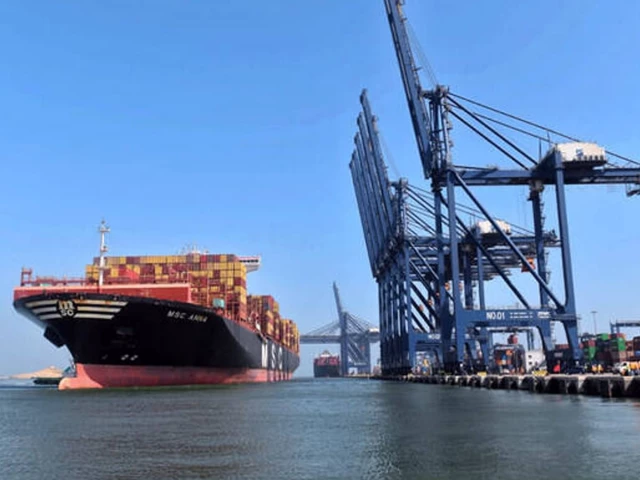
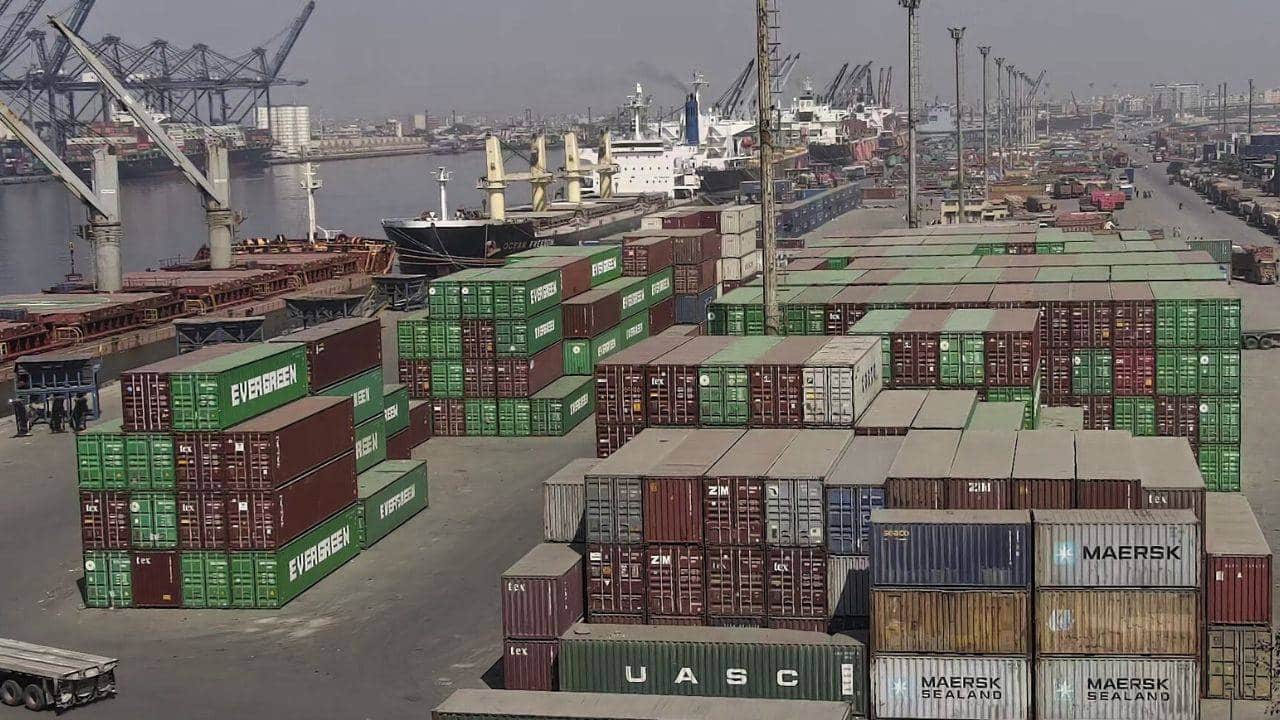
While Port Qasim manages Pakistan’s fuel security, Karachi Port is simultaneously turning the regional shipping crisis into a strategic opportunity, recording a notable rise in transshipment cargo handling as international shipping lines increasingly reroute operations away from disrupted Middle Eastern corridors. Two transshipment vessels were berthed simultaneously at Karachi Port, highlighting the port’s growing regional relevance. M/V CGLA Ocean Breeze 1 docked at the Karachi International Container Terminal (KICT), while M/V GFS Jade berthed at the Karachi Gateway Terminal Limited (KGTL). Both vessels are discharging transshipment containers destined for various ports across the Middle East.

Copyright Business Recorder, 2026
 

Karachi Port to Handle 100,000-Ton Vessels Within Months​

By Muhammad Bilal | Published Mar 19, 2026 | 1:19 pm


Dredging of the Karachi Port Trust (KPT) main channel has begun under an agreement with KGTL, in a move aimed at upgrading port capacity and enabling the handling of larger vessels.

The Ministry of Maritime Affairs said the project will enhance navigational capacity and support growing international shipping demand, as Pakistan looks to modernize its port infrastructure and strengthen its role in global trade.

Federal Minister for Maritime Affairs Muhammad Junaid Anwar Chaudhry said the work is expected to be completed within three months and will allow the port to accommodate ships up to 350 metres in length and 100,000 gross registered tonnage.


The dredging will deepen harbour channels to 14 metres and extend 14 berths to a depth of 15.5 metres, improving safety and operational capacity.

Officials said the upgrade will reduce congestion, shorten turnaround times and enable smoother cargo handling at the country’s busiest port.
 

Users who are viewing this thread

Back
Top