Sea Port / Dry Port and Maritime Updates.

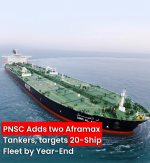
Pakistan National Shipping Corporation (PNSC) has expanded its fleet to 12 vessels with the induction of two Aframax-class tankers, Swan Lake and P. Aliki, in a move the government says will reduce dependence on foreign carriers and enhance energy transport capacity.

Maritime Affairs Minister Muhammad Junaid Anwar Chaudhry, after being briefed on the acquisition by PNSC CEO Zarar Hussain at a meeting on Thursday, said the government was committed to strengthening the national shipping sector and set an ambitious target of increasing the fleet to 20 ships by the end of the year.

1760122686810.png
 

Pakistan’s Pasni port pitch to Washington can reshape regional rivalries with China and India​

SAIMA AFZAL

Ports of call (Getty Images Plus)


Ports of call (Getty Images Plus)
Published 8 Oct 2025

Pakistan has quietly pitched a bold idea to Washington to build a new deep-sea port at Pasni, on the Arabian Sea, just over 100 kilometres from the China-funded port at Gwadar and about half as far again from Iran and India’s joint Chabahar port.

If the United States decides to back the project, this could become South Asia’s most geopolitically charged shoreline.

Pasni, a small fishing town with an estimated population of 70,000, has long been regarded as a potential site for port development. The waters are naturally deep, and the town is well positioned on the Arabian Sea. China saw the same potential in nearby Gwadar Port, developing the area under the China–Pakistan Economic Corridor linked to the Belt and Road Initiative. The Pasni proposal does not include any provisions for US military bases, but rather seeks to develop financial and logistical partnerships. If approved, such a venture would give the US a commercial foothold in a region where China’s influence has expanded significantly in recent years.

The Financial Times reported last week that advisers to Pakistan’s army chief, Field Marshal Asim Munir, had approached US officials with a proposal to build and operate the port. It appears of a piece with Pakistan’s pitch to the Trump administration to facilitate access to Pakistan’s critical minerals, and US President Donald Trump’s boasts about the prospect of resource developments in the country.

Pasni sits in the province of Balochistan, which borders Afghanistan and Iran, and between the Strait of Hormuz, Central Asia, and the Balochistan mineral belt. Whoever controls this coastline will influence energy, trade, and data routes of the next decade.

Map of Pakistan and neighbouring countries marking ports of Pasni, Gwadar and Chabahar (ANU Map)
ANU Map with ports of Pasni and Chabahar added
So far, no official statement has been released from the US State Department, White House or Pakistan’s army and foreign ministry regarding the FT report. In September, a new chapter quietly opened in Pakistan-US economic relations. Missouri-based US Strategic Metals (USSM) signed a memorandum of understanding with Pakistan’s Frontier Works Organisation, the army’s engineering arm, to explore cooperation in mineral refining and exports. During a recent visit to Karachi and Gwadar, USSM executives also discussed the prospect of developing a deep-sea port at Pasni, a naturally sheltered coastal site that could be connected by rail to the Reko Diq copper-gold belt in Balochistan. The idea, they noted, “made a lot of sense” for facilitating mineral exports at a time when Washington is seeking alternatives to Chinese supply chains. Pakistan subsequently shipped its first small consignment of critical minerals including copper, antimony, and neodymium to USSM, underscoring the geo-economics and strategic diversification themes in Pakistan’s foreign policy.

The proposal shows that Pakistan is willing to pivot from security dependence to economic diplomacy.

The Pasni port development plan offers the United States something it lost decades ago – an important foothold near China’s flank, minus the baggage of military basing. Reports suggest its estimated cost is $1.2 billion, to be funded through a mix of Pakistani federal money and US development finance, with the aim of exporting critical minerals including copper, antimony, and neodymium, essential for EVs, batteries and defence tech.

If Gwadar is considered China’s Belt and Road hub, Pasni port will be Washington’s mineral gateway. But the proximity of both ports could define the next major rivalry on the Arabian Sea.

More than that, the proposal shows that Pakistan is willing to pivot from security dependence to economic diplomacy. While India has framed the region through the “Indo-Pacific” lens with the United States, Pakistan just countered with a “Mineral Corridor” idea as a way for Washington to hedge its bets and diversify beyond Delhi.

The Pasni proposal also sends a message to Beijing; Islamabad isn’t abandoning China, only balancing its relations. The port lies outside the Gwadar concession, meaning Pakistan can cooperate with the United States without crossing red lines and balancing its ties with both states.

But the opportunity is not without risk for Pakistan. Any formal move could strain its careful balance between Washington and Beijing. Yet it also highlights Islamabad’s urgent need for foreign investment and economic revival under IMF-backed reforms. While Pakistan continues to face security challenges along its eastern and western borders, projects like Pasni signal a broader ambition to turn geography into leverage and connectivity into strategy.
 

Pakistan courts US with pitch for new Arabian sea port, FT reports​

By Reuters
October 4, 20258:52 AM GMT+8

Oct 3 (Reuters) - Advisers to Pakistani army chief Field Marshal Asim Munir have approached U.S. officials with an offer to build and run a port on the Arabian Sea, the Financial Times reported on Friday, citing a plan seen by the newspaper.

The plan envisages American investors building and operating a terminal to access Pakistan's critical minerals in the town of Pasni, according to the FT. Pasni is a port town in Gwadar District in the province of Balochistan, which borders Afghanistan and Iran.

The move comes after Munir, along with Pakistan's Prime Minister Shehbaz Sharif, held a meeting with U.S. President Donald Trump at the White House in September. In that meeting, Sharif sought investment from U.S. companies in the agriculture, technology, mining and energy sectors for investment.

According to the FT, the offer was floated with some U.S. officials, and was shared with Munir ahead of a meeting with Trump in the White House late last month.

The blueprint excludes the use of the port for U.S. military bases, and instead aims to attract development finance for a rail network linking the port to mineral-rich western provinces, the FT report added.

Reuters could not immediately verify the report. The U.S. State Department, White House, and Pakistan's Ministry of Foreign Affairs did not immediately respond to a request for comment. The Pakistani Army could not immediately be reached.


Pakistan’s Pasni port pitch to Washington can reshape regional rivalries with China and India​

SAIMA AFZAL

Ports of call (Getty Images Plus)


Ports of call (Getty Images Plus)
Published 8 Oct 2025

Pakistan has quietly pitched a bold idea to Washington to build a new deep-sea port at Pasni, on the Arabian Sea, just over 100 kilometres from the China-funded port at Gwadar and about half as far again from Iran and India’s joint Chabahar port.

If the United States decides to back the project, this could become South Asia’s most geopolitically charged shoreline.

Pasni, a small fishing town with an estimated population of 70,000, has long been regarded as a potential site for port development. The waters are naturally deep, and the town is well positioned on the Arabian Sea. China saw the same potential in nearby Gwadar Port, developing the area under the China–Pakistan Economic Corridor linked to the Belt and Road Initiative. The Pasni proposal does not include any provisions for US military bases, but rather seeks to develop financial and logistical partnerships. If approved, such a venture would give the US a commercial foothold in a region where China’s influence has expanded significantly in recent years.

The Financial Times reported last week that advisers to Pakistan’s army chief, Field Marshal Asim Munir, had approached US officials with a proposal to build and operate the port. It appears of a piece with Pakistan’s pitch to the Trump administration to facilitate access to Pakistan’s critical minerals, and US President Donald Trump’s boasts about the prospect of resource developments in the country.

Pasni sits in the province of Balochistan, which borders Afghanistan and Iran, and between the Strait of Hormuz, Central Asia, and the Balochistan mineral belt. Whoever controls this coastline will influence energy, trade, and data routes of the next decade.

Map of Pakistan and neighbouring countries marking ports of Pasni, Gwadar and Chabahar (ANU Map)
ANU Map with ports of Pasni and Chabahar added
So far, no official statement has been released from the US State Department, White House or Pakistan’s army and foreign ministry regarding the FT report. In September, a new chapter quietly opened in Pakistan-US economic relations. Missouri-based US Strategic Metals (USSM) signed a memorandum of understanding with Pakistan’s Frontier Works Organisation, the army’s engineering arm, to explore cooperation in mineral refining and exports. During a recent visit to Karachi and Gwadar, USSM executives also discussed the prospect of developing a deep-sea port at Pasni, a naturally sheltered coastal site that could be connected by rail to the Reko Diq copper-gold belt in Balochistan. The idea, they noted, “made a lot of sense” for facilitating mineral exports at a time when Washington is seeking alternatives to Chinese supply chains. Pakistan subsequently shipped its first small consignment of critical minerals including copper, antimony, and neodymium to USSM, underscoring the geo-economics and strategic diversification themes in Pakistan’s foreign policy.

The proposal shows that Pakistan is willing to pivot from security dependence to economic diplomacy.

The Pasni port development plan offers the United States something it lost decades ago – an important foothold near China’s flank, minus the baggage of military basing. Reports suggest its estimated cost is $1.2 billion, to be funded through a mix of Pakistani federal money and US development finance, with the aim of exporting critical minerals including copper, antimony, and neodymium, essential for EVs, batteries and defence tech.

If Gwadar is considered China’s Belt and Road hub, Pasni port will be Washington’s mineral gateway. But the proximity of both ports could define the next major rivalry on the Arabian Sea.

More than that, the proposal shows that Pakistan is willing to pivot from security dependence to economic diplomacy. While India has framed the region through the “Indo-Pacific” lens with the United States, Pakistan just countered with a “Mineral Corridor” idea as a way for Washington to hedge its bets and diversify beyond Delhi.

The Pasni proposal also sends a message to Beijing; Islamabad isn’t abandoning China, only balancing its relations. The port lies outside the Gwadar concession, meaning Pakistan can cooperate with the United States without crossing red lines and balancing its ties with both states.

But the opportunity is not without risk for Pakistan. Any formal move could strain its careful balance between Washington and Beijing. Yet it also highlights Islamabad’s urgent need for foreign investment and economic revival under IMF-backed reforms. While Pakistan continues to face security challenges along its eastern and western borders, projects like Pasni signal a broader ambition to turn geography into leverage and connectivity into strategy.
Pakistan always ready to serve Usa, if UsA takes one step, Pakistani leaders take 10 steps.
 
Last edited:
Pakistan always ready to serve Usa, if UsA takes one step, Pakistani leaders take 10 steps.
If India and China can solve their border issues. It might be time to reconsider long held alliances if this is Pakistan's position.
 
If India and China can solve their border issues. It might be time to reconsider long held alliances if this is Pakistan's position.

Respectfully, I feel as if that's not the case. as this was shown recently in the Shanghai summit with China's carefully thought out rebuttal in regards to the border inquiries/concerns by India - with China basically saying:

"Yeah, we get what you're saying. But we understand you're speaking from a low position considering your recent debacle with the U.S, so we're just gonna say this and you'll agree cause you have to."

And this was the case for multiple topics, including India acknowledging Taiwan as a part of China (which they then backpeddled), signing and agreeing the SCO statement regarding the condemnation of strikes on Iran (in which India initially took a neutral stance), and more.

China is arguably one of the smartest nations on Earth with a very keen and carefully thought out foreign policy. In several decades worth of competition with the west + India, political rhetoric (from India's side) towards China, and more recently, border issues, I do not think China would reconsider their alliances, especially with a country like India that switches their foreign policy to whatever suits their needs (basically ever other week).
 
Respectfully, I feel as if that's not the case. as this was shown recently in the Shanghai summit with China's carefully thought out rebuttal in regards to the border inquiries/concerns by India - with China basically saying:

"Yeah, we get what you're saying. But we understand you're speaking from a low position considering your recent debacle with the U.S, so we're just gonna say this and you'll agree cause you have to."

And this was the case for multiple topics, including India acknowledging Taiwan as a part of China (which they then backpeddled), signing and agreeing the SCO statement regarding the condemnation of strikes on Iran (in which India initially took a neutral stance), and more.

China is arguably one of the smartest nations on Earth with a very keen and carefully thought out foreign policy. In several decades worth of competition with the west + India, political rhetoric (from India's side) towards China, and more recently, border issues, I do not think China would reconsider their alliances, especially with a country like India that switches their foreign policy to whatever suits their needs (basically ever other week).

India and China still have a long way to go.

No one expects their issues to be resolved overnight. But if both countries can find common ground on their border disputes, there’s huge potential for a strong and mutually beneficial relationship.

In fact, an India–China partnership could become even more significant than China’s current ties with Pakistan. If India and China were to improve relations and bring Russia into the mix—forming something like an Asian version of NATO—it would reshape global power dynamics.

That’s exactly the kind of alliance the West would prefer not to see happen
 
If India and China can solve their border issues. It might be time to reconsider long held alliances if this is Pakistan's position.
I am pretty sure it’s in sync with China. I would assume China wants US to have stake to prevent it to act as a spoiler to its plans.
 
I am pretty sure it’s in sync with China. I would assume China wants US to have stake to prevent it to act as a spoiler to its plans.
Please elaborate more on this point especially the bold part
 
India and China still have a long way to go.

No one expects their issues to be resolved overnight. But if both countries can find common ground on their border disputes, there’s huge potential for a strong and mutually beneficial relationship.

In fact, an India–China partnership could become even more significant than China’s current ties with Pakistan. If India and China were to improve relations and bring Russia into the mix—forming something like an Asian version of NATO—it would reshape global power dynamics.

That’s exactly the kind of alliance the West would prefer not to see happen

Your relationship with China will happen at the expense of the US.

Go ahead though. Pakistan will do whatever needs to be done and also benefit from Indian US rupture.
 
Please elaborate more on this point especially the bold part
US having economic stake will prevent it from playing covert destabilizing games and turn it against others in the region who would want to.

What will happen to BLA/BRA which been plaguing has been CPEC in Baluchistan.
 

Pakistan courts US with pitch for new Arabian sea port, FT reports​

By Reuters
October 4, 20258:52 AM GMT+8

Oct 3 (Reuters) - Advisers to Pakistani army chief Field Marshal Asim Munir have approached U.S. officials with an offer to build and run a port on the Arabian Sea, the Financial Times reported on Friday, citing a plan seen by the newspaper.

The plan envisages American investors building and operating a terminal to access Pakistan's critical minerals in the town of Pasni, according to the FT. Pasni is a port town in Gwadar District in the province of Balochistan, which borders Afghanistan and Iran.

The move comes after Munir, along with Pakistan's Prime Minister Shehbaz Sharif, held a meeting with U.S. President Donald Trump at the White House in September. In that meeting, Sharif sought investment from U.S. companies in the agriculture, technology, mining and energy sectors for investment.

According to the FT, the offer was floated with some U.S. officials, and was shared with Munir ahead of a meeting with Trump in the White House late last month.

The blueprint excludes the use of the port for U.S. military bases, and instead aims to attract development finance for a rail network linking the port to mineral-rich western provinces, the FT report added.

Reuters could not immediately verify the report. The U.S. State Department, White House, and Pakistan's Ministry of Foreign Affairs did not immediately respond to a request for comment. The Pakistani Army could not immediately be reached.


It will be good for Army Generals and Balochistan. with all seriousness, it should only be used for economic purposes and not for military.
 
When will the incompetent establishment full of fagg0ts learn? This is nothing short of a betrayal to China. A strategic blunder on monumental proportions. But hey, a suitcase full of dollars is enough for these sellouts constantly looting and raping the country for personal gain.

To view this content we will need your consent to set third party cookies.
For more detailed information, see our cookies page.
 

Users who are viewing this thread

Pakistan Defence Latest

Back
Top