Six countries sign agreement to develop rail on China – Iran – Europe route

冖_冖

Registered Member
Joined
May 31, 2024
Messages
1,542
Reaction score
518
Reputation
350.6
Country of Origin
Country of Residence

Six countries sign agreement to develop rail on China – Iran – Europe route​

Published on 12-05-2025 at 14:12

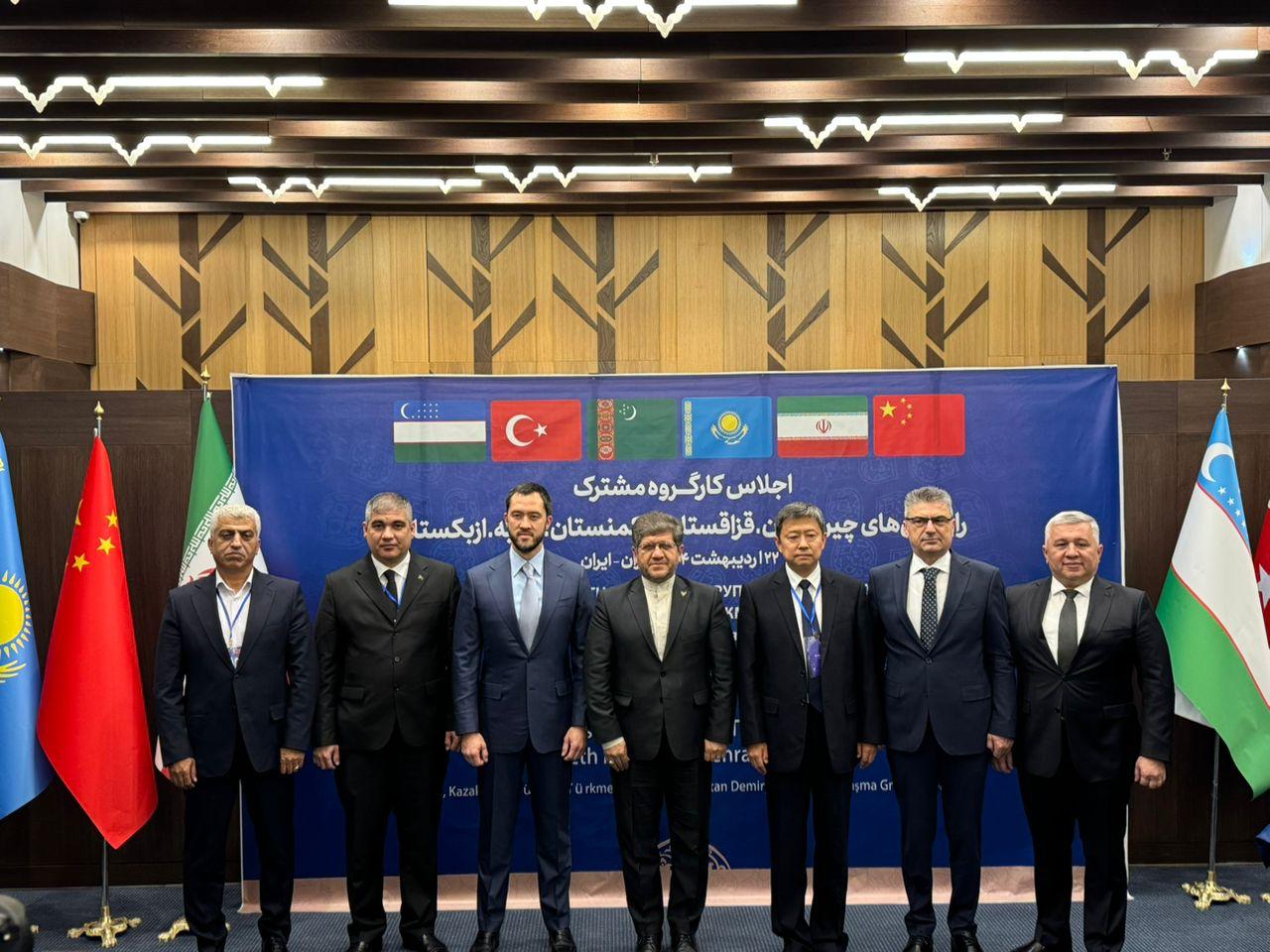
WhatsApp-Image-2025-05-12-at-16.21.23-1024x768.jpeg
Image: © Kazakh Railways

Container traffic on the China – Iran route grew by 2.6 times in the first months of 2025. Such strong demand for rail services seems promising for the future. Consequently, six countries decided to come together and agree on steps to develop the route.

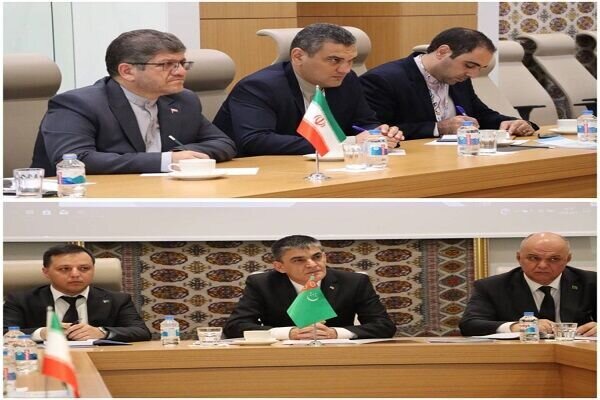
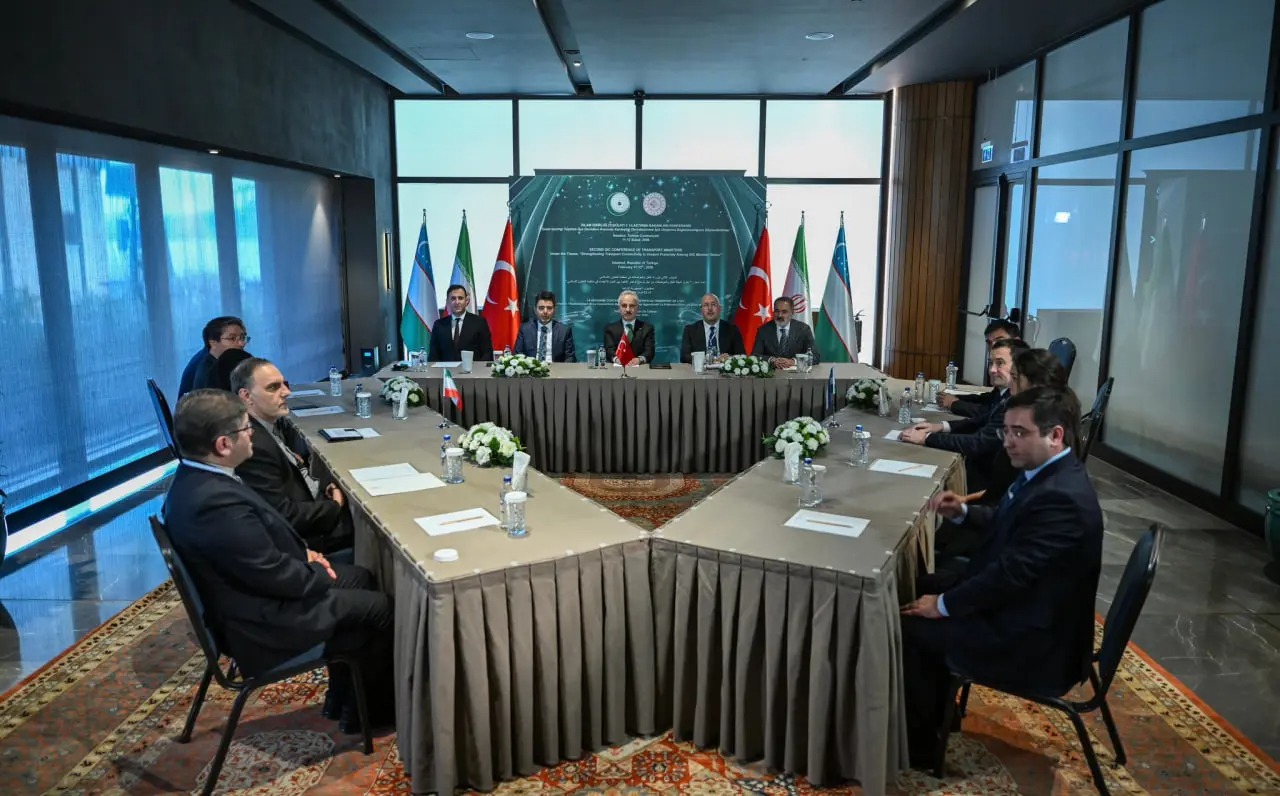
Representatives from Kazakhstan, China, Uzbekistan, Turkmenistan, Iran, and Türkiye met in Tehran to discuss the development of the Eurasian transport corridor. The meeting, led by Kazakhstan Railways' Deputy Chairman Yerlan Koishibaev, focused on enhancing multilateral cooperation for an efficient transport route connecting China, Kazakhstan, Uzbekistan, Turkmenistan, Iran, and Türkiye/Europe.

Kazakhstan Invests in Development of Bandar Abbas Port in Iran​

06.05.2025

Kazakhstan invests in the development of Bandar Abbas Port to strengthen its logistics network and create a stable transit route through Iran to global maritime lanes. This is reported by the railway transport news portal Railway Supply.
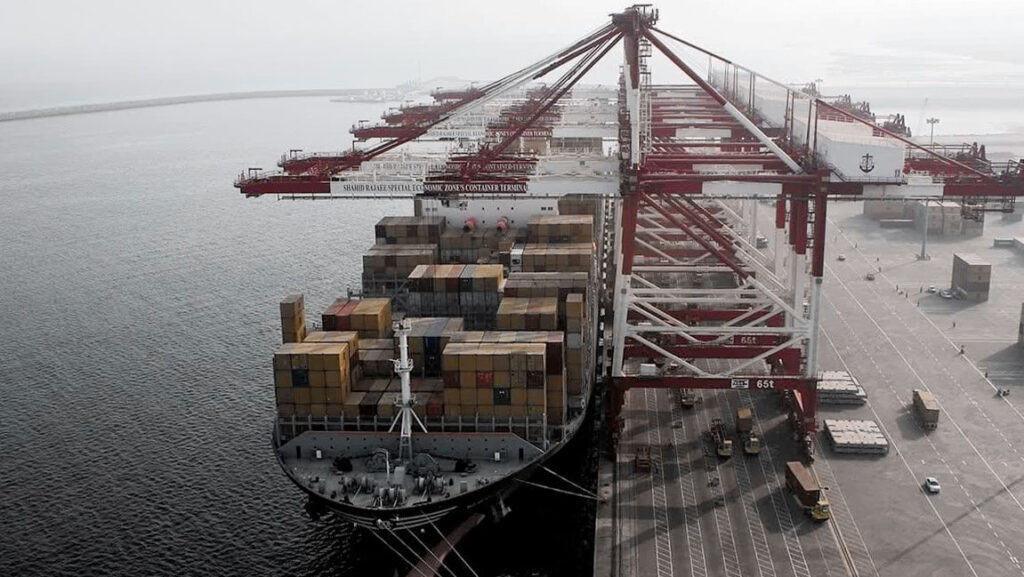
Kazakhstan invests in the development of Bandar Abbas Port to strengthen its logistics network and create a stable transit route through Iran to global maritime lanes
Photo: Shahid Rajaee Port

On April 29, 2025, Kazakhstan and Iran signed a memorandum of understanding aimed at the joint development of the Shahid Rajaee Port. The Iranian news agency Tasnim reported the agreement, citing PMO.

Under the agreement, Kazakhstan will submit a business plan within 30 days to build a terminal and logistics center in the coastal zone. PMO’s executive board will review and approve the project.

Kazakhstan Develops Logistics Hub for Central Asia​

The planned terminal will handle not only Kazakhstan’s cargo but also shipments from neighboring Central Asian countries. This will expand international transit through Iran’s southern ports.

The project gives Kazakhstan access to the Indian Ocean and supports the creation of reliable supply routes to Asia, the Middle East, and Europe. It will also enhance the country’s competitiveness in global trade.

Kazakhstan Strengthens Partnership with Iran Through Investment​

Iran is seeking new partners to modernize its port infrastructure. Kazakhstan’s support will strengthen bilateral economic ties and lay the groundwork for future joint ventures.

The agreement aligns with Kazakhstan’s strategy to expand foreign economic relations and promote outbound investment. It will reinforce its position in transregional logistics chains.

Bandar Abbas Port is set to become a key node in Eurasian logistics, and Kazakhstan’s involvement in its development opens new prospects for regional transit and trade.

Iran aims to move 54m tons of freight by rail in 2025​

April 15, 2025 - 15:5

TEHRAN – Iran is on track to achieve its 2025 target of transporting 54 million tons of domestic and international freight by rail, the head of the Islamic Republic of Iran Railways (RAI) said, citing improved locomotive readiness across the network.

Jabarali Zakeri, head of RAI, told a meeting of the national railway transport commission that close coordination among all departments—especially deputies and mid-level managers—will be key to achieving the rail system’s freight targets for the Iranian year 1404, which ends in March 2026.

Zakeri, who also serves as deputy transport and urban development minister, said that more than 570 freight locomotives were operational at the beginning of the current Iranian year, and that the target of 54 million tons is “fully achievable” based on the operational plans of regional departments.

He stressed that performance assessments for both headquarters and regional managers would be based on their ability to meet freight goals, and warned that no excuse would be accepted for any shortfalls given the current locomotive capacity.

Zakeri praised the northeastern Khorasan region for its strong growth in international rail freight over the past year and highlighted the strategic roles of both Khorasan and Hormozgan in expanding Iran’s transit capacity. He said growth in these regions would be central to achieving the goal of moving 8 million tons of international transit freight by rail.

To boost both domestic and international freight volumes, Zakeri urged regional directors to engage more actively with freight forwarding companies and support their operations.

Zakeri also announced that additional high-speed trains with a maximum speed of 160 km/h will be added to the Tehran-Mashhad line starting this summer. The route is considered a flagship passenger service for the national railway system.

He called for a thorough review of unnecessary delays at railway stations and urged an acceleration of the replacement of old rail switches with modern concrete ones.

Zakeri reiterated the ministry’s goal of increasing average speeds on the Tehran–Mashhad passenger line to 160 km/h and cutting the travel time to between 6 and 8 hours.
 
Source:
/
WhatsApp-Image-2025-05-12-at-16.21.23-1024x768.jpeg
Image: © Kazakh Railways

Container traffic on the China – Iran route grew by 2.6 times in the first months of 2025. Such strong demand for rail services seems promising for the future. Consequently, six countries decided to come together and agree on steps to develop the route.

Representatives from Kazakhstan, China, Uzbekistan, Turkmenistan, Iran, and Türkiye met in Tehran to discuss the development of the Eurasian transport corridor. The meeting, led by Kazakhstan Railways' Deputy Chairman Yerlan Koishibaev, focused on enhancing multilateral cooperation for an efficient transport route connecting China, Kazakhstan, Uzbekistan, Turkmenistan, Iran, and Türkiye/Europe.

Kazakhstan Participates in Six-Party Talks to Boost China–Europe Rail Corridor​

By Dana Omirgazy in International on 13 May 2025

ASTANA – Tehran hosted a high-level six-party meeting on May 12 with the participation of railway representatives from China, Iran, Kazakhstan, Turkmenistan, Türkiye and Uzbekistan.

WhatsApp-Image-2025-05-12-at-16.21.23-1024x768.jpeg

Photo credit: rail-news.kz

The talks marked a significant step toward advancing the China–Kazakhstan–Uzbekistan–Turkmenistan–Iran–Türkiye/Europe transport corridor, which has seen container traffic on the China–Iran route via Kazakhstan increase by 2.6 times in January-April compared to the same period last year.

During the meeting, an agreement was reached on joint actions to intensify container traffic on this route. The meeting participants confirmed their readiness to provide comprehensive support for promoting the corridor in the international transportation market, reported Kazakhstan Temir Zholy national railway company’s press service on May 12.

They also approved competitive tariff conditions and agreed on key parameters for organizing train traffic, including maintaining the approved delivery time along the route.
 
Well done, seeking more avenues for collaboration, not putting all your eggs in one basket
 

Published 16:52 14 May 2025 GMT+1

$8 billion rail route from Europe to China via Middle East set to cut travel time by 200% as six countries sign up​


It could be a game-changer for future online orders

A new train line which could be among of the world's longest is one step closer to becoming a reality.

While freight trains are nothing new, a proposed line stretching 12,000 kilometers from China to Europe could revolutionize the supply chain.

Rail freight between China and Iran has sky-rocketed, growing 2.6 times in just the first few months of 2025.

Seeing the potential for a faster, more efficient land bridge between Asia and Europe, six countries have joined forces see this growing demand through.

In a high-level meeting held in Tehran, representatives from Kazakhstan, China, Uzbekistan, Turkmenistan, Iran and Türkiye sat down to map out the future of the Eurasian transport corridor.


The talks were led by Yerlan Koishibaev, Deputy Chairman of Kazakhstan Railways, who emphasized the need for deeper cooperation to streamline cargo movement across borders.

The goal? Build a world-class freight corridor stretching from the heart of China, across Central Asia and the Middle East, straight into Europe.


And whether you've got a vested interest in the supply chain, or if you're just curious about your future Temu orders, this train line is worth paying attention to.

It will operate between China, Kazakhstan, Turkmenistan, Iran, Turkey and then to an as-of-yet undisclosed location in Europe.

It could span up to 12,000 kilometers and would cut shipping times by a whopping 200 percent.

Currently, shipping goods from eastern China to Europe by sea can take between 30 and 45 days - especially if you’re navigating around the Suez Canal.

Enter the China–Iran–Türkiye rail corridor: a route that slashes that delivery time to just 18 to 25 days.

Not only does it boost speed, but it removes the unpredictability of sea lanes affected by everything from Red Sea attacks to port strikes.

It could see faster delivery of goods - including electronics, textiles and perishables - as well as shorter border clearances due to improved infrastructure in Iran and Turkey.

While the total cost of the new railway hasn't been disclosed, it's been previously reported the China–Kyrgyzstan–Uzbekistan railway could come it at around $8 billion.

And while the route will be lengthy, it won't quite be the longest in the world.

The China-Iran-Türkiye corridor competes with at least two existing routes for that title.

That includes other China to Europe roues, like Chongqing in China to Duisburg in Germany, which clocks in at around 13,000 kilometers.

Then there's the Yiwu–Madrid, Spain freight route which is also around 13,000 km, considered one of the longest freight rail routes globally.
 

Iran, Turkmenistan agree to build 2 new rail lines at Sarakhs border​

August 12, 2025 - 15:31


TEHRAN – Iran and Turkmenistan have agreed to construct two new railway lines at the Sarakhs border crossing to ease freight congestion and boost rail trade, the head of the Islamic Republic of Iran Railways said after meeting Turkmenistan’s railway minister.

Jabbarali Zakeri said the plan includes adding one standard-gauge line and one broad-gauge line between the Sarakhs stations on each side of the border.

The agreement was reached during a bilateral meeting in Turkmenbashi on the sidelines of the United Nations’ Third Conference on Landlocked Developing Countries.

Zakeri, who is also deputy minister of transport and urban development, stressed that expanding the number of exchange tracks is vital for strengthening rail links between the two countries.

He said expert-level meetings between the two rail administrations will be held to advance implementation.

The talks also addressed the backlog of export freight at Sarakhs.

Zakeri said Turkmenistan’s railway will add 200 to 300 Uzbek freight wagons to the joint transport fleet to help increase international cargo capacity and speed up rail trade along the route.

The Sarakhs crossing is a key gateway for cargo flows between Iran, Central Asia and beyond, forming part of the International North–South Transit Corridor (INSTC) and other regional rail networks.

Officials say the planned infrastructure expansion will enhance both bilateral trade and multimodal transit operations through the corridor.
 

01.09.25 20:00

Iran confirms new railway routes to expand trade corridor with China

Iran’s Ministry of Roads and Urban Development has confirmed plans to expand railway links to strengthen trade with China under the framework of the 25-year strategic partnership between the two countries. This is reported by Mehr News Agency, a partner of TV BRICS.

Amin Taraf, Head of the International Affairs Centre at Iran’s Ministry of Roads and Urban Development, highlighted that Iran is already connected to Central Asia via the Sarakhs and Incheh-Borun rail lines, which in turn link the country to Kazakhstan and onward to China. He noted that new rail routes, including a China–Kyrgyzstan line, are under construction, creating a more direct and efficient connection between Iran and China.

Taraf also indicated that road connections between Iran and China could be established within the next few months, complementing the existing rail network. He highlighted that these developments build on the long-standing flow of imports and exports from China through Iran, ensuring the country remains a vital transit corridor for trade moving westwards from China.

Enhanced infrastructure is expected to increase Iran’s share of international freight traffic, providing economic benefits and strengthening its role in regional logistics.

While more than 90 per cent of trade between Iran and China currently takes place via maritime routes, the development of rail and road links is viewed as a strategic opportunity to diversify transport channels, enhance connectivity, and strengthen Iran’s position in regional and international trade networks, the report emphasised.
 

20:47, 19 September 2025

Armenia supports Kazakhstan-Turkmenistan-Iran-Armenia freight route project- Deputy PM​


The 11th meeting of the Intergovernmental Commission on Economic Cooperation between Armenia and Kazakhstan was held remotely on September 19, co-chaired by Deputy Prime Minister of Armenia Mher Grigoryan and Deputy Prime Minister and Minister of National Economy of Kazakhstan Serik Zhumangarin, Grigoryan's Office has said.

In his speech, Deputy Prime Minister Grigoryan highlighted the importance of strengthening relations with Kazakhstan, including within the framework of EAEU cooperation, and noted the significant unrealized potential in trade and economic partnership. He paid special attention to cooperation in the transport sector.

“The Republic of Armenia supports the initiative to establish a multimodal transport route along the Kazakhstan-Turkmenistan-Iran-Armenia corridor. Freight transport is already underway along the China-Kazakhstan-Uzbekistan-Turkmenistan-Iran-Armenia route, indicating growing interest in expanding transport and logistics ties between our countries,” Grigoryan said.

He added that Armenia hopes these shipments could become regular, noting the potential interest of Armenian entrepreneurs in the Khorgos International Border Cooperation Center on the Kazakh-Chinese border.

“The development of interregional transport and logistics infrastructure is particularly important for Armenia in the context of the "Crossroads of Peace" infrastructure project, he emphasized.

Grigoryan expressed confidence that Armenia and Kazakhstan will continue to strengthen their partnership based on trust, respect and friendship between the two peoples.
 

20:47, 19 September 2025

Armenia supports Kazakhstan-Turkmenistan-Iran-Armenia freight route project- Deputy PM​


The 11th meeting of the Intergovernmental Commission on Economic Cooperation between Armenia and Kazakhstan was held remotely on September 19, co-chaired by Deputy Prime Minister of Armenia Mher Grigoryan and Deputy Prime Minister and Minister of National Economy of Kazakhstan Serik Zhumangarin, Grigoryan's Office has said.

In his speech, Deputy Prime Minister Grigoryan highlighted the importance of strengthening relations with Kazakhstan, including within the framework of EAEU cooperation, and noted the significant unrealized potential in trade and economic partnership. He paid special attention to cooperation in the transport sector.

“The Republic of Armenia supports the initiative to establish a multimodal transport route along the Kazakhstan-Turkmenistan-Iran-Armenia corridor. Freight transport is already underway along the China-Kazakhstan-Uzbekistan-Turkmenistan-Iran-Armenia route, indicating growing interest in expanding transport and logistics ties between our countries,” Grigoryan said.

He added that Armenia hopes these shipments could become regular, noting the potential interest of Armenian entrepreneurs in the Khorgos International Border Cooperation Center on the Kazakh-Chinese border.

“The development of interregional transport and logistics infrastructure is particularly important for Armenia in the context of the "Crossroads of Peace" infrastructure project, he emphasized.

Grigoryan expressed confidence that Armenia and Kazakhstan will continue to strengthen their partnership based on trust, respect and friendship between the two peoples.

Pashinyan: Imagine loading cargo in Armenia and unloading it in China​

18 Sep, 2025

The most important outcome of Armenia-China relations is the establishment of a strategic partnership, formalized in a document adopted following my meeting with the President of China, Prime Minister Nikol Pashinyan said during the government’s September 18 press briefing, responding to a question about what the Armenia-China agreements mean for Armenian businesses.

“A strategic partnership means, among other things, that the business sectors of our countries now have a positive political signal to deepen cooperation in the economy and other areas. It is simply up to our partners to take advantage of these opportunities.

Of course, distance and transport limitations exist, but I hope—and in fact I am convinced—that the unblocking of regional infrastructure will resolve a significant part of these issues.

Just imagine the possibility of loading cargo onto trains in Armenia and unloading it in China. This would create a completely different economic reality, and one of our key objectives is precisely to record and achieve that reality.

Overall, concrete partnership has been established between Armenia and China, and this partnership—also thanks to reciprocal investment opportunities—must continue to develop,” he said.
 

Iran and Türkiye announce $1.6 billion railway to link Asia and Europe


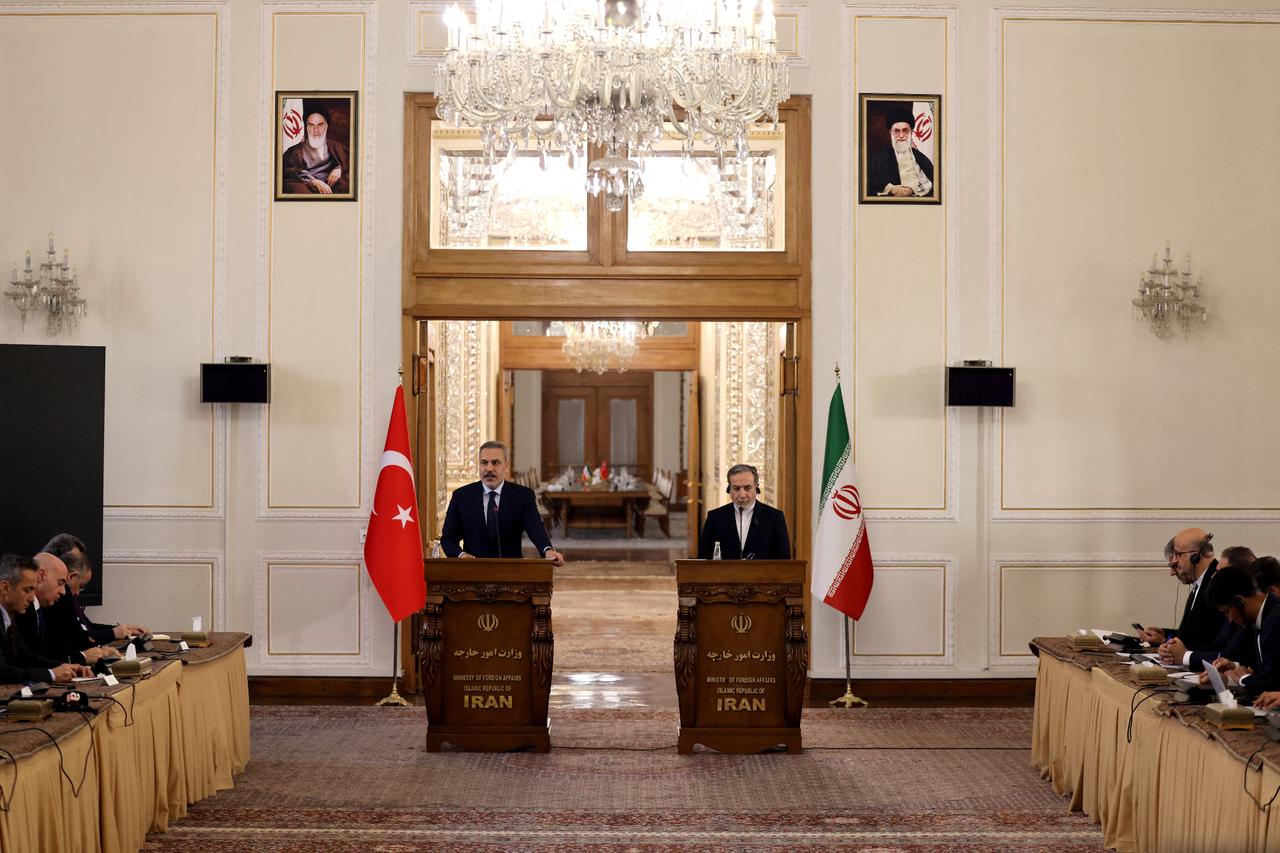
Foreign Minister Hakan Fidan (L) and Irans Foreign Minister Abbas Araghchi holds a joint press conference in Tehran on Nov. 30, 2025. (AFP Photo)

Foreign Minister Hakan Fidan (L) and Irans Foreign Minister Abbas Araghchi holds a joint press conference in Tehran on Nov. 30, 2025. (AFP Photo)

November 30, 2025 07:05 PM GMT+03:00

Iran and Türkiye have reached an agreement to construct a new railway line aimed at creating a strategic transport corridor between Asia and Europe, Iranian Foreign Minister Abbas Araghchi announced Sunday.

The planned route, known as the Marand-Cheshmeh Soraya railway transit line on the Iranian side, will extend approximately 200 kilometers toward Türkiye's Aralik border region. Iranian authorities estimate the project will cost roughly $1.6 billion and require three to four years to complete.

Reviving an ancient trade corridor​

The railway is designed to modernize a southern section of what was historically the Silk Road, the network of trade routes that connected East Asia to the Middle East and Europe for centuries. Iranian Transport Minister Farzaneh Sadegh said earlier this month that the line would create an "all-rail corridor ensuring the continuity of the network between China and Europe."

The infrastructure would enable "fast and cheap transport of all types of cargo with minimal stops," Sadegh added, positioning the route as a competitive alternative for international freight movement.

Bilateral cooperation on trade and investment​

During a joint press conference Saturday with his Turkish counterpart Hakan Fidan, Araghchi said both nations "placed emphasis on the need to remove barriers to trade and investment between the two countries." The ministers expressed optimism that construction could begin in the near term, stressing the railway's regional significance.

The announcement comes as Iran pursues expanded infrastructure development with neighboring countries to counter the economic impact of international sanctions that have constrained its economy for decades. The country has increasingly looked to regional partnerships as Western sanctions have limited its access to global financial systems and markets.

Connecting to China's Belt and Road vision​

The project aligns with China's Belt and Road Initiative, launched in 2013 as a massive infrastructure development strategy spanning maritime, road and rail networks across multiple continents. Sometimes called the "New Silk Road," the initiative seeks to enhance global trade connectivity, and Iran has positioned itself as a potential link in routes connecting Chinese manufacturing centers to European markets.

The Marand-Cheshmeh Soraya line would provide an alternative land route for goods moving between Asia and Europe, potentially reducing reliance on longer maritime shipping lanes or other overland corridors that pass through different countries.


Iran, Turkey agree to build $1.6 billion trade rail link​

9 hours agoUpdated 4:26 PM

Iran and Turkey have agreed to start building a new joint rail line that will serve as a strategic trade corridor between Asia and Europe, Iranian foreign minister Abbas Araghchi said Sunday.

The Marand–Cheshmeh Soraya transit line, which will run toward Turkey’s Aralik border region, will span about 200 kilometres and cost roughly $1.6 billion.

Iranian authorities say construction is expected to take three to four years to complete.
 

Iran sees surge in China-Europe rail traffic after new deal​

Iran sees surge in China-Europe rail traffic after new deal


TEHRAN, Dec. 04 (MNA) – Iran’s rail authority says 40 trains from China have entered the country this year—compared to just seven over the previous seven years—following a major six-country transit alignment.

According to Mehr News Agency, Shahryar Naqizadeh, Director-General for International Commerce at the Iranian Railways, said the Southern Corridor passing through Iran is the safest and most economical rail route for freight transport from China to Europe.

In an interview with IRNA, he referred to the recent six-party railway agreement signed in Istanbul between Iran, China, Uzbekistan, Turkey, Turkmenistan, and Kazakhstan. He said a meeting was held earlier this year in Beijing focused on developing the East-West corridor through Iran with representatives of these countries.

According to Naqizadeh, the participating states agreed to apply unified tariffs and reduce transit times to activate the southern branch of the East-West rail corridor.

Explaining the routes, he said three transport corridors currently connect China to the European Union. The first is the Northern Corridor through Mongolia and Russia. The second is the Middle Corridor, which branches into a rail route toward Russia and a mixed sea-rail route crossing the Caspian Sea toward Azerbaijan, Georgia and the Black Sea.

The third, long known as the Southern Corridor but inactive until now, passes through Iran and dates back 2,000 years to the original Silk Road.

He emphasized that Iran’s rail diplomacy and recent meetings in Beijing and Istanbul focused on activating the Southern Corridor. Naqizadeh said the Beijing and Istanbul meetings led to agreements on implementing unified tariffs among all six countries, reducing transport costs. Another agreement involved cutting transit times by coordinating authorities to ensure cargo moves through each country as quickly as possible.

Highlighting early results, he said 40 trains from China have entered Iran since the start of this year, compared to only seven trains over the previous seven years.

Based on the capacity provided by this agreement, he said transit trains from China to Europe will also pass through Iran.

Referring to the annual 60 million tons of cargo transported from China to Europe by rail, Naqizadeh said that even diverting 10 percent of this flow to the Southern Corridor through Iran would bring significant economic benefits to the country. Achieving this requires completing rail links from Marand to Maku and from Bazargan to Cheshmeh Soraya, extending onward to Kars in Turkey.

He noted that related memoranda have been signed and will be finalized during an upcoming meeting between the presidents of Iran and Turkey.

Considering the Northern Corridor’s disruptions due to the Ukraine-Russia conflict and the Middle Corridor’s multimodal complications—requiring Caspian Sea crossings, higher costs, and slower transit—Naqizadeh argued that the fully rail-based Southern Corridor will be the most attractive option for cargo owners.

He added that the current cost of transporting a 40-foot container from Xi’an, China to Tehran under existing tariffs is USD 4,500. The return route offers a 50 percent discount, priced at USD 2,500.

With a transit time of at most three weeks along the 9,000-kilometer route—significantly faster than maritime alternatives—he said the rail corridor will appeal strongly to traders and commercial operators.
 

Kazakhstan and Iran look to expand transport corridors and logistics cooperation​

Today, 00:02

OyZxh8wTLXPcFvGLnMK6KLHD5AOSXRJ974NMqlBH.jpg
Photo by: Gov

Ambassador of Kazakhstan to Iran Ontalap Onalbayev held talks with Farzaneh Sadegh, Minister of Roads and Urban Development of the Islamic Republic of Iran. The meeting focused on strengthening transport connectivity between the two countries and advancing large-scale logistics projects of mutual interest, DKNews.kz reports.

From presidential visit to concrete projects​

A key part of the discussions was devoted to implementing the agreements reached during the official visit of Iran’s President Masoud Pezeshkian to Kazakhstan. The sides also reviewed the instructions issued by the two heads of state following the visit, emphasizing the need to move from political decisions to practical implementation.

Both sides noted that the current stage of cooperation requires concrete infrastructure solutions that can deliver measurable economic results.

Transport and logistics at the core of bilateral ties​

Trade, economic cooperation, and transport connectivity remain central pillars of Kazakhstan-Iran relations. In this context, the sides expressed readiness to thoroughly examine ways to increase cargo and transit volumes along the International North-South Transport Corridor.

Special attention was also given to expanding the capacity of the Kazakhstan-Turkmenistan-Iran railway, which plays a growing role in regional transit flows linking Central Asia with the Middle East and South Asia.

New corridors: Iraq and Armenia on the map​

Beyond existing routes, Kazakhstan and Iran are exploring the launch of new transport corridors. Among the options discussed were the “Kazakhstan-Iran-Iraq” and “Kazakhstan-Turkmenistan-Iran-Armenia” corridors.

These routes are seen as an opportunity to diversify logistics pathways, reduce transit risks, and open access to new regional markets.

Ports and maritime routes: Shahid Rajaee and Chabahar​

Maritime connectivity also featured prominently in the talks. The sides expressed interest in developing shipping links between the ports of Kazakhstan and Iran, as well as in implementing joint transport and logistics investment projects at the Shahid Rajaee and Chabahar ports.

These ports are viewed as strategic gateways for Kazakhstan to reach the Persian Gulf, the Indian Ocean, and markets beyond the region.

Regular dialogue and next steps​

To ensure steady progress, the sides underscored the importance of holding regular meetings between officials responsible for transport and logistics in both countries. Such coordination is expected to accelerate the implementation of joint projects and improve operational alignment.

Issues related to enhancing transport connectivity between Kazakhstan and Iran are expected to be discussed in detail at the next meeting of the Joint Intergovernmental Commission, which is planned to take place in Iran.

The talks reflect a shared commitment by both countries to elevate bilateral cooperation in transport and logistics to a new, more practical level - with infrastructure, transit, and long-term regional integration at the forefront.
 
Uzbekistan develops new rail links to strengthen Eurasian transit role
Published on 21/01/2026 - 7:00 GMT+1

New international corridors and fleet upgrades are expanding cross-border rail connectivity, supporting trade flows between Europe, Asia and South Asia, while modernisation and electrification aim to improve passenger and freight services.

Uzbekistan is expanding its international railway corridors as part of a strategy to strengthen its role as a transit country linking Europe, Asia, and South Asia. The new and upgraded routes aim to reduce transit times, improve trade flows, and provide alternative connections between major global markets, according to officials.

“We are actively opening new corridors with neighbouring countries and with Asia and Europe. The goal is to unlock the full potential of Uzbekistan as a transit hub, making trade faster, more efficient, and more accessible,” said Jasurbek Choriyev, deputy minister of transport.

The expanded network includes several key corridors. These range from the TRACECA route through the Black Sea, to the China–Kazakhstan–Uzbekistan railway via the Altynkol/Korgos border crossing, and routes through Turkmenistan and Iran leading to the port of Bandar Abbas. Additional connections provide access to Baltic ports via Russia.

One of the shorter routes is the Hairatan–Mazar-i-Sharif railway, which links Uzbekistan with Afghanistan and provides access towards Pakistan. Officials say this connection opens new possibilities for trade with South Asia while supporting the transit of goods such as cotton, natural gas, and agricultural products.

“Our vision is to make Uzbekistan’s railways a world-class system: efficient, green, and capable of meeting the needs of the economy, passengers, and international partners,” said Khikmatualla Rakhmetov, first deputy chairman of Uzbekistan Railways JSC.

A central element of the strategy is the planned Trans-Afghan Railway, designed to connect Uzbekistan with Pakistan’s seaports and the Indian Ocean. The project is intended to create a continuous land route between Central Asia and South Asia.

“The Trans-Afghan Railway is a historic project. It links Central Asia with South Asia and the Indian Ocean, opening new opportunities for trade and economic growth across the region,” Choriyev emphasised.

Development of these corridors is supported through cooperation with international financial institutions, including the European Bank for Reconstruction and Development, the Asian Development Bank and the World Bank, according to the Ministry of Transport.


Fleet modernisation and infrastructure upgrades​

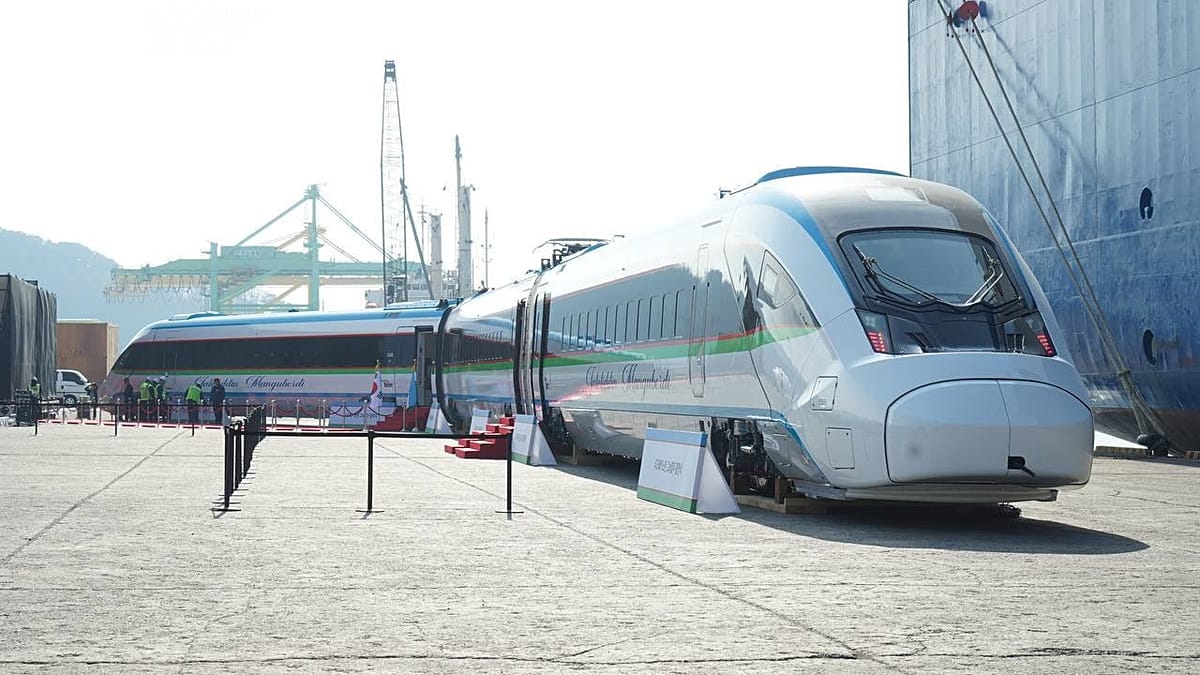
Alongside corridor development, Uzbekistan Railways is modernising its rolling stock and infrastructure. The programme includes the purchase of 38 mainline locomotives and 50 shunting and hybrid locomotives from China, as well as six high-speed electric trains produced by South Korean manufacturer Hyundai Rotem.

The first of these high-speed trains is scheduled to operate on the Tashkent–Urgench–Khiva route, reducing travel time from about 14 hours to around 7.5 hours. The broader programme also covers the acquisition of 250 passenger carriages, 23 intercity electric trains and around 10,000 freight wagons. More than 6,000 existing wagons are undergoing refurbishment, while 12 electric locomotives are being overhauled.

Domestic rail capacity has also been expanded. Uzbekistan Railways has added 1,200 new freight wagons and introduced digital systems that reduce wagon ordering times from 72 hours to around 12 hours. According to officials, train throughput in the Tashkent area has increased by about 30%.

New and upgraded domestic lines, including Navoiy–Uchquduq–Sulton Uvaystog’ and Toshguzar–Boysun–Qumqo‘rg‘on, have strengthened internal connectivity, while the Hairatan–Mazar-i-Sharif line continues to support access towards South Asia.

“Uzbekistan is developing alternative corridors to overcome regional constraints. These initiatives are crucial to securing reliable transit routes and expanding our international connections,” said Bekzod Kholmatov, director of the Centre for the Study of Transport and Logistics Problems.

Passenger service and tourism​

High-speed passenger services are growing rapidly, with volumes expected to triple by 2026. The network supports tourism to cities such as Samarkand, Bukhara and Khiva, which have seen rising interest from foreign visitors.

Data from the National Statistics Committee shows that during January to June 2025, railways transported an average of about 29,400 passengers per day.

“Passenger transport is a priority. High-speed trains improve mobility and help connect visitors with Uzbekistan’s historical and cultural centres,” Rakhmetov said.

Investments in station modernisation, rolling stock upgrades, and service standards are intended to improve travel times, comfort, and safety for both domestic and international passengers.

Sustainability and​

Electrification and renewable energy form a core part of Uzbekistan’s railway strategy. Electrified rail services reduce dependence on diesel-powered transport and lower greenhouse gas emissions. More than 70% of the country’s rail network is currently electrified, with plans to raise this share to 85% by 2030.

750x500_cmsv2_81582519-f37b-5459-8520-06e407251a21-9617584.jpg

Intelligent Locomotive Operations Centre Uzbekistan Railways JSC

Over the past eight years, Uzbekistan has invested more than €17.2bn in solar and wind power projects, which complement the expansion of electrified rail services.

“Electrification not only reduces transport costs but also benefits the environment, making railways a key part of Uzbekistan’s sustainable future,” Rakhmetov said.

Long-term strategy​

Officials describe rail transport as a central component of Uzbekistan’s economic infrastructure, linking production centres, consumers, and international markets.

“Railways are not just a transport system; they are the backbone of Uzbekistan’s economy, connecting people, goods, and opportunities across Central Asia and beyond,” Rakhmetov emphasised.

Over 70% of Uzbekistan’s network is already electrified, with plans to reach 85% by 2030, making it one of the most electrified networks in Central Asia.
 

Uzbekistan aims to link joint China-Kyrgyzstan railway to Iran-Türkiye transit routes​

Economy Materials 16 February 2026 17:14 (UTC +04:00)

Uzbekistan aims to link joint China-Kyrgyzstan railway to Iran-Türkiye transit routes

Photo: The Ministry of Transport of Uzbekistan

TASHKENT, Uzbekistan, February 16. Uzbekistan is seeking to integrate the under-construction China-Kyrgyzstan-Uzbekistan railway into existing international transport corridors, including routes via Iran and Türkiye, Trend reports via the Uzbek Ministry of Transport.

This issue was discussed during a trilateral meeting held on the sidelines of the 2nd meeting of the Ministers of Transport of the Organization of Islamic Cooperation (OIC) member states in Istanbul, Türkiye.

The talks brought together Uzbekistan’s Minister of Transport Ilkhom Makhkamov, Iran’s Minister of Roads and Urban Development Farzaneh Sadegh, and Türkiye’s Minister of Transport and Infrastructure Abdulkadir Uraloglu.

During the meeting, the sides also explored ways to develop a mutually integrated transport and logistics system, strengthen regional cooperation, and advance joint infrastructure and connectivity projects.

Makhkamov stated that Uzbekistan is ready to elevate its strategic partnership with Iran and Türkiye to a new level, with a particular focus on expanding transport links and developing road and logistics infrastructure.

On December 27, 2024, a ceremonial event in Jalal-Abad marked the official commencement of construction for the China-Kyrgyzstan-Uzbekistan highway. Earlier, on June 6, 2024, a cooperative agreement was signed in Beijing between the Governments of the People's Republic of China, Kyrgyzstan, and Uzbekistan, outlining their collaboration on advancing the project. This agreement was in accordance with the memorandum approved on May 18, 2023, which confirmed the feasibility study and established the combined route linking Kashgar – Torugart – Makmal – Jalal-Abad – Andijan.

According to the Ministry of Transport of Uzbekistan, the railway will span a total of 532.53 km. The project plans include the construction of 20 stations—among them, two border stations, one transshipment station, four intermediate stations, and 13 passing loops. Additionally, the plan provides for the construction of 48 bridges, totaling 16.06 km in length, along with 27 tunnels, which will cover 103.63 km. In total, the combined length of the bridges and tunnels will extend for 119.69 km, accounting for 39.3 percent of the overall length of the railway.
 

Turkish, Chinese companies to launch regular freight trains from Guangzhou​

June 10, 2026 04:53 PM GMT+03:00

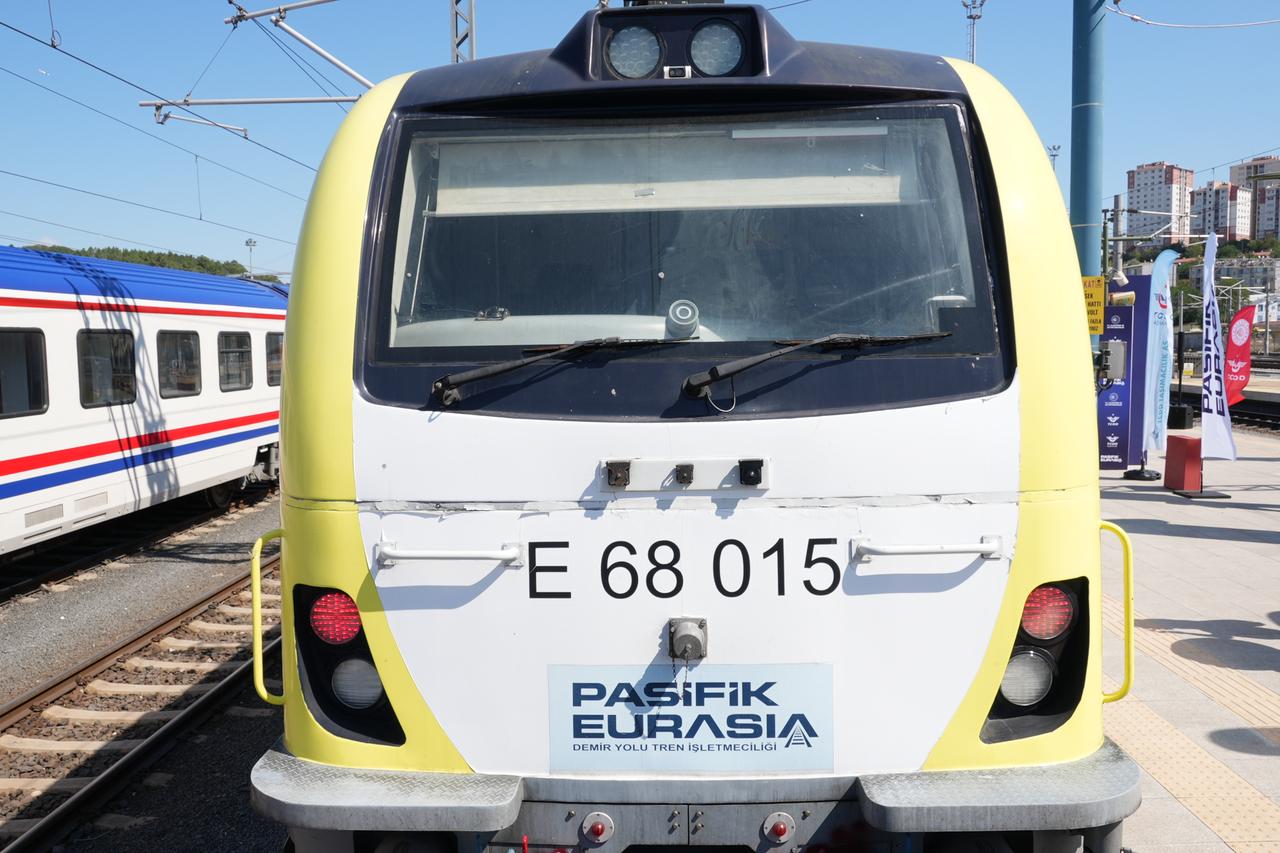
Istanbul-based Pasifik ISR and China's Guangzhou Communications Investment International Train Operation Management Co. Ltd. signed a cooperation agreement on Wednesday to launch regular freight train services from Guangzhou to Türkiye as a new step in efforts to strengthen the rail corridor between China and Europe, according to the statement.

The memorandum of understanding was signed by senior executives of both companies in Istanbul. The first trial train from Guangzhou is scheduled to arrive in Türkiye in July 2026.

Twice-weekly freight services set to begin​

The partnership aims to develop a logistics corridor linking China's Guangdong province with Türkiye before extending onward to Europe, the Middle East, the United Kingdom and Africa under the Belt and Road Initiative.

Under the agreement, the route will host scheduled block train services twice a week, the first regular operations of their kind on the line. Running on fixed days and times, the services are expected to offer exporters more predictable transit schedules and stable transport capacity. The companies also plan to establish an integrated transportation network based on standardized routes, transit timetables and pricing.

The two sides will work together to improve operational coordination within the China-Europe Railway Express network, including cargo tracking, customs procedures and service scheduling.

The agreement also calls for closer coordination of logistics infrastructure across Türkiye, including free zones and industrial areas, to support growing trade flows along the route.
 
Last edited:

Users who are viewing this thread

Pakistan Defence Latest

Country Watch Latest

Latest Posts

Back
Top