Syrian Civil War and The future of Syria after liberation

8 years of ceasefire the Syrian Mujahideen trained and the syrian army deteriorated. Why is the Syrian army retreating without putting up any resistance? They are simply leaving, judging by the media reports . They have not built any fortifications in so many years... Or are they waiting for others to fight for their country? Shame.
Syrians are fighting, Those who are fighting for one man are fleeing.
 
8 years of ceasefire the Syrian Mujahideen trained and the syrian army deteriorated. Why is the Syrian army retreating without putting up any resistance? They are simply leaving, judging by the media reports . They have not built any fortifications in so many years... Or are they waiting for others to fight for their country? Shame.
It would be in their best interest to withdraw without resorting to conflict, as engaging in unnecessary bloodshed would not alter the inevitable outcome.
 
To view this content we will need your consent to set third party cookies.
For more detailed information, see our cookies page.
 
To view this content we will need your consent to set third party cookies.
For more detailed information, see our cookies page.
 

We won't use chemical weapons under any circumstance, rebel group says​

BBC

Staying on the issue of chemical weapons, Islamist rebel group Hayat Tahrir al-Sham (HTS) says it has no plans to use chemical weapons controlled by Syrian authorities "under any circumstances", according to reports from Reuters news agency.

HTS is the group leading the anti-government offensive that started last week, seizing Aleppo on 27 November after a surprise attack in the north-west, and later taking Hama, Deraa.

Recent reports say rebels are closing in on the capital Damascus and have entered Homs, Syria's third largest city.

Designated as a terrorist organisation by the UN, US, Turkey and other countries, the group was set up initially as Jabhat al-Nusra as a direct affiliate al-Qaeda. In 2016, the group broke ranks with al-Qaeda and renamed itself HTS, along with other similar groups in 2017.
 
To view this content we will need your consent to set third party cookies.
For more detailed information, see our cookies page.
 

Rumours swirling over whereabouts of President al-Assad​


Sebastian Usher
BBC Arab Affairs Editor

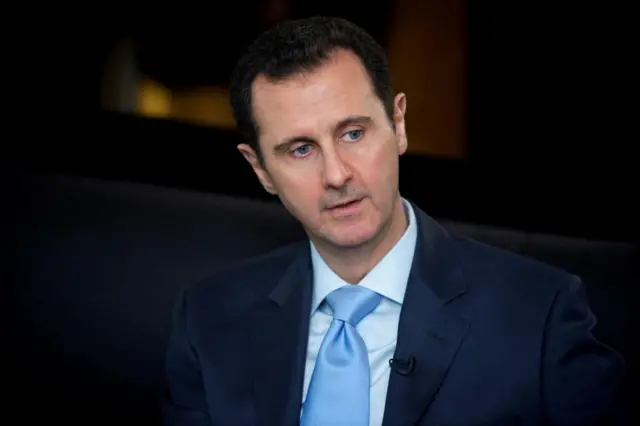
Bashar al-Assad in a suit and tie, sat down, looking to the right of the camera with mouth slightly open, dark background
Image source,Reuters
The mood in Damascus appears to be one of confusion and fear, with many people unable to find out exactly what is going on as rebel factions approach ever closer.

In several suburbs, symbols of the power of the Assad dynasty have been torn down or toppled. The interior ministry says it's creating a ring of steel around the capital.

But government forces have notably failed to provide any such defence in cities, towns and villages that have fallen to rebel factions across the country.

Rumours are swirling over the whereabouts of President al-Assad, with people logging flights in and out of Damascus to work out whether he might have left.

His office has denied all such reports, saying he's still at work in Damascus, but there's been no sign of him.
 
To view this content we will need your consent to set third party cookies.
For more detailed information, see our cookies page.
 
To view this content we will need your consent to set third party cookies.
For more detailed information, see our cookies page.
 

Fate of Assad will soon be decided on the ground, observers in Doha say​


Lyse Doucet
Chief international correspondent

As Syrian rebels close in on Damascus, diplomacy is also intensifying. Emergency talks are taking place in the Qatari capital Doha. Arab foreign ministers from Egypt, Jordan, and Saudi Arabia, have flown into Doha to join their counterparts from Iran, Turkey, and Russia for discussions on this fast-moving situation. The foreign minister of Iraq, who shares their growing concern, is also engaging in this scramble to find a negotiated end to this escalating crisis.

Russia and Iran, President Assad’s major foreign backers, and Turkey, a key supporter of Syrian rebel groups, form part of what is called the Astana Process which was forged in 2017 as a forum to discuss ways forward in Syria. They held their own talks earlier in the day and emphasised the urgent need for a political process. That’s something President Assad has long refused to engage in.

The UN’s Special envoy for Syria Geir Pederson has also been holding urgent meetings here. But many observers assess that the fate of President Assad and his government will soon be decided on the ground.
 
To view this content we will need your consent to set third party cookies.
For more detailed information, see our cookies page.
 

Uncertainty sparks fear​

Aleks Phillips
BBC News

More now from Zaina Shahla, who lives in the centre of Damascus and talks about spoke to me about fear in the capital city.

As we reported earlier, footage on social media suggests there have been anti-Assad protests in the suburbs of Damascus, while there have been claims in the US that these suburbs could fall to the rebels quickly.

She says that aside from these videos, she has not seen any protests in the centre of Damascus - and that different people living in the capital have different views about the rebels.

The fear, she says, comes from a sense of uncertainty.

"We are afraid because we really don’t know what’s going to happen," she said. "Nobody wants to see fighting in Damascus."

Zaina added: "Everything is ambiguous and nothing is clear for anyone."

Her family have remained in Damascus throughout Syria's civil war, and have not considered fleeing - until now.

While they are not planning on leaving yet, Zaina said, "if things escalate in a dramatic way or a dangerous way, maybe we will think about it".
 
To view this content we will need your consent to set third party cookies.
For more detailed information, see our cookies page.
 

Users who are viewing this thread

Pakistan Defence Latest

Country Watch Latest

Back
Top