ghazi52
THINK TANK: CONSULTANT


The Middle East is reeling because ideas taken as a given – like pervasive Iranian strength, and Russian solidity as an ally – are crumbling as they meet new realities. Assad prevailed as the leader of a blood-drenched minority, not through guile or grit, but because Iran murdered for him and Moscow bombed for him. Now these two allies are wildly over-stretched elsewhere, the imbalance that kept Assad and his ruling Alawite minority at the helm is also gone.
When established regional powers seem suddenly unable to act, there is often a moment of significant risk. But this is one seized by Turkey, a NATO member which has dealt with the most fallout from Syria’s turmoil.

Related articleSyrian rebels appear to have entered Damascus as Assad regime’s defenses crumble
Ankara has had to play the long game over Syria, and housed over three million of its refugees since 2012. It has had to see the Kurdish militants – the Syrian Democratic Forces (SDF) that the US trained, equipped and helped to fight ISIS – develop a stronghold along its border. From Ankara’s perspective, the Syria problem has never gone away even though attention to it faded; it would one day need to alter the enduring mess in its favor.
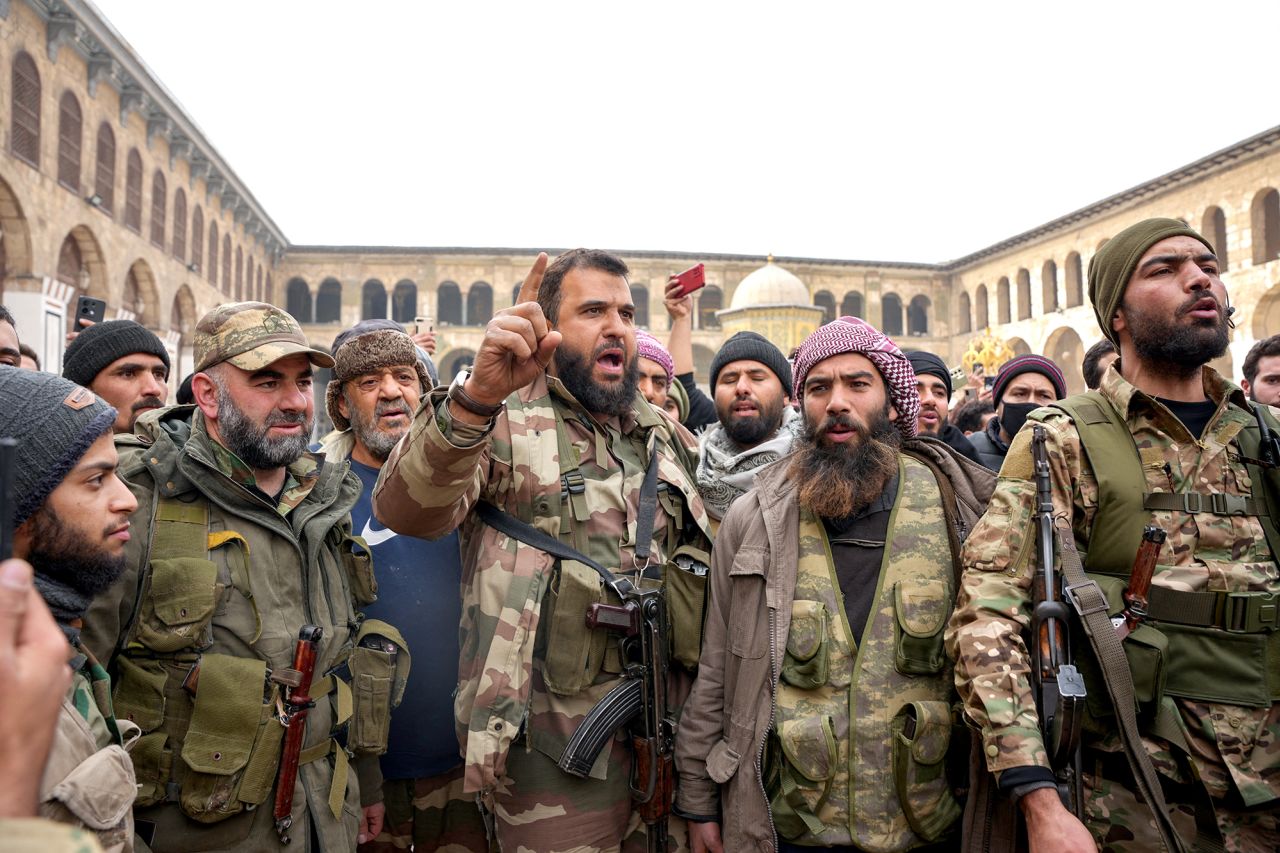
The sweeping offensive by Hayat Tahrir al-Shams (HTS) – with its impetus, equipment and inclusive communications strategy, telling Syria’s disparate and panicked ethnic groups their new society would view them all as one – spoke of a sophisticated hand behind it. Turkish President Recep Tayyip Erdoğan made his strongest suggestion to date whose hand that was when he said Friday he had tried to negotiate the future of Syria with Assad, failed, and he wished the offensive well, all the way to the Syrian capital. It was not a subtle message. But it does not need to be at a time of seismic change Erdogan has likely long awaited.
Exactly who Turkey has empowered remains unclear. HTS’s upper echelons, in short, began as al-Qaeda, found ISIS too extreme, and are now trying to suggest they’ve grown up. From Ireland to Afghanistan, the history of this sort of evolution is messy. It’s not always simple for extremists to reform, yet also possible sometimes they can change just about enough. Separately, while Turkey may have lit the touch paper of HTS assaults, the speed of Assad’s collapse may not have been anticipated. There is such a thing as too great a success.
When established regional powers seem suddenly unable to act, there is often a moment of significant risk. But this is one seized by Turkey, a NATO member which has dealt with the most fallout from Syria’s turmoil.
Related articleSyrian rebels appear to have entered Damascus as Assad regime’s defenses crumble
Ankara has had to play the long game over Syria, and housed over three million of its refugees since 2012. It has had to see the Kurdish militants – the Syrian Democratic Forces (SDF) that the US trained, equipped and helped to fight ISIS – develop a stronghold along its border. From Ankara’s perspective, the Syria problem has never gone away even though attention to it faded; it would one day need to alter the enduring mess in its favor.
The sweeping offensive by Hayat Tahrir al-Shams (HTS) – with its impetus, equipment and inclusive communications strategy, telling Syria’s disparate and panicked ethnic groups their new society would view them all as one – spoke of a sophisticated hand behind it. Turkish President Recep Tayyip Erdoğan made his strongest suggestion to date whose hand that was when he said Friday he had tried to negotiate the future of Syria with Assad, failed, and he wished the offensive well, all the way to the Syrian capital. It was not a subtle message. But it does not need to be at a time of seismic change Erdogan has likely long awaited.
Exactly who Turkey has empowered remains unclear. HTS’s upper echelons, in short, began as al-Qaeda, found ISIS too extreme, and are now trying to suggest they’ve grown up. From Ireland to Afghanistan, the history of this sort of evolution is messy. It’s not always simple for extremists to reform, yet also possible sometimes they can change just about enough. Separately, while Turkey may have lit the touch paper of HTS assaults, the speed of Assad’s collapse may not have been anticipated. There is such a thing as too great a success.