Tang dynasty battles with the caliphate

Before the Arab expansion, the Tang Dynasty has been allied with Persia, and most likely the two nations did share a borderline.

And a famous Chinese poet was even born in Kyrgyzstan.


He lived during the era of the Battle of Talas.

After that war campaign, China's influence in the Central/West Asia was pretty much over.
My point is that we need to look at such battles from many perspectives. Geographic proximity to heartlands, population size, other battles/engagements during the same time period, internal unrest, past accomplishments, later history etc. Not in isolation.

When there was no betrayl at the battle of aksu the caliphate did not do very well. Talas is a tale of betrayal and no one in china see it as a tale of fighting your best and losing.
Every losing side always have their arguments and reasons. Nobody is disputing that. But I don't think that 10% of the total soldiers was the difference between victory and defeat.

To me it is astonishing (given the context and everything I wrote) that Arab armies even managed to conquer that much land and venture as far east in the first place.

Once again during that era (Battle of Aksu and Battle of Talas) there was no empire bigger than the Arab Caliphates (Umayyad and Abbasid).

There is a reason why Arab military conquests are regarded (by military historians) as some of the greatest military achievements in human history and why many Arab generals and strategists continuously rank as some of the best ranked generals in history.

But nowadays it is just a curiosity more than anything else. Most Arabs and Chinese do not remember or know about this battle nor is it relevant to anything that occurs nowadays.

Today the Arab world and China have excellent relations and an enormous annual trade that amounts to almost 500 billion USD! There are zero disputes and China hosts an annual Sino-Arab meeting and the Chinese government has created an entire Arab policy paper (only one such region in the world).


To view this content we will need your consent to set third party cookies.
For more detailed information, see our cookies page.
 
Last edited:
My point is that we need to look at such battles from many perspectives. Geographic proximity to heartlands, population size, other battles/engagements during the same time period, internal unrest, past accomplishments, later history etc. Not in isolation.


Every losing side always have their arguments and reasons. Nobody is disputing that. But I don't think that 10% of the total soldiers was the difference between victory and defeat.

To me it is astonishing (given the context and everything I wrote) that Arab armies even managed to conquer that much land and venture as far east in the first place.

But nowadays it is just a curiosity more than anything else. Most Arabs and Chinese do not remember or know about this battle nor is it relevant to anything that occurs nowadays.

Today the Arab world and China have excellent relations and an enormous annual trade that amounts to almost 500 billion USD! There are zero disputes and China hosts an annual Sino-Arab meeting and the Chinese government has created an entire Arab policy paper (only one such region in the world).


To view this content we will need your consent to set third party cookies.
For more detailed information, see our cookies page.


Before the Arab conquest, Central Asia was prosperous as the westernmost part of Sinosphere.

After the Arab conquest, Central Asia remained prosperous under the Islamic rule.

However, after the Mongol conquest, it has never been recovered.
 
My point is that we need to look at such battles from many perspectives. Geographic proximity to heartlands, population size, other battles/engagements during the same time period, internal unrest, past accomplishments, later history etc. Not in isolation.


Every losing side always have their arguments and reasons. Nobody is disputing that. But I don't think that 10% of the total soldiers was the difference between victory and defeat.

To me it is astonishing (given the context and everything I wrote) that Arab armies even managed to conquer that much land and venture as far east in the first place.

Once again during that era (Battle of Aksu and Battle of Talas) there was no empire bigger than the Arab Caliphates (Umayyad and Abbasid).

There is a reason why Arab military conquests are regarded (by military historians) as some of the greatest achievements in human history and why many Arab generals and strategists continuously rank as some of the best ranked generals in history.

But nowadays it is just a curiosity more than anything else. Most Arabs and Chinese do not remember or know about this battle nor is it relevant to anything that occurs nowadays.

Today the Arab world and China have excellent relations and an enormous annual trade that amounts to almost 500 billion USD! There are zero disputes and China hosts an annual Sino-Arab meeting and the Chinese government has created an entire Arab policy paper (only one such region in the world).


To view this content we will need your consent to set third party cookies.
For more detailed information, see our cookies page.

Fair enough we all have our opinions and there is no hard feelings between chinese and arabs
 
Was talas a decisive battle to lose control of central asia for long time for Tang empire ?

The Battle of Talas in 751 AD halted Tang westward expansion, but it was not the sole reason China lost Central Asia. The true catalyst was the devastating An Lushan Rebellion four years later in 755 AD, which forced the Tang to recall elite frontier garrisons and abandon the region. [1, 2, 3, 4]

Immediate Impact of Talas
    • Halted the Tang army under general Gao Xianzhi from expanding further into Transoxiana.
    • Resulted from a betrayal by Karluk mercenaries who shifted sides mid-battle to support the Abbasid Caliphate.
 
Before the Arab conquest, Central Asia was prosperous as the westernmost part of Sinosphere.

After the Arab conquest, Central Asia remained prosperous under the Islamic rule.

However, after the Mongol conquest, it has never been recovered.
Maybe one day along the belt and road project, Central Asia can prosper once again
 
Before the Arab conquest, Central Asia was prosperous as the westernmost part of Sinosphere.

After the Arab conquest, Central Asia remained prosperous under the Islamic rule.

However, after the Mongol conquest, it has never been recovered.
If I recall correctly just 2000 years ago much of Central Asia (I am not including Xinjiang here - which is almost as big as Central Asia itself - as I consider it more a part of historical China/Sinosphere historically - or at the crossroads at least) was very sparsely populated and most of the locals were Indo-Iranian speakers and others. Basically one of the world's highways due to the open plains, steppes and mostly flat terrain - easy to cross large distances on camel or horseback.

That is why you can't really find many old artifacts or cities in Central Asia compared to West or East Asia.

Turkic and later Mongol migrations occurred much later and both were originally from Siberia/North of China. Correct me, if I am wrong here.

EDIT: Another very interesting thing. It was the Mongol dynasties that solidified and dominated Central Asia.

Golden Horde, Timurids were all Mongols (paternally). Similarly with the Mongol Empire.

Even the last sovereign Muslim dynasties in Central Asia before the Russian Empire conquests - main ones were Mongol in origin.


But at the same time many of those dynasties became partially Turkified due to intermarriages so it is, like most of history, complex.

It was the Mongols (Yuan) who conquered much of China (most) and not the Turkic peoples as well.

It is also interesting that Mongols (all of them with the exception of the ones remaining in Russia) west of Mongolia itself converted to Islam while the ones in Mongolia itself and China did not (for the most part).
 
Last edited:
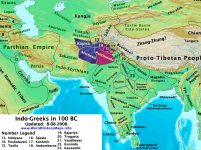
1787294395411.png
Turks did not arrive in central asia until later
 
Was talas a decisive battle to lose control of central asia for long time for Tang empire ?

The Battle of Talas in 751 AD halted Tang westward expansion, but it was not the sole reason China lost Central Asia. The true catalyst was the devastating An Lushan Rebellion four years later in 755 AD, which forced the Tang to recall elite frontier garrisons and abandon the region. [1, 2, 3, 4]

Immediate Impact of Talas
    • Halted the Tang army under general Gao Xianzhi from expanding further into Transoxiana.
    • Resulted from a betrayal by Karluk mercenaries who shifted sides mid-battle to support the Abbasid Caliphate.
Yeah whoever controlled the ferghana valley got rich and china lost it after an lushan rebellion
 
  • Like
Reactions: ety
Maybe one day along the belt and road project, Central Asia can prosper once again

It is already pretty decent

To view this content we will need your consent to set third party cookies.
For more detailed information, see our cookies page.
 
China actually was in Central Asia hundreds of years before the Tang dynasty. They fought a war against greco kingdom.

The War of the Heavenly Horses (104–101 BCE) was a military conflict between the Chinese Han Dynasty and the Hellenistic kingdom of Dayuan in the Fergana Valley. [1, 2]
Emperor Wu of Han initiated the war to acquire prized "heavenly horses" needed to fight the Xiongnu nomads, resulting in a Han victory and expanded Central Asian influence. [1, 2, 3, 4, 5]

Background
    • The Greek Presence: Dayuan was populated by descendants of Greek colonists settled by Alexander the Great in Central Asia (such as Alexandria Eschate).
    • The Trigger: Han envoys sent to trade gold for the powerful, sweat-sweating horses were killed after a diplomatic breakdown. [1, 2, 3, 4, 5]

The Campaigns
    • First Expedition (104 BCE): General Li Guangli led a depleted force of roughly 30,000 men across the Taklamakan Desert, but failed due to starvation and logistical collapse at local oasis towns. [1]
    • Second Expedition (102 BCE): A much larger, better-supplied Han army of over 60,000 soldiers successfully besieged the Dayuan capital. [1, 2, 3, 4]
    • Resolution: The desperate citizens of Dayuan executed their king, surrendered, and provided thousands of elite horses alongside annual tribute. [1, 2, 3, 4, 5]
 
If I recall correctly just 2000 years ago much of Central Asia was very sparsely populated and most of the locals were Indo-Iranian speakers.

That is why you can't really find many old artifacts or cities in Central Asia compared to West or East Asia.

Turkic and later Mongol migrations occurred much later and both were originally from Siberia/North of China. Correct me, if I am wrong here.

Before the Tang Dynasty from 618-907 AD, there was the Han Dynasty from 206 BC to 220 AD.


During the era of the Han Dynasty, China has already interacted with the Iranic speakers like Scythians, also the Tocharians, and the archnemesis Xiongnu.

The Turks appeared during the period between the Han Dynasty and Tang Dynasty.

When the Han Dynasty collapsed in the 220 AD, China has become chaotic, and it becomes prosperous again once the unification under the Tang Dynasty in the 618 AD.

So the Turks emerged from the chaotic period of China between the collapse of the Han Dynasty and the establishment of the Tang Dynasty.

The Mongols are even much younger than the Turks, and they emerged after the collapse of the Tang Dynasty in the 907 AD.
 
Was there ever a settled or old civilization in Central Asia say 2500 years ago? I don't recall such a thing. Most of the locals (regardless of ethnic origin and time period) were mostly nomads or pastoral nomads. Oldest settlements are mostly in Southern Uzbekistan along the few fertile valleys.

Otherwise the climate and terrain is incredible tough. Law rainfall throughout the year and heat during the summer and extreme cold during the winter.

Still better than Mongolia which is absolutely horrible in this regard (hence no settled civilization there ever or even much farming) but not much better.

No sea/landlocked as well which makes it even worse.

Lack of a strong central state made it very easy for the Russians to conquer Central Asia and Russify it within 1-2 generations.

Now it is a different world of course.

Before the Tang Dynasty from 618-907 AD, there was the Han Dynasty from 206 BC to 220 AD.


During the era of the Han Dynasty, China has already interacted with the Iranic speakers like Scythians, also the Tocharians, and the archnemesis Xiongnu.

The Turks appeared during the period between the Han Dynasty and Tang Dynasty.

When the Han Dynasty collapsed in the 220 AD, China has become chaotic, and it becomes prosperous again once the unification under the Tang Dynasty in the 618 AD.

So the Turks emerged from the chaotic period of China between the collapse of the Han Dynasty and the establishment of the Tang Dynasty.

The Mongols are even much younger than the Turks, and they emerged after the collapse of the Tang Dynasty in the 907 AD.
I roughly knew about this timeline.

What are the oldest attested Chinese sources about Central Asia? Do we have anything from the period of say the Shang dynasty (1600 BC to 1046 BC)?


But it makes sense if most Indo-Iranians were north of Caucasus during that era (apparently) and there were no Chinese, Mongols or Turkic peoples (settled), it makes sense that nobody attested anything this old and there are no traces of anything to this day.
 
Was there ever a settled or old civilization in Central Asia say 2500 years ago? I don't recall such a thing. Most of the locals (regardless of ethnic origin and time period) were mostly nomads or pastoral nomads. Oldest settlements are mostly in Southern Uzbekistan along the few fertile valleys.

Otherwise the climate and terrain is incredible tough. Law rainfall throughout the year and heat during the summer and extreme cold during the winter.

Still better than Mongolia which is absolutely horrible in this regard (hence no settled civilization there ever or even much farming) but not much better.

No sea/landlocked as well which makes it even worse.

Lack of a strong central state made it very easy for the Russians to conquer Central Asia and Russify it within 1-2 generations.

Now it is a different world of course.

There were several civilizations in Central Asia, but it was just not recognized as a paramount civilization as the Han Dynasty which was the Chinese Dynasty that invented paper, and a peer contemporary civilization to the Greco-Roman civilization.

The Tang Dynasty was the Chinese Dynasty who invented the gun power, and it was the contemporary peer civilization to the Umayyad-Abbasid Caliphate.

And Mongolia was the homeland for Xiongnu/Turk/Mongol, and it has never been the cradle of any civilization, but the birthplace of the fiercest steppe nomads.
 
Before the Arab conquest, Central Asia was prosperous as the westernmost part of Sinosphere.

After the Arab conquest, Central Asia remained prosperous under the Islamic rule.

However, after the Mongol conquest, it has never been recovered.


And now full of free and modernized Countries
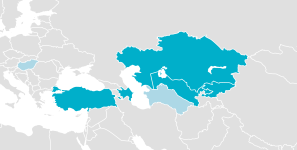
Kazakhstan , Turkmenistan , Uzbekistan , Kyrgyzistan

To view this content we will need your consent to set third party cookies.
For more detailed information, see our cookies page.


-- Turkmenistan hosts the 4th largest gas reserves in the World
-- Kazakhstan hosts large oil and gas reserves

Also , Kazakhstan is the world's leading producer of uranium, accounting for roughly 40% of global output
1787294790802.png
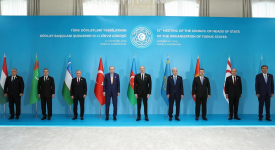
1787294852459.png
 
And now full of free and modernized Countries
Kazakhstan , Turkmenistan , Uzbekistan , Kyrgyzistan

To view this content we will need your consent to set third party cookies.
For more detailed information, see our cookies page.


-- Turkmenistan hosts the 4th largest gas reserves in the World
-- Kazakhstan hosts large oil and gas reserves

Also , Kazakhstan is the world's leading producer of uranium, accounting for roughly 40% of global output
View attachment 211556
View attachment 211557


They are seeking for political independence and balance between the great powers.
 

Users who are viewing this thread

Pakistan Defence Latest

Back
Top