SteppeWolff
Trusted Member
Ok Greek, and Im not some larpers friendI hate to break it to you, but you're an Indian my friend. Not an Uzbek.
Follow along with the video below to see how to install our site as a web app on your home screen.
Note: This feature may not be available in some browsers.
Ok Greek, and Im not some larpers friendI hate to break it to you, but you're an Indian my friend. Not an Uzbek.
You're wrong. Firstly, the western part of China is the Taklamakan Desert. The Tang Dynasty had a population of 80 million, 570000 professional soldiers, and millions of militia. However, due to the Taklamakan Desert, the Tang Dynasty could only maintain a supply capacity of 20000 troops in Central Asia, otherwise the Tang Dynasty would not have only had a few thousand regular troops to participate in the Battle of Hengros. Under such supply conditions, even if the Tang Dynasty achieved victory in the Battle of Hengluo, it did not have the logistical capability to continue its westward expedition. Secondly, the Tang Dynasty was a Han dynasty, not a Mongol dominated Yuan dynasty. Han people will not occupy land that cannot be completely digested. At the limit of Han Chinese immigration was the Tang Dynasty in Central Asia, where they were not interested in further territories. Thirdly, Confucianism is based on the foundation of the nation. I don't think countries outside of East Asia would accept this idea. China is also not interested in promoting this idea.If the Karluk Turks had stood by China (the Tang Dynasty) instead of change sides , China would have won a decisive victory at the Battle of Talas.
This shift would have fundamentally altered the geopolitical landscape of Asia and the Middle East, rewriting global history
Instead of Islam, Turkish tribes would have largely adopted Buddhism, Confucianism, or Taoism due to deep Chinese cultural hegemony
And Islam might not exist at all in the regions of India, Pakistan, Bangladesh today.
even Anatolia and Balkans

Do you seriously not have anything better to do than try pretend being a Turkic Uzbek and try divide Turks?Ok Greek, and Im not some larpers friend
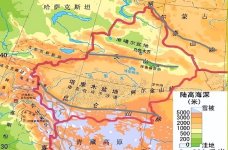
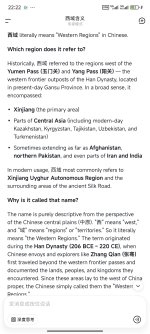
That was the name chosen by the Manchu rulers of the Qing Dynasty. It was a new territory of the Manchu people, but a traditional territory of the Han ethnic group.There was not Xinjiang until 1884
Chinese reoccupied East Turkistan and gave a new name called Xinjiang which means "New Territory" in Chinese.

Do you seriously not have anything better to do than try pretend being a Turkic Uzbek and try divide Turks?
the Tang Dynasty was a Han dynasty, not a Mongol dominated Yuan dynasty. Han people will not occupy land that cannot be completely digested.
He is not a Turk. Trust me. Turks do not hate on others for being Sunni or Shia.There are indeed many Uzbek in Pakistans, mostly they are Shiahs, those close to Himalayan mountains
There are indeed many Uzbek in Pakistans, mostly they are Shiahs, those close to Himalayan mountains
Prior to the Battle of Talas in 751, the Tang Dynasty did conduct military expeditions and interventions in northern India and its border regions.While the Tang Dynasty did not launch a massive, direct invasion force from mainland China with the intent to colonize India
They heavily projected power into the Indian subcontinent through diplomatic crises, alliances, and punitive expeditions
The Extraordinary Expedition of Wang Xuance (648–649 AD)
This is the most direct and famous Tang military intervention deep inside Indian territory.
Wang Xuance is a diplomat, not a general. He did not invade India, but carried out a retaliatory military operation. The local government of India robbed his diplomatic mission, so he borrowed some troops from Tubo and Nepalese nobles and destroyed some Indian kings.
The sectarianism in this part of the world is mad.Correction, just checking on Gemini, 99% Pakistani Uzbek are Sunni Muslim, what I refer those living in Hunza Valley with Shia majority
That was the name chosen by the Manchu rulers of the Qing Dynasty. It was a new territory of the Manchu people, but a traditional territory of the Han ethnic group.
We use essential cookies to make this site work, and optional cookies to enhance your experience.