Textile Industries of Pakistan

Why are they stuck in the same industry ? Use the business skills and capital to branch out to other industries. They can start manufacturing defence equipment supplying components for high-tech weapons. I am not sure if they want to go extinct like the Dodo birds.
 
KARACHI:
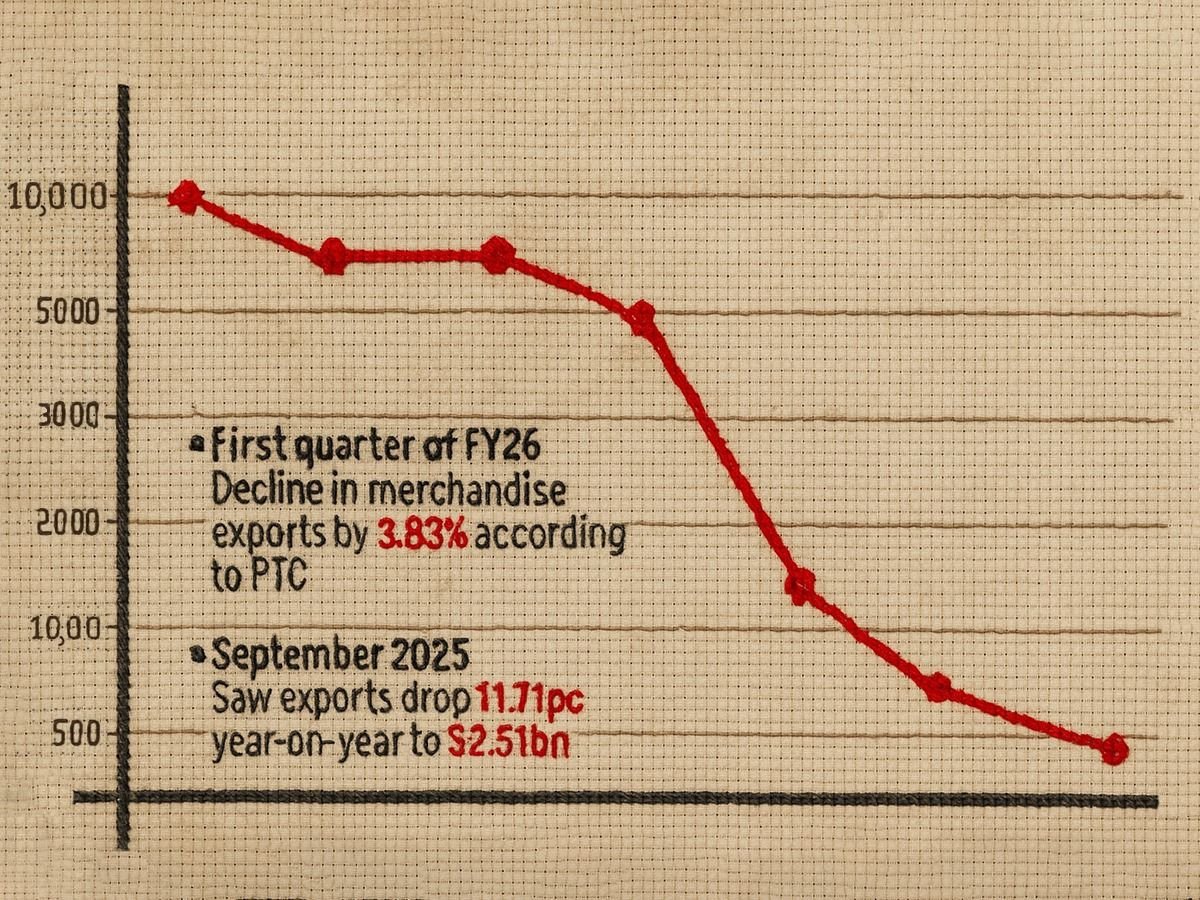
Pakistan's largest export sector is in deep crisis, as the Pakistan Textile Council (PTC) and other leaders sounded an alarm over a sharp decline in exports, factory closures, and mounting costs that threaten the country's economic stability. Exports fell nearly 12% year-on-year in September, dragging first-quarter FY26 proceeds down by 3.83% to $7.61 billion, while a widening trade deficit and surging imports add further pressure on external accounts.

Industry stakeholders, including PTC Chairman Fawad Anwar, KCCI's former president Javed Bilwani, and industrialist Zubair Motiwala, warned that without urgent reforms on energy pricing, taxation, and facilitation schemes, Pakistan risks losing its competitive edge to regional rivals like Bangladesh, India, and Vietnam. The abrupt end of the Export Facilitation Scheme (EFS), coupled with record-high energy tariffs and deteriorating infrastructure, was cited as a major blow to the already struggling textile sector.

In a statement, the Pakistan Textile Council (PTC) expressed deep concern over a decline in merchandise exports by 3.83% in the first quarter of FY26, raising red flags for the country's economic outlook. According to the Pakistan Bureau of Statistics (PBS), total export proceeds stood at $7.61 billion during July and September, down from $7.91 billion in the same period last year. September alone saw exports drop 11.71% year-on-year to $2.51 billion, marking the fifth month of contraction in the last six.

Design credit: Mohsin Alam


Design credit: Mohsin Alam

This continued decline in exports comes at a time when Pakistan is also facing a widening trade deficit, which rose to $9.37 billion in the first quarter, up from $7.05 billion last year. Imports surged by 13.49%, compounding the pressure on external accounts. The textile sector, Pakistan's largest export engine, is bearing the brunt of both subdued global demand and rising domestic costs.

Closures underscore cost crisis


Against this backdrop, a series of industrial closures and multinational exits highlight the depth of Pakistan's competitiveness crisis. Gul Ahmed Textile Mills Limited recently announced the closure of its export apparel segment, citing sustained losses from high input costs, shifting taxation, and stiff regional competition. The apparel segment is highly labour-intensive, employing thousands, and its closure is a stark warning of the pressures driving even market leaders to scale back.

Speaking to The Express Tribune former president of KCCI said, "More textile units across Pakistan are on the verge of closure as industries continue to operate at a loss." He criticised the government for sidelining key stakeholders in policymaking and talking to either minor stakeholders or totally irrelevant people.

Despite KCCI's contribution of 54% to exports and 66% to the national tax base, we are not heard in any policymaking process, he said.

Highlighting the multiple crises confronting the textile sector, he pointed to severe infrastructure challenges, chronic water shortages, poor law and order, and some of the highest electricity tariffs in the world - higher even than Europe and the US, which are Pakistan's major export destinations. "If production costs here exceed the cost at export destinations, how can exports remain viable?" he asked.

Bilwani further stressed that the abrupt end of the EFS had dealt a major blow to the industry. He argued that instead of scrapping the scheme altogether, the government should have plugged loopholes and strengthened regulations.

Echoing Bilwani's concerns, leading industrialist Zubair Motiwala said the collapse of exports is tied directly to the withdrawal of EFS. "The only real solution is the restoration of EFS. If there was a legal issue, it should have been corrected, not abolished," he said. He added that the recent closure of Gul Ahmed's export apparel unit was a direct result of rising costs compounded by the absence of export facilitation measures.

The crisis is not confined to textiles. In recent months, global players such as Procter and Gamble, Microsoft, Shell, Total Energies, Pfizer, Sanofi, and Careem have either exited or significantly reduced operations in Pakistan.

The PTC has repeatedly urged the government to take urgent corrective steps to restore competitiveness: 1) Regionally competitive and predictable energy (RLNG & Electricity) pricing for export industries; 2) Tax reforms, including automated 72-hour refunds and zero-rating of input under the Export Facilitation Scheme; 3) Financing facilitation, including strengthening EXIM Bank and expanding Export Finance and Long-Term Financing Facilities (LTFF); 4) Policy stability, monitored transparently with monthly KPIs.

"If urgent corrective measures are not taken, Pakistan risks further closures of export-oriented units and reduced foreign investment," warned the PTC chairman. "This will not only mean job losses and industrial shutdowns, but also a sharp decline in Pakistan's foreign exchange earnings at a time when the country cannot afford such shocks."
 
The All Pakistan Textile Mills Association (APTMA) has warned that Pakistan’s energy-intensive textile industry faces potential mill closures after being hit with a sudden multi-billion-rupee RLNG (re-gasified liquefied natural gas) billing shock. The retrospective charges, spanning seven years, have pushed already struggling manufacturers into a deeper working capital crisis.

APTMA stated that what should have been routine price reconciliations over seven years have now become a single massive retrospective charge, threatening the viability of major manufacturing sectors, reducing exports, and accelerating mill closures.

Pakistan’s textile industry has strongly objected to the sudden and retrospective RLNG billing. The association has filed a petition with the Oil and Gas Regulatory Authority (OGRA) over the matter.

APTMA stated that what should have been routine price reconciliations over seven years have now become a single massive retrospective charge, threatening the viability of major manufacturing sectors, reducing exports, and accelerating mill closures.

Pakistan’s textile industry has strongly objected to the sudden and retrospective RLNG billing. The association has filed a petition with the Oil and Gas Regulatory Authority (OGRA) over the matter.

Members noted that businesses had sold electricity, gas-based power, goods, and transport fuel according to the tariff levels that were in effect at that time. They cannot now go back and reprice past sales to match the new, higher costs.

Since mid-2023, natural gas tariffs for captive power have jumped from Rs. 1,100 per mmBtu to Rs. 3,500 per mmBtu. With an additional grid transition levy of Rs. 791, the effective cost has reached around Rs. 4,291 per mmBtu ($15.4).
 
@Samlee

The usual practice in such cases is to allow staggered payment over a 4-5 year period, isn't it?

Regards
 

Pakistan’s textile firm temporarily shuts spinning unit amid ‘unfavourable market conditions’

  • The country's crucial textile sector is facing a downturn

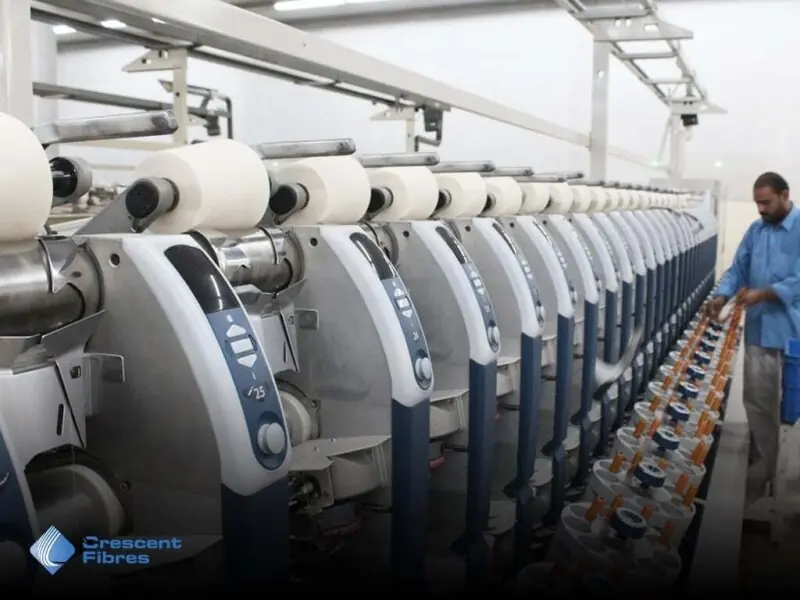
Crescent Fibres Limited (CFL) has announced a temporary suspension of operations at its spinning unit in Nooriabad, Sindh, citing unfavourable market conditions.

The textile firm disclosed the development in a notice to the Pakistan Stock Exchange (PSX) on Wednesday.

“We inform you that the company operates two spinning units located at Nooriabad, Sind and Bhikki, Punjab. Due to unfavourable market conditions, the management has decided to temporarily suspend operations at the Nooriabad unit,” read the notice.

However, the Bhikki unit continues to operate, the company shared.

“Various strategic alternatives are being evaluated to resume normal operations and restore profitability,” it added.

Crescent Fibres Limited was incorporated in Pakistan as a public limited company in 1977. The company is engaged in the manufacturing and sale of yarn.

On the financial front, CFL kicked off FY26 on a gloomy note with a radical fall of 34.64% in its topline, which clocked in at Rs1,011 million in 1QFY26. Due to curtailed capacity utilization, the company recorded a gross loss of Rs7.96 million in 1QFY26 against a gross profit of Rs19.9 million posted in 1QFY25.

Operating loss surged by 130.73% in 1QFY26 to clock in at Rs37.64 million.

Overall, the country’s textile sector, which remains Pakistan’s largest generator of export receipts, is facing a downturn.

According to the figures released by the Pakistan Bureau of Statistics, during July-August FY26, the textile sector declined by 0.15%, compared to the corresponding period of last year.

 
The All Pakistan Textile Mills Association (APTMA) has warned that Pakistan’s energy-intensive textile industry faces potential mill closures after being hit with a sudden multi-billion-rupee RLNG (re-gasified liquefied natural gas) billing shock. The retrospective charges, spanning seven years, have pushed already struggling manufacturers into a deeper working capital crisis.

APTMA stated that what should have been routine price reconciliations over seven years have now become a single massive retrospective charge, threatening the viability of major manufacturing sectors, reducing exports, and accelerating mill closures.

Pakistan’s textile industry has strongly objected to the sudden and retrospective RLNG billing. The association has filed a petition with the Oil and Gas Regulatory Authority (OGRA) over the matter.

APTMA stated that what should have been routine price reconciliations over seven years have now become a single massive retrospective charge, threatening the viability of major manufacturing sectors, reducing exports, and accelerating mill closures.

Pakistan’s textile industry has strongly objected to the sudden and retrospective RLNG billing. The association has filed a petition with the Oil and Gas Regulatory Authority (OGRA) over the matter.

Members noted that businesses had sold electricity, gas-based power, goods, and transport fuel according to the tariff levels that were in effect at that time. They cannot now go back and reprice past sales to match the new, higher costs.

Since mid-2023, natural gas tariffs for captive power have jumped from Rs. 1,100 per mmBtu to Rs. 3,500 per mmBtu. With an additional grid transition levy of Rs. 791, the effective cost has reached around Rs. 4,291 per mmBtu ($15.4).
These guys have blackmailed the nation for an eternity now. One of the worst sectors in the economy that doesnt really give much other than the employment and number fudging
 
As many as 144 textile mills have been closed across the country, said All Pakistan Textile Mills Association (APTMA) Chairman Kamran Arshad on Thursday, reported 24NewsHD TV channel.

He said that the rates of gas and electricity for these mills were extremely high. “Heavy taxes are also to blame for the closure of mills,” he said, and added, “To make matters worse, the government has again increased the prices of electricity for industrial units.”

The APTMA chairman said that industries would only grow in the country when electricity would be available at Rs25 per unit, not at Rs35 per unit. “Electricity in Pakistan is costly than India, Bangladesh and Vietnam.”

He informed that 19 per cent less electricity was consumed in November.

Arshad said that due to the closure of these units, the export of textile products has dropped.

He also demanded bringing the interest rate down to single digits.

On the other hand, despite the fact that the strike by the containers’ association is over, it has hit the textile industry badly, prompting the mills’ owners to write to concerned ministries to make demands.

Mills’ owners have said that the one-and-a-half-week-long strike delayed the transportation of import and export items.

APTMA, the representative body of mills’ owners, has demanded the government to give time for the payment of electricity bills.

APTMA Zonal Chairman Naveed Gulzar has said that the textile industry was already grappling with so many issues, and the strike by the containers’ association exacerbated the situation.

He has said that the concerned ministries should take steps for ease of doing business. “Currently, we are facing financial issues. And for the resolution of these issues, we need time from the government.”

Reporter: Bilal Dogar
 
World Bank Has Projected Afghanistan Having A Higher Growth Rate Than Pakistan.Heck Mullahs Are Doing A Better Job Of Running Their Country Than Our Effing Failed Marshall and The Property Dealers In Uniform


this country cannot get sustainable growth.
we have three economies
1 shadow economy2
2 highly tax able economy
3 fauji economy
when army is in business then they wnt let any one to grow and threat their busines empire. army and common people intersts are not same .
 
To view this content we will need your consent to set third party cookies.
For more detailed information, see our cookies page.
 
As many as 144 textile mills have been closed across the country, said All Pakistan Textile Mills Association (APTMA) Chairman Kamran Arshad on Thursday, reported 24NewsHD TV channel.

He said that the rates of gas and electricity for these mills were extremely high. “Heavy taxes are also to blame for the closure of mills,” he said, and added, “To make matters worse, the government has again increased the prices of electricity for industrial units.”

The APTMA chairman said that industries would only grow in the country when electricity would be available at Rs25 per unit, not at Rs35 per unit. “Electricity in Pakistan is costly than India, Bangladesh and Vietnam.”

He informed that 19 per cent less electricity was consumed in November.

Arshad said that due to the closure of these units, the export of textile products has dropped.

He also demanded bringing the interest rate down to single digits.

On the other hand, despite the fact that the strike by the containers’ association is over, it has hit the textile industry badly, prompting the mills’ owners to write to concerned ministries to make demands.

Mills’ owners have said that the one-and-a-half-week-long strike delayed the transportation of import and export items.

APTMA, the representative body of mills’ owners, has demanded the government to give time for the payment of electricity bills.

APTMA Zonal Chairman Naveed Gulzar has said that the textile industry was already grappling with so many issues, and the strike by the containers’ association exacerbated the situation.

He has said that the concerned ministries should take steps for ease of doing business. “Currently, we are facing financial issues. And for the resolution of these issues, we need time from the government.”

Reporter: Bilal Dogar
These 144 owners are Imran's cultists. They want to prove that the country is failing.
 

Users who are viewing this thread

Country Watch Latest

Latest Posts

Back
Top