Textile Industries of Pakistan

The survival of Pakistan's textile sector now hinges on aggressive market diversification. He said Africa and Central Asian states offer untapped potential, but Pakistan has failed to position itself effectively in these regions.

He criticised the Trade Development Authority of Pakistan (TDAP) for its weak role in identifying and developing new markets and urged it to become more proactive. He also stressed the need for product diversification, noting that while Pakistan's bed linen enjoys a strong global reputation, most other textile categories lag behind in innovation and branding.
 
Nearly all stakeholders in the textile sector fear that without policy support, rationalisation of energy costs, and strategic market diversification, the industry may struggle to even match export revenues in 2026.
They warned that the sector is now fighting on multiple fronts for survival and that the government should impose an emergency-like response to avert any decline in export earnings, cautioning that failure to act could seriously undermine the sector's contribution to employment, foreign exchange inflows, and overall economic stability at a time when Pakistan can least afford another external shock.

Valid concerns. Cost of doing textile business in Pakistan is too high.
From what I have seen in last 1-2 days, expect major changes, including possibly letting go the current Finance Minister Mr. Aurangzeb.
 
It seems like Pakistan's so-called 'vibrant' textile sector is on its way towards a modest improvement in terms of earning export revenues for calendar year 2025; however, for 2026, a majority of textile pundits are sensing a declining trend due to tariff reshufflings and strategic shifts by global players, particularly the United States under Trump 2.0 and the People's Republic of China, as both seek to protect their domestic industries.

For more: https://tribune.com.pk/story/2584563/1
#etribune #News #latest
 

New textile plants open in Punjab, advancing high-value production​


By Tahir Ali | Gwadar Pro
Jan 1, 2026

New textile plants open in Punjab, advancing high-value production


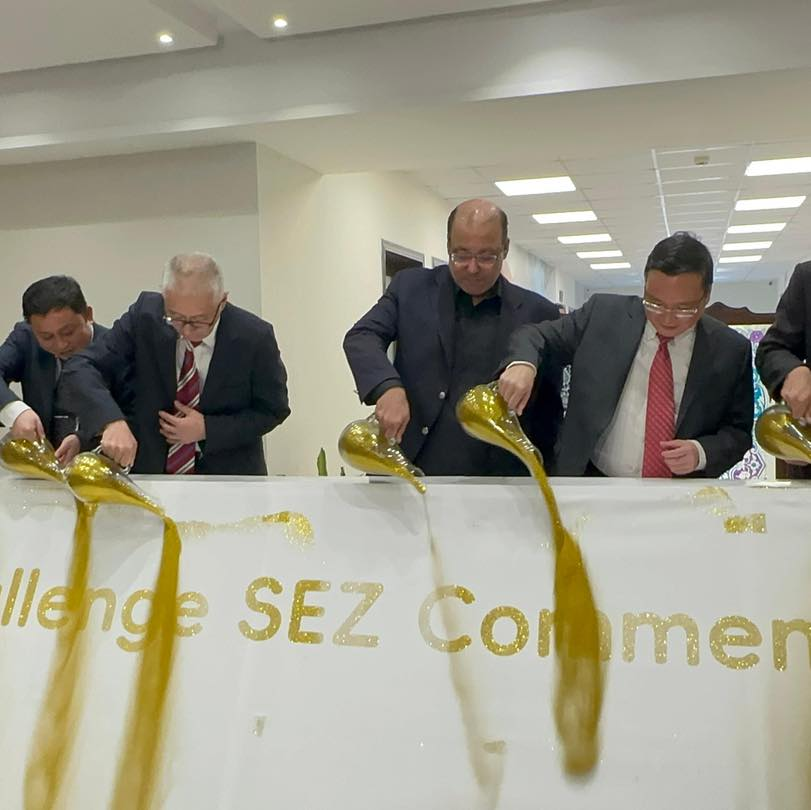
Pakistani and Chinese officials formally inaugurate the factories. [Photo/IC&ID]


The Punjab government has opened two new textile factories in the Challenge Special Economic Zone, projects expected to create thousands of jobs for local workers and strengthen Pakistan’s textile exports through higher-value production.

One of the factories will manufacture an advanced fabric that is being produced in Pakistan for the first time, marking a shift toward more sophisticated textile technology.

Both factories are being developed by Challenge Apparel Group, a Chinese-backed enterprise. According to the IC&ID, the units are scheduled to begin production within the next year, with advanced machinery already on order.

One of the plants will manufacture a textile product that has never before been produced in Pakistan, signaling a shift toward higher-value textile output.

According to the IC&ID, the expansion of manufacturing capacity in the Challenge Special Economic Zone highlights Punjab’s efforts to attract foreign investment, diversify industrial production and strengthen Pakistan’s position in the global textile market.
 

Early cotton arrivals hit record 527,900 bales

Amjad Mahmood
July 19, 2026

LAHORE: Pakistan’s cotton arrivals increased by a record 77.3 per cent by July 15 compared to the same period last year, marking the strongest early-season recovery in years.

However, experts warned that adverse weather, rising input costs, and the deepening crisis in the textile industry could still threaten the final crop output.

According to the first production report for cotton season 2026-27 released by the Pakistan Cotton Ginners Association (PCGA) on Saturday, total seed cotton arrivals at ginning factories reached 527,900 bales by July 15, up by 230,149 bales from 297,751 bales recorded during the corresponding period last year.

Cotton Ginners Forum Chairman Ihsanul Haq said Punjab contributed 201,497 bales, an increase of 38.9pc over last year, while Sindh recorded a remarkable 326,403 bales, registering a 113.8pc rise. Balochistan also posted a 90pc increase, with arrivals rising from 5,100 to 9,700 bales.

Sindh output doubles, Punjab’s jumps 38.9pc
 

Users who are viewing this thread

Country Watch Latest

Latest Posts

Back
Top