
Navigation
Install the app
How to install the app on iOS
Follow along with the video below to see how to install our site as a web app on your home screen.
Note: This feature may not be available in some browsers.
More options
Style variation
You are using an out of date browser. It may not display this or other websites correctly.
You should upgrade or use an alternative browser.
You should upgrade or use an alternative browser.
TF-X / KAAN / Hürjet Turkish Fighter & Trainer Aircrafts News & Discussions
- Thread starter SiliconBit (silicon0000)
- Start date
More options
Who Replied?


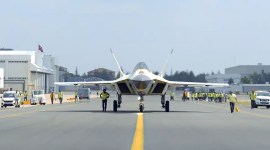
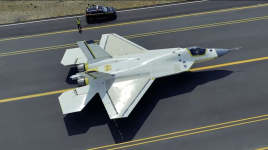
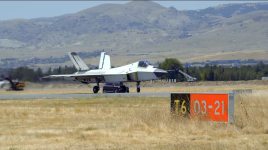

Oublious
Registered Member


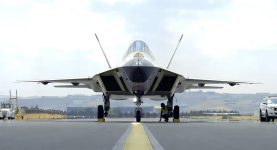
What's changed in the P1 prototype ?
The cockpit was put little back and inlet was changed, the rest i dont remember.
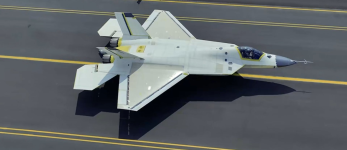
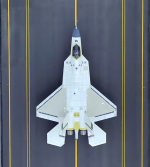
He looks much more handsome now.What's changed in the P1 prototype ?

hyperman
INT'L MOD
KAAN discussion here please, apologies for the locked thread, I believe one of the mods had locked it earlier due to it being derailed off the KAAN topic into other arguements, but we are now back on track as new KAAN news has come in. I have moved KAAN content all into this thread here, and you guys can continue to discuss.


Massive radome. At least 1 meter aperture. 43% bigger than current APG-81's 700mm aperture and roughly 10% bigger than APG-77 910mm aperture.
Only other 5th gen fighter that has 1 meter aperture is J20A/S

MMM-E
Elite Member
KAAN P-1 preparing for the first flight ... ( all about the KAAN )
Length : 20,3 m
Wing Span : 13,4 m
Wing Area : 71,6 m2
Hight : 5 m
MTOW : 34.750 kg
Thrust : 2 x 29,000 lb
Maximum Speed : 1.8 Mach
Service Ceiling : 16.764 m (55,000 ft)
Positive / Negative G Limit : +9 / -3,5 G
KAAN is one of the most advanced Fighter Jets in the world, will be equipped with cutting-edge technology
MURAD 600-A AESA Radar ( GaN ) 200 km against 1 m2 targets
360° situational awareness
Artificial Intelligence Co-pilot
FEWS next gen Electronic Warfare System
TULGAR HMDS
TOYGUN EOTS
KARAT IRST
YILDIRIM DIRCM ( LASER Weapon )
Full data-to-decision (D2D) capability
MUM-T capability with the ANKA-3 and KIZILELMA
-- KAAN will be autonomous .. The pilot can leave the task entirely to KAAN
Artificial Intelligence Co-pilot
-- KAAN to have auto pilot technology ... ( Pilot Health Tracking )
if the Pilot faints , KAAN can return to the base and land on
Because of some features belonging to the 6th generation.
1 -- full data-to-decision (D2D) capability
MUM-T concept with KIZILELMA and ANKA-III unmanned stealth platforms
2 -- Artificial Intelligence (AI) integration
High-capacity networking , AI, data fusion
Artificial Intelligence Co-pilot
Pilot Health Tracking
3 -- DIRCM ( LASER Weapon )
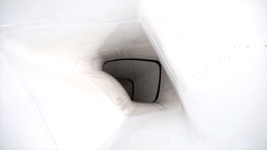
KAAN has S routing duct to hide Engine comprassor blades from direct enemy radar signals .. also RAM coating on inner surface of duct
MURAD-600A AESA Radar
Produced with 100% national resources, from chip level to final system integration
Aselsan MURAD-600A AESA Radar with 2000+ GaN T/R modules
5th-gen Fighters with GaN AESA Radar
F-35 Lightning II (USA) — Upgrading to the AN/APG-85
Chengdu J-20 (China) — Features an advanced domestic GaN radar array, widely reported to be a variant of the Type 1475 (KLJ-5) series
TAI KAAN (Turkiye) — Equipped with the MURAD-600A AESA Radar
-------------------------------------------------------------------------
Low-Observable EOTS in the World
USA : AN/AAQ-40 ( F-35 )
Turkiye : TOYGUN-100 ( KAAN and KIZILELMA )
China : EOTS-86 ( J-20 )
F-35 Lightning II (United States) — Features the Lockheed Martin EOTS embedded behind a multi-faceted sapphire glass window under the nose
Chengdu J-20 (China) — Utilizes the EOTS-86 system housed in an angular, radar-deflecting chin enclosure beneath the cockpit
TAI KAAN (Turkiye) — Employs a split system featuring an under-fuselage, faceted stealth targeting window alongside a flush nose-mounted IRST
Bayraktar KIZILELMA (Turkiye) — Integrates the indigenous TOYGUN Low-Observable EOTS, making it the first unmanned stealth fighter with this internal capability
-------------------------------------------------------------------------
Comparison of generator powers of some Fighter Jets
▪︎ KAAN: 2x125Kw .... 250 kw (developed by Turkish company VOLT )
▪︎ F35:3x80Kw .... 240 kw
▪︎ F22: 2x65Kw ... 130 kw
▪︎ KF-21: 2x65Kw .. 130 kw ... (Collins aerospace from USA)
-------------------------------------------------------------------------
Only 3 Countries can produce lithium-ion battery systems
ASPILSAN Energy General Manager Prof. Dr. Ahmet Turan Özdemir:
As ASPILSAN Energy, we produce the battery for the KAAN Fighter Jet, one of Turkiye's signature projects.
There are only 3 Countries in the world capable of designing and manufacturing high-performance, mission-critical, aviation-grade lithium-ion battery systems, such as those for 5th-generation fighter jets, and Turkiye is one of them.
USA
China
Turkiye
------------------------------------------------------------------------
Aselsan HMDS
KAAN and F-35 use Helmet-Mounted Display System (HMDS)
HMDS fully utilizes the advanced avionics architecture of the KAAN and F-35 provides the pilot video with imagery in day or night conditions
virtual cockpits presented via helmet-mounted displays which allow the pilot 360-degree vision with AI-enhanced battlefield awareness
Aselsan TULGAR HMDS
Color screen and digital night vision technologies ( the first time in the system )
------------------------------------------------------------------------
Aselsan's sensor fusion for KAAN Fighter Jet called BILGE KAAN
Thanks to Aselsan HAKİM which is the world's one of the most advanced and AI-powered macro sensor fusion software, implemented on a massive scale capable of managing the airspace of entire Turkiye for STEEL DOME
4 AESA Radars
EOTS
IRST
Electronic Warfare Suite
HMDS
Data-Link
ASELSAN has developed Radar absorbing materials to reduce RCS for 1.000 times to use on KAAN 5th gen Fighter Jet , ANKA-3 flying wing stealth UCAV
1 -- Radar absorbing material ( RAM ) Paint
2 -- Ceramic Radar absorbing material ( RAM )
3 -- Elastomeric Radar absorbing material ( RAM )
KAAN with stealth design , advanced magnetic coating , S routing Air inlet ducts , Internal weapon Bays and RAM panel layer it could RCS value for X band 10GHz as 0.0030 m2 [ -25dbsqm ]
The Turkish developer of the stealth material for F-35 and B-2 Aircraft confirmed his work on KAAN.
-------------------------------------------------------------------------
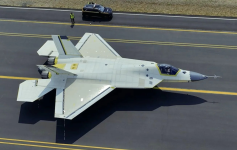
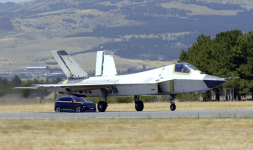
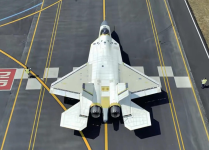
The KAAN P1 prototype introduces substantial structural, aerodynamic, and electronic upgrades over the initial P0 concept demonstrator
.... The design changes P0 vs P1 ....
Nose design : Appears wider and more elongated, with the chin bulge reduced or eliminated.
Air intakes : Longer, higher, and positioned beyond the fuselage chin line; slightly closer to the canopy. This improves engine intake airflow, critical for supersonic performance and radar reflection reduction
Landing gear and hatches : Landing gear, more standard in the P0, is fully integrated into the fuselage and made suitable for stealth characteristics in the P1 (optimized for low radar cross-section)
Overall dimensions : slightly reduced compared to P0
Redesigned Aft Fuselage Section: It has a more flush, and hence stealthier, profile between the two engines. This change will most likely help increase the aircraft's fuel capacity.
Redesigned Flaps: The flaps on the trailing edge of P1's wing now have a uniform edge line in comparison to P0, which had larger inboard flaps than outboard flaps.
Redesigned Horizontal Tailplanes: A slight adjustment was made on P1 that clipped the inside corners of the horizontal tailplanes. A similar adjustment was made on the American F-22 when it was in development.
-------------------------------------------------------------------------
KAAN powered by 2 x GE-F-110 turbofan Engines (2 x 29,000 lb)

Thrust and Weight Comparison
TF-35.000 ( 35.000 lbs ) indigenous turbofan Engine under development to power the KAAN in 2033
-- 5th gen stealth capability with the TF-35.000 Engine
-- Supercruise capability with the TF-35.000 Engine
Length : 20,3 m
Wing Span : 13,4 m
Wing Area : 71,6 m2
Hight : 5 m
MTOW : 34.750 kg
Thrust : 2 x 29,000 lb
Maximum Speed : 1.8 Mach
Service Ceiling : 16.764 m (55,000 ft)
Positive / Negative G Limit : +9 / -3,5 G
KAAN is one of the most advanced Fighter Jets in the world, will be equipped with cutting-edge technology
MURAD 600-A AESA Radar ( GaN ) 200 km against 1 m2 targets
360° situational awareness
Artificial Intelligence Co-pilot
FEWS next gen Electronic Warfare System
TULGAR HMDS
TOYGUN EOTS
KARAT IRST
YILDIRIM DIRCM ( LASER Weapon )
Full data-to-decision (D2D) capability
MUM-T capability with the ANKA-3 and KIZILELMA
-- KAAN will be autonomous .. The pilot can leave the task entirely to KAAN
Artificial Intelligence Co-pilot
-- KAAN to have auto pilot technology ... ( Pilot Health Tracking )
if the Pilot faints , KAAN can return to the base and land on
Because of some features belonging to the 6th generation.
1 -- full data-to-decision (D2D) capability
MUM-T concept with KIZILELMA and ANKA-III unmanned stealth platforms
2 -- Artificial Intelligence (AI) integration
High-capacity networking , AI, data fusion
Artificial Intelligence Co-pilot
Pilot Health Tracking
3 -- DIRCM ( LASER Weapon )
KAAN has S routing duct to hide Engine comprassor blades from direct enemy radar signals .. also RAM coating on inner surface of duct
MURAD-600A AESA Radar
Produced with 100% national resources, from chip level to final system integration
| Fighter Jet | Radar Designation | Core Semiconductor | Estimated T/R Modules | Estimated Detection Range (for 1 m² target) | Key Specialization |
|---|---|---|---|---|---|
| F-22 Raptor | AN/APG-77 | GaAs | 2,000 | 200 – 230 km | Optimized for raw air-to-air tracking power and narrow electronic focus. |
| TAI KAAN | MURAD-600A | Next-Gen GaN | 2000+ | 180 – 200 km | High thermal limits allow it to track many fast targets across multiple bands. |
| F-35 Lightning II | AN/APG-81 | GaAs | ~1,200 | 140 – 160 km | Built as an electronic warfare suite to jam air defenses and gather signals. |
| J-20 Mighty Dragon | Type 1475 (KLJ-7A) | GaN (Late Blocks) | ~1,800+ | 150 – 200 km | Large nose aperture delivers a massive tracking field for long-range missiles. |
| Su-57 Felon | N036 Byelka | GaAs | ~1,500 | 140 – 160 km | Uses side-facing cheek arrays to maintain tracking even during sharp turns. |
| KF-21 Boramae | Hanwha AESA | GaN | ~1,000+ | 110 – 130 km | High-speed processing optimized for multi-role air-to-ground target sorting. |
Aselsan MURAD-600A AESA Radar with 2000+ GaN T/R modules
5th-gen Fighters with GaN AESA Radar
F-35 Lightning II (USA) — Upgrading to the AN/APG-85
Chengdu J-20 (China) — Features an advanced domestic GaN radar array, widely reported to be a variant of the Type 1475 (KLJ-5) series
TAI KAAN (Turkiye) — Equipped with the MURAD-600A AESA Radar
-------------------------------------------------------------------------
Low-Observable EOTS in the World
USA : AN/AAQ-40 ( F-35 )
Turkiye : TOYGUN-100 ( KAAN and KIZILELMA )
China : EOTS-86 ( J-20 )
F-35 Lightning II (United States) — Features the Lockheed Martin EOTS embedded behind a multi-faceted sapphire glass window under the nose
Chengdu J-20 (China) — Utilizes the EOTS-86 system housed in an angular, radar-deflecting chin enclosure beneath the cockpit
TAI KAAN (Turkiye) — Employs a split system featuring an under-fuselage, faceted stealth targeting window alongside a flush nose-mounted IRST
Bayraktar KIZILELMA (Turkiye) — Integrates the indigenous TOYGUN Low-Observable EOTS, making it the first unmanned stealth fighter with this internal capability
-------------------------------------------------------------------------
Comparison of generator powers of some Fighter Jets
▪︎ KAAN: 2x125Kw .... 250 kw (developed by Turkish company VOLT )
▪︎ F35:3x80Kw .... 240 kw
▪︎ F22: 2x65Kw ... 130 kw
▪︎ KF-21: 2x65Kw .. 130 kw ... (Collins aerospace from USA)
-------------------------------------------------------------------------
Only 3 Countries can produce lithium-ion battery systems
ASPILSAN Energy General Manager Prof. Dr. Ahmet Turan Özdemir:
As ASPILSAN Energy, we produce the battery for the KAAN Fighter Jet, one of Turkiye's signature projects.
There are only 3 Countries in the world capable of designing and manufacturing high-performance, mission-critical, aviation-grade lithium-ion battery systems, such as those for 5th-generation fighter jets, and Turkiye is one of them.
USA
China
Turkiye
------------------------------------------------------------------------
Aselsan HMDS
KAAN and F-35 use Helmet-Mounted Display System (HMDS)
HMDS fully utilizes the advanced avionics architecture of the KAAN and F-35 provides the pilot video with imagery in day or night conditions
virtual cockpits presented via helmet-mounted displays which allow the pilot 360-degree vision with AI-enhanced battlefield awareness
Aselsan TULGAR HMDS
Color screen and digital night vision technologies ( the first time in the system )
------------------------------------------------------------------------
Aselsan's sensor fusion for KAAN Fighter Jet called BILGE KAAN
Thanks to Aselsan HAKİM which is the world's one of the most advanced and AI-powered macro sensor fusion software, implemented on a massive scale capable of managing the airspace of entire Turkiye for STEEL DOME
4 AESA Radars
EOTS
IRST
Electronic Warfare Suite
HMDS
Data-Link
ASELSAN has developed Radar absorbing materials to reduce RCS for 1.000 times to use on KAAN 5th gen Fighter Jet , ANKA-3 flying wing stealth UCAV
1 -- Radar absorbing material ( RAM ) Paint
2 -- Ceramic Radar absorbing material ( RAM )
3 -- Elastomeric Radar absorbing material ( RAM )
KAAN with stealth design , advanced magnetic coating , S routing Air inlet ducts , Internal weapon Bays and RAM panel layer it could RCS value for X band 10GHz as 0.0030 m2 [ -25dbsqm ]
The Turkish developer of the stealth material for F-35 and B-2 Aircraft confirmed his work on KAAN.
-------------------------------------------------------------------------
The KAAN P1 prototype introduces substantial structural, aerodynamic, and electronic upgrades over the initial P0 concept demonstrator
.... The design changes P0 vs P1 ....
Nose design : Appears wider and more elongated, with the chin bulge reduced or eliminated.
Air intakes : Longer, higher, and positioned beyond the fuselage chin line; slightly closer to the canopy. This improves engine intake airflow, critical for supersonic performance and radar reflection reduction
Landing gear and hatches : Landing gear, more standard in the P0, is fully integrated into the fuselage and made suitable for stealth characteristics in the P1 (optimized for low radar cross-section)
Overall dimensions : slightly reduced compared to P0
Redesigned Aft Fuselage Section: It has a more flush, and hence stealthier, profile between the two engines. This change will most likely help increase the aircraft's fuel capacity.
Redesigned Flaps: The flaps on the trailing edge of P1's wing now have a uniform edge line in comparison to P0, which had larger inboard flaps than outboard flaps.
Redesigned Horizontal Tailplanes: A slight adjustment was made on P1 that clipped the inside corners of the horizontal tailplanes. A similar adjustment was made on the American F-22 when it was in development.
-------------------------------------------------------------------------
KAAN powered by 2 x GE-F-110 turbofan Engines (2 x 29,000 lb)
Thrust and Weight Comparison
| Specification | Lockheed Martin F-35A | Lockheed Martin F-22 | TAI KAAN (Current F110) | TAI KAAN ( Domestic) |
|---|---|---|---|---|
| Engine Layout | 1x P&W F135-PW-100 | 2x P&W F119 | 2x GE F110-GE-129 | 2x Domestic Engines |
| Single Engine Thrust (A/B) | ~19,504 kgf (191 kN) | ~15,908 kgf (156 kN) | ~13,358 kgf (131 kN) | ~15,876 kgf (35,000 lbf) |
| Total Max Thrust (A/B) | ~19,504 kgf | ~31,815 kgf | ~26,716 kgf | ~31,752 kgf |
| Empty Weight | ~13,300 kg | ~19,700 kg | ~14,150 kg | ~14,150 kg |
| Combat / Loaded Weight | ~22,450 kg | ~25,200 kg | ~23,200 kg | ~23,200 kg |
| Combat Thrust-to-Weight | 0.87 | 1.26 | 1.15 | 1.36 |
| Dogfight Factor | TAI KAAN (Domestic ) | TAI KAAN (F-110) | F-35A |
|---|---|---|---|
| Thrust-to-Weight (Combat) | 1.36 (Excellent energy) | 1.15 (Good energy) | 0.87 (Poor energy retention) |
TF-35.000 ( 35.000 lbs ) indigenous turbofan Engine under development to power the KAAN in 2033
-- 5th gen stealth capability with the TF-35.000 Engine
-- Supercruise capability with the TF-35.000 Engine
MMM-E
Elite Member
Massive radome. At least 1 meter aperture. 43% bigger than current APG-81's 700mm aperture and roughly 10% bigger than APG-77 910mm aperture.
Only other 5th gen fighter that has 1 meter aperture is J20A/S
Even P1's radome section covering the radar has been reduced in size to minimize aerodynamic drag and radar signature
The massive radome volume on the KAAN P1 is a deliberate architectural choice that gives it a massive technological advantage with the MURAD-600A AESA Radar which gives KAAN a significantly higher module count than the F-35’s AN/APG-81
Network Centric mini AWACS role with 2000+ GaN T/R modules
F-35 : AN/APG-81 with 1200+ GaAs T/R modules
J-20S : Type 1475 (KLJ-5) with 1800+/2000+ GaN T/R modules
KAAN : MURAD 600A with 2000+ GaN T/R modules
royalharris
Registered Member

All I see is a single prototype slowly taxiing.
Can it really take off?
xbat
Registered Member
you got the point, it is all about stock market, TAI try to increase its revenue from idiots. thank you, if you didnt tell us there would be great losesAll I see is a single prototype slowly taxiing.
Can it really take off?
hyperman
INT'L MOD
All I see is a single prototype slowly taxiing.
Can it really take off?
This is 2 years ago flying, if it can do it 2 years ago, why can't a more refined prototype fly as well?
royalharris
Registered Member
This is 2 years ago flying, if it can do it 2 years ago, why can't a more refined prototype fly as well?
Forty years ago, the U.S. could land on the Moon. Now it suddenly can't.
A prototype that flew two years ago has since undergone major structural and dimensional changes. Whether it can still take off is anyone's guess.
In the end, only real-world results can prove the truth
royalharris
Registered Member
The J-10 is currently one of the hottest fourth-generation fighter jets in the world. Why? Because it is widely reported to be the only fighter of its generation credited with achieving a beyond-visual-range air-to-air kill at a distance of around 200 kilometers in actual combat. It may not have the flashy specifications or impressive PowerPoint figures of the Eurofighter Typhoon or the Rafale, but it is the one associated with a real combat record. Uzbekistan has reportedly purchased 24 of them, while Indonesia, Bangladesh, and Egypt have all been linked with potential interest in the J-10. After all, practice is the ultimate test of the truth.Forty years ago, the U.S. could land on the Moon. Now it suddenly can't.
A prototype that flew two years ago has since undergone major structural and dimensional changes. Whether it can still take off is anyone's guess.
In the end, only real-world results can prove the truth
Users who are viewing this thread
Total: 2 (members: 0, guests: 2)
Pakistan Defence Latest
-
-
KP govt backs out of counterterrorism commitments during talks: Naqvi (3 Viewers)
- Latest: White Privilege
-
-

-
Country Watch Latest
-
-

-
 Trump orders military base mass shooter to be executed by firing squad (10 Viewers)
- Latest: Vikramaditya1
-
-


