The SC
INT'L MOD

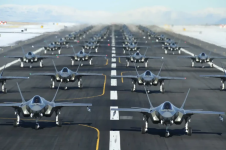
Saudi Arabia is close to achieving one of its biggest goals in modernizing its air forces, with US procedures for approving the sale of up to 48 F-35 stealth fighters (specifically the F-35A Lightning II version) continuing. If the deal is completed, it will not only represent a qualitative addition to the Saudi aviation fleet, but rather it will constitute a strategic shift in the nature of the Kingdom’s air power, transferring it to the club of fifth-generation fighter operators, in a move that may reshape the balance of air power in the Middle East in the coming years.
This deal is part of a broader path to strengthen the defense partnership between Riyadh and Washington, after years of discussions that faltered due to political and security considerations. With the return of the administration of US President Donald Trump, the file witnessed remarkable progress, as Reuters revealed that the Saudi request for 48 fighters had passed one of the most important stages within the US Department of Defense, in preparation for the start of official procedures that include the approval of the US administration and notification of Congress.
According to circulating information, the deal comes within a broader defense cooperation package between the two countries, which includes programs for training, technical support, infrastructure, ammunition, and logistical services, in addition to defense agreements and mutual investments that have strengthened Saudi Arabia’s position as one of the largest military partners of the United States in the region. White House documents also confirmed that the US administration agreed in principle to include the delivery of F-35 fighters in the future defense package allocated to the Kingdom.
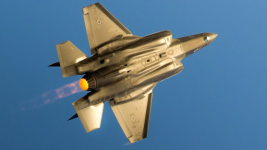
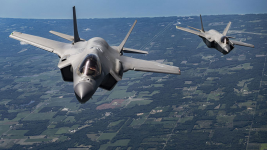
The F-35A fighter represents the latest generation of multi-role fighter aircraft, and was designed to combine radar stealth, the ability to collect and analyze information, and operate within an integrated combat network. The aircraft is characterized by a very low radar signature, which allows it to approach targets protected by advanced air defense systems without being easily detected. It also includes an advanced sensor system capable of integrating data received from radar, electro-optical sensors, and electronic warfare systems into a single operational image that is displayed in front of the pilot in real time.
For the Royal Saudi Air Force, the entry of the F-35 will add a new dimension to an air system that is already considered one of the most advanced in the Middle East. The Saudi Air Force currently possesses more than 200 modern fighters, led by the F-15SA fleet, which is the most advanced version of the F-15 family, along with Eurofighter Typhoon fighters and Tornado aircraft, as well as E-3A AWACS early warning aircraft and Airbus A330 MRTT refueling aircraft, which gives it a great ability to carry out long-range air operations.
But possessing advanced fourth-generation fighters, no matter how efficient they are, does not replace the need for the fifth generation in a combat environment in which air defense and long-range missile capabilities are increasing. Systems such as the Russian S-400 or modern Chinese systems are designed to confront conventional aircraft, while the F-35 provides a higher level of ability to penetrate these networks and carry out missions in depth.
Military experts believe that the best way to benefit from the F-35 is not to use it alone, but rather to integrate it with the F-15SA and Eurofighter Typhoon fleet. In this model, stealth aircraft carry out reconnaissance, infiltration, target detection and air defense positioning missions, while F-15SA fighters, which have a huge load of munitions and long-range weapons, carry out major strikes based on information provided by the F-35.
This concept is known as “multi-layered air operations,” and it is one of the most prominent modern air combat methods adopted by the US Air Force and a number of its allies. This integration gives Saudi Arabia the ability to carry out more complex and effective operations while reducing risks to pilots and aircraft.
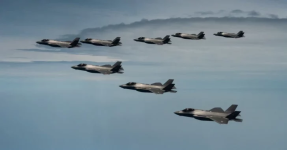
At the regional level, this deal is expected to have a clear impact on the balance of air power. Saudi Arabia already has one of the largest defense budgets in the world, and with the addition of fifth-generation fighters, it will be able to carry out more complex operations in various operational environments, whether in defending its airspace or carrying out long-range missions in cooperation with allies.
However, the deal still faces several challenges before it becomes final. The sale of F-35 fighters is subject to complex procedures within the United States, starting with technical reviews within the Ministry of Defense and the Ministry of State, then the approval of the US President, followed by official notification to Congress, which has the authority to review and object to the deal. Any export of the aircraft is also subject to a strict set of restrictions related to protecting sensitive technology and ensuring the security of the fighter's software and electronic systems.
One of the most prominent files related to the deal is also the issue of preserving Israel’s “qualitative military superiority,” which is a well-established principle in American policy when exporting advanced weapons to Middle Eastern countries. For decades, this factor has been one of the most prominent reasons for not exporting the F-35 to most Arab countries, with the exception of the UAE, which signed an initial agreement earlier before it later faltered. In the Saudi case, the current US administration seems more open to completing the deal, with continued consultations regarding the necessary security and technological guarantees.
In terms of time, even if contracts are signed during the coming period, aircraft delivery will not be quick. The F-35 program is witnessing high global demand, as the aircraft is operated or contracted by more than 19 countries, while the number of aircraft produced has exceeded 1,200 fighters, which imposes great pressure on Lockheed Martin’s production lines and makes delivery dates extend for several years.
The importance of the project does not stop at purchasing 48 fighters only, but extends to building an integrated operating system that includes training pilots and technicians, establishing specialized maintenance facilities, developing air bases capable of accommodating the requirements for operating the aircraft, in addition to transferring part of the industrial and technical expertise in line with the goals of Saudi Vision 2030, which aims to localize an increasing proportion of defense industries.
Performance proven in the first extensive testing
The war that Iran witnessed during 2026 represented the first large-scale combat test of the F-35 fighters against a country that possesses a multi-layered air defense network, long-range missiles (S-300 BMU2), and advanced electronic warfare capabilities, which gave analysts an opportunity to evaluate the performance of the American fighter in one of the most complex combat environments.
The course of operations showed that the Israeli F-35I and American F-35A fighters played a pivotal role in the early stages of the attack, as they carried out sorties targeting air bases, military installations, command and control centers, and air defense sites deep inside Iran. The aircraft benefited from its stealth characteristics and its ability to collect information from various sensors and integrate it into a unified operational picture, which allowed it to operate within Iranian airspace while reducing the chances of detection and interception compared to traditional fighters.
The role of the plane was not limited to carrying out precise strikes, but it also played an essential role in detecting and identifying the locations of Iranian radars and air defense systems, and then transmitting this data immediately to other fighters, such as the F-15, which carried out intensive strikes using its larger load of munitions. This method is one of the most prominent modern air combat concepts, as fifth-generation fighters operate as platforms for reconnaissance, sensing, and air command, in addition to carrying out combat missions.
The fighter also recorded a remarkable achievement during operations, after Israel announced that one of the F-35I “Adir” aircraft shot down an Iranian Yak-130 aircraft, in the first airdrop of a manned aircraft attributed to the F-35 fighter since it entered service, which strengthened the image of the aircraft as a platform capable of combining air superiority and ground attack missions simultaneously.
Despite this performance, the war also revealed that the fighter is not immune to threats. American sources confirmed that an F-35A fighter was damaged while carrying out a combat mission over Iran, and was later forced to make an emergency landing at one of the American bases in the region. While Washington confirmed that the plane was not lost, Tehran exploited the incident to emphasize the ability of its air defenses to threaten stealth fighters, in the first known incident in which the F-35 was exposed to direct damage during a combat confrontation with an opponent that possesses an advanced air defense system.
In general, most military assessments concluded that operations against Iran confirmed the effectiveness of the F-35 in carrying out the tasks for which it was designed, in particular penetrating air defense networks, gathering intelligence, commanding network air operations, and directing precision strikes against high-value targets. The war also highlighted that the superiority provided by the fighter does not depend on its stealth feature alone, but rather on its integration with early warning systems, electronic warfare, refueling aircraft, and command and control networks, which makes it a pivotal element in any modern air force that adopts the concept of joint operations.
If completed, this deal will be one of the largest transformations in the history of the Saudi Air Force since the introduction of the F-15 fighters decades ago. It does not only mean having a more advanced aircraft, but moving to a new concept of air warfare based on stealth, networked intelligence, and full integration between aircraft and command, control and reconnaissance systems. With the combination of a large fleet of advanced fourth-generation fighters and squadrons of fifth-generation fighters, the Kingdom will be facing a new stage in building an air force capable of carrying out a wide range of missions with greater efficiency, and enhancing its ability to protect its interests and airspace in a security environment witnessing rapid developments.
Source:
Diverse
Diverse