The deal for 48 F-35 fighters.. How can it reshape Saudi air power in the Middle East?

My friend
those days are over,
we are way past those days ...
We will walk and run on our own now and we are determined to make it on our own.

My only concern, will be some jealous friends, who might plot mischief and anarchy.
We stay clear for the next few years, we are Gold !

Now or never.
Crucial times ahead of us indeed but the progress across the entire board is rapid, massive and truly remarkable. The past 10 years of changes were unfathomable not long ago.

Luckily all the underlining data (scientific, industrial, economic) points towards KSA achieving most of the goals. Being at the forefront of many new technologies and having just 1 sovereign wealth fund (PIF) with 1 + trillion USD of assets to invest for, 18th largest economy in the world, second fastest economic growth (after 1.5 billion big India) among the G-20 major economies, as well as one of the largest trade surpluses, one of the youngest populations, large human capital, large and constantly developing industrial base, highest ranked universities in the Muslim world, more natural and mineral wealth than anybody else not named 8 times larger Russia and 4 times larger USA etc. helps.

The most important possible stumbling block are external factors - not really internal ones. In other words stability for a sustained internal development. But we are surrounded by backward, failed and impoverished entities with little to lose but if **** hits the fan, we should obliterate them completely - we have the power - but the problem is that they are hiding among fellow Arabs - those located in neighboring Arab states - not talking about the non-Arabs here which are also present in this calculus.
 
Last edited:
Very interesting article about the modernization of the powerful RSAF and recent impressive track record. Now you could add the highly extensive and succesfull aerial bombing campaign across 7 provinces in Iraq that killed 100 + terrorists and 20 + IRGC terrorist advisors in Iraq. As well as the highly succesfull attacks on the Houthi terrorist cultists.

Why Saudi Arabia is building an Aerospace Force​


Saudi Air Force


MIDDLE EAST

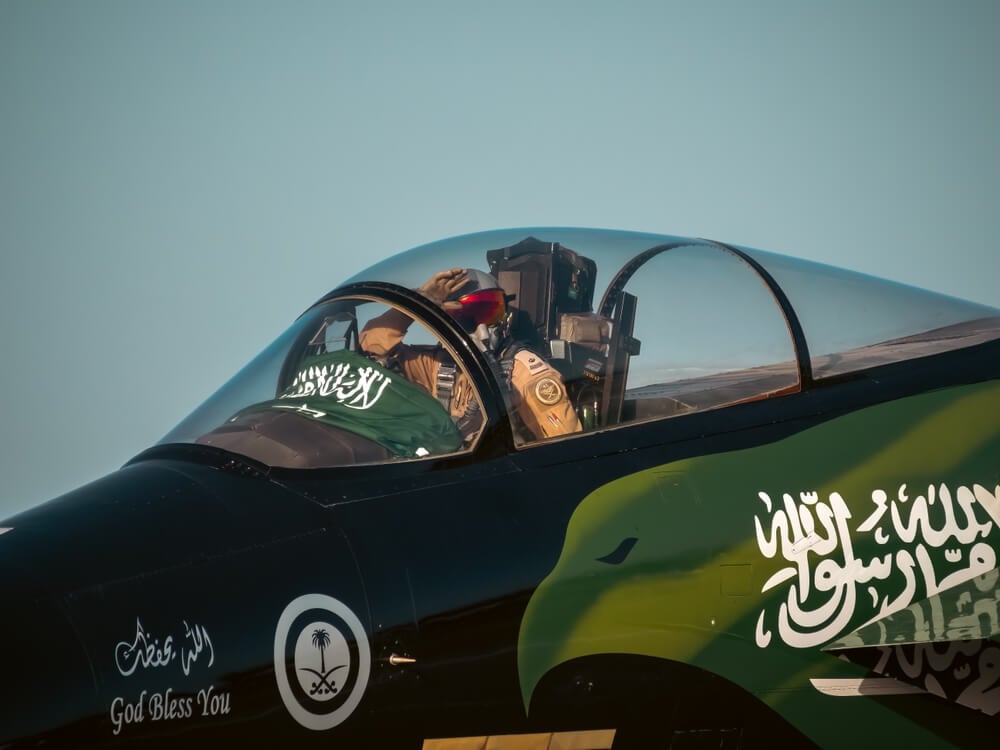
When Royal Saudi Air Force Commander Lt. Gen. Prince Turki bin Bandar announced that the establishment of the Royal Saudi Air and Space Force (RSASF) had entered its final phase, the significance was not institutional. It was operational.

The Kingdom is now formalising a military transformation that has been developing since the beginning of the Yemen war in 2015.

The merger of the Royal Saudi Air Force (RSAF) and the Royal Saudi Air Defense Forces (RSADF), along with the incorporation of expanding military space capabilities, reflects a reality already evident on the battlefield.

Air operations, missile defence, intelligence, strategic warning, and space capabilities increasingly function as parts of the same combat system. The new force simply formalises this reality.

Saudi Arabia entered Yemen in 2015 with a large, technologically advanced, and well-equipped air force.

What it lacked was not aircraft, precision weapons, or resources. It continued to conduct warfare in a conventional manner, relying on traditional concepts of air power that were better suited to limited campaigns than to managing a prolonged and highly complex theatre.

The early years revealed significant weaknesses in targeting, intelligence fusion, command and control, and shortcomings in integrating military and political objectives.

Yemen became a steep and costly learning curve. Over the following decade, the RSAF progressed from conducting basic air operations to managing the entire battlespace.

By January 2026, that evolution was evident. RSAF operations in South Yemen demonstrated a mature, integrated C6ISR architecture operating at a level very different from the early years of the war.


The removal of the Abu Dhabi-backed Southern Transitional Council (STC) military position in South Yemen demonstrated the extent of the RSAF’s progress in surveillance, targeting, operational sequencing, and theatre command.

By 2026, the RSAF was no longer using fighter jets solely to strike targets. It was employing an integrated architecture of aircraft, intelligence, surveillance, missile defence, and C2 real-time command systems to control the battle itself.

Opposing forces were responding to Saudi decisions rather than shaping events themselves.

The scale of the Saudi challenge is often underestimated. Saudi Arabia is the largest country in the Middle East.

It contains the world’s largest continuous concentration of energy infrastructure, sits atop the world’s largest proven conventional oil reserves, and lies astride some of the most important energy and commercial maritime corridors in the global economy.


As the conflict evolved, defending the Kingdom increasingly required maintaining awareness across all of Yemen, including Bab al-Mandab, Socotra Island, and the air and maritime routes connecting them.

The mission was no longer limited to defending Saudi national airspace. It became the management of a theatre stretching from the Gulf to the Red Sea, through the Arabian Sea, and the Gulf of Aden.

The same capability became evident during the Iran war that began in February 2026. By then, the RSAF had developed a standalone fused C6ISR capability able to operate independently across multiple theatres simultaneously.

Separate from American CENTCOM unified military operations, the RSAF demonstrated the ability to identify threats, execute strikes, and assess results within a single command process.

RSAF's retaliatory strikes against Iranian military and security targets were deliberately calibrated to deter attacks on Saudi critical energy infrastructure while maintaining escalation control.


At the same time, RSAF carried out simultaneous operations against Iranian-backed militia networks in southern Iraq responsible for missile and drone attacks on the Kingdom.

RSAF was no longer operating on a single front. It was managing Yemen, Iraq, and Iran simultaneously through an integrated C6ISR command system developed over a decade of war.

What began in 2015 as a large but operationally standard air force had, by 2026, evolved into a force capable of managing interconnected theatres across the region.

That evolution, more than any individual platform, explains the significance of the force now being established.

The RSAF already has the scale needed to translate operational evolution into strategic effect.

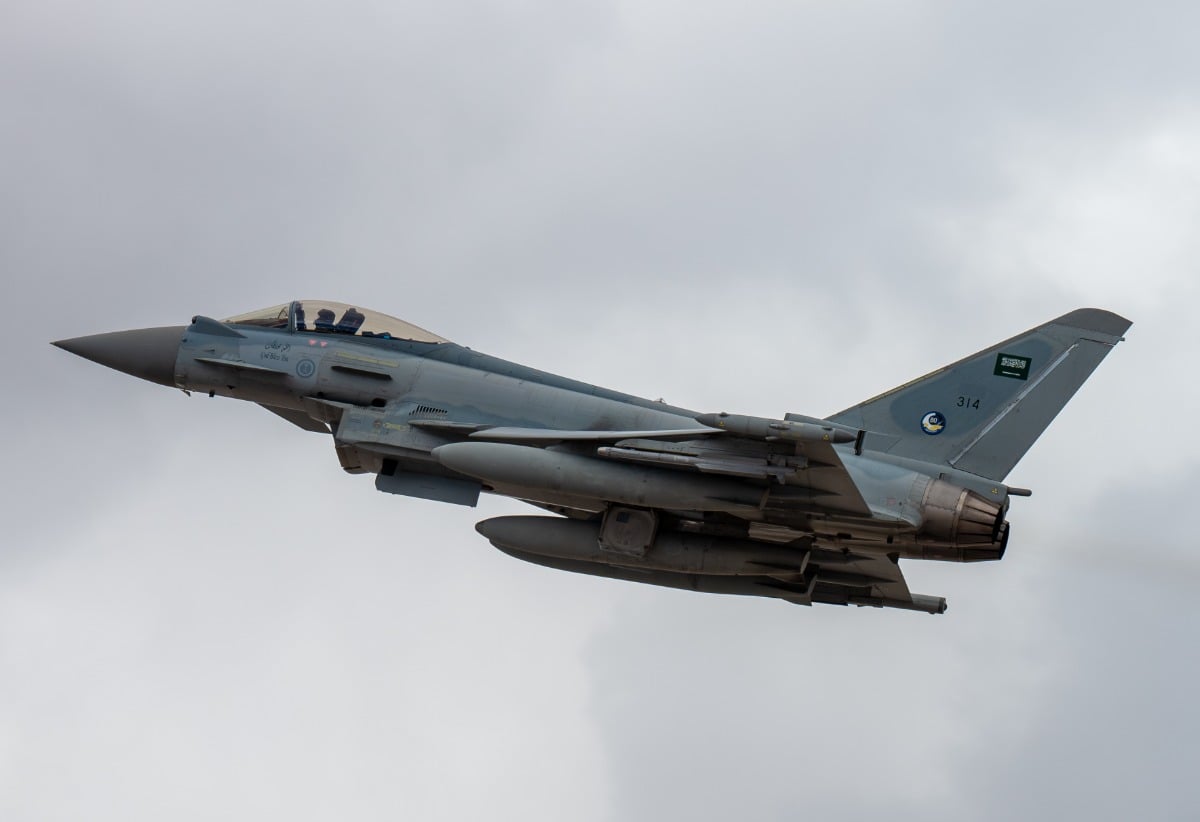
It operates approximately 365 combat aircraft, including about 226 4.5 generation fighters composed of 154 F-15SA (Saudi Advanced) and 72 Eurofighter Tranche 2/3 Typhoons.

They are supported by approximately 59 F-15C/D 4.0+ fighters and around 80 Tornado IDS legacy 4.0 strike aircraft. Saudi Arabia is already the second-largest operator of the F-15 after the United States.

The air-defence architecture supporting this force is equally significant. THAAD (Terminal High Altitude Area Defense) provides the upper tier against higher-altitude ballistic missile threats, while Patriot batteries (PAC-2/PAC-3) form the middle layer, protecting critical infrastructure and population centres.

Beneath them lies a dense SHORAD network, including Shahine and Crotale-derived systems, which repeatedly proved effective against drones and low-flying threats during the Yemen and Iran conflicts.

Only the United States will have a larger layered air- and missile-defence architecture than Saudi Arabia once the Kingdom’s Patriot and THAAD deployments are complete.


One of the most important lessons from the wars in Yemen and Iran was that not every threat requires a strategic interceptor.

Ballistic missiles, cruise missiles, and drones require different defensive layers. Success resulted from integrating these layers rather than relying on a single defensive system.

The transformation extends well beyond combat aviation and missile defence.

Saudi Arabia has invested heavily in indigenous missile and unmanned systems production, with growing emphasis on domestic manufacturing of ballistic missiles, long-range strike systems, reconnaissance platforms, and one-way attack drones.

The objective is a more resilient defence-industrial base capable of sustaining prolonged operations and reducing dependence on external suppliers.

The Royal Saudi Strategic Missile Force (RSSMF) remains outside this restructuring and continues its own modernisation trajectory as Saudi Arabia's distinct strategic forces command.

Space is the next phase of the transformation. Saudi Arabia is investing heavily in geospatial intelligence, satellite constellations, secure communications, and strategic warning systems.

Modern military power increasingly depends on seeing further, identifying threats earlier, and responding more quickly.

This is where the transition from C6ISR to C7ISR becomes crucial. Cognition is not simply another sensor; it is the ability to convert information into action more rapidly than an adversary.

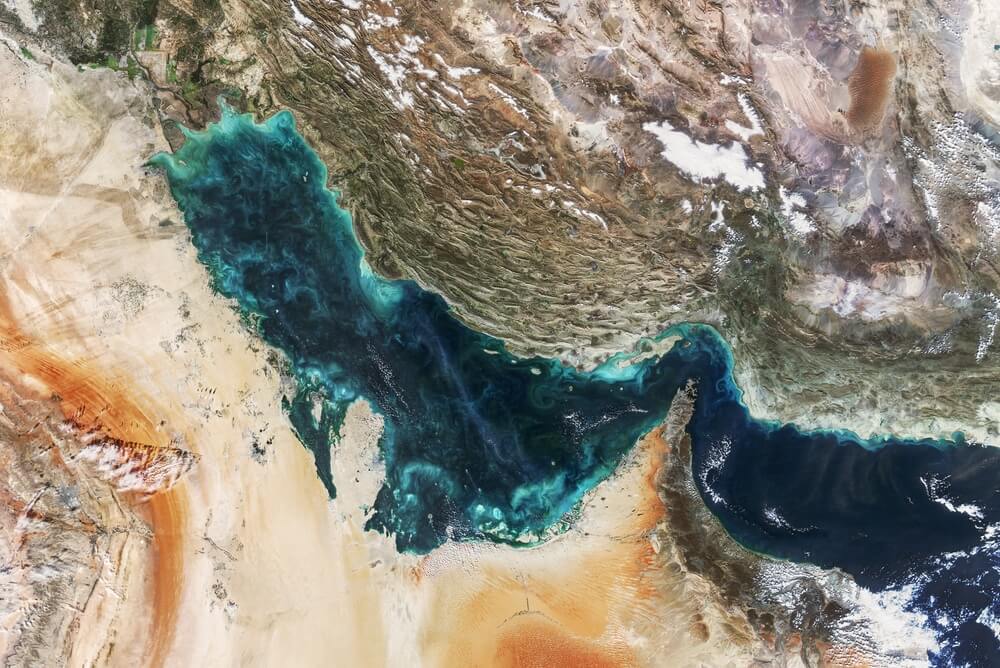
Persian Gulf Satellite


Saudi Arabia is investing heavily in geospatial intelligence, satellite constellations, secure communications, and strategic warning systems
The RSASF is integrating aircraft, missile defences, drones, intelligence systems, and space-based assets under a single command capable of managing the battlespace rather than merely participating in it.

Many programmes for modernising military systems, improving readiness, and strengthening institutional performance are underway. These reforms matter because sophisticated equipment alone does not create military power. Institutions do.

Saudi Arabia entered Yemen in 2015 with a large but operationally standard air force. A decade later, it fields a very different force.

It is supported by a layered missile defence network, increasing indigenous missile and drone production, expanding space capabilities, and an integrated command and control system tested in Yemen, Iraq, and Iran.


What RSASF is now building is the structure designed to preserve, expand, and exploit this over the next generation.


Dr Nawaf Obaid is a Senior Research Fellow at the Department of War Studies, King’s College London.

(The views expressed in this article are those of the author and do not necessarily reflect the editorial position of Tomorrow's Affairs.)

The F-35 purchase (with TOT and local production as stipulated by Saudi Arabian law whenever a defense deal is signed) should be seen in this light and the ongoing localization of the military within KSA and overall industrialization.

At the same time KSA is working with partners spanning from Turkiye, UK (Typhoon), South Korea and others.

Extensively covered in the "Made in KSA" thread and many other KSA-related threads on this section. Or all it takes is a few simple Google searches. Not that difficult.
 
Developing your own working jet engine will take decades to reach, Developing a modern fighter jet engine is one of the hardest engineering challenges and can take decade like you know brother . Türkiye's phased approach-using imported engines first while developing an indigenous engine in parallel—is a practical and commonly used strategy. I only just wish of a possibility of Chinese or Russian assistance for Turkey I know no country will share there hard earned engine RD they will lose billions in lost revenues.
True, but Saudis can leverage their purchases (direct it one way instead of another) to gain ToT and speed up the process. For example buy British and gain Rolls Royce help, instead of buying American or European.
 
True, but Saudis can leverage their purchases (direct it one way instead of another) to gain ToT and speed up the process. For example buy British and gain Rolls Royce help, instead of buying American or European.


I cam’t disagree with your point: Saudis money could get them a Rolls Royce engine. I dunno if it’s true or just rumours there is a potential engine from Rolls Royce for Swedens Gripen as a replacement to the American GE Engine they use . .
 
True, but Saudis can leverage their purchases (direct it one way instead of another) to gain ToT and speed up the process. For example buy British and gain Rolls Royce help, instead of buying American or European.
The Chinese have actually experimented with a strategy broadly similar to this over the past 5–6 years. Beijing encouraged Chinese companies and state-linked investors to acquire stakes in, or in some cases take over, foreign companies in strategically important sectors, with the broader objective of gaining access not merely to individual technologies but to the industrial ecosystems and technology chains surrounding them.

The logic was quite straightforward: acquiring a company gives you much more than its patents or products. It potentially gives you access to engineers, suppliers, manufacturing processes, intellectual property, management expertise, certification capabilities, customer networks and, most importantly, the tacit knowledge that is often impossible to obtain simply by purchasing a licence.

This was particularly attractive in sectors such as semiconductors, aerospace, robotics, advanced manufacturing and other dual-use technologies. The objective was not necessarily to immediately transfer an entire technology to China, but to gradually internalise the knowledge and capabilities embedded within the foreign industrial ecosystem.

The problem, however, was that Washington eventually recognised the strategic implications of this approach.

The United States increasingly began treating Chinese acquisitions and investments in sensitive technology companies not as ordinary commercial transactions but as potential mechanisms for technology transfer and the erosion of America's technological advantage. This resulted in significantly greater scrutiny of Chinese investments and, in many cases, the blocking or forced restructuring of proposed acquisitions.

The U.S.-China Economic and Security Review Commission's analysis is useful in understanding this broader concern.

And this is where the European dimension becomes particularly interesting.

Turkey, for example, has increasingly demonstrated an ability to use international acquisitions as a means of accelerating the development of its indigenous defence-industrial base. Baykar's acquisition of the Italian aviation company Piaggio Aerospace is a particularly interesting example because of the company's historical expertise in aviation and aerospace engineering.

Baykar's announcement on the Piaggio Aerospace acquisition

But there is an important strategic limitation here.

You cannot simply go on an acquisition spree.

If Turkey, or any other country, starts systematically purchasing European companies in strategically sensitive sectors—engines, avionics, propulsion, radar, aerospace materials, electronics, sensors, etc.—European governments will eventually stop viewing these transactions as normal commercial investments.

At some point, European politicians and security establishments will begin asking whether these acquisitions are actually part of a deliberate strategy to capture European technological capabilities and create a competing indigenous industrial ecosystem outside European control.

Once that perception becomes established, the political response becomes predictable. Governments will introduce investment-screening mechanisms, national-security restrictions, export controls and ultimately legislation designed to prevent acquisitions in sensitive sectors.

This is essentially what happened in the United States with Chinese investment.

Therefore, there is a strategic paradox here: foreign acquisitions can accelerate technological development, but excessive reliance on acquisitions can trigger precisely the political reaction that closes the door to future technology acquisition.

Turkey would therefore need to be much more sophisticated.

Instead of trying to acquire everything that it lacks, Ankara would need to selectively acquire companies where the transaction can plausibly be presented as a normal commercial investment, while using those acquisitions to build capabilities that can subsequently be replicated domestically.

The ultimate objective should not be permanent dependence on European technology. It should be technology absorption followed by indigenous substitution.

And this becomes especially important in the case of aircraft engines.

Buying an aviation company that possesses relevant expertise may provide Turkey with engineers, facilities, intellectual property and accumulated institutional knowledge. But acquiring a company does not automatically give you the ability to design and manufacture a modern high-performance turbofan independently. Engine development depends on decades of accumulated expertise in metallurgy, single-crystal turbine blades, high-temperature coatings, compressors, combustion systems, bearings, manufacturing tolerances, control systems and testing.

Much of this is tacit knowledge.

You cannot simply purchase a company and suddenly acquire fifty years of accumulated industrial learning.

This is why the engine programme ultimately has to become a domestic industrial project.

External partners can provide nudges in the right direction—technical consultancy, selected components, manufacturing equipment, materials expertise, testing assistance and perhaps limited technology cooperation—but the core intellectual and industrial capability has to be progressively internalised.

China is particularly relevant here. Beijing's experience demonstrates that indigenous technological capability is ultimately built through a combination of foreign technology exposure, reverse engineering, joint ventures, targeted acquisitions, talent acquisition, state-supported R&D and, eventually, domestic substitution.

The important distinction is that external partners should help Turkey climb the technological ladder, not become the ladder itself.

The ideal strategy would therefore be something like:

Acquire selectively → absorb knowledge → develop domestic engineering teams → reproduce subsystems → develop indigenous components → integrate domestically → progressively eliminate foreign dependence.

The acquisition of foreign companies should consequently be treated as a catalyst rather than the foundation of the strategy.

There is also a political dimension that Turkey cannot ignore. European defence companies are embedded within NATO and EU security structures. If European governments begin to perceive Turkish acquisitions as part of a broader strategy to create an autonomous defence-industrial competitor, they will eventually react collectively.

Turkey therefore needs to avoid creating a visible pattern in which every acquisition maps directly onto a known Turkish technological deficiency.

The smarter approach is distributed capability acquisition: acquire commercial companies for legitimate business reasons, build partnerships with multiple European firms, recruit international talent, establish joint R&D programmes and simultaneously invest heavily in domestic research institutions and manufacturing.

In other words, the objective should be to make the technological transfer process look less like technology extraction and more like industrial integration.

Ultimately, however, there is no shortcut around indigenous capability.

External acquisitions can provide Turkey with a tremendous head start, but they cannot substitute for the decades of engineering experience required to develop something as complex as a modern fighter engine.

The engine programme therefore needs to be fundamentally Turkish, with foreign partners providing targeted assistance, mentorship, equipment, expertise and technological nudges where necessary.

China, in particular, could potentially play an important role—not necessarily by simply handing over a complete engine technology package, but by helping Turkey overcome specific technological bottlenecks while Turkey develops its own engineering and manufacturing ecosystem.

That is the sustainable model.

The objective should not be to buy the world's technology. It should be to use the world's technology to build an industrial base that eventually no longer needs to buy it.
 
The Chinese have actually experimented with a strategy broadly similar to this over the past 5–6 years. Beijing encouraged Chinese companies and state-linked investors to acquire stakes in, or in some cases take over, foreign companies in strategically important sectors, with the broader objective of gaining access not merely to individual technologies but to the industrial ecosystems and technology chains surrounding them.

The logic was quite straightforward: acquiring a company gives you much more than its patents or products. It potentially gives you access to engineers, suppliers, manufacturing processes, intellectual property, management expertise, certification capabilities, customer networks and, most importantly, the tacit knowledge that is often impossible to obtain simply by purchasing a licence.

This was particularly attractive in sectors such as semiconductors, aerospace, robotics, advanced manufacturing and other dual-use technologies. The objective was not necessarily to immediately transfer an entire technology to China, but to gradually internalise the knowledge and capabilities embedded within the foreign industrial ecosystem.

The problem, however, was that Washington eventually recognised the strategic implications of this approach.

The United States increasingly began treating Chinese acquisitions and investments in sensitive technology companies not as ordinary commercial transactions but as potential mechanisms for technology transfer and the erosion of America's technological advantage. This resulted in significantly greater scrutiny of Chinese investments and, in many cases, the blocking or forced restructuring of proposed acquisitions.

The U.S.-China Economic and Security Review Commission's analysis is useful in understanding this broader concern.

And this is where the European dimension becomes particularly interesting.

Turkey, for example, has increasingly demonstrated an ability to use international acquisitions as a means of accelerating the development of its indigenous defence-industrial base. Baykar's acquisition of the Italian aviation company Piaggio Aerospace is a particularly interesting example because of the company's historical expertise in aviation and aerospace engineering.

Baykar's announcement on the Piaggio Aerospace acquisition

But there is an important strategic limitation here.

You cannot simply go on an acquisition spree.

If Turkey, or any other country, starts systematically purchasing European companies in strategically sensitive sectors—engines, avionics, propulsion, radar, aerospace materials, electronics, sensors, etc.—European governments will eventually stop viewing these transactions as normal commercial investments.

At some point, European politicians and security establishments will begin asking whether these acquisitions are actually part of a deliberate strategy to capture European technological capabilities and create a competing indigenous industrial ecosystem outside European control.

Once that perception becomes established, the political response becomes predictable. Governments will introduce investment-screening mechanisms, national-security restrictions, export controls and ultimately legislation designed to prevent acquisitions in sensitive sectors.

This is essentially what happened in the United States with Chinese investment.

Therefore, there is a strategic paradox here: foreign acquisitions can accelerate technological development, but excessive reliance on acquisitions can trigger precisely the political reaction that closes the door to future technology acquisition.

Turkey would therefore need to be much more sophisticated.

Instead of trying to acquire everything that it lacks, Ankara would need to selectively acquire companies where the transaction can plausibly be presented as a normal commercial investment, while using those acquisitions to build capabilities that can subsequently be replicated domestically.

The ultimate objective should not be permanent dependence on European technology. It should be technology absorption followed by indigenous substitution.

And this becomes especially important in the case of aircraft engines.

Buying an aviation company that possesses relevant expertise may provide Turkey with engineers, facilities, intellectual property and accumulated institutional knowledge. But acquiring a company does not automatically give you the ability to design and manufacture a modern high-performance turbofan independently. Engine development depends on decades of accumulated expertise in metallurgy, single-crystal turbine blades, high-temperature coatings, compressors, combustion systems, bearings, manufacturing tolerances, control systems and testing.

Much of this is tacit knowledge.

You cannot simply purchase a company and suddenly acquire fifty years of accumulated industrial learning.

This is why the engine programme ultimately has to become a domestic industrial project.

External partners can provide nudges in the right direction—technical consultancy, selected components, manufacturing equipment, materials expertise, testing assistance and perhaps limited technology cooperation—but the core intellectual and industrial capability has to be progressively internalised.

China is particularly relevant here. Beijing's experience demonstrates that indigenous technological capability is ultimately built through a combination of foreign technology exposure, reverse engineering, joint ventures, targeted acquisitions, talent acquisition, state-supported R&D and, eventually, domestic substitution.

The important distinction is that external partners should help Turkey climb the technological ladder, not become the ladder itself.

The ideal strategy would therefore be something like:

Acquire selectively → absorb knowledge → develop domestic engineering teams → reproduce subsystems → develop indigenous components → integrate domestically → progressively eliminate foreign dependence.

The acquisition of foreign companies should consequently be treated as a catalyst rather than the foundation of the strategy.

There is also a political dimension that Turkey cannot ignore. European defence companies are embedded within NATO and EU security structures. If European governments begin to perceive Turkish acquisitions as part of a broader strategy to create an autonomous defence-industrial competitor, they will eventually react collectively.

Turkey therefore needs to avoid creating a visible pattern in which every acquisition maps directly onto a known Turkish technological deficiency.

The smarter approach is distributed capability acquisition: acquire commercial companies for legitimate business reasons, build partnerships with multiple European firms, recruit international talent, establish joint R&D programmes and simultaneously invest heavily in domestic research institutions and manufacturing.

In other words, the objective should be to make the technological transfer process look less like technology extraction and more like industrial integration.

Ultimately, however, there is no shortcut around indigenous capability.

External acquisitions can provide Turkey with a tremendous head start, but they cannot substitute for the decades of engineering experience required to develop something as complex as a modern fighter engine.

The engine programme therefore needs to be fundamentally Turkish, with foreign partners providing targeted assistance, mentorship, equipment, expertise and technological nudges where necessary.

China, in particular, could potentially play an important role—not necessarily by simply handing over a complete engine technology package, but by helping Turkey overcome specific technological bottlenecks while Turkey develops its own engineering and manufacturing ecosystem.

That is the sustainable model.

The objective should not be to buy the world's technology. It should be to use the world's technology to build an industrial base that eventually no longer needs to buy it.
The Saudis can have Turkish advisors guide them, but have the new facilities built in Saudi, while giving the companies work in the countries of origin orders for the domestic and global market to satisfy local political and workers concerns.
 

Users who are viewing this thread

Back
Top