The Egyptian flag on “Kizilelma
”.. Is Egypt close to obtaining the latest Turkish Baykar technology?
Egyptian-Turkish defense cooperation is entering a new phase.. The Minister of Defense’s visit to Baykar raises questions about the future of the military partnership.
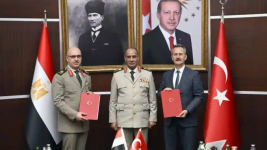
Arab Defense Website - July 20, 2026: The visit of Egyptian Defense Minister Lieutenant General Ashraf Zaher to Turkey is no longer read as a diplomatic or protocol station. Rather, observers considered it a clear indication of the transition of military relations between Cairo and Ankara to a more advanced stage, after it included a tour inside a center belonging to Baykar, the largest Turkish company specialized in developing and producing drones, in addition to signing a letter of intent for defense cooperation, in a step that reflects the transition of relations from the consultation stage to the construction stage. A deeper military partnership.
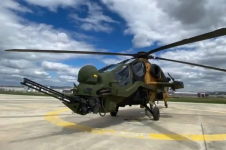
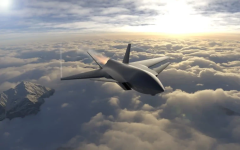
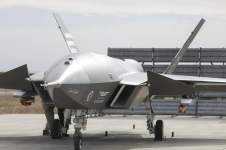
Experts believe that the inclusion of Baykar in the Egyptian Defense Minister’s visit program was not unusual, given the position the company occupies as the face of the Turkish defense industries in recent years. The appearance of the Egyptian flag on a special display screen of the Kızılelma jet drone platform also sparked widespread interest in Turkish and international media, and opened the door to speculation about the messages that the company wanted to convey through this scene.

Although no official announcement has been issued yet regarding concluding arms deals between the two countries, official statements confirmed that the visit included reviewing the latest military technologies, in addition to discussing areas of cooperation in defense industries and joint military manufacturing, which analysts consider an exploratory stage that may pave the way in the future for programs to transfer expertise, manufacturing, or joint development.
The timing of the visit is of particular importance, as it came after a series of mutual military activities between the two countries, which included joint training and mutual visits between the leadership of the armed forces, leading up to the “Golden Eagle 2026” maneuvers, which reflects a gradual path that goes beyond political coordination to include operational and industrial cooperation in the defense field.
Experts point out that these moves may represent a prelude to moving to the stage of concluding official deals, especially in light of the Egyptian interest in systems that have proven effective in the fields of reconnaissance, precision strikes, and network warfare, as well as artificial intelligence technologies and management of combat drone swarms developed by Baykar.
Observers confirm that the importance of the visit does not lie only in the possibility of purchasing a specific military system, but rather in enhancing the image of cooperation between Cairo and Ankara in the defense industries sector, at a time when the region is witnessing an accelerating race towards possessing advanced military technology.
In their reading of the backgrounds of this rapprochement, experts believe that the regional security environment is witnessing radical transformations as a result of escalating tensions and wars, whether in Ukraine, the Middle East, the eastern Mediterranean, or the Gulf, which is pushing the countries of the region to enhance their defense capabilities, secure their borders, and build new military partnerships. They believe that the Egyptian-Turkish rapprochement comes in this context, especially after years of apathy, with a common vision based on expanding areas of security and military cooperation.
Experts also point out that Turkey has been able, in recent years, to develop its defense industries significantly, after the restrictions imposed by the United States on the export of some weapons and military equipment to it, which led Ankara to achieve a great deal of self-sufficiency, before it turned into a defense partner for a number of countries, including Saudi Arabia, Qatar, and Syria, and it is likely that Egypt will join this path through a more serious partnership.
Despite this, experts believe that Egyptian-Turkish relations have not yet reached the level of a full military alliance, because building such a level of relations requires time and the consolidation of trust and common interests between the two sides. They point out that the regional scene has changed significantly compared to previous years, especially in the issues of the Eastern Mediterranean, Libya and Syria, where there has become a greater convergence of views, which has been reflected in the development of security relations in a tangible way.
Regarding the possibility of transferring military technology, experts point out that Cairo places the localization of defense industries and technology transfer among its priorities in any new military cooperation, considering that Turkey appears open to this trend, as it relies in its defense partnerships on the principle of industrial cooperation more than just selling military equipment, which has previously appeared in its cooperation with a number of Arab countries.
Ankara also views defense partnerships as a means to enhance the security and stability of the region, and it prefers to build relationships based on joint production and exchange of experiences, benefiting from its experience in developing its military industries after years of dependence on Western suppliers.
As for the American position, the noticeable improvement in relations between Ankara and Washington, as well as between Cairo and Washington, may contribute to creating a more suitable environment for the development of Egyptian-Turkish cooperation, especially in light of the United States’ need to maintain a wide network of allies in the region.
On the other hand, experts refused to interpret the military rapprochement between Egypt and Turkey as directed against Israel, stressing that the primary goal is to enhance the defense capabilities of each country and secure its national interests in light of a turbulent regional environment. They point out that any country in the region seeks to strengthen its military capabilities to protect its national security, and not necessarily to enter into a confrontation with a specific party, even if regional developments force all parties to re-evaluate their security and defense policies.