The Egyptian-Turkish alliance.. Cairo and Ankara are moving towards a new Middle East through the “KAAN” stealth aircraft project

The SC

INT'L MOD
Joined
Feb 13, 2012
Messages
52,517
Reaction score
49,993
Reputation
3,887.3
Country of Origin
Country of Residence
1782005758991.png

Egypt is no longer satisfied with purchasing weapons and aircraft. Rather, it is moving today towards a different stage based on industrialization and industrial partnership, even with former regional adversaries, most notably Turkey, which is leading an ambitious project to develop the fifth generation fighter known as “Kaan” (or Qaan), a project in which Cairo today has become a partner, in a development that opens the door to questions about the backgrounds of this rapprochement and the regional repercussions it may have, especially on Israel.

Fifth-generation stealth fighters are an advanced symbol of air power and sovereignty, and they are systems that are not easily given and sold only under strict conditions, even to the closest allies. However, Egypt seems to be stepping directly into this exclusive club, not only as a buyer, but as a partner in manufacturing and development, in a step that represents a qualitative shift in its modern military history, as it represents Cairo’s first direct entry into an international project to develop a fifth generation fighter, which means its transition from the import and assembly stage to the field of high-tech manufacturing.

This shift also reflects a degree of relative freedom from dependence on the West and Russia for its air armament. Cairo already possesses a diverse fleet that includes American F-16 aircraft, and French aircraft such as the Rafale, in addition to previous efforts to acquire the Russian Sukhoi Su-35. However, all of these platforms do not provide full stealth capabilities, and they remain linked to restrictions on armament, spare parts, and political use.

On the other hand, engaging in the Kan project gives Egypt for the first time access to the heart of advanced military technology, with possibilities for transferring industrial and engineering knowledge, especially since Turkey produces a large percentage of its fighter components locally, including radar and electronic warfare systems. This cooperation is also in line with a broader Egyptian trend to modernize defense industries and localize technology, which also appears in other partnerships such as cooperation with South Korea in the K2 tank project and with Italy in manufacturing frigates.

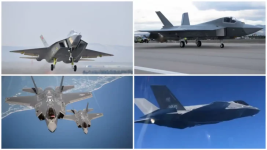
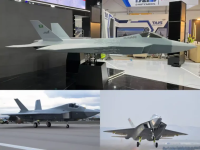
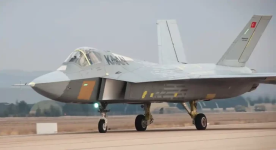
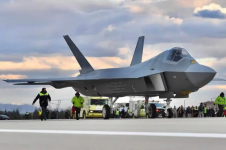
When moving to the characteristics of the fighter itself, the Kaan project is not just a development of a new aircraft, but rather a Turkish strategic project that aims to break the monopoly of fighters such as the American F-35, the Russian Su-57, and the Chinese J-20. This fighter is close in philosophy to the capabilities of the F-35, but it is designed to be more independent in modernization and operation, giving partner countries greater flexibility away from Western political restrictions.
1782005961344.png

Its most prominent features include a locally made AESA radar capable of tracking more than 20 targets simultaneously with high accuracy, advanced electronic warfare systems capable of jamming and influencing an opponent’s defenses, in addition to a cockpit equipped with a smart helmet system that provides a panoramic view and real-time information, as well as network capabilities that allow direct communication with drones and air defense systems, in addition to an internal stealth design that reduces the radar footprint by reducing the attachment points for external weapons.

As for the production level, the main manufacturing takes place in the facilities of the Turkish Aerospace Industries Company in Ankara, with possibilities to establish a production line or partial assembly in Egypt if the agreement includes a special section for industrial cooperation, similar to the Egyptian-Korean model in the K2 project.

With this development, the question arises about the future of the Egyptian Air Force, as this accession means that any future air threat may face a more advanced system with the ability to conceal and strike from a long range, which may put Egypt within one decade in a position that allows it to match advanced regional air capabilities, including Israel and some European powers, which reflects a shift in Egyptian military doctrine from conventional defense to advanced deterrence.

Egypt's accession to the Qan project does not appear to be just industrial cooperation, but may indicate a broader strategic shift, as Turkey needs a strong regional partner to support its ambitious defense project. It also benefits from Egypt's entry in strengthening the political legitimacy of the project and opening new markets, while Ankara obtains a reduction in the high financial burdens, especially since the cost of the program exceeds billions of dollars, and may reach more than 10 billion with the completion of development and production.
1782006167225.png

Expanding the industrial base is also a crucial factor, as Türkiye needs partners capable of supporting production and supply, which Egypt can provide with its industrial structure and growing engineering expertise. In addition, the geopolitical dimension plays a pivotal role, in light of the restructuring of regional alliances and the decline of traditional divisions, in contrast to the rise of the logic of flexible interests.

In this context, the question arises as to whether this cooperation is just an industrial partnership or the beginning of a broader alliance, especially with the expansion of cooperation in other fields such as energy, gas, maritime defense, and drones, which may pave the way for the formation of a new Egyptian-Turkish axis that redraws the region’s balances in the Mediterranean, North Africa, and the Red Sea.

On the other hand, this development raises questions within Israel, which relies on qualitative air superiority supported by F-35 fighters. The emergence of Egypt as part of an advanced stealth fighter project may mean, for the first time in decades, a decline in the idea of absolute air superiority. The new fighter provides advanced stealth capabilities, advanced electronic warfare, and an operational range that may exceed 2,000 kilometers, with the ability to work networked with drones, which reshapes the equation of air combat in the region.

This potential shift means, from an Israeli perspective, the loss of the unconditional superiority that was based on possessing the F-35 over regional opponents’ possession of less advanced aircraft such as the Rafale and F-16. Egypt's possession of significant numbers of these fighters by the end of the decade may give it the ability to carry out precise long-range strikes while reducing the chances of detection.

The most sensitive factor is the possibility of the formation of an Egyptian-Turkish axis, bringing together two major military forces in the Middle East, which may radically change the calculations of regional deterrence if cooperation expands to include broader intelligence or defense fields.

Although no clear official Israeli positions have been issued, some media outlets and specialized analysis centers are following this development with interest, noting that transferring this technology to an Arab country the size of Egypt may redefine the nature of future threats in the region.

This is not just a new arms deal, but rather a gradual restructuring of the concept of air power in the Middle East, as Egypt transforms from a consumer of weapons into a partner in their production, with implications for the balance of regional deterrence and the course of military competition in the region in the coming years, in light of a new reality in which air superiority may not remain as limited as it was before.
 
Source:
Arab Defense Website - June 16, 2026
Israeli media warns of a new regional axis led by Saudi Arabia, Egypt and Turkey with Pakistani nuclear support

1782007384334.png

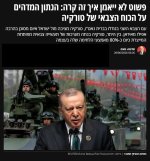
Israeli media highlighted what it described as the features of the formation of a new regional axis that includes Saudi Arabia, Egypt, Turkey, and Pakistan, considering that this trend may lead to redrawing the balance of power in the Middle East and reducing the traditional dependence on the Western security umbrella.

According to these reports, the four countries are seeking to build a broader strategic and security cooperation framework, based on increased political and military coordination between the most prominent Sunni forces in the region, in light of the rapid transformations taking place in the Middle East and the escalation of tensions related to Iran and Israel.

Israeli analyzes believe that this rapprochement may develop into something resembling an independent regional security platform, whose goal is to enhance the ability to manage regional crises and provide alternatives to foreign interventions, with a focus on security, defense, military technology and industrial cooperation files.

Reports indicated that Saudi Arabia plays a pivotal role in promoting this path.

On the military side, Pakistan stands out as the most sensitive element within this potential bloc, given its possession of nuclear weapons. Israeli media believe that the growing defense partnership between Riyadh and Islamabad may create what some analyzes describe as a “Pakistani nuclear umbrella,” which may add a new dimension to deterrence equations in the Middle East.

These estimates are based on the defense cooperation agreement signed between Saudi Arabia and Pakistan during the year 2025, which included provisions for joint military coordination and collective dealing with security threats. Israeli reports also indicated the deployment of Pakistani forces, fighters, and air defense systems inside the Kingdom during 2026 within the framework of enhancing military cooperation between the two countries.

1782007242954.png

At the same time, both Turkey and Saudi Arabia continue to expand their defense cooperation, especially in the fields of drones and advanced aviation industries, including the Turkish fifth-generation fighter project “KAAN,” while Egypt continues to strengthen its military and regional partnerships within the growing network of relations between these countries.

Some Israeli circles warn that the emergence of such an axis may limit Israel's margin for strategic maneuvering, whether at the regional level or in its relationship with the United States, especially if it succeeds in presenting itself as a security framework capable of addressing the region's crises from within.

On the other hand, the same analyzes indicate that this potential bloc may raise concerns among other regional parties, as Iran may view it as a direct challenge to its influence, while it may contribute to accelerating arms races and reshaping military balances in the Middle East.

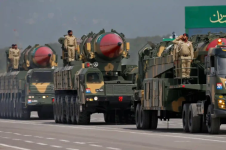
Reports also pointed out that Pakistan's possession of a nuclear arsenal and long-range missiles, including Shaheen-III missiles, gives this cooperation an additional deterrent dimension, at a time when Saudi Arabia prefers to rely on strategic partnerships and external security protection rather than seeking to develop an independent military nuclear program.

In general, the Israeli media believes that any strategic rapprochement between Saudi Arabia, Egypt, Turkey, and Pakistan may constitute one of the most prominent geopolitical changes in the region in the coming years, with repercussions on the traditional balance of power and regional and international relations.
 
The Israelis are totally goners now. They had a chance to secure their future by following the UNSC resolution 242 and limiting their state to the green line and achieving peace with their neighbors.

That's not how it will play out. In ~20 years when the US is replaced as the sole superpower on the planet they won't be around to serve their Israeli handlers anymore.

Would Egyptians/Syrians/Lebanese/Palestinians simply ignore Israel when that picture shows up? Toasted.
 
I feel that the alliance with these 4 powerhouse(in their own might) would be the best thing to happen for the muslim world......
KSA, Egypt, Turkiye, Pakistan and others......together we can be a force of good in the world, and work for our collective interests and cooperation.

Israel, as expected, is already terrified of such an alliance.
They really don't like Pakistan as it has the nukes and a battle-hardered military and people who really will never tolerate israel or ever warm upto it.
 
I feel that the alliance with these 4 powerhouse(in their own might) would be the best thing to happen for the muslim world......
KSA, Egypt, Turkiye, Pakistan and others......together we can be a force of good in the world, and work for our collective interests and cooperation.

Israel, as expected, is already terrified of such an alliance.
They really don't like Pakistan as it has the nukes and a battle-hardered military and people who really will never tolerate israel or ever warm upto it.
Firstly they need to get rid of the dollar between em and with China and Russia.
the 3 countries ( Egypt , Turkey and Pakistan) are in great debt and this close to be bankrupt .. you can't make strong alliance with those 3 failed states am sorry. my country comes first in the failed list.
 
Firstly they need to get rid of the dollar between em and with China and Russia.
the 3 countries ( Egypt , Turkey and Pakistan) are in great debt and this close to be bankrupt .. you can't make strong alliance with those 3 failed states am sorry. my country comes first in the failed list.
They are all doing well..you should follow the news my friend..
 
They are all doing well..you should follow the news my friend..
Slightly off topic , long time back I read somewhere that Egyptian arms industry was reasonably advanced during the late 19th and early 20th century...is that true ?
 
Egypt for all its faults and mistakes over the last few decades is VITAL for the Muslim world and it controls the Suez


Egypt needs to wake up
Egypt needs to work with the Muslim world and we need to strengthen Egypt


A Muslim NATO has always been a urgent need
A multi state alliance that can fund and arm itself
With 2 billion population
With major strategic Choke points in it's grasp
 
Firstly they need to get rid of the dollar between em and with China and Russia.
the 3 countries ( Egypt , Turkey and Pakistan) are in great debt and this close to be bankrupt .. you can't make strong alliance with those 3 failed states am sorry. my country comes first in the failed list.

Wth are you talking about ?

Turkiye doesnt have huge debt , even lowest debt in Europe to compare with GDP
Türkiye's government debt-to-GDP ratio stands at 23.8% of Nominal GDP.


And Turkish Economy ( $1,64 trillion ) is bigger than Egypt+Pakistan+Iran+$450 billion combined

-------------------------------------------------------------------------

1 -- Turkish Defense Industry is so advanced and enough to match with Israel

2 -- S.Arabia and Qatar can finance this alliance

3 -- Pakistan can provide nuclear umbrella

4 -- Huge Population ( around 500 million )


Israel itself says that Turkiye has already reached 80% local production, has a formidable military power
1782056784938.jpeg
 
Wth are you talking about ?

Turkiye doesnt have huge debt , even lowest debt in Europe to compare with GDP
Türkiye's government debt-to-GDP ratio stands at 23.8% of Nominal GDP.


And Turkish Economy ( $1,64 trillion ) is bigger than Egypt+Pakistan+Iran+$450 billion combined

-------------------------------------------------------------------------

1 -- Turkish Defense Industry is so advanced and enough to match with Israel

2 -- S.Arabia and Qatar can finance this alliance

3 -- Pakistan can provide nuclear umbrella

4 -- Huge Population ( around 500 million )


Israel itself says that Turkiye has already reached 80% local production, has a formidable military power
View attachment 202638
Have you sorted out your foreign trade imbalance ? As far as I know that's the only economic issue you were facing.
 

Users who are viewing this thread

Back
Top