CSAW
Trusted Member


- Thread starter
- #91
PFX Much anticipated Capabilities....
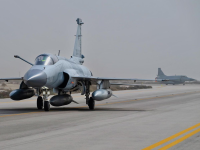
" Look on the nose of many modern jet fighter aircraft and you’ll spot a large bulbous protrusion coming from just near the cockpit
While it has a rather unassuming appearance, this aperture forms an important role in the fighter’s detection and fire control functionality, acting like a powerful thermal camera to spot distant enemy targets and using that data to neutralize the threat.
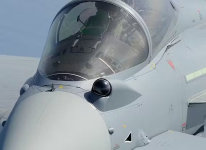
The beauty of infrared search and track technology IRST technology is it is completely passive and does not highlight the location of the aircraft, unlike when a pilot decides to use the on-board radar, which can give away its position as radio frequency energy bursts out. IRST can also work in all weather conditions as it uses the infrared rather than the visible part of the electromagnetic spectrum.
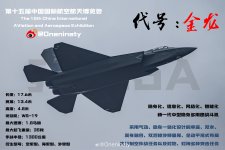
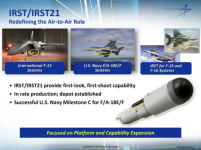
So important is this capability, particularly as China and Russia develop their own stealth aircraft with advanced detection capabilities, that the US is retrofitting many of its advanced fighter aircraft – including the navy’s F/A-18E/F Super Hornet and the air force’s F-15 Eagle – with an IRST capability. It is hoped that with these new “eyes” Western fighter jets will be able to sense adversary aircraft first and kill them before being seen themselves.
Giorgio Balzarotti, vice president of IRST programmes at Leonardo’s Nerviano site in Italy, said having an IRST sensor is like being in a dark room with your enemy. You are able to see your enemy because of the temperature emitted by them, but they would have to shine a light (analogous to turning on a radar) to be able to see your position. “You are at an advantage...you can be completely silent,” he added.
In the mid-2000s, Leonardo developed its own IRST solution for the advanced nEUROn unmanned combat aerial vehicle (UCAV) built by French aerospace manufacturer Dassault. This unique configuration employed a medium-wave infrared (MWIR) sensor in an air-to-ground application rather than the traditional air-to-air role, but retained the search, detection and tracking functionalities. An additional function was automatic target recognition performed by cross checking the UCAV’s real-time imagery with a database of ground targets.
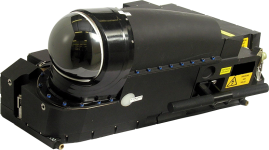
This growing experience and expertise saw Leonardo win a contract to supply its new Skyward IRST technologies for Saab’s newest fighter aircraft, the Gripen E. The company is now in the series production phase for the Skyward-G contract, said Balzarotti, and will supply over 60 units for the Swedish Air Force’s Gripen E fleet.
Another variant of the IRST system, Skyward-K has also found success in Asia, and will eventually form part of a new regional fighter programme. Balzarotti did not disclose the customer or the programme due to commercial sensitivities, but said Leonardo would supply 20 units over the next two years. This is believed to be part of a wider technology transfer agreement with the domestic company.
In another sign of the growing appetite for IRST on next-generation platforms, Balzarotti also revealed that Leonardo had been awarded a contract from a Far East customer this year to supply a new Skyward sensor variant known as the Skyward-AB. This will be integrated onto a tactical UAV, which “is not the first time we have tested on an unmanned aircraft, but it is the most important one,” he noted.
It is believed that the tactical UAV is still in its development phase and will be ready next year, with the IRST sensors also being delivered next year for use in an air-to-air detection and tracking role. This the first time an IRST sensor has been used on a UAV in an air-to-air role - the past example of nEUROn was exclusively air-to-ground - although no further details are known at this point owing to its confidential nature.
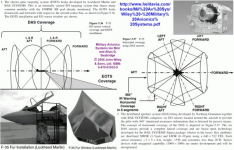
Leonardo also system in development, known as the Multi-Aperture Infrared (MAIR) system. This differs from past systems in that it uses multiple IR cameras around a platform to aid detection and tracking of targets and threats, rather than just a single aperture as on traditional systems.
“If we are able to have a single head sensor, we can have more than one head to perform full coverage of the scene,” explained Balzarotti.
MAIR has been company funded and will be tested on a helicopter next year. Leonardo is also exploring additional functions including interfacing with countermeasures - to detect incoming rockets or missiles, and dispense flares or cue laser jamming - as well as a pilot aid to increase situational awareness by projecting imagery of their surroundings onto a helmet-mounted holographic display.
Expect to see more activity in the IRST space in the future, especially as companies such as Leonardo progressively improve the technology and it is fielded on more platforms, including UAVs and helicopters. The combination of both thermal and radar detection technologies, along with more effective image processing, will give aircraft far greater sensing capabilities to address emerging threats in the airborne space."
" Look on the nose of many modern jet fighter aircraft and you’ll spot a large bulbous protrusion coming from just near the cockpit
While it has a rather unassuming appearance, this aperture forms an important role in the fighter’s detection and fire control functionality, acting like a powerful thermal camera to spot distant enemy targets and using that data to neutralize the threat.
The beauty of infrared search and track technology IRST technology is it is completely passive and does not highlight the location of the aircraft, unlike when a pilot decides to use the on-board radar, which can give away its position as radio frequency energy bursts out. IRST can also work in all weather conditions as it uses the infrared rather than the visible part of the electromagnetic spectrum.
So important is this capability, particularly as China and Russia develop their own stealth aircraft with advanced detection capabilities, that the US is retrofitting many of its advanced fighter aircraft – including the navy’s F/A-18E/F Super Hornet and the air force’s F-15 Eagle – with an IRST capability. It is hoped that with these new “eyes” Western fighter jets will be able to sense adversary aircraft first and kill them before being seen themselves.
Giorgio Balzarotti, vice president of IRST programmes at Leonardo’s Nerviano site in Italy, said having an IRST sensor is like being in a dark room with your enemy. You are able to see your enemy because of the temperature emitted by them, but they would have to shine a light (analogous to turning on a radar) to be able to see your position. “You are at an advantage...you can be completely silent,” he added.
In the mid-2000s, Leonardo developed its own IRST solution for the advanced nEUROn unmanned combat aerial vehicle (UCAV) built by French aerospace manufacturer Dassault. This unique configuration employed a medium-wave infrared (MWIR) sensor in an air-to-ground application rather than the traditional air-to-air role, but retained the search, detection and tracking functionalities. An additional function was automatic target recognition performed by cross checking the UCAV’s real-time imagery with a database of ground targets.
This growing experience and expertise saw Leonardo win a contract to supply its new Skyward IRST technologies for Saab’s newest fighter aircraft, the Gripen E. The company is now in the series production phase for the Skyward-G contract, said Balzarotti, and will supply over 60 units for the Swedish Air Force’s Gripen E fleet.
Another variant of the IRST system, Skyward-K has also found success in Asia, and will eventually form part of a new regional fighter programme. Balzarotti did not disclose the customer or the programme due to commercial sensitivities, but said Leonardo would supply 20 units over the next two years. This is believed to be part of a wider technology transfer agreement with the domestic company.
In another sign of the growing appetite for IRST on next-generation platforms, Balzarotti also revealed that Leonardo had been awarded a contract from a Far East customer this year to supply a new Skyward sensor variant known as the Skyward-AB. This will be integrated onto a tactical UAV, which “is not the first time we have tested on an unmanned aircraft, but it is the most important one,” he noted.
It is believed that the tactical UAV is still in its development phase and will be ready next year, with the IRST sensors also being delivered next year for use in an air-to-air detection and tracking role. This the first time an IRST sensor has been used on a UAV in an air-to-air role - the past example of nEUROn was exclusively air-to-ground - although no further details are known at this point owing to its confidential nature.
Leonardo also system in development, known as the Multi-Aperture Infrared (MAIR) system. This differs from past systems in that it uses multiple IR cameras around a platform to aid detection and tracking of targets and threats, rather than just a single aperture as on traditional systems.
“If we are able to have a single head sensor, we can have more than one head to perform full coverage of the scene,” explained Balzarotti.
MAIR has been company funded and will be tested on a helicopter next year. Leonardo is also exploring additional functions including interfacing with countermeasures - to detect incoming rockets or missiles, and dispense flares or cue laser jamming - as well as a pilot aid to increase situational awareness by projecting imagery of their surroundings onto a helmet-mounted holographic display.
Expect to see more activity in the IRST space in the future, especially as companies such as Leonardo progressively improve the technology and it is fielded on more platforms, including UAVs and helicopters. The combination of both thermal and radar detection technologies, along with more effective image processing, will give aircraft far greater sensing capabilities to address emerging threats in the airborne space."
Last edited: