National Trophy Infantry Team aka Infantry Trophy but better known as “rattle battle”.
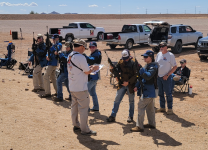
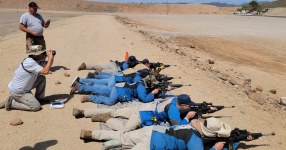
Today was range day to begin training for the NTIT Match at Camp Perry. I won’t go into a dissertation of the history of the match. There are plenty of sources out there for the interested reader. Suffice to say, the match, at least for civilians, is the closest one will come to actual combat without the targets shooting back at you! During the course of fire, it is literally a “mad minute” but with a time limit of 50 seconds per stage. So when the command “LOAD AND BE READY!” is given, you had better be ready because those targets could come up at any time. This is where the coaches have got to be paying attention.
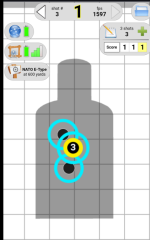
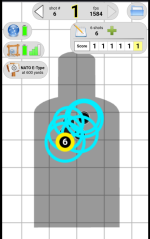
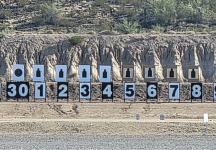
The match is fired on 8 targets by a team of six shooters. Firing will begin on the 600 yard line in the prone position on the NATO E-target in a time limit of 50 seconds from the moment the targets appear. One firing is complete, the teams will advance to the 500 yard line and repeat the sequence. Once that stage is complete, the teams will the advance to the 300 yard line and from the sitting position, fire on the NATO D-target. The final advance will be the 200 yard line where the shooters will expend whatever remaining rounds they have from the offhand position. It is best you do NOT have any rounds left at 200 yards. More on that in the coming paragraphs.
Watching 6-8 teams per relay advancing as an infantry squad / platoon / company would is a sight to behold. And, like in the olden days, the line MUST keep pace with the flag bearer. There have been years where the flag bearer would slow walk from 600 to 500 and double time from 500 to 300 at which point, the line official will yell “Team Captains, move your teams to the line”. At this point you're still several yards out from the actual firing line. We learned the hard way years ago to double time, not stroll to the line because sure enough, the line official will almost immediately call “LOAD AND BE READY!” Nothing ruins your day more than to still be dropping into position and hear the dreaded call and immediately your targets come up. Seriously, it’s a conspiracy. The military teams are obviously used to this. Civilian teams, which are more like mobs unless they have coaches with prior military experience or who have been through this nonsense already, will invariably get “burned”.
Even though this is a shooting event, there is some strategy involved. Because the match is still based on the days when the teams were shooting the M-1 Garand, each team is issued 384 rounds. For 6 shooters, that is 64 rounds (theoretically) per shooter. This is where the strategy begins to come into play. Remember, this is simulated combat and while you’d like to have a team of top shooters, most teams won’t. So coaches and their teams will hopefully be training for the match prior to arrival for game day. Those who don’t; it will show. This is a game that is either won, or lost, at 600 yards.
The head coach’s job (and I did that for a few years) is to keep tabs on how each shooter is shooting during training. Once zeros are established for 600 / 500 / 300/ 200 yards for each shooter, how are they doing? Remember, firing is for a maximum of 50 seconds. I’ve seen teams still shooting as their targets are going down. Guess what, those last couple shots are always going to be misses. And remember, like in combat, only hits count. So the coach has to know who can consistently get hits and who is really good at it. Remember, you have 6 shooters firing at 8 targets so it is important that all 8 targets receive hits. And, even more important that each target receive a minimum of 6 hits! More on that in a bit.
Once the shooter performance has been established, now comes the next part of the strategery. Remember, I said this game is either won or lost on the 600 yard line. Why? Because of the point values earned by the number of hits. Each hit at 600 yards is worth 4 points. At 500 yards, a hit is worth 3 points. At 300 yards, those point value earned is 2 points. On the 200 yard line, each hit is worth a point. And, if that isn’t enough to drive a planner nuts, add in the bonus points. The way that works is that for each and every target that has six or more hits, the square of the number of targets with six or more hits is the bonus value. Remember, there are 8 targets. If all have six or more hits each, that is an additional 64 points added to the score for that yard line. Only 7 targets with 6 ore more hits earns 49 bonus points and so on and so forth. And yes, I’ve seen where two teams had the same number of hits total. But the one team had six or more hits on all 8 targets and the other team did not. That 15 bonus point was the difference between winning and losing.
With 64 rounds per shooter, the coach will drive himself (or herself) nuts putting the fire plan together. I still have nightmares about it today. The military teams have the advantage because they do this for a living. The civilian teams not so much. Many years ago (I’ll go into more detail on that in a later post) the Marine Marksmanship Unit fired 40 rounds per shooter at the 600 yard line and each shooter had 40 hits not to mention they also got the full bonus. 6 shooters x 40 hits is 240 hits total. Multiply that by 4 points per hit and that added up to 960 points. Add in the bonus and they were at 1024 points before leaving the 600 yard line. They each shot their last 24 rounds at the 500 yard line. Don’t remember how many hits they had at 500. It didn’t matter. They won that year. The majority of the civilian teams can only aspire to be that good. One of the fire plans I had put together, and we went to Perry with, would have resulted in something like 1380 points. We were consistently hitting 1250-1290 in training. That would have been a top score among the civilian teams. I didn’t go that year due to a serious shoulder injury that sidelined me for several months of shooting. The team got to Perry, no one could agree on the what to have for lunch much less the wind call at 600. And, their score showed it.
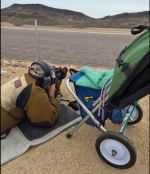
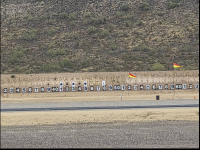
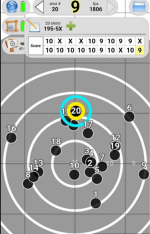
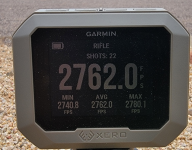
And now, I am back to training alongside the team. And, not only were today’s results promising, I learned a few things that will help as we develop loads for the team ammo. That will be in the next post. Want to get some photos up first.


 jarheadtop.com



 ?
?