Beijingwalker
VIP Member

The US Is Badly Losing Its Trade War with China
US trade restrictions since 2018 have done little to alter China’s trajectory while imposing a significant cost on American companies and consumers.SEPTEMBER 23, 2026
By Scott Lincicome
Xi Jinping’s arrival at the White House on Thursday will be the first Chinese state visit to the United States since 2015. It thus makes for the perfect time to judge the radical changes to US-China trade policy that President Donald Trump unleashed in 2018. After eight years of historically high tariffs, export controls, industrial policy, and more, we can conclude the policy has been a failure by its own objectives.
In March 2018, the US’s opening tariff salvo – implemented via Section 301 of the Trade Act of 1974 – aimed to roll back Chinese industrial policy and blunt Beijing’s push for dominance in advanced manufacturing. Subsequent tariffs and export controls added more goals: shrink China’s trade surplus and policy-driven overcapacity, reduce US dependence on Chinese goods, slow China’s technological advance, and weaken Beijing’s geopolitical position.
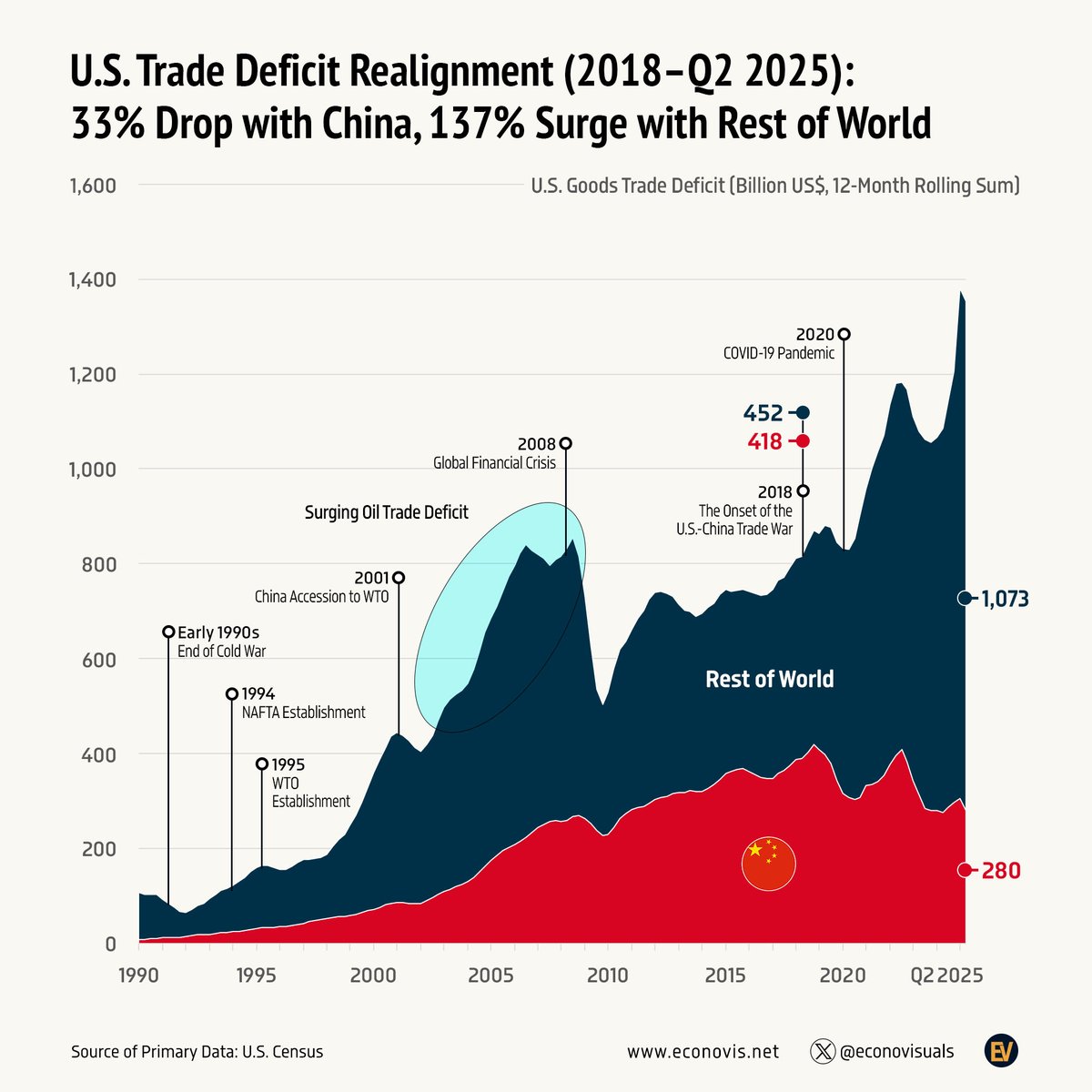
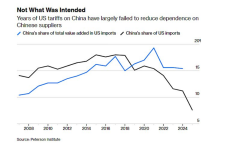
Granted, there have been a few superficial victories. Between 2017 and 2025, direct imports from China declined from about 21.6% of US goods imports in 2017 to roughly 9% by 2025, a level not seen since China joined the World Trade Organization in 2001. Export restrictions have denied Chinese companies easy access to Nvidia Corp.’s best chips and ASML Holding NV’s best chipmaking equipment. And American firms such as Apple Inc. shifted production capacity from China to India, Vietnam, Mexico, and other low-wage alternatives.
Beneath the surface, however, there’s little for trade hawks to cheer. New research finds that Chinese content – either directly or lawfully embedded in third-country goods – has been entering the US at levels only modestly below those in 2017, confirming the anecdotal evidence. Illegal transshipment and customs fraud have also increased – another predictable result of high and complex US tariffs. The 2025–26 drop in China’s import share, meanwhile, is mainly owed to surging AI inputs from Mexico and Taiwan – goods that were never made in China to begin with.
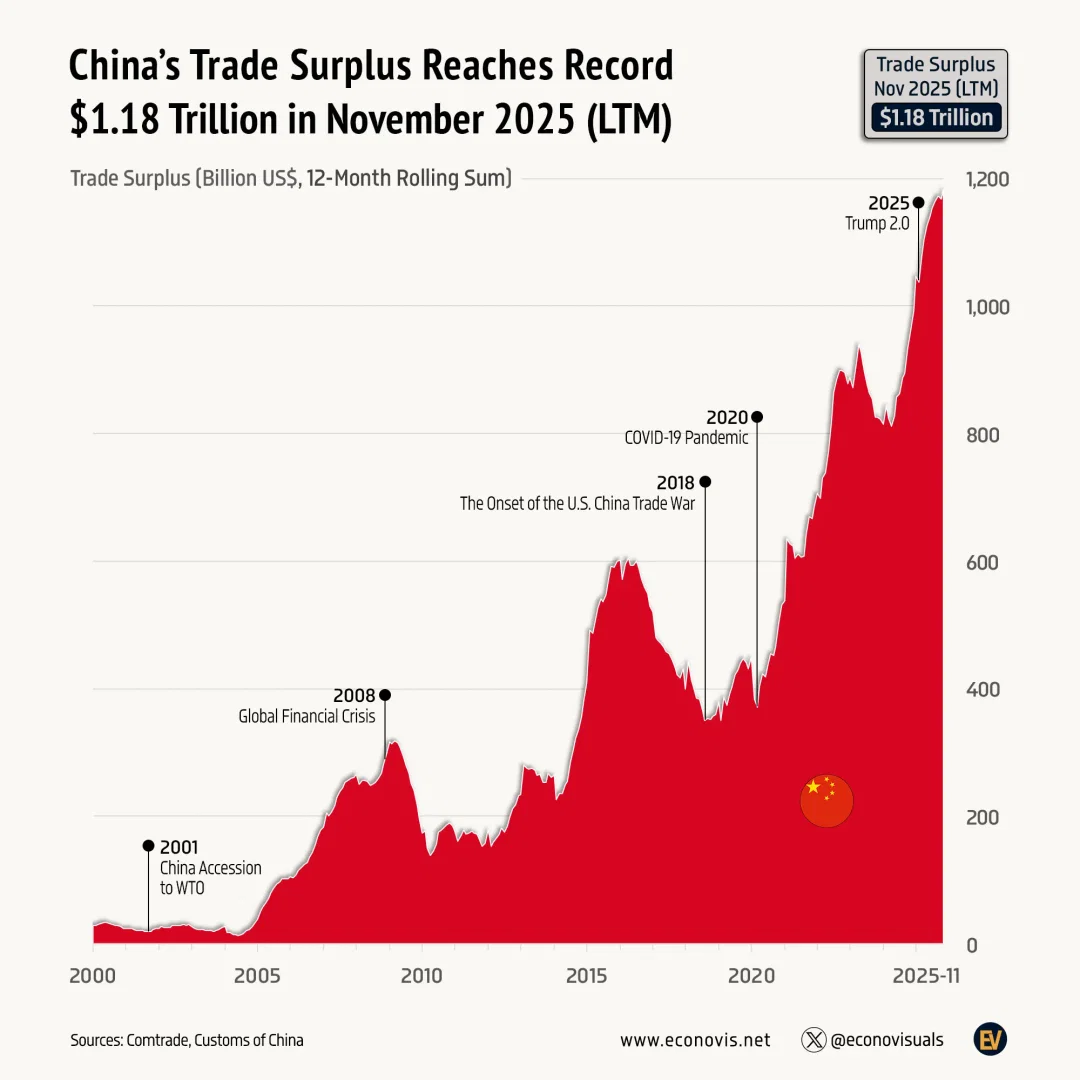
Outside the US, China’s trade position has never been stronger. Its trade surplus in goods rose to a record $1.19 trillion last year and is on pace to meet or exceed that total in 2026, with substantial export gains in non-US markets and in advanced industries like electronic vehicles. China also remains the world’s top manufacturing nation and the largest producer and exporter of intermediate goods – both by large margins. Chinese firms have ramped up both sales to and outbound investment in third-country production hubs facing lower US tariffs. Overall, Chinese exporters responded to new trade barriers not by shrinking but simply going around them.

China’s state capitalist economic model is also unchanged and may have been further entrenched by the US’s confrontational approach. In 2021, Beijing responded to US tariffs with a five-year plan that doubled down on industrial policy and technological self-reliance. According to the US-China Business Council, Beijing’s latest (15th) plan “suggests that industrial policy is no longer just one policy area among many but rather an organizing logic for the whole economy.”
Today, policymakers in Europe and elsewhere worry aloud about a destabilizing wave of Chinese exports – a “China Shock 2.0” – fueled by massive Chinese subsidies. State-owned enterprises, meanwhile, continue to play a large role in China’s economy and trade. Per the Peterson Institute, companies with full or substantial government ownership still accounted for 60% of the combined market value of China’s top 100 listed firms. American farm export targets in the most recent US-China trade deal perversely depend on state-owned Sinograin and COFCO.
American policy has proven ineffective – if not counterproductive – in other ways, too. Following the shock of US tariffs and export restrictions during Trump’s first term, Beijing worked to reduce its vulnerability to economic pressure from Washington and to develop asymmetric countermeasures should US coercion reemerge. This deepened Beijing’s involvement in China’s economy, led Chinese companies to look inward for technology and innovation, and gave the CCP new leverage – most notably over the rare earth minerals that US firms depend on – in bilateral talks. The moves help to explain why the 2018 wave of US tariffs produced a “Phase One” deal that (superficially, at least) favored Washington, while Trump’s second-term escalation has produced a stalemate.
Today, the US-China détente has, along with other Trump tariffs on non-China goods, so narrowed the gap between tariffs on Chinese imports and those on China alternative nations that some supply chains are now moving back into China. German firms are boosting their China investments while cutting US outlays. India has engaged with China after years of tension. And polls find China is viewed more favorably than the US in numerous countries for the first time.
American export controls and sanctions have also proven leaky. Research firm Epoch AI estimated that by the end of 2025 hundreds of thousands of Nvidia’s advanced artificial intelligence chips had reached China in violation of US export controls. Washington has relented on advanced chip sales to China, but no one there is buying because US restrictions prodded Chinese chipmakers to build passable alternatives. American firms, the Brookings Institute concluded in June, are now “shut out of the high end of the world’s largest chip market.”
These US policy failures don’t mean that China is an unstoppable hegemon in waiting. Beijing has set its lowest growth target in decades. Chinese technology still lags behind in certain advanced manufacturing industries, including top-end semiconductors. And the Chinese economy faces long-term headwinds – pervasive capital misallocation, sub-frontier productivity, smothering debt, and a rapidly aging population – that no amount of exports can fix.
But that’s very much the point. The problems in China’s economy are owed to factors beyond Washington’s control, and US trade restrictions since 2018 have done little to alter China’s trajectory while imposing a significant cost on American companies and consumers.
After eight years of failed unilateralism, Trump officials still don’t seem to understand that Washington can’t fundamentally change how the Chinese government organizes its economy, and that it’s better to focus US government efforts on a narrow set of real Chinese threats, on deepening non-China alliances, and on fixing American economic competitiveness across a range of issue areas.
Dramatic changes to Chinese policy must come from Chinese officials. Washington unfortunately keeps giving them reasons not to change.




 Mexico
 Canada
 China
China