
Navigation
Install the app
How to install the app on iOS
Follow along with the video below to see how to install our site as a web app on your home screen.
Note: This feature may not be available in some browsers.
More options
Style variation
You are using an out of date browser. It may not display this or other websites correctly.
You should upgrade or use an alternative browser.
You should upgrade or use an alternative browser.
Tree Plantation in Pakistan
- Thread starter ghazi52
- Start date
More options
Who Replied?

ghazi52
THINK TANK: CONSULTANT

- Thread starter
- #107
How Thar Foundation and IUCN Pakistan are turning Thar into a model of sustainability
Tree planting, saline farming and wildlife conservation are transforming Tharparkar into a thriving green landscape.Publishing Partner
October 30, 2025
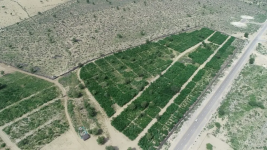
In Tharparkar, a land often associated with scorching heat and scarce rainfall, a quiet miracle is taking root. Over the past few years, it has become home to one of Pakistan’s most ambitious community-driven biodiversity conservation efforts, led by Thar Foundation and IUCN Pakistan.
Their collaboration spanning over a million tree plantations, the protection of critically endangered bird and plant species, enhancement of rangeland ecology, saline agriculture and environmental education for local communities is reshaping the desert’s story for both environmental sustainability and community wellbeing.
These initiatives took centre stage at the IUCN World Conservation Congress 2025 in Abu Dhabi, the world’s largest event dedicated to nature conservation, where the IUCN and Thar Foundation’s model of community-driven environmental action in Thar drew international attention.
Taking Thar’s story to the world
At the Congress, IUCN Pakistan hosted a dedicated pavilion session to present the country’s biodiversity conservation success stories. The session showcased the Upscaling Green Pakistan Programme, innovative community-led ecotourism initiatives, efforts to strengthen coastal resilience, biodiversity conservation and the implementation of a gender action plan in environmental management.
Among the speakers was Amir Iqbal, CEO of Sindh Engro Coal Mining Company (SECMC) and Thar Foundation, who highlighted the Million Tree Plantation, saline agriculture projects, and vulture and flora conservation initiatives that are restoring ecological balance in Thar.
Amir shared, “Our biodiversity conservation projects with IUCN in Thar align closely with the broader national agenda. These projects show that sustainability has always been at the core of our business strategy. It strengthens our social licence to operate and reinforces our commitment to responsible growth.”
ghazi52
THINK TANK: CONSULTANT
- Thread starter
- #108
A forest that tells the story of Thar’s resilience
In Thar’s arid landscape, where rainfall is scarce and temperatures often exceed 45°C, even maintaining a small garden is a challenge. Yet Thar Foundation set out to achieve a bold goal: the Thar Million Tree Programme.
Under this initiative, more than 1.2 million trees have been planted across Tharparkar to combat desertification and transform a 100-acre stretch of barren land into a thriving forest using the Miyawaki technique. Native species such as Roheero (Tecomella) and Kandi (Prosopis) were selected for their resilience in desert conditions.
A 2022 IUCN study found that these trees have already absorbed over 123,000 tonnes of carbon. With a survival rate of 72 per cent, the forest stands as a living symbol of endurance and renewal.
“This project is special because it reflects the resilience of Thar’s people. When nurtured well, just like these trees, they thrive and turn what once seemed impossible into reality,” said Amir, reflecting on the programme’s success.
To sustain this green cover, drip irrigation and saline water utilisation techniques have been deployed, showing how technology and indigenous knowledge can come together to transform life in the desert.
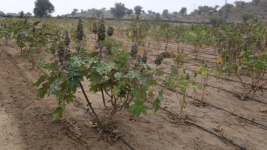
Native species such as Roheero (Tecomella) and Kandi (Prosopis) were selected for their resilience in desert conditions.
An agricultural revolution against all odds
Frequent drought cycles in Thar create a domino effect for communities that depend on rainwater for growing fodder and crops. To counter this, Thar Foundation and IUCN have introduced saline agriculture, an innovative method of cultivating salt-tolerant crops that offers new hope and livelihoods to local farmers.
“We had no idea that crops could grow using saline water,” said 33-year-old farmer Manzoor Das. “The SECMC and Thar Foundation teams guided us and encouraged us to try it. Now we are seeing real results.”
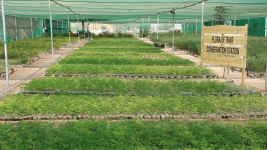
To sustain this green cover, drip irrigation and saline water utilisation techniques have been deployed.
In Thar’s arid landscape, where rainfall is scarce and temperatures often exceed 45°C, even maintaining a small garden is a challenge. Yet Thar Foundation set out to achieve a bold goal: the Thar Million Tree Programme.
Under this initiative, more than 1.2 million trees have been planted across Tharparkar to combat desertification and transform a 100-acre stretch of barren land into a thriving forest using the Miyawaki technique. Native species such as Roheero (Tecomella) and Kandi (Prosopis) were selected for their resilience in desert conditions.
A 2022 IUCN study found that these trees have already absorbed over 123,000 tonnes of carbon. With a survival rate of 72 per cent, the forest stands as a living symbol of endurance and renewal.
“This project is special because it reflects the resilience of Thar’s people. When nurtured well, just like these trees, they thrive and turn what once seemed impossible into reality,” said Amir, reflecting on the programme’s success.
To sustain this green cover, drip irrigation and saline water utilisation techniques have been deployed, showing how technology and indigenous knowledge can come together to transform life in the desert.
Native species such as Roheero (Tecomella) and Kandi (Prosopis) were selected for their resilience in desert conditions.
An agricultural revolution against all odds
Frequent drought cycles in Thar create a domino effect for communities that depend on rainwater for growing fodder and crops. To counter this, Thar Foundation and IUCN have introduced saline agriculture, an innovative method of cultivating salt-tolerant crops that offers new hope and livelihoods to local farmers.
“We had no idea that crops could grow using saline water,” said 33-year-old farmer Manzoor Das. “The SECMC and Thar Foundation teams guided us and encouraged us to try it. Now we are seeing real results.”
To sustain this green cover, drip irrigation and saline water utilisation techniques have been deployed.
ghazi52
THINK TANK: CONSULTANT
- Thread starter
- #109
Conserving biodiversity for future generations
Biodiversity loss is often invisible until it is too late. In Thar, however, some of the most visible guardians of nature are its birds, particularly vultures. When vulture populations collapsed across South Asia due to toxic veterinary drugs, Thar became one of their last remaining safe havens.
In 2018, Thar Foundation and IUCN launched a vulture conservation project to protect nesting sites and raise awareness among nearby communities. Through extensive engagement, they identified and safeguarded 250 nests, installed artificial nesting platforms and involved 15,000 residents across 48 villages. More than 2,000 young people were trained on the ecological importance of vultures.
Thanks to these sustained efforts, Thar is now recognised as a Vulture Safe Zone, with its vulture population recovering and making it a rare conservation success story in Pakistan.
The IUCN-SECMC partnership continues to build on over four years of work, including a comprehensive ecological baseline survey of Tharparkar’s flora and fauna. The survey documented 149 plant species, including two globally threatened trees, the Indian Bdellium and Desert Teak. Many of these native species provide essential ecosystem services that sustain both wildlife and local livelihoods.
“The Thar flora includes some of the most unique and threatened plant species in the world, including those listed on the IUCN Red List,” said Mahmood Akhtar Cheema, Country Representative, IUCN Pakistan. “The collaboration between IUCN and Thar Foundation is not only contributing to local ecological resilience but also advancing global biodiversity goals.”
Building on these findings, Thar Foundation and IUCN established Pakistan’s first Flora Conservation Station in Thar, a sanctuary for native plant species and a hub for ecological research. Managed on ground by Baanhn Beli, the facility reflects a long-term commitment to conservation and community-led ecosystem management.
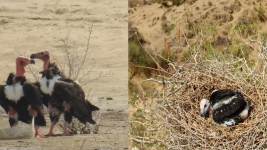
In 2018, Thar Foundation and IUCN launched a vulture conservation project to protect nesting sites and raise awareness among nearby communities.
Biodiversity loss is often invisible until it is too late. In Thar, however, some of the most visible guardians of nature are its birds, particularly vultures. When vulture populations collapsed across South Asia due to toxic veterinary drugs, Thar became one of their last remaining safe havens.
In 2018, Thar Foundation and IUCN launched a vulture conservation project to protect nesting sites and raise awareness among nearby communities. Through extensive engagement, they identified and safeguarded 250 nests, installed artificial nesting platforms and involved 15,000 residents across 48 villages. More than 2,000 young people were trained on the ecological importance of vultures.
Thanks to these sustained efforts, Thar is now recognised as a Vulture Safe Zone, with its vulture population recovering and making it a rare conservation success story in Pakistan.
The IUCN-SECMC partnership continues to build on over four years of work, including a comprehensive ecological baseline survey of Tharparkar’s flora and fauna. The survey documented 149 plant species, including two globally threatened trees, the Indian Bdellium and Desert Teak. Many of these native species provide essential ecosystem services that sustain both wildlife and local livelihoods.
“The Thar flora includes some of the most unique and threatened plant species in the world, including those listed on the IUCN Red List,” said Mahmood Akhtar Cheema, Country Representative, IUCN Pakistan. “The collaboration between IUCN and Thar Foundation is not only contributing to local ecological resilience but also advancing global biodiversity goals.”
Building on these findings, Thar Foundation and IUCN established Pakistan’s first Flora Conservation Station in Thar, a sanctuary for native plant species and a hub for ecological research. Managed on ground by Baanhn Beli, the facility reflects a long-term commitment to conservation and community-led ecosystem management.
In 2018, Thar Foundation and IUCN launched a vulture conservation project to protect nesting sites and raise awareness among nearby communities.
ghazi52
THINK TANK: CONSULTANT
- Thread starter
- #111
Punjab grants arrest powers to forest department under new amendment
Changes aim to target illegal logging, forest fires, encroachments, timber smuggling
Asif Mehmood
December 22, 2025
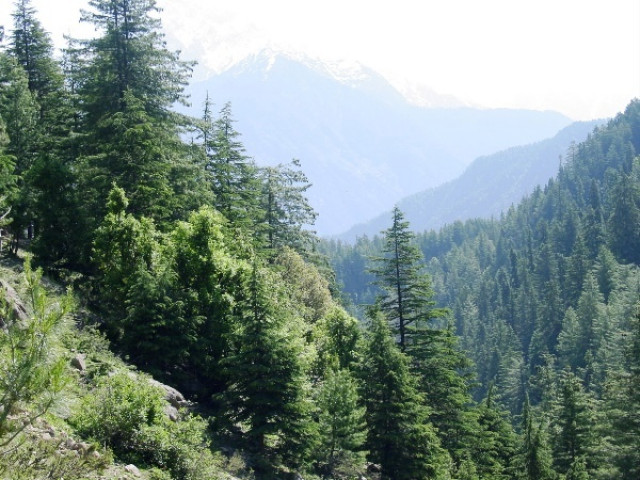
Punjab has amended the Forest (Amendment) Act 2025 on Monday, aiming to take stricter action against illegal logging, forest fires, encroachments and timber smuggling. The law has not been amended in 10 years, originally enacted during the British era.
Under the new law, those involved in illegal tree cutting, setting forests on fire, occupying forest land or transporting timber illegally can face imprisonment from three to eight years, along with fines ranging from Rs1 million to Rs5 million. In cases of organised forest crime, the law also allows longer jail terms, heavier fines and confiscation of vehicles and machinery used in the offence.
With the enforcement of the Act, the Punjab Forest Department has been given the status of a force and powers similar to the police. Forest officers can now arrest suspects, conduct investigations, carry out searches and register FIRs. Authorities say this step is aimed at ensuring quick action and better enforcement of forest laws.
The Act also provides for the establishment of Forest Protection Centres across the province. These centres will monitor forest areas, investigate offences and support legal action. Each centre will be headed by a forest officer and provided with official vehicles, uniforms and required equipment. The post of Director General of Forests has also been created to supervise forest protection activities at the provincial level.
Punjab Director General Forests Azfar Zia said the new law allows forest officers to directly register cases related to illegal logging, encroachment, arson and illegal transportation of timber, and to submit cases to courts after completing investigations.
Earlier, he said, the department had to depend on other agencies for legal proceedings.
Illegal tree cutting, unauthorised use of forest land and the establishment of sawmills or timber depots in reserved forests are punishable with three to seven years in prison and fines of up to Rs5 million, according to the new amendments. Similar offences in protected forests carry penalties of up to five years’ imprisonment and fines of up to Rs1 million.
Organised forest crimes, including large-scale illegal logging, smuggling, encroachments, attacks on forest staff and damage to government property, carry a minimum punishment of eight years in prison and fines above Rs1 million.
Major forest offences, including arson, illegal logging, encroachment and illegal transportation of timber, have been declared non-bailable and cognisable. The law also provides for special courts to ensure speedy trials and strict implementation of punishments.

Meengla
Elite Member
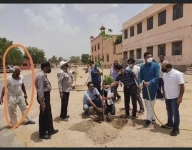
There are many such success stories where citizens have taken upon themselves to help restore Pakistan's environment, with or without any govt help. The mangroves restorations in Pakistan's coastline alone is a a major achievement and you'd see the poor locals have been informed enough to protect the mangroves because they know the significance.
ghazi52
THINK TANK: CONSULTANT
- Thread starter
- #114
Pakistan achieves 68pc target of planting trees under Green Pakistan Programme
NEWS WIREISLAMABAD - Pakistan has successfully achieved 68 percent of its tree plantation target under the government’s flagship initiative, the “Upscaling Green Pakistan Programme” which aims at combating climate change, enhancing forest cover and restoring degraded ecosystems across the country.
According to official documents available with Wealth Pakistan, the Ministry of Climate Change and Environmental Coordination, in collaboration with provincial governments, planted more than 2.22974 billion saplings between 2019 and December 2024, against the overall target of 3.29 billion saplings by 2028.
Sindh emerged as the top-performing province by planting 856.01 million saplings, achieving 85 percent of its set target. Khyber Pakhtunkhwa (KP) followed with 713.25 million plantations, while Punjab contributed 364.79 million, achieving 77 percent of its goal. Azad Jammu & Kashmir (AJK) planted 177.05 million, and Gilgit-Baltistan (GB) accounted for 94.10 million plantations. In Balochistan, 24.55 million saplings were planted during the review period.
The programme’s annual progress breakdown includes 492.03 million saplings in 2019, 595.37 million in 2020, 766.50 million in 2021, 233.41 million in 2022, and 125.99 million in 2023. A senior ministry official told Wealth Pakistan that Pakistan loses nearly 11,000 hectares of forest land annually due to wildfires, climate change, and land conversion.
To address this alarming trend, the government has coupled plantation drives with several structural and policy interventions. An interprovincial coordination committee was constituted to curb illegal logging and regulate inter-provincial timber movement.
The committee regularly highlights challenges faced by the forestry sector and issues recommendations for compliance. In line with Prime Minister Shehbaz Sharif’s directives, the ministry has also developed Standard Operating Procedures (SOPs) on forest fire management in coordination with all provinces, AJK, and GB. Forest fire monitoring data is now systematically collected and reviewed at the national level.
Additionally, an early warning system prototype has been installed in two valleys of KP and is currently in the testing phase. The Federal Forestry Board has also been revived to address deforestation challenges and ensure alignment with the National Forest Policy 2017.
Moreover, provinces have updated their forestry-related laws and policies, including the Punjab Forestry Policy 2019, Sindh Sustainable Forest Management (SFM) Policy 2023 (Amended), KP Forest Ordinance 2002, KP Protected Forest Management Rules 2005, Balochistan Forest Act 2022, GB Forest Act 2019, GB Forest Force Rules 2020, GB Wildlife Biodiversity Areas Act 2021 and AJK Forest Regulations (Amendment) Act 2017.
Users who are viewing this thread
Total: 1 (members: 0, guests: 1)
Pakistan Defence Latest
-

-

-
Pakistan nears $1.5 billion deal to supply weapons, jets to Sudan, sources say (1 Viewer)
- Latest: LHA4210
-
-

Country Watch Latest
-

-
 Chinese Aircraft Carriers - Liaoning, Shandong, Fujian and the future (6 Viewers)
- Latest: Beijingwalker
-
-

Latest Posts
-
-

-
-
India Emerges as key diesel supplier to Turkiye amid Russia Middle East disruptions (13 Viewers)
- Latest: indo17787
-
 BREAKING NEWS: Erdogan raises Kashmir issue at UNGA; calls for resolution as per UN resolutions (14 Viewers)
- Latest: Thinking_Hard