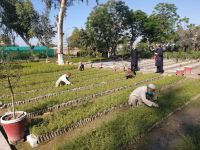
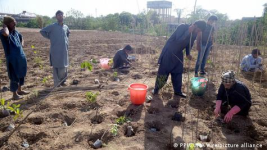
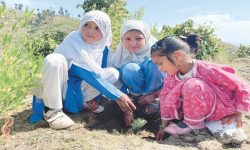
Tree Plantation in Pakistan

Pakistan introduces first-ever cannabis regulatory policy to curb misuse, boost economy​


Policy envisages regulated plant cultivation, derivatives manufacturing for medicinal, industrial use

ZAFAR BHUTTA
January 20, 2026


tribune


ISLAMABAD: The federal cabinet has approved the National Cannabis Control and Regulatory Policy, 2025, to curb the misuse of cannabis and market manipulation.

The cabinet had earlier formed a high-level committee to examine the proposed policy while keeping in view the international best practices.

The Cabinet Division recalled that the cannabis regulatory policy had been placed before the cabinet for consideration in its meeting on June 17, 2025. Following a review, the cabinet constituted a committee, in terms of Rule 17(3) of the Rules of Business, 1973, with the defence minister being the convener, to evaluate the policy document.

The Cabinet Division apprised the cabinet in a recent meeting, chaired by Prime Minister Shehbaz Sharif, that the committee held two meetings, headed by the defence minister, and thoroughly examined the draft policy in line with the terms of reference. First meeting was held on August 5, 2025 and the second on October 13, 2025.
 

THE LOST FORESTS OF SINDH

It is estimated that Sindh has lost nearly 80pc of its forest cover since Pakistan came into being, much of it in the last 30 years.

Zuhaib Ahmed Pirzada
February 1, 2026

1770128056878.png

MANUFACTURING HEAT

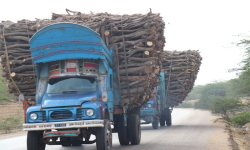
A truck loaded with freshly cut wood thunders past. Then another. Then another. All of them are headed towards Karachi with engines roaring, and timber stacked high and loose. Tree varieties of neem, babul and keekarr are all piled atop this truck. Their trunks look thick enough to have been standing for decades.

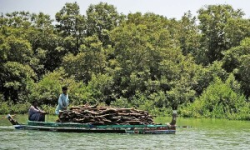
The trucks passing the rabrri seller’s stall are not an anomaly. They form a steady, visible supply chain running from lower Sindh into Karachi. Each one of these trucks carries with it more than wood. These trucks carry away shade from roads such as this one in Makli, cover from fields and riverbanks across Sindh, the homes of various local animals and birds, and the natural setting that gives rise to flora and fauna.

Near the Thatta-Karachi bypass, a rabrri [a condensed milk-based dessert] seller in his late thirties stands behind his roadside stall as sweat carves clean lines through the dust on his face. There are no trees nearby, no shade. There is only the open road and the sun beating straight down.

The rabrri seller speaks about what Makli (located near Thatta in Sindh) used to be like two decades ago. “Even summers felt different then,” he says. In those days, thick trees lined the road, holding back the heat. Some evenings even brought a light drizzle, settling the dust and softening the air.
 
A HISTORY OF DESTRUCTION

When the British annexed Sindh in 1843, the Indus riverine forests were among the first landscapes to be surveyed, mapped and claimed. Timber from babul and keekarr fed railway expansion, cantonments and canal construction.

Forests ceased to be living systems and became inventories. Large stretches of riverine forests were cleared to serve colonial infrastructure and revenue needs as floodplains were also regulated.

In 1932, the Sukkur Barrage diverted water, thus reducing inundations and riverine regeneration. After Partition, the same logic persisted, as Pakistan inherited colonial forest laws. In 1947, the Sindh Forest Department inherited and managed 269,511 hectares of reserved forests and 24,369 hectares of protected forests, mainly riverine forests along the Indus floodplains. These figures marked the baseline for productive cover in the province, with dense stands of babul, keekarr and other species regenerating naturally through annual inundations.

Since then, the nominal area of riverine forests has stayed roughly stable on official records at 241,198 hectares, as per the Sindh Forest Department, reflecting a modest nominal decline of about 28,313 hectares from the 1947 reserved figure.

Yet, the effective loss is much steeper due to degradation, encroachment, illegal felling and reduced freshwater flows from barrages. Estimates indicate that up to 80 per cent of riverine forests have been destroyed or heavily degraded.
 
1770128387419.png

World Wide Fund for Nature-Pakistan (WWF-P) said conserving forests is not just an environmental imperative but a social and economic necessity.

This year’s theme — ‘Forests and Food’ — emphasises forests’ critical role in supporting food security, improving local livelihoods, and conserving biodiversity.

The organisation said Pakistan is a forest-poor country, with only five per cent of the total area under forests. “Since most of the area falls in arid and semi-arid regions, low precipitation naturally deters the growth of forests.”

On International Day of Forests, WWF-P urges govt, civil society and local communities to take collective action to protect wooded areas

“Thousands of hectares of forest are destroyed yearly, making way for various human activities. The rising population, coupled with poverty and lack of awareness, has led to illegal and unsustainable logging, overharvesting of wood for fuel and charcoal, and increased small-scale farming that continues to reduce the forest cover of Pakistan,” the organisation said.

It further said that protecting the forests in Pakistan requires a multi-faceted approach that brings together government institutes, conservation organisations, and local communities on one platform. “WWF-Pakistan underscored the urgent need to protect and restore the country’s forests, which serve as a lifeline for biodiversity, support local livelihoods, and maintain the health of ecosystems.”
 

500,000-tree plantation drive kicks off in Margalla Hills​


The campaign is in line with Punjab CM’s ‘Green Punjab’ vision

Web Desk
February 17, 2026

tribune


A comprehensive spring tree plantation drive has been launched to preserve and restore the natural ecosystem of the Margalla Hills region. The initiative sets a target of planting 500,000 saplings during 2026, reinforcing the commitment to environmental sustainability and ecological rehabilitation.

In line with Punjab Chief Minister Maryam Nawaz’s ‘Green Punjab’ vision and the broader ‘Plant for Pakistan’ initiative, the large-scale plantation campaign focuses on restoring forest areas adversely affected by stone crushing activities and environmental degradation.

The initiative is a collaborative effort of Faisal Town Group, the Punjab government and the Punjab Forest Department.

Environmental experts stress that structured afforestation efforts of this magnitude are essential to combat rising pollution levels, smog, biodiversity loss and the escalating impacts of climate change.


The plantation drive was formally launched at Faisal Hills and witnessed participation from representatives of public and private sector institutions, environmental stakeholders, students, and local residents. Hundreds of saplings were planted in designated areas as part of a forest restoration plan for the region.

The group’s director, Chaudhry Zohair Majeed, said that the policy of planting one tree for every kanal developed by Faisal Town Group was embedded within the Vision 2040 framework as a measurable sustainability commitment. “Our expansion strategy is consciously linked with environmental accountability, ensuring that each phase of development contributes to mass forestation and structured green infrastructure planning,” he added.

Chief Conservator of Forests Iftikharul Hassan Farooqi said that partnerships with responsible corporate entities such as Faisal Town Group are instrumental in translating the ‘Green Punjab’ vision into practical implementation, particularly in rehabilitating affected forest areas of the Margalla Hills.

Moazzam Majeed stressed that beyond plantation targets, Faisal Town Group is implementing structured monitoring mechanisms to ensure the survival, growth, and maintenance of newly planted trees. He added that dedicated environmental management teams will oversee plantation zones, protection measures, and long-term green area development across projects. He further said that sustainability is not a one-day campaign but an operational commitment embedded into execution, compliance, and future expansion planning.

Campaign participants pledged to continue the plantation drive in the coming months alongside protection, monitoring, and maintenance measures to ensure the long-term survival of trees.
 

CM Bugti launches tree plantation drive

The Newspaper's Staff Correspondent
February 17, 2026

QUETTA: Balochistan Chief Minister Sarfraz Bugti has formally launched the Spring Tree Plantation Campaign 2026 by planting a sapling at the Chief Minister’s Secretariat.

The initiative marks the beginning of a province-wide plantation drive aimed at increasing green cover and tackling the growing threats of climate change in Balochistan. The ceremony was attended by provincial ministers, members of the Balochistan Assembly, and senior government officials.
 
MULTAN, Feb 16 (APP): The Cantonment Board Multan on Monday launched a weekly tree plantation campaign aimed at promoting a cleaner and greener environment for residents and raising awareness about ECO-friendly practices.
The campaign, initiated on the directives of Cantonment Executive Officer Sardar Atif Sultan will continue till February 19,2026.

The initiative involves students,civil society members,local residents and environmentally conscious citizens who are participating in plantation activities and awareness programs.

As part of the campaign,walks,workshops and community activities were being organized to encourage participation across all age groups and to educate residents about the benefits of greenery and proper plant care.

The campaign aims to distribute up to 10,000 plants to maximize community involvement and enhance urban greenery.
Sardar Atif Sultan urged residents to actively participate by planting and protecting trees,stressing that sustained public cooperation was essential to transform Multan Cantt into an environmentally friendly and healthy urban community.
 
According to official documents available with Wealth Pakistan, the Ministry of Climate Change and Environmental Coordination, in collaboration with provincial governments, planted more than 2.22974 billion saplings between 2019 and December 2024, against the overall target of 3.29 billion saplings by 2028.

Sindh emerged as the top-performing province by planting 856.01 million saplings, achieving 85 percent of its set target. Khyber Pakhtunkhwa (KP) followed with 713.25 million plantations, while Punjab contributed 364.79 million, achieving 77 percent of its goal. Azad Jammu & Kashmir (AJK) planted 177.05 million, and Gilgit-Baltistan (GB) accounted for 94.10 million plantations. In Balochistan, 24.55 million saplings were planted during the review period.

The program’s annual progress breakdown includes 492.03 million saplings in 2019, 595.37 million in 2020, 766.50 million in 2021, 233.41 million in 2022, and 125.99 million in 2023.

A senior Ministry official told Wealth Pakistan that Pakistan loses nearly 11,000 hectares of forest land annually due to wildfires, climate change, and land conversion. To address this alarming trend, the government has coupled plantation drives with several structural and policy interventions.
 

CDA seeks 45,000 saplings after felling 30,000 trees in Islamabad

Jamal Shahid
March 6, 2026

1772798802451.png

CDA workers plant saplings on a green belt at Shakarparian in Islamabad on January 9. — Dawn/File

ISLAMABAD: The Capital Development Authority (CDA) has requested the Ministry of Climate Change to provide saplings to compensate for the 30,000 fully grown trees chopped in the federal capital.

In a letter to the ministry, the director environment of the CDA provided a list of indigenous trees the civic body requires for the spring plantation drive. The authority has requested 45,000 saplings of species including Arjan, Kachnar, Amaltas, Jacaranda, Tecoma, Siris (Shreen) and Phulai.

The request was made for the provision of plants for the spring tree plantation campaign as replacements for paper mulberry trees across Islamabad, which the authority described as an invasive species.

A number of trees were cut in the H-8 area where a park is being upgraded, while the cutting of decades-old trees also took place in Chak Shahzad for the construction of a dual carriageway for the CDA-DHA housing society. WWF-Pakistan field assessments and documentation provided evidence of the scale and impact of these operations, showing that not all tree removal was limited to paper mulberry or driven solely by public health concerns related to pollen and allergies. The findings underscored the need for structured, transparent and science-driven urban tree management.
 

Over 1m saplings planted in a single day as ‘Ehsaas Shajar’ drive kicks off in KP

Dawn Report
March 24, 2026

1774352729106.png

Students plant a sapling in Agror Tanawal Forest Division, Mansehra. — Dawn

PESHAWAR: The Khyber Pakhtunkhwa government on Monday planted over one million saplings simultaneously at over 250 locations across the province as it kicked off the ‘Ehsaas Shajar’ campaign.

Chief Minister Mohammad Sohail Afridi opened the drive by planting a sapling at the KP House in Islamabad, under the Clean and Green Pakistan vision of former prime minister Imran Khan, according to a statement issued from the chief minister’s secretariat.

Speaking on the occasion, Mr Afridi reaffirmed the provincial government’s commitment to environmental protection, climate resilience, and safeguarding the future of the coming generations through sustained and practical interventions.

The chief minister emphasised that in light of escalating environmental challenges, promotion and protection of forests had become imperative, leaving no room for complacency.

CM says his govt committed to environmental protection, climate resilience

He termed the initiative a historic and record-setting plantation drive, noting that a target of one million saplings had been set at the government level within a single day, alongside strong public participation across the province.
 

Non-native trees threaten local biodiversity​


Experts warn foreign species may harm local ecosystems despite rapid urban greening benefits

Asif Mehmood
March 25, 2026

tribune


LAHORE: For several decades, large numbers of non-native trees and plants have been planted in urban afforestation projects and new housing societies in Lahore. However, botanists argue that while these trees may provide rapid greenery in urban environments, they can also have a negative impact on local biodiversity and the ecological balance.

Over the years, various non-native species have been planted along Lahore’s roads, in parks, green belts, and private housing societies. Prominent among these are conocarpus, eucalyptus, paper mulberry, mesquite, lantana, and bottlebrush.

These trees can be found in parks such as Jilani Park, Gulshan-e-Iqbal Park, and Model Town Park, as well as along major roads. In areas like Gulberg and Model Town, Australian species such as gum and bottlebrush trees are common, while along Canal Road and in Defence, fast-growing species originating from South America have been planted in large numbers.

According to a report by the Urban Unit, an urban planning organisation, many of the trees and plants introduced in Lahore originate from other countries and were not historically part of the local ecosystem.
 
Read More: Govt proposes optional multi-tariff system for industries

Professor Dr Abdul Rehman Khan Niazi of the Institute of Botany at the University of Punjab states that trees such as eucalyptus can affect groundwater levels, while the pollen of paper mulberry has been linked to an increase in allergy cases in urban areas. “Aquatic plants like water hyacinth can also pose risks to native aquatic life, as they spread rapidly across water surfaces and create problems for other organisms.

Species such as vilayati kikar, lantana, and other non-native plants are spreading rapidly across different parts of the country,” said Dr Niazi.
 
Research studies also highlight this issue. A study conducted by researchers at the University of Education Lahore identified 14 non-native and invasive plant species in surveys carried out between 2015 and 2017 across different areas of the city.

Of these, eight species originated from the United States, three from Europe, and one each from China, Australia, and Mexico. Experts estimate that around 700 foreign plant species have been recorded in Pakistan, many of which are classified as invasive.
 

Users who are viewing this thread

Pakistan Defence Latest

Back
Top