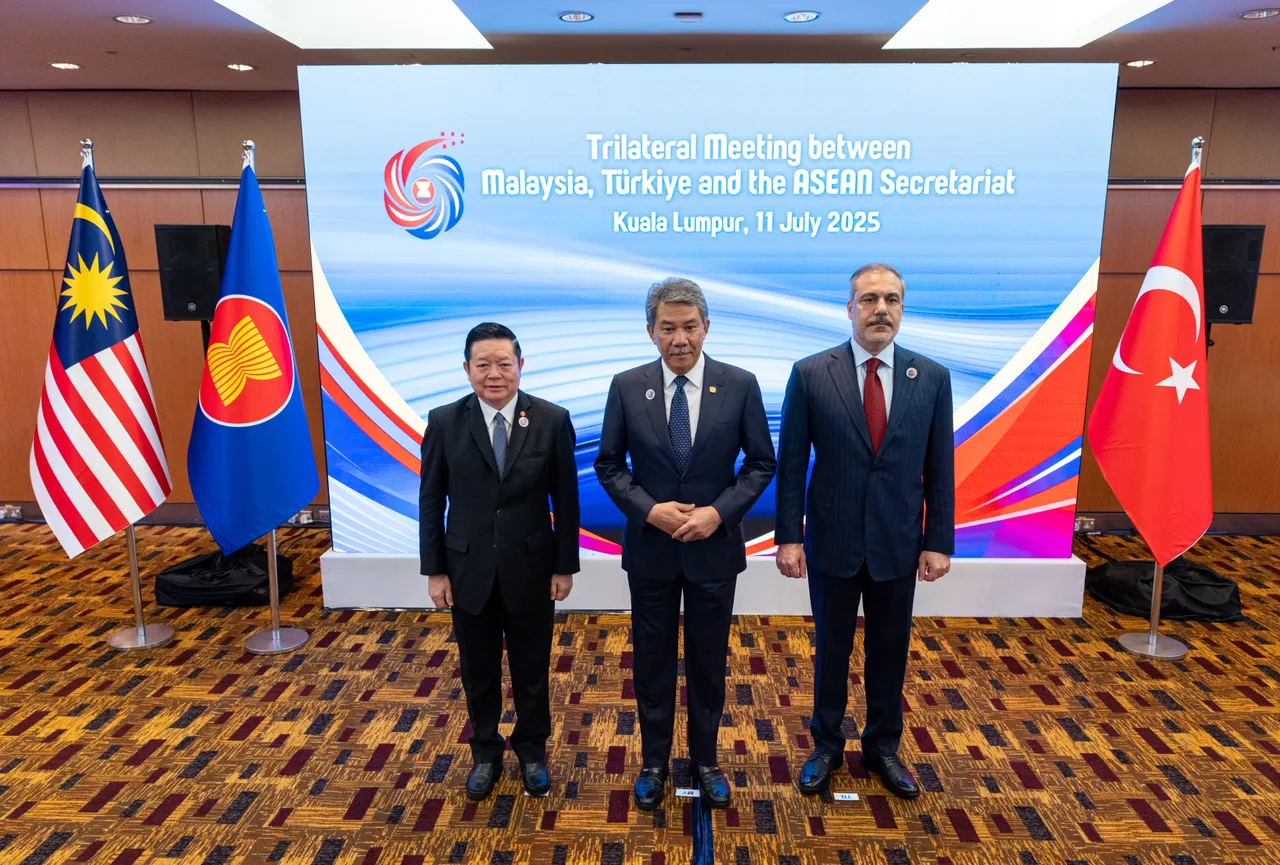
Turkey Said to Seek Membership of Saudi-Pakistan Defense Pact

So if Saudis were this fond of Turkey, why not have a strategic pact with turkey rather than Pakistan?? There is a reason why Saudis got independence from the Ottomon Empire !:LOL:

Once again, IT IS BAD IDEA TO GET TURKEY INVOLVED IN THIS SPECIALLY IF THE SAUDIS DO NOT WANT TURKEY IN THIS.
What are you blabbering about? Arabia was never a part of the Ottoman Empire. Nor any Saudi (prior to 1932) states. The only part was Hejaz which was ruled by local Hejazi Hashemites (Sharifs of Makkah) that had ruled Hejaz for 500 years prior to the Ottomans.


The Ottoman presence was limited to a few military garrisons and a few bureaucrats. Otherwise there was full autonomy.

When the Ottoman Empire was declining and faced several internal uprisings (Albania, Balkans, Levant, Mesopotamia, Anatolia itself (Young Turks etc.), the Hashemites rebelled as well (Arab Revolt). Afterwards when that occurred, the House of Saud invaded the Hashemite-ruled independent Kingdom of Hejaz. Later the rulers were forced to flee and were compensated/got to rule the short-lived kingdom of Syria, Jordan (a new entity carved out of mostly historical Hejaz) and the Kingdom of Iraq (ended with the revolution in 1958).

The only direct House of Saud and Ottoman (this dynasty is no longer relevant or ruling since 100 + years ago - the head of state of this family was born in Syria and most of their few descendants today have either married with Arabs or Europeans https://en.wikipedia.org/wiki/Osmanoğlu_family )

was the Ottoman-Saudi war 200 + years ago and that was mostly with Albanian-ruled Egypt (Muhammad Ali Dynasty).


Even the Makkawi/Jordanian Hashemites have intermarried with the Ottoman family directly.


Some Arabs and Turks are trying to create enmity based on two dynastic rivalries (during a limited time frame) to paint modern day relations with this nonsense, while the actual families involved have intermarried with each other long after those events, lol. One could not make it up.


Nobody, sane at least, cares about any of this today. Just like so sane Arab is complaining that Arabs lost the Calipahte to the Ottomans in 1517 after almost 1000 years of rule.

KSA by virtue of its size (by far largest country in the region) wealth (by far richest country in terms of natural and mineral wealth in the region - 3rd richest in the world - only 4 times larger US and 8 times larger Russia is richer), historical (heirs of Rashidun, Umayyad, Abbasid, Fatimid etc. Caliphates), cultural, linguistic, religious (Makkah and Madinah), ethnic etc., economic size (by far largest Arab economy) will be looked at and most likely (regime) looks at itself as the key Arab state and the one that determines most of the policies. Hence in point KSA upping the ante against the satanic Abu Dhabi policies and throwing them out of Yemen within 5 days, and now going to deal with them in Sudan, Somalia and elsewhere.

Turkey too see itself as a regional power and that does not necessary mean that this in itself is a challenge. It might see itself more as a power/leader in the Turkic world.

That can all be complimentary.

Besides today's power lies in economics mostly.

KSA and Turkey positions realign mostly in the region and the relationship is quietly but quickly growing into a strategic one.

There should be no room for any stupid enmity.

I know where you are coming from but honestly Saudi's, turks and iran are too arrogant to consider Pakistan as some sort of bridge. The only reason they are in this game is due to the uncertain stategic times which whole region is facing. And these countries fear their survival is at stake.
Nonsense. Is that why KSA has been bankrolling Pakistan (military that rules the country since 1947) since forever and came to Pakistan's aid during the nuclear weapons program and afterwards during the crippling sanctions against Pakistan later to forgive the loans to Pakistan in the early 2000's? Who has given refugee and has been hosting the largest Pakistani diaspora in the world since the 1960's?

To view this content we will need your consent to set third party cookies.
For more detailed information, see our cookies page.


And we all know that it is an open secret that KSA has access to nuclear weapons courtesy of Pakistan and its nuclear program that we were a key founding partner of.

To view this content we will need your consent to set third party cookies.
For more detailed information, see our cookies page.


Pakistan is widely regarded as the most powerful Muslim military power in KSA. If that is arrogance to you, so be it.
 
Last edited:
This begs the question, what would be the general public and GOI stance against Saudi Arabia when there is another war between India and Pakistan and Saudi Arabia as per the defense pact fully backs Pakistan financially, materially and even militarily. Would the public cry for BDS against Saudi Arabia as they did with Turkey, calling for complete boycott of Turkey and what about GOI, will it cancel and terminate all dealings with Saudi Arabia especially the FDI. Would the public demand all the expat indians working in SA return home immediately. Just speculating what the consequences would be.
India will lick Saudi boots whatever Saudi does. Some stupid ones will curse Saudi on twitter and be expelled with their families. Hopefully they will have saved up enough for half of a h1b by then.
 
India will lick Saudi boots whatever Saudi does. Some stupid ones will curse Saudi on twitter and be expelled with their families. Hopefully they will have saved up enough for half of a h1b by then.
India cannot afford to become an open enemy of Arabs as they rely on Arab oil and gas + economic cooperation. Not to mention their expat communities. Nor can they afford to piss off 250 + million Indian Muslims.

India is not capable of invading Pakistan any way. At most we will see a repeat of past border skirmishes. The nukes is what saves Pakistan from the demographic and economic disparity with India and that is the real lifeline of Pakistan.

My feeling is also that the US and other powers do not want to see 1 powerful South Asian entity emerging (in other words India will not be allowed to annex or invade any neighbors by China, Russia, USA etc.), same way their policies have always been in the Arab world. They prefer division and as many entities as possible.

They are trying to do the same in Europe by destroying the EU.

This is what empires have always been doing historically.

And this is what Abu Dhabi and the Zionists are doing in the region currently. Which has put every relevant entity in the region on the same page to combat that before it reaches our own borders.
 
Everyone is interested in shaping the world in their own image.. hence yes everyone wants hegemony
No. That’s a western pov. China never gave a damn what foreigners did. China doesn’t have the messianic need to force other cultures to adopt its ways.

Also China doesn’t really believe or want other countries to copy its system.
It doesn’t want competition.
 
what is going on boys. Are Saudis ok with it ? Saudi and Turks dont get along due to Ottomon history and distrust.
All the differences remain...but the global order(and even alliances) are shifting.
- US is increasingly trying to take a back seat of sorts when it comes to defending Europe, Japan, and others...either due to a change in narrative(at home and in political circles). A narrative of America first..and why should the Americans pay for defending other countries ...and those other countries need to do more/spend more for their defense. Or perhaps it due to the economic pressures with US debt at an all time high to the point that just the interest payment alone is now greater than the defense budget...or perhaps both of these reasons combined.

So if the US not going to be the guaranteed security provider for NATO(the relationship with Turkey has already been at an all time low among the NATO members)...nor for middle eastern countries like KSA(given factors like Israeli pressure/lobbying)...
...both of these countries feel the need to make moves...to chart their own path in a way...that provides them security...and this might mean putting aside(or ignoring) their differences just enough..when it comes to defense/survival.

The Israeli attacks on Syria, Palestine have been ongoing for decades. Then Iraq and Libya fell and are mere shells of their former selves. Through Syria and Iraq ...this opened up the way for Israel to extend its reach all the way to Iran..and we recently saw how Israel struck Iran with impunity...
...Then strikes occurred even in Qatar...which had been throwing billions at western powers for decades to win powerful allies. No one predicted that Qatar would come under fire...Qatar assumed it was safe by giving billions to major western powers..and yet it found itself alone with just some lip service of its supposed allies.

This should've been the wake up call. It would require lots of work for Pakistan/KSA to make their defense pact a reality...and even more so if a third country like Turkey is to get involved in the mix...given that all 3 have been using equipment of various origins... different training, probably not much interoperability...and so on.
...but all 3 have different strengths that they bring to the table ...and if they get it just right...they could effectively checkmate any threat.

My personal opinion would be for these countries to stop at just these 3...adding any more would create more problems than it would solve.
...and all 3 together work on developing nuclear subs and ICBMs(as well as SLBMs)..a joint project. This way Pakistan can continue to have ownership of the nukes(warheads)...and yet still be able to provide a nuclear umbrella to both Turkey and KSA..using boomers from anywhere in the world. This would at least get a credible nuclear deterrence in place for Turkey and KSA.
 
Last edited:
I know where you are coming from but honestly Saudi's, turks and iran are too arrogant to consider Pakistan as some sort of bridge. The only reason they are in this game is due to the uncertain stategic times which whole region is facing. And these countries fear their survival is at stake.
I believe that last year Netanyahu and Trump have made almost all Islamic countries feel the importance of unity, especially Saudi Arabia, Iran and Türkiye, the three most important Islamic countries. In this situation, there will be no more foolishness or arrogance. When they choose to shake hands with Pakistan, they should understand that they have chosen a bridge of communication for each other. I am optimistic about the renewed unity of the Islamic world.
 
Given the machinations going on in the region, KSA and Turkey feel there is an active "encirclement" threat against them and this is one of the reasons the two countries are converging. Very interesting observations to say the least:

To view this content we will need your consent to set third party cookies.
For more detailed information, see our cookies page.
 
Also see this, specifically the part about how Turkey perceives Pakistan, which means closer alignment between Turkey, KSA and Pakistan is very attainable in tangible areas (beyond just words):


Türkiye's growing footprint and rising strategic clarity in the Indo-Pacific
From the Eastern Mediterranean to the heart of maritime Southeast Asia, Türkiye is now a vital player across diplomatic, economic and defence sectors.

Share
Türkiye's growing footprint and rising strategic clarity in the Indo-Pacific
Türkiye’s engagement with the Indo-Pacific region is best understood as an extension of the Asia Anew Initiative. / TRT World

January 6, 2026
For much of the past decade, the Indo-Pacific has been portrayed as a distant geopolitical theatre, primarily shaped by the rivalry between the US and China.

However, from Ankara’s perspective, the region is neither remote nor theoretical.

Türkiye’s growing diplomatic, economic and defence presence in South and Southeast Asia indicates an emerging reality. Türkiye is already an Indo-Pacific actor in practice, even if it has not yet defined itself as such.

This growing engagement is not the result of a single grand strategy or formal doctrine. Instead, it has emerged organically through a complex network of bilateral relationships, defence partnerships, trade diversification and people-to-people connections, particularly with Pakistan, Malaysia and Indonesia.

Collectively, these relationships demonstrate a subtle yet significant expansion of Türkiye’s strategic geography, extending from the Eastern Mediterranean to the heart of the maritime Southeast Asian region.

As Türkiye's presence in the Indo-Pacific region grows, a new opportunity is emerging: the development of a Türkiye-centric interpretation of the region's importance to Ankara and the region.

While major actors such as the US, the European Union, Japan, India and ASEAN have already established their own Indo-Pacific frameworks, Türkiye's clear definition of its own boundaries would allow it to translate its growing engagement into strategic clarity.
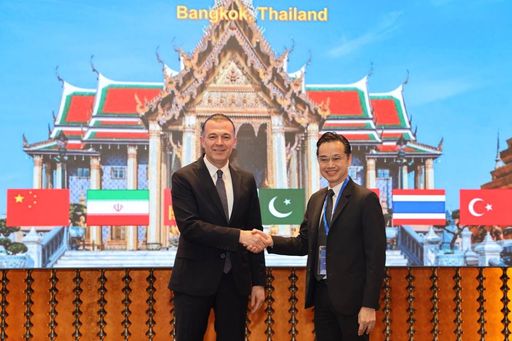

RELATEDTRT World - Türkiye scores historic win as TUA chief elected to lead Asia-Pacific Space Council
Rather than starting from scratch, Türkiye is well-positioned to shape its own narrative of the region, one that is grounded in existing partnerships, connectivity, and strategic autonomy.

This would reinforce its role as a purposeful and self-defining actor in the region.

An emerging Indo-Pacific reality

Türkiye’s engagement with the Indo-Pacific region is best understood as an extension of the Asia Anew Initiative, launched in 2019 to recalibrate Ankara’s approach to the rapidly changing global economic landscape.

This initiative was never intended to be a narrow regional pivot.

Rather, it was designed as a multidimensional opening spanning diplomacy, trade, logistics, investment, science, higher education and cultural exchange, aimed at enhancing Türkiye’s strategic autonomy in an increasingly multipolar world.

Since then, Türkiye’s engagement with Asia has deepened in both scope and substance.

President Recep Tayyip Erdogan’s tour of Malaysia, Indonesia and Pakistan in February 2025, which resulted in 48 bilateral agreements, was emblematic of this momentum.

These agreements covered defence, energy, finance, education, health, and culture, reflecting institutionalised cooperation rather than mere symbolic outreach.

Considered as a whole, Türkiye’s relationships with Pakistan, Malaysia and Indonesia demonstrate how its presence in the Indo-Pacific region has evolved through action rather than rhetoric.

Pakistan is Türkiye’s western anchor in the Indo-Pacific region.

A relationship long characterised by political goodwill, it has acquired strategic depth through defence-industrial cooperation.

The MILGEM Corvette Project is widely cited as a leading example of South–South naval collaboration and has demonstrated Türkiye’s capacity for technology transfer and joint shipbuilding.

Pakistan’s adoption of Turkish unmanned aerial systems further strengthens their shared path of military modernisation. Analysts are increasingly pointing to Pakistan as a potential future partner in Türkiye’s fifth-generation KAAN fighter programme, particularly in light ofIndonesia’s significant acquisition.

Beyond defence, Pakistan’s involvement in the China–Pakistan Economic Corridor could provide Türkiye with indirect logistical and strategic access to the Indian Ocean, which is often overlooked in discussions about Ankara’s presence in the Indo-Pacific region.


Malaysia adds an ideological and economic dimension to this emerging arc.

RELATEDTRT World - Turkiye deepens security footprints in Southeast Asia with defence deals and partnerships
The political synergy between President Erdogan and Malaysian Prime Minister Anwar Ibrahim reflects a shared emphasis on multipolarity, global justice and strategic autonomy, an alignment that has been widely discussed in scholarship on Muslim middle-power diplomacy.

Cooperation between Türkiye and Malaysia has also expanded into areas such as Islamic finance, the halal economy, cybersecurity, energy and media, establishing both countries as influential players in shaping the region's norms and economy.

Indonesia represents the geostrategic centre of gravity in Türkiye’s engagement with the Indo-Pacific region.

As the largest economy in ASEAN and a pivotal maritime actor, Indonesia provides Türkiye with scale, reach and regional legitimacy.

In 2025, a historic defence package was agreed, including the sale of 48 KAAN fighter jets and the joint production of Bayraktar TB3 and Akinci UCAVs, marking Türkiye’s most significant defence industrial breakthrough in Southeast Asia to date.

Together, Pakistan, Malaysia and Indonesia demonstrate Türkiye's substantial relevance in the Indo-Pacific region.

Rather than entering the region as an outsider, Ankara is already embedded within its strategic, economic and security networks.

Filling the gaps in Türkiye's Indo-Pacific picture

As Türkiye’s engagement with the Indo-Pacific region continues to grow, the next logical step is for Ankara to articulate its own perspective on the region.
This is not an attempt to correct an absence, but a natural evolution of an already active policy.

The term 'Indo-Pacific' is not a neutral geographical label, but rather a political construct shaped by power, identity and strategic intent.

The way in which the region is defined influences who sets agendas, who shapes norms, and which actors are seen as central.

In this regard, most major players have already turned practice into a concept.

The US views the Indo-Pacific in terms of strategic competition with China. India emphasises its role as a leading Indian Ocean power.

The European Union is approaching the region through connectivity and normative influence.

Importantly, ASEAN has also articulated its own outlook on the Indo-Pacific, which is grounded in inclusivity, openness, and ASEAN centrality.

NATO has described it as a 'greater alignment line'.

Meanwhile, Türkiye has pursued a different path, deepening its engagement with the Indo-Pacific region first and developing a conceptual framework for it later.

This distinctive trajectory is increasingly emphasised in academic analyses: Even though it refrains from adopting a fixed regional label, Ankara already operates as an Indo-Pacific stakeholder through diplomacy, trade, and defence cooperation.

This diplomacy has enabled Türkiye to establish partnerships independently of externally defined strategic narratives.

At the same time, articulating a clearer Indo-Pacific vocabulary would enable Türkiye to translate operational momentum into strategic clarity.

While Asia Anew Initiative provides Ankara with a versatile policy toolbox, a Türkiye-centric Indo-Pacific concept would offer a shared framework through which partners, scholars and policymakers could better understand the scope and logic of Türkiye’s engagement.

Rather than limiting options, such a framework would reinforce Türkiye's capacity to present itself as a middle power that defines its own role in the Indo-Pacific.

Toward a Turkish Indo-Pacific map

As Türkiye’s involvement in the Indo-Pacific region grows, it is becoming increasingly important for Ankara to articulate its own regional understanding to consolidate its position as a rule-shaping middle power.

A Türkiye-centric concept of the Indo-Pacific enables Ankara to reflect its unique geography, interests, and strategic culture, thereby transforming growing engagement into strategic clarity.

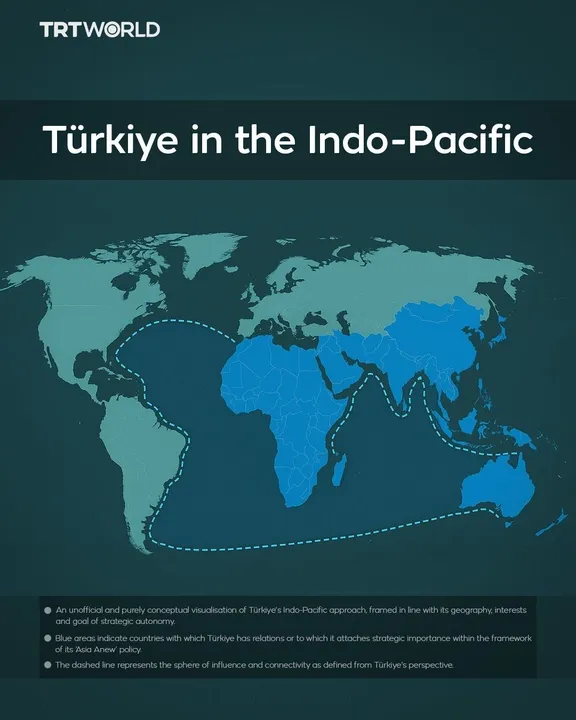
Taking inspiration from ASEAN's inclusive outlook, Türkiye's vision of the Indo-Pacific can be understood as an interconnected network of maritime and economic spaces stretching from the eastern coast of Africa across the Indian Ocean and Southeast Asia to the western and central Pacific.

Türkiye in the Indo-Pacific

Türkiye in the Indo-Pacific
In this definition, the Indo-Pacific is not viewed as a military frontier, but rather as a corridor of connectivity where sea lanes, trade networks, energy routes and political and economic interactions converge.

Boundaries do not depict military deployments or alliance lines. Instead, they highlight the geoeconomic and geopolitical space in which Türkiye is already active through diplomacy, trade, defence-industrial cooperation, logistics and connectivity initiatives.

The highlighted countries are neither allies nor adversaries.

Instead, they represent different levels of engagement within Türkiye’s flexible foreign policy framework: strategic partners, significant stakeholders, competitors and situational partners.

This approach reflects Ankara’s broader middle-power strategy, which prioritises adaptability, inclusivity and issue-based cooperation over rigid bloc alignment.

This conceptual map also does not position Türkiye within an anti-China bloc or extend NATO’s strategic frontiers.

Instead, it signals a commitment to inclusivity, autonomy, and multidimensional engagement. It tells the region, and the world, that Türkiye views itself as part of the Indo-Pacific network rather than an external power taking sides.

For a country that has long defined itself as both European and Asian, and as both Mediterranean and Black Sea, creating its own Indo-Pacific sphere of influence represents a logical progression.

It is the next logical step in Türkiye’s evolving foreign policy, acknowledging the existing realities on the ground.

Most Indo-Pacific frameworks developed by the US, Japan, India, the EU and NATO tend to exclude Africa, as they are primarily security-focused constructs centred on military balance and strategic competition in the Indian and Pacific Oceans.

In these approaches, Africa is treated as a geographical boundary rather than a strategic connector.

However, Türkiye includes Africa in its understanding of the Indo-Pacific because it is connectivity-based, centred on maritime trade routes, energy corridors, logistics networks, and diplomatic engagement that link the Mediterranean, Red Sea, Indian Ocean, and Pacific.

This reflects Türkiye's view of the Indo-Pacific as an interconnected belt of cooperation rather than a closed security bloc.

In an era when regions are defined not just by geography, but also by ideas, those who fail to create their own maps risk being confined by someone else's.

Türkiye’s engagement with the Indo-Pacific region is already a reality. Giving it a name, a framework, and a map would simply make that reality visible.
 
China stands for “regional affairs run by the region itself”: Latin America should speak for the Americas, not Washington alone; Southeast Asia belongs to ASEAN, the Middle East to the Arab League. These bodies should be granted a formal veto—through a future Charter amendment—on draft resolutions that concern their own neighborhoods, while the privileges of the permanent five are steadily diluted.
Tomorrow’s world money will be anchored to gold, silver and a basket of real goods, issued as a digital BRICS currency now under pilot testing; no single national currency will serve as global reserve. Two-thousandths of every international trade transaction could be remitted to a “Peace and Development Fund” once the General Assembly adopts the requisite budget resolution, financing the UN’s regular operations.
In the Middle East, peacekeeping would be a joint operation: the Arab League supplies the troops—predominantly Muslim—under a UN mandate, with both councils sharing cost, command and oversight.
Beijing will not ally with any single state; it partners only with regional organizations, folding ASEAN, the African Union, the Arab League and others into a “shared-destiny” framework that keeps the Global South from splintering into rival blocs.
 
took one guy year to bring it on the brink of collapse lmao , if any of you wondered , how did ancient empires collapse this is how , all it take is one retard to **** it up

Not the thread but it wasn't this guy. He's a result of the systematic erasure of the American middle class and their de-education by the unfettered Capitalistic pursuit of wealth and power concentration. It started at the end of the gilded age. Textbook fall of a power.
 
WRT to what's going on and about to happen in the region, as war looms over Iran which will have impact on Pakistan, I think its high time that all three countries KSA/Pakistan/Turkiye finalize this PACT asap.
 

Pakistan, Saudi Arabia and Turkiye have prepared a draft defence agreement after nearly a year of talks, Defence Production Minister Raza Hayat Harraj confirmed on Wednesday.

His confirmation follows a statement by the Turkish foreign minister about the potential deal earlier today.

Harraj told Reuters the potential deal between the three countries was separate from a bilateral Saudi-Pakistani accord announced last year.

A final consensus between the three states is needed to complete the deal, he said.

“The Pakistan-Saudi Arabia-Turkey trilateral agreement is something that is already in pipeline,” Harraj said in an interview.

“The draft agreement is already available with us. The draft agreement is already with Saudi Arabia. The draft agreement is already available with Turkey. And all three countries are deliberating. And this agreement has been there for the last 10 months.”

Asked at a press conference in Istanbul earlier today about media reports on negotiations between the three sides, Turkish Foreign Minister Hakan Fidan said talks had been held but that no agreement had been signed.

Fidan pointed to a need for broader regional cooperation and trust to overcome distrust, which he said created “cracks and problems” that led to the emergence of external hegemonies or wars and instability stemming from terrorism, in the region.

“At the end of all of these, we have a proposal like this: all regional nations must come together to create a cooperation platform on the issue of security,” Fidan said.

Regional issues could be resolved if relevant countries would “be sure of each other,” he added.

“At the moment, there are meetings, talks, but we have not signed any agreement. Our President (Tayyip Erdogan)’s vision is for an inclusive platform that creates wider, bigger cooperation and stability,” Fidan said, without naming Pakistan or Saudi Arabia directly.

Bloomberg, citing people familiar with the matter, reported last week that Turkiye was seeking to join the Pak-Saudi defence pact signed in September 2025.

The report said Turkiye viewed the pact “as a way of strengthening security and deterrents when there are questions over the reliability of the US, which has strong military ties with all three countries, and President Donald Trump’s commitment” to the North Atlantic Treaty Organisation (Nato).


Saudi Arabia brings financial clout, Pakistan has nuclear capability, ballistic missiles and manpower, while Turkiye has the military experience and has developed a defence industry, Bloomberg quoted Nihat Ali Ozcan, a strategist with Ankara-based think tank TEPAV, as saying.

Asked about reports of Istanbul eyeing such a pact, Defence Production Minister Raza Hayat Harraj told BBC Urdu: “From a strategic point of view, Turkiye, China, Saudi Arabia and Azerbaijan are close friendly countries of Pakistan, and there is a close relationship with them in terms of strategic policy.”

Prime Minister Shehbaz Sharif and Saudi Crown Prince Mohammed bin Salman had signed a “Strategic Mutual Defence Agreement” in Riyadh, pledging that any attack on either nation would be treated as an act of aggression against both.
 
Turkey plans to launch over 100 satellites in the coming 5 years through Fergani Space

Pakistan is also launching satellites and plans 54 units

between Turkey and Pakistan by 2035 they can both have over 150+ military satellites

satellites are the eye and ears of modern warfare

without satellites you are fighting blind and at the mercy of the aggressor

Turkey and Pakistan must build up their satellites constellations as soon as possible
 

Users who are viewing this thread

Back
Top