Turkish Air Force | News & Discussions

Turkish BAYKAR did it before American BOEING

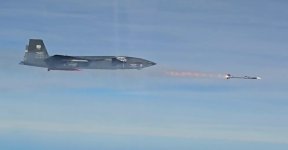
The MQ-28 Ghost Bat Unmanned Combat Aircraft, developed in collaboration with the US and Australia, is scheduled to launch the AIM-120 AMRAAM BVR air-to-air Missile in December 2025. The Boeing team says this will be a world first


-----------------------------

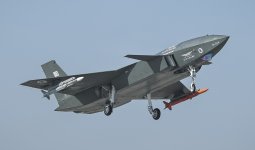
KIZILELMA has shot down an air target with GOKDOGAN air-to-air BVR missile, using its own MURAD-100A AESA Radar.


Commander of the Turkish Air Force
I thank those who developed the technologies that will make the Turkish Air Force much more advanced than its rivals and a force to be feared
To view this content we will need your consent to set third party cookies.
For more detailed information, see our cookies page.

1764496966348.jpeg
1764496692238.jpeg

Unmanned stealth Fighter Jets in NATO
USA , Turkiye

AESA Radars in NATO
USA , Turkiye , The UK , France , Italy

BVR Missiles in NATO
USA , Turkiye , France
 
Last edited:
Looking back, the significance of the Ozgur project can really not be overstated, every breakthrough goes back to the Ozgur project. Ozgur led to Kizilelma Murad radar, Akinci Murad, Ozgur led to KAAN, Ozgur allowed for compatibility/integration of munitions, Ozgur allowed for the integration of all the sensors from EOTS to the future IRST, Ozgur allowed for integration of domestic electronic warfare suites. It allowed for even exports of subsystems to upgrade foreign aircraft like the Su-25 Lachin upgrades. Turkey is now capable of building the electronics suite from the ground up of entire aircrafts and upgrade foreign systems.

Engines are the last domain left, and the lynchpin in every project.
 
@MMM-E Radiator man has a new friend. lol

To view this content we will need your consent to set third party cookies.
For more detailed information, see our cookies page.
 
Engines are the last domain left, and the lynchpin in every project.
You're soooo wrong about that. The last remaining domain isn't the engine, it's the chip and processor.

The real downside of our late entry into the engine business is that it prevented us from entering the chip manufacturing business.

That's why it's crucial to close the engine file as soon as possible so we can allocate resources to chip manufacturing.
 
Last edited:
You're soooo wrong about that. The last remaining domain isn't the engine, it's the chip and processor.

The real downside of our late entry into the engine business is that it prevented us from entering the chip manufacturing business.

That's why it's crucial to close the engine file as soon as possible so we can allocate resources to chip manufacturing.

You can get dual use chips from elsewhere, the chips part is not that significant b/c you don't need bleeding edge nodes. Most defense products use reliable older chips. Of course AI chips are a different matter but those Turkey would have difficultly being self sufficient b/c no one on the planet is self sufficient there.

South Korea has chips but no engine, many places have chips but no engine. The engine is the real element.
 
South Korea has chips but no engine, many places have chips but no engine. The engine is the real element.

We can buy chips from Taiwan , USA , S.Korea , The Netharlands , Malaysia
but We can not buy Engine anywhere

If our TF-35,000 engine was ready now, at least if we could supply F-110 engines from the US without any problems, We could start KAAN production in 2027-2028, and even the first block of KAAN would be superior to all 4.5 gen Fighter Jets


------------------------

btw , Turkiye actually has the infrastructure for chips through our Semiconductor Technologies Research Laboratory (YITAL) since 1983 . we have this competence in Turkiye at 65 nanometers

TUBITAK BILGEM established a Chip production Facility in 2024
The YONCA project will enable Türkiye to produce 16 nm chips for the first time, to produce critical chips below 7 nm in the future.
1764738126694.png
1764739701661.png

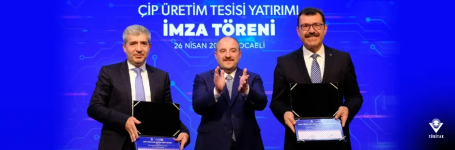
Türkiye boosts local chip production with $5 billion investment led by TUBITAK-BILGEM , ASELSAN and YONGATEK

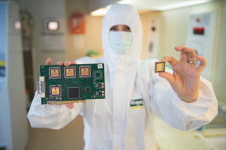
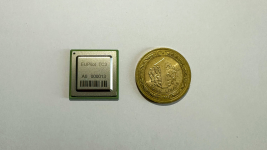
and the 65 nm CAKIL processor supports various defense applications such as Radars , Drones , fire and flight control , Guidance Systems

for example , ASELSAN has developed AESA Radar technology, from chip-level production to final system integration ... ( 100% indigenous )

( We can produce the CAKIL microprocessor in Malaysia which is brotherly country to Turkiye )
 
We can buy chips from Taiwan , USA , S.Korea , The Netharlands , Malaysia
but We can not buy Engine anywhere.
You're both wrong about this @MMM-E and @hyperman

There's no backdoor in engines, but there can be in chips! We can't be 100% certain that chips we don't produce are reliable. Therefore, it's imperative that we be able to produce chips for use in military systems at all costs. The 16nm chip production facility we've invested in needs to be operational as soon as possible.

Meanwhile, Malaysia's economy is actually driven by the Chinese. So don't rely too much on their "brotherhood." The more you trust the "Saudi brotherhood," the more you can trust them.
 
The 16nm chip production facility we've invested in needs to be operational as soon as possible.

We will produce 16nm chip before than the TF-35.000 turbofan Engine
and we are waiting for F-110 Engine instead of chips

16 months ago,the first test chip produced in the European Pilot project in association with TÜBİTAK BİLGEM using 12nm technology
1764751329254.png

------------------------

btw Malaysia is not S.Arabia ( Arabs have historical complex towards the Turks )

The cost of the most advanced chip manufacturing facility is minimum $3 billion ( max $10 billion ) therefore We produced the CAKIL microprocessor in Malaysia

and now Turkiye builds its own facilities to produce chips at 16 nm
the final target is chips below 7nm in the coming years


soon We will solve the problem of external dependency on chips
but the TF-35.000 turbofan Engine will be final element to become real military power in aviation industry as like USA , Russia , China
 
Last edited:
You're both wrong about this @MMM-E and @hyperman

There's no backdoor in engines, but there can be in chips! We can't be 100% certain that chips we don't produce are reliable. Therefore, it's imperative that we be able to produce chips for use in military systems at all costs. The 16nm chip production facility we've invested in needs to be operational as soon as possible.

Meanwhile, Malaysia's economy is actually driven by the Chinese. So don't rely too much on their "brotherhood." The more you trust the "Saudi brotherhood," the more you can trust them.

Most defense products you see Russia and frankly any country, the chips are imported usually from FABs in Asia. Its not possible to own the entire supply chain of chips from the minerals down to the end product, I've looked into this. The Design software(EDA tools) comes from the US, the Lithography machines to makes the chips only 2 countries have(Netherlands(EUV/DUV) and Japan(DUV)) the fabs are in Taiwan, Korea. The Materials to use in the fabs come from Japan, the HBM memory is supplied by the koreans.

No one is sovereign in chip making(atleast inhouse i.e. everything built in one country), not even the US. The US supply chains are only secure b/c every node/chokepoint(outside of the raw minerals) is in a friendly country whose industry they built up over decades after ww2. China is attempting to become the first to do it all inhouse and for lower level chips they are capable of doing this, but not at the highest level.

Turkey can build chips inhouse as well, but the difference with the chip and the engine is that you can design the engine and mine the minerals to build the alloys to make the engine, and control essentially the whole process internally. You cannot do this with chips. Turkey is just not big enough of an economy to do that all without reliance from the outside, infact outside of the US and China no one is even theoretically capable.

They can't stop Turkey from building an engine, they can stop turkey from building chips, either by not supplying the subcomponents or tampering with a subcomponent if they had to.

Its good that Turkey is build the FABs to manufacture lower level nodes, but even those fabs are reliant on supply from the outside. So we are back at the same problem, its just a matter of degrees of the problem. The good news is that with Chips, Dual use is a big element and these chips are everywhere and really impossible to try to embargo, b/c they are available for commercial products and civilian markets.
 
Most defense products you see Russia and frankly any country, the chips are imported usually from FABs in Asia. Its not possible to own the entire supply chain of chips from the minerals down to the end product, I've looked into this. The Design software(EDA tools) comes from the US, the Lithography machines to makes the chips only 2 countries have(Netherlands(EUV/DUV) and Japan(DUV)) the fabs are in Taiwan, Korea. The Materials to use in the fabs come from Japan, the HBM memory is supplied by the koreans.

No one is sovereign in chip making(atleast inhouse i.e. everything built in one country), not even the US. The US supply chains are only secure b/c every node/chokepoint(outside of the raw minerals) is in a friendly country whose industry they built up over decades after ww2. China is attempting to become the first to do it all inhouse and for lower level chips they are capable of doing this, but not at the highest level.

Turkey can build chips inhouse as well, but the difference with the chip and the engine is that you can design the engine and mine the minerals to build the alloys to make the engine, and control essentially the whole process internally. You cannot do this with chips. Turkey is just not big enough of an economy to do that all without reliance from the outside, infact outside of the US and China no one is even theoretically capable.

They can't stop Turkey from building an engine, they can stop turkey from building chips, either by not supplying the subcomponents or tampering with a subcomponent if they had to.

Its good that Turkey is build the FABs to manufacture lower level nodes, but even those fabs are reliant on supply from the outside. So we are back at the same problem, its just a matter of degrees of the problem. The good news is that with Chips, Dual use is a big element and these chips are everywhere and really impossible to try to embargo, b/c they are available for commercial products and civilian markets.
I do not think chips are that important either. If chips were truly such a significant issue, why is NATO's arch enemy, Russia, still engaged in mass production of weapons?

I consider this to be a crucial matter, but the production of engines is what is truly important. There are billions of electronic products available in the commercial market that one can purchase solely to extract the chips.

Interestingly, this is precisely what Russia is undertaking. It is nearly impossible to prohibit or control this activity.
 
I do not think chips are that important either. If chips were truly such a significant issue, why is NATO's arch enemy, Russia, still engaged in mass production of weapons?

I consider this to be a crucial matter, but the production of engines is what is truly important. There are billions of electronic products available in the commercial market that one can purchase solely to extract the chips.

Interestingly, this is precisely what Russia is undertaking. It is nearly impossible to prohibit or control this activity.
They have production of their own chips, old fashioned but suitable enough for most of the military applications.
 
They have production of their own chips, old fashioned but suitable enough for most of the military applications.
I think they're doing both. Russia's import of white goods skyrocketed for a reason.


Where does Russia get its chips?

There are 3 main ways how Russia will get its microchips:

1 Domestic Production

2 Regular Imports

3 Unorthodox methods, such as getting chips from consumer products and appliances.
 
I think they're doing both. Russia's import of white goods skyrocketed for a reason.


Where does Russia get its chips?

There are 3 main ways how Russia will get its microchips:

1 Domestic Production

2 Regular Imports

3 Unorthodox methods, such as getting chips from consumer products and appliances.

They have some old chips they produce, but most their chips as you said is via sanctions busting, buying off the commercial market in other countries and from china to be more specific. Its good to be able to build your own chips somewhat, but its impossible to have the entire ecosystem in the country, just too vast of a matter.
 

Users who are viewing this thread

Country Watch Latest

Back
Top