EU deals add to customs union debate
The European Union signed bilateral free trade agreements with the Mercosur bloc—Argentina, Brazil, Paraguay, and Uruguay—and with India earlier this year to secure broader access to those markets, raising concerns in Türkiye, as such deals can create structural disadvantages under the current design of the Türkiye–EU Customs Union.
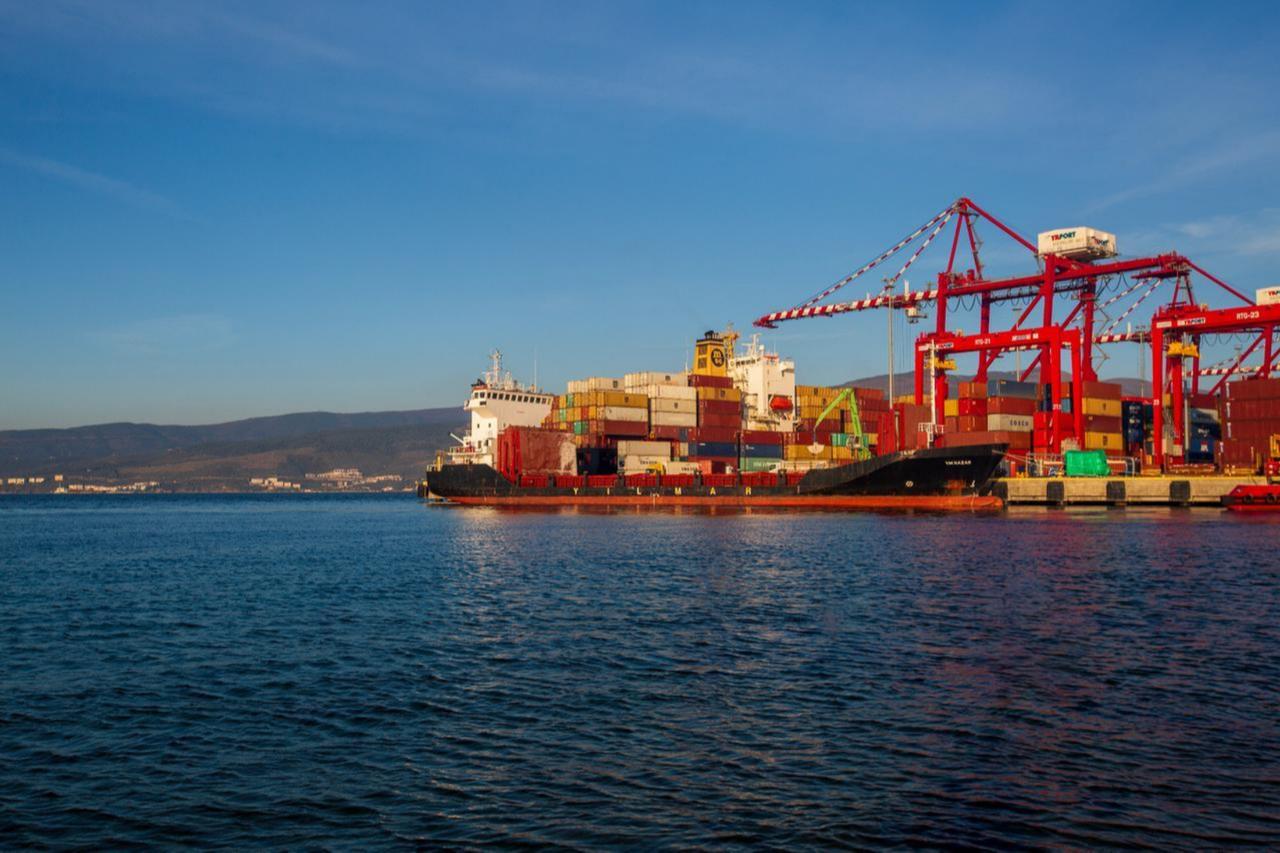
Under the 1995 customs union arrangement, industrial goods move tariff-free between Türkiye and the EU, but Ankara does not automatically benefit from the trade agreements the EU signs with third countries.
Kacir acknowledged that addressing asymmetries created by the EU’s free trade agreements with third countries is a priority in ongoing discussions on updating the Türkiye–EU Customs Union.
‘
Made in EU’ opens door for Türkiye
Kacir pointed to the draft Industry Accelerator Act, which outlines the scope and criteria of the EU’s "Made in EU" approach, as a recent example of progress in negotiations.
He said recognizing Türkiye within the framework of the existing customs union is significant for maintaining investment continuity and supporting the competitiveness of European value chains.
"The inclusion of Türkiye under the ‘EU origin’ requirement within the customs union framework is an important step," Kacir said, adding that the move would deepen sectoral integration between Türkiye and the European Union.
The development is also expected to support green and digital transformation across industrial value chains, the minister added.
Ankara works to secure fair conditions for its manufacturers to address trade asymmetries, Minister Kacir says

www.turkiyetoday.com




 . Even the biggest zionists are coming to Turkiye, the finance bridge Europe, Asia and Africa. America fuked up big time, little zionistan emiratis will not be the same after this war. Americans will lose ther biggest investor GCC. They will search for new aliancies.


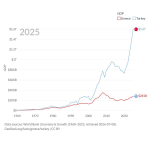
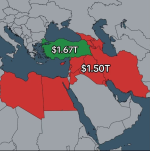
 Turkiye - $1.64 Trillion
 Indonesia - $1.54 Trillion
 Saudi Arabia - $1.39 Trillion
 United Arab Emirates - $622 Billion
 Malaysia - $516 billion
 Bangladesh - $511 billion
 Egypt - $430 billion
 Pakistan - $408 billion
 Algeria - $317 billion
 Iran - $300 billion