U.S. Ban of TikTok Is Set to Deal a Major Blow to ByteDance, Its Chinese Owner

ByteDance hit $146B in revenue in 2024, growing 30% year-over-year, with China contributing $112B (77%) and international markets, primarily TikTok, generating $34B (23%).
To view this content we will need your consent to set third party cookies.
For more detailed information, see our cookies page.


The U.S is trying to pull some sort of mafia sh*t, a company does well and they turn up forcing the owner to give it up so they can take it over

Crazy
 
The U.S is trying to pull some sort of mafia sh*t, a company does well and they turn up forcing the owner to give it up so they can take it over

Crazy
At the current trajectory, bytedance will hit 200b in revenue even without the US market in 3-4 years. All is good. They have done it many times in the past with forced sale of foreign companies by arrest and investigations lol it's nothing new
 
Last edited:
Alot of people seem to think bytedance is a company who relies on TikTok to survive. The reality is the opposite. Douyin is the main player and TikTok international is the sidekick but there's a lot of room for growth in the international markets especially in the global South as they get richer they will spend more on the app. Tough luck trying to buy TikTok from byte dance. It does not lack money.
 
YouTube shorts were meant to compete with TikTok but they failed.

YouTube Shorts was first released in India in September 2020. The launch was following India's ban of TikTok. In March 2021, it was also released in the United States.
I don't know whether or not YouTube short should consider a failure, because it is based off an existing long form video platform, I mean most people upload to YouTube is between 16 to 56 minutes long, and you need to count YouTube as a whole not just YouTube short, if you look at it this way, YouTube short enhanced the popularity and also ads revenue for YouTube. Yes, they may not be as popular than Tik Tok, that's the same when Tik Tok try to get into long form video in 2021 and was never picked up.

But yes, the timing cannot be coincident, YT started bouncing off the idea of YT Short right around the time Trump was talking about banning it.......
 
Yet, there is Instagram, FaceBook, X, etc. I am of the camp that Google in particular should be broken up.
I don't think banning anything can solve this.

We need to have a data privacy law instead of platform specific ban. That did nothing on the issue...
 
I don't think banning anything can solve this.

We need to have a data privacy law instead of platform specific ban. That did nothing on the issue...
I agree on the data privacy laws. I work for the Germans and quite a bit of what has been implemented in the EU has been applied to the Americas.
 
I agree on the data privacy laws. I work for the Germans and quite a bit of what has been implemented in the EU has been applied to the Americas.

The EU’s GDPR laws are the strictest by far in the world.

If TikTok is compliant with EU - I think we can be pretty confident.
 
I agree on the data privacy laws. I work for the Germans and quite a bit of what has been implemented in the EU has been applied to the Americas.
The issue here is the other social media platform, that's the reason why the US don't have a data privacy law. In Australia, the Australian government just issued a law to basically banned any social media usage for underage people


Such thing, if applies in the US, there will be a fierce lobbying battle against the law, and this will not go thru as long as US continue to run on bi-partisanism. That's the core issue we don't have law unless no one have issue with it. Which is hard in these days and ages
 
Members of Congress have already thrown cold water on that idea today. With that 90 day order, he has to prove a deal with an American company is underway.

Even IF that order goes through, we’ll be back at this same point in 3 months. It has to be sold to an American company or it’s banned. The law has been passed by Congress and unanimously upheld by the Supreme Court. Trump can’t snap his fingers and make it go away.
The law was passed with the leeway of allowing the president the choice of enforcement. Tramp can choose not to enforce.
 

TikTok users migrate to RedNote in an unexpected success for Chinese soft power

Published: January 20, 2025 4.39pm GMT

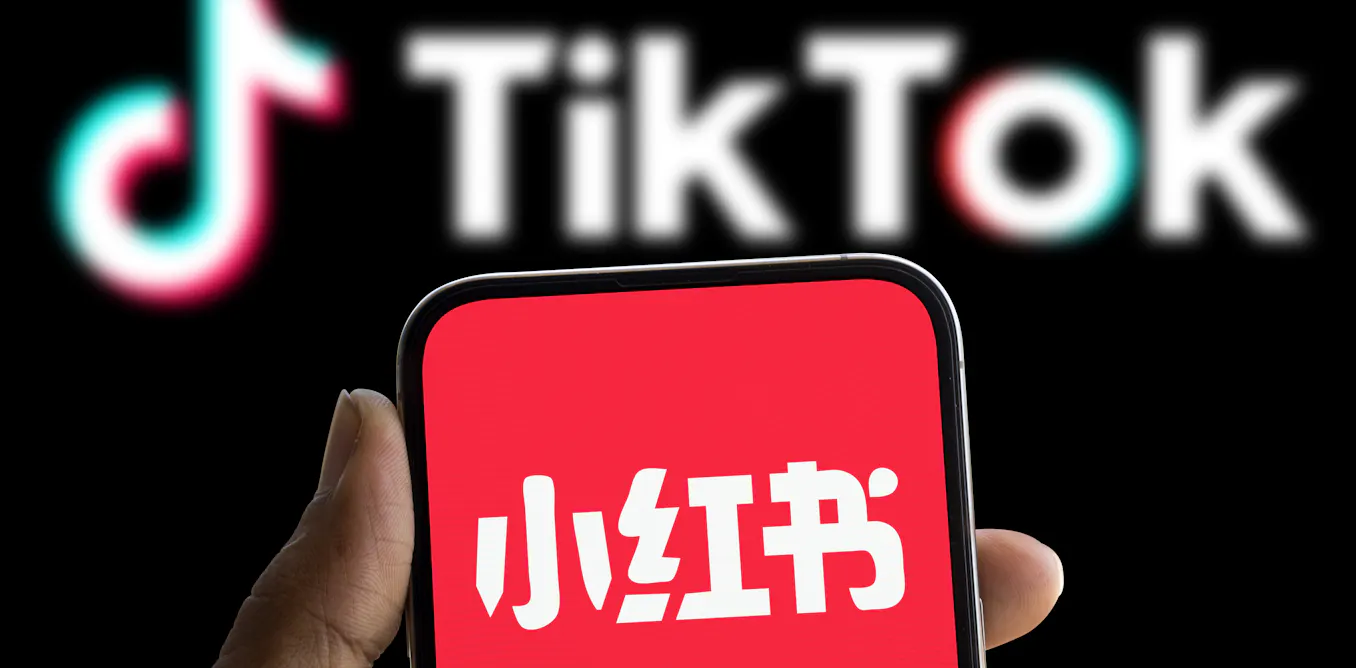
Xiaohongshu logo displayed on smartphone and tiktok logo in the background.

As the fate of TikTok hung in the balance, US users flocked to the Chinese social media app, Xiaohongshu. Mojahid Mottakin / Shutterstock

The new US president, Donald Trump, has given TikTok a reprieve one day after a law came into effect banning the Chinese-owned app in the US on national security grounds. Trump, who has previously expressed admiration for TikTok, has promised to issue an executive order to suspend the ban’s enforcement for 60 to 90 days. And TikTok has now begun restoring services to its roughly 170 million users in the country.

Over the past week, as the ban drew nearer, a large number of American TikTok users flocked to a Chinese social media app called Xiaohongshu. The platform, which translates to “little red book” and is being called RedNote by many, surged to top position on the US Apple Store on January 14, with over 700,000 new users. Chinese users have greeted the so-called “TikTok refugees” by producing more English language content.

The reasons why these TikTok users chose Xiaohongshu over other platforms are varied. Some reported wishing to snub the US government over its TikTok ban, while others cited how Xiaohongshu combines the features of TikTok and other familiar social media platforms like Instagram. Few seem to be concerned over fears concerning data collection by the Chinese government.

The move to Xiaohongshu is an unexpected win for China’s soft-power push. The term “soft power” was coined in the late 1980s by American political scientist Joseph Nye. It refers to the ability of a country to influence others through attraction rather than coercion.

The competition between Beijing and Washington for global economic and technological dominance has long been underpinned by soft power. Chinese political theorists such as Yan Xuetong have argued that soft power is the key to China becoming a “great power”. And the US passed a bill in 2024 dedicating US$1.6 billion (£1.3 billion) to “countering Chinese propaganda” over the next five years.

But China has historically been seen as unable to emulate the attractiveness of the world’s more established soft-power bastions. These include not only the US, but also Japan and South Korea, whose popular culture has enjoyed global appeal through television dramas, pop music, anime and video games.

Understand how AI is changing society​

Get our newsletter
This perception has been challenged by the flood of TikTok refugees to Xiaohongshu. The platform is, like most Chinese apps and internet services, subject to Beijing’s censorship requirements. But its growing western user base has seen online audiences exposed to Chinese content and culture in a way and scale that has not been seen before.

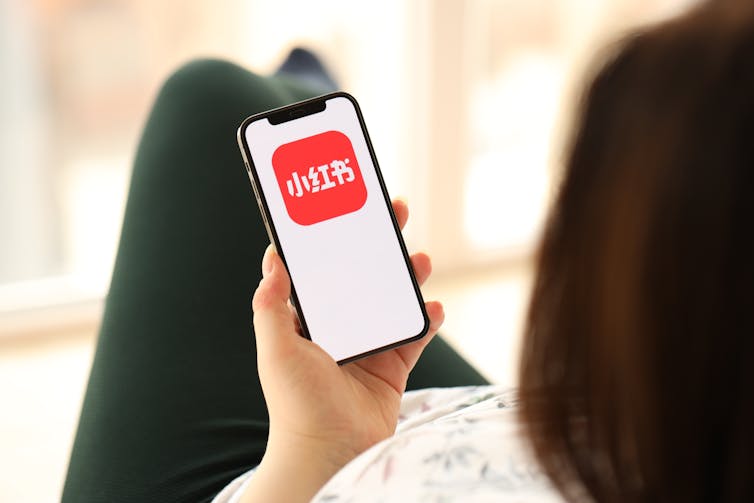
A woman looking at the Xiaohongshu app on her phone screen.

Chinese and American users of Xiaohongshu have been able to interact on the app directly. Mehaniq / Shutterstock

In a comment posted on the platform in Chinese, a self-declared TikTok refugee named Amanda said: “I am so happy to talk to Chinese people and learn about your culture and experiences”. Many Chinese users on Xiaohongshu have welcomed American users, even offering to teach them Chinese.

On January 16, language learning platform Duolingo said it had seen a 216% increase in new Mandarin learners in the US compared to the same time the previous year. This development may well be related to the growing number of Xiaohongshu users in the west.

Interactions between American and Chinese users have also helped challenge mainstream narratives concerning China. Several western users of the platform have questioned the more adversarial rhetoric around China that has become a linchpin of political debates concerning the country. These interactions have, in turn, led Chinese internet users to query their assumptions about the west, with a greater degree of discussion on issues varying from geopolitics to healthcare.

It’s not certain whether Xiaohongshu’s growth, coupled with recent developments in Chinese popular culture such as the success of the Black Myth Wukong video game, will create a “Chinese wave” akin to the movement that saw South Korean popular culture reach global audiences in the late 1990s. Nevertheless, it remains a key step in improving the attractiveness of Chinese culture in the English-speaking world.

Towards the future​

Xiaohongshu’s rapid rise, as well as the debates in the west about the threat posed by TikTok, also show how social media and the internet as a whole have become increasingly fragmented in recent years. This has been one of the consequences of a wider backlash against globalisation, with differing geopolitical regions working to create their own version of the internet.

The most prominent example of this has been China’s Golden Shield Project. Known as the “Great Firewall of China”, the project has effectively created an indigenous Chinese internet environment by restricting access to certain websites and building Chinese versions of major western platforms. Should further restrictions occur, it is possible that the internet will be split further from one unified entity into several.

However, this is not an inevitable outcome. In contrast to US Congress, Trump himself has been more reluctant to ban TikTok, and even invited the platform’s CEO, Shou Zi Chew, to his inauguration. Such a move is perhaps motivated by the key role TikTok has played in spreading the message of the Maga movement, which is something Trump’s base is loath to part with.

It remains to be seen whether the growth of Xiaohongshu will continue or be a one-off fad. What is clear, though, is that it is the latest phase of the interactions between China and the west – and one that suggests the previous playbook on “great power relations” needs updating.
 
A lot of people seem to think bytedance is a company who relies on TikTok to survive. The reality is the opposite. Douyin is the main player and TikTok international is the sidekick but there's a lot of room for growth in the international markets especially in the global South as they get richer they will spend more on the app. Tough luck trying to buy TikTok from byte dance. It does not lack money.


This is the lashings of a dying superpower and a lot of its 'wealth" is connected to its reserve currency status which it will lose within the next 5-10 years.

US "purchasing power" is grossly overvalued to US dollar dominance and so in effect BYtedance won't lose much over the long term by being banned from US.
 
The EU’s GDPR laws are the strictest by far in the world.

If TikTok is compliant with EU - I think we can be pretty confident.
Fair points. No disagreement from me. As previously noted, working for a German company, a lot of the privacy actions taken are being applied to those of us based in the US.
 
We need to have a data privacy law

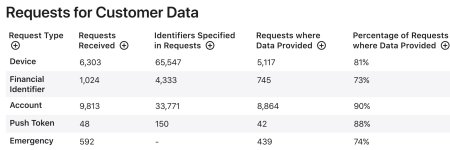
Any country can say the magic words 'national security' or 'terrorism' and demand data from companies. There have been high profile refusals, e.g. by Apple, but even Apple complies with the vast majority of requests. Bad publicity and public pressure may tip their decision in high profile cases.

Screenshot 2025-01-21 at 9.06.16 am.jpg

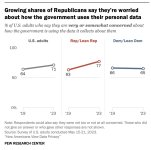
Also interesting that most Americans don't trust any government.


Screenshot 2025-01-21 at 9.08.15 am.jpg
 
Trump doesn't want to lose TikTok, he wants to establish at least 50% American control over it via a JV. Many Americans already moved over to Chinese equivalents, so this entire fiasco was very counterproductive for America.
Different Chinese apps has been on top 10 US chart for quite sometimes, it means they are attractive to normal American, just like Chinese commercial drones, you can't banned all the products.
 

Users who are viewing this thread

Pakistan Defence Latest

Latest Posts

Back
Top