Navigation
Install the app
How to install the app on iOS
Follow along with the video below to see how to install our site as a web app on your home screen.
Note: This feature may not be available in some browsers.
More options
Style variation
You are using an out of date browser. It may not display this or other websites correctly.
You should upgrade or use an alternative browser.
You should upgrade or use an alternative browser.
UAE strategic Projects: news, discussions & updates
- Thread starter The SC
- Start date
More options
Who Replied?

The SC
INT'L MOD
- Thread starter
- #78
The Wall Street Journal revealed that Elon Musk tried to obstruct the UAE -OpenAI agreement to build one of the largest artificial intelligence data centers in the world in Abu Dhabi, where Elon Musk continues with G42 officials, warning that the project will not obtain the approval of the administration of US President Donald Trump if his emerging company XAI is not included in the project. 
Elon Musk failed to disable the project despite his attempts, and the American administration went ahead to support the project; For its economic benefits and its importance in strengthening relations between the United States and the UAE in the field of artificial intelligence
Elon Musk failed to disable the project despite his attempts, and the American administration went ahead to support the project; For its economic benefits and its importance in strengthening relations between the United States and the UAE in the field of artificial intelligence
The SC
INT'L MOD
- Thread starter
- #79
Falcon Arabic: new AI language model made in UAE 'outperforms all others' in region
Concerns that Arabic might be left behind in the fast-developing AI sector are starting to evaporate with the introduction of the Falcon Arabic language model, created in Abu Dhabi.
https://www.thenationalnews.com/future/technology/2025/05/21/arabic-ai-language-model-uae/
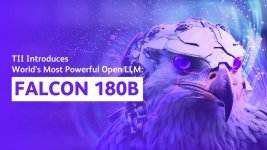
Falcon-Arabic: A Breakthrough in Arabic Language Models
https://huggingface.co/blog/tiiuae/falcon-arabic
The SC
INT'L MOD
- Thread starter
- #80
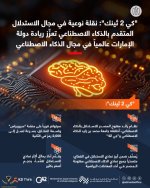
When the U.S. Senate speaks admiringly of Abu Dhabi as a model to be emulated in providing AI-supported government services, we realize that the UAE is no longer just part of the future, but has become the future itself.. A leadership that has turned ambition into reality, and innovation into an approach, making the UAE a shining example that inspires the world.. In the UAE's journey toward the future, it did not settle for merely adopting artificial intelligence, but established a comprehensive philosophy that made it the core of governmental transformation, where the human is the goal and technology the means, the citizen a partner and innovation a methodology in a journey of turning challenges into exceptional opportunities.. Long live the house of Zayed


As I have written a few times already, it is far from everything that I agree with when it comes to UAE foreign policy (in particularly related to Yemen, Sudan, Israel/Palestine) but I (or anybody else for that matter) cannot deny that they have done a very great job of turning UAE into a powerful, stable, rich and modern country that is a leading pioneer on many fronts in the Arab and Muslim world. Wish nothing but positives for our Emirati brothers and sisters of course.
Even though KSA has almost 35 times the population (native to native population), 26 times the size and in every sphere a much more complex country to govern, I have to give them immense credit in many regards.
In particular the establishment of sovereign wealth funds (one of the first in the world to do it), their focus on new technology and AI (KSA is doing similarly), their military sector (regardless of headhunting outside talent, help, money, they have done something that no other country their size have in this regard), infrastructure projects etc.
In many ways UAE is the laboratory and testing ground for KSA (in a smaller scale) of what is possible and positive in regards to projects, new technology and trends.
Now, if they could correct their foreign policies a bit, that would be much preferable though but we all have disagreements, even with our own politics.
Even though KSA has almost 35 times the population (native to native population), 26 times the size and in every sphere a much more complex country to govern, I have to give them immense credit in many regards.
In particular the establishment of sovereign wealth funds (one of the first in the world to do it), their focus on new technology and AI (KSA is doing similarly), their military sector (regardless of headhunting outside talent, help, money, they have done something that no other country their size have in this regard), infrastructure projects etc.
In many ways UAE is the laboratory and testing ground for KSA (in a smaller scale) of what is possible and positive in regards to projects, new technology and trends.
Now, if they could correct their foreign policies a bit, that would be much preferable though but we all have disagreements, even with our own politics.
The SC
INT'L MOD
- Thread starter
- #82
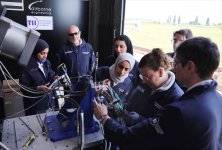
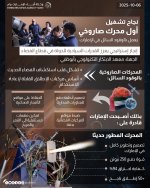
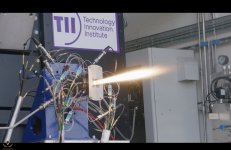
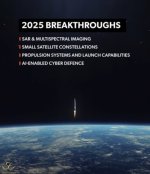
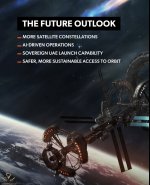
UAE achieves key milestone in space technology with liquid-fuelled rocket engine test
The project marks a new chapter in UAE’s journey towards independent access to space
https://gulfnews.com/uae/science/ua...liquid-fuelled-rocket-engine-test-1.500296712
The SC
INT'L MOD
- Thread starter
- #83
The Emirates is shaping the future
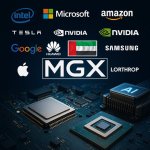
The Emirati company MGX is writing a new chapter in the artificial intelligence industry after acquiring Altera, a leader in smart chip technology.
This deal has placed the Emirates at the heart of technological partnerships with global giants:
Intel, the largest partner and primary beneficiary
Microsoft and Amazon to accelerate computing and artificial intelligence
Tesla in autonomous driving systems
NVIDIA and Google for processing massive data
Apple and Samsung for developing and testing advanced chips
Cisco and Huawei in fifth-generation networks and infrastructure
The impact did not stop at technology alone but extended to the world’s leading defense companies:
Lockheed Martin
Raytheon
Northrop
BAE Systems
All of them now rely on Altera’s technologies under the banner of the Emirati MGX
A deal of global magnitude.. and the Emirates is shaping the future with its own hands.
@hasan_altahir
The Emirati company MGX is writing a new chapter in the artificial intelligence industry after acquiring Altera, a leader in smart chip technology.
This deal has placed the Emirates at the heart of technological partnerships with global giants:
Intel, the largest partner and primary beneficiary
Microsoft and Amazon to accelerate computing and artificial intelligence
Tesla in autonomous driving systems
NVIDIA and Google for processing massive data
Apple and Samsung for developing and testing advanced chips
Cisco and Huawei in fifth-generation networks and infrastructure
The impact did not stop at technology alone but extended to the world’s leading defense companies:
Lockheed Martin
Raytheon
Northrop
BAE Systems
All of them now rely on Altera’s technologies under the banner of the Emirati MGX
A deal of global magnitude.. and the Emirates is shaping the future with its own hands.
@hasan_altahir
冖_冖
Registered Member

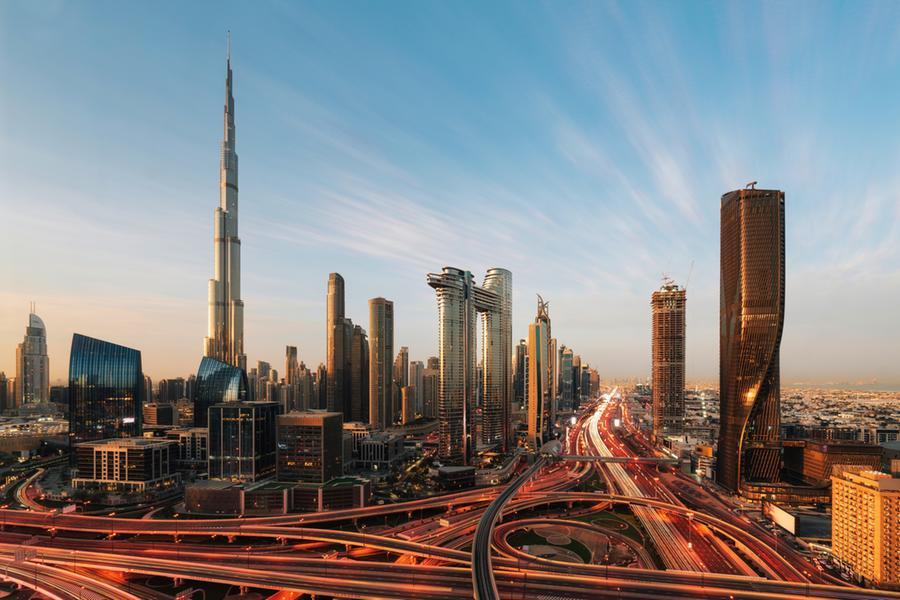
China Railway lands $272mln BNW's Dubai project contract
The partnership brings global engineering expertise, robust governance frameworks, and strict adherence to international construction standards
January 12, 2026
UAE-based BNW Developments has announced that it as awarded a contract worth AED1 billion ($272 million) to CREC4, a subsidiary of top global infrastructure group China Railway Group, for its prime development in Dubai.
As BNW Developments advances its AED 32+ billion gross development value (GDV) pipeline, the partnership with CREC4 represents one of several global construction alliances being activated.
The SC
INT'L MOD
- Thread starter
- #85
Abu Dhabi test-launches first fully UAE-built hybrid rocket in milestone for space ambitions
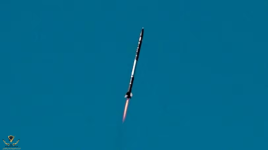
The launch of a UAE-built hybrid rocket over the Abu Dhabi desert demonstrates that the UAE can develop its own systems, say researchers. Photo: Technology Innovation Institute
https://www.thenationalnews.com/new...rocket-marking-milestone-for-space-ambitions/


The SC
INT'L MOD
- Thread starter
- #87
UAE receives first shipment of Nvidia's advanced AI chips
The first shipments of Nvidia's highly sought-after CPUs and GPUs, critical for artificial intelligence infrastructure, have arrived in the UAE, the country's ambassador to the US said on Friday.

UAE receives first shipment of Nvidia's advanced AI chips | The National
Ambassador Yousef Al Otaiba hails 'gold standard' for chip security
 www.thenationalnews.com
冖_冖
Registered Member
Chinese consortium builds AED 6.2 billion power plant in Abu Dhabi
China Energy Engineering Co. (CEE) has signed a $1.69 billion (AED 6.2 billion) contract to carry out engineering, procurement and construction (EPC) work for a
Chinese consortium builds AED 6.2 billion power plant in Abu Dhabi
The project aims to establish a dual-fuel plant with a net production capacity of 2600 MWBy Mustafa DarwishPublished: Thursday, June 4, 2026 at 7:38 PM
China Energy Engineering Co. (CEE) has signed a $1.69 billion (AED 6.2 billion) contract to carry out engineering, procurement and construction (EPC) work for a gas-fired combined cycle power plant project in Abu Dhabi, according to an official disclosure published on the Shanghai Stock Exchange.
The winning consortium includes three subsidiaries of the Chinese group, where the contract was signed with the project company, which was founded by the winning developers, namely Saudi Arabia's Aljomaih Power and Water Company and Singapore's Sembcorp Long Sea.
The project aims to establish a dual-fuel plant with a net production capacity of 2600 MW, supporting plans to expand power generation capacity in the Emirate of Abu Dhabi, under the supervision of the Emirates Water and Electricity Company (EWEC).
According to the data, the construction work will take 32 months, as part of one of the emirate's most prominent energy infrastructure projects, and reflects continued investments in enhancing energy security and meeting the growing demand for electricity.
The project is part of Abu Dhabi's drive to enhance the energy mix by relying on high-efficiency, combined-cycle plants, to increase production efficiency and reduce emissions compared to conventional power plants, as well as support the long-term stability of the electric grid.
The SC
INT'L MOD
- Thread starter
- #90
The US raises the UAE to Group A:5 within export controls
The United States has elevated the UAE to Group A:5 under the US Export Controls (EAR), taking it out of Groups D:3 and D:4.
Saeed Al Hajri, Minister of State, said on his account on the “X” platform: “This achievement is the fruit of the vision of His Highness Sheikh Mohammed bin Zayed Al Nahyan, President of the State, may God protect him, who made trust, credibility, and commitment to international standards basic pillars of the UAE’s global standing.”
He added: “With this measure, the UAE has become the first Arab country to obtain this classification, joining the elite group of the United States’ closest and most reliable partners in the field of advanced technology. This decision represents international recognition of the strength of the UAE’s system of export controls and compliance, and strengthens its position as a reliable partner in the development and adoption of strategic technologies, including: artificial intelligence and advanced computing, semiconductors, quantum technologies, space, peaceful nuclear energy, and advanced dual-use technologies.”
He explained that this classification opens broader horizons for cooperation in research and development, investment, global supply chains, and advanced technology transfer with international partners.
The Trump administration's decision to ease export restrictions imposed on the UAE will have major and very important repercussions
To know what this means, read the warning written by American researcher Chris McGuire, a specialist in semiconductor export policies and technology controls, who is known for closely following the policies of the US Bureau of Industry and Security (BIS).
This is the most important thing he said in evaluating the decision
 The US Department of Commerce has canceled the requirements for export licenses for artificial intelligence chips to the UAE government and G42, and has included the UAE within Country Group A:5, which it describes as a major strategic shift in US export control policy. The direct result of this is that the UAE and the G42 can now purchase unlimited quantities of advanced American artificial intelligence chips, after these purchases were subject to licenses due to national security considerations and the G42’s previous relations with China. G42 may seek to purchase millions of NVIDIA's Blackwell chips, representing a large portion of the current global production capacity, which could make the UAE one of the largest computing centers for artificial intelligence in the world. He also believes that G42 will become the first real global competitor to giant American cloud computing companies (hyperscalers) by building huge data centers inside and outside the Emirates, and hosting advanced artificial intelligence models on its territory. He warns that the UAE may become the second largest global center for artificial intelligence computing capabilities after the United States, giving it strategic weight similar to the role it plays today in energy markets. One of the most prominent warnings he provides is that canceling the licensing system also means the disappearance of the restrictions that prevented China from remotely accessing American chips inside the Emirates, because those restrictions were linked to the conditions of export licenses, and with the cancellation of the licenses, these conditions disappear, according to his interpretation. He also points out that the inclusion of the UAE in the A:5 group is not limited to artificial intelligence chips, but also allows the acquisition, without separate licenses, of a wide spectrum of sensitive materials covered with the exception of License Exception STA, which includes military aircraft components, military gas turbine engines, military electronics, navigation and aviation systems, and other sensitive technologies. He adds that this development raises, from his point of view, concerns related to the fact that the UAE is one of the largest re-export centers (Transshipment Hubs) in the world, wondering about the feasibility of canceling licensing requirements for sensitive military materials in light of this reality. It is also expected that the decision to include the UAE in the A:5 group will create political pressure to add other countries, led by Saudi Arabia, then Israel, and perhaps other Gulf countries, which may lead to expanding the circle of countries that can obtain sensitive American technologies that were previously subject to more stringent controls. The writer also raises a political accusation that the biggest beneficiary of the decision may be G42, noting that its purchase of 49% of World Liberty Financial in 2025 may have contributed to improving its relationship with the American administration.
Users who are viewing this thread
Total: 1 (members: 0, guests: 1)
Pakistan Defence Latest


Country Watch Latest


Latest Posts
-
-
-
 🧨 Microsoft releases emergency Windows 11 update to fix issues with latest September patch (6 Viewers)
- Latest: Ali_Baba
-

-
