From Kiev to the Gulf: Will interceptor drones become a strategic alternative to the American missile shield?
Gulf countries are moving to acquire Ukrainian-made interceptor drones, in an effort to build an internal defense layer capable of confronting attacks by cheap “Shahed” drones that are overwhelming even the most well-funded air defense systems. The Financial Times quoted Oleksandr Yakovenko, founder of TAF Industries, as saying that the UAE requested 5,000 interceptor aircraft, and Qatar 2,000, while Kuwait expressed a similar interest, while Reuters reported that Ukraine is already discussing assistance in confronting the drones with Washington and Gulf partners.
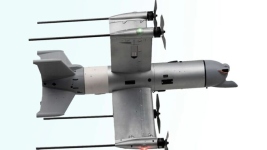
What Gulf buyers are seeking is a battlefield-proven method for defeating slow, dense air threats at a sustainable cost. They want to understand how to integrate these aircraft into a broader system that brings together monitoring and tracking, electronic warfare, and guns into a single layered structure, similar to the model adopted by Ukraine. The specifications of the Octopus-100 and A-10 aircraft explain this demand. The former has a speed exceeding 300 kilometers per hour, a combat range of 30 kilometers, and an altitude ceiling of 4,500 metres, while the latter is distinguished by its resistance to electronic warfare and its encrypted communications via the “Mail ELRS” protocol. Reuters reported that interceptor aircraft accounted for 70 percent of the drones shot down in the vicinity of Kiev last February.
Here lies the fundamental difference with the Patriot system, as the price of the PAC-3 MSE interceptor missile is close to $4 million, compared to only a few thousand dollars for some Ukrainian interceptor aircraft, while Lockheed Martin only delivered 620 missiles during the year 2025. The need is becoming more urgent in the Gulf after Tehran, since the recent American-Israeli strikes on it, has launched hundreds of missiles and more than 1,000 drones at countries. A Gulf ally of Washington, at a time when the UAE had previously used Patriot missiles during the Houthi attacks in 2022.
However, these aircraft are not a ready-made replacement for the Patriot batteries, as they require trained pilots, reliable sensor guidance and safe command links, and Yakovenko said that pilot training remains the main obstacle. The growing Gulf demand indicates that interceptor aircraft are moving from being an emergency field solution to a recognized component of modern layered air defense, as Patriot batteries will still protect the most difficult targets, while Ukrainian interceptor aircraft make this shield resilient at a tolerable cost.