Uber now available in 70+ countries and 10,500+ cities - Updates and Discussion

Hamartia Antidote

Elite Member
Joined
Nov 17, 2013
Messages
47,394
Reaction score
27,051
Reputation
609.7
Country of Origin
Country of Residence
Uber Technologies, Inc. is an American multinational transportation company that provides ride-hailing services, courier services, food delivery, and freight transport.[1] It is headquartered in San Francisco, California, and operates in approximately 70 countries and 10,500 cities worldwide.[1]
It is the largest ridesharing company worldwide with over 150 million monthly active users and 6 million active drivers and couriers. It facilitates an average of 28 million trips per day and has facilitated 47 billion trips since its inception in 2010.[2] In 2023, the company had a take rate (revenue as a percentage of gross bookings) of 28.7% for mobility services and 18.3% for food delivery
 

Uber launches 'XXL' airport-only service worldwide​


LOS ANGELES - If you've ever wished you had more space for your luggage and all those extra gifts taking up space in your Uber, the company has some good news for you.

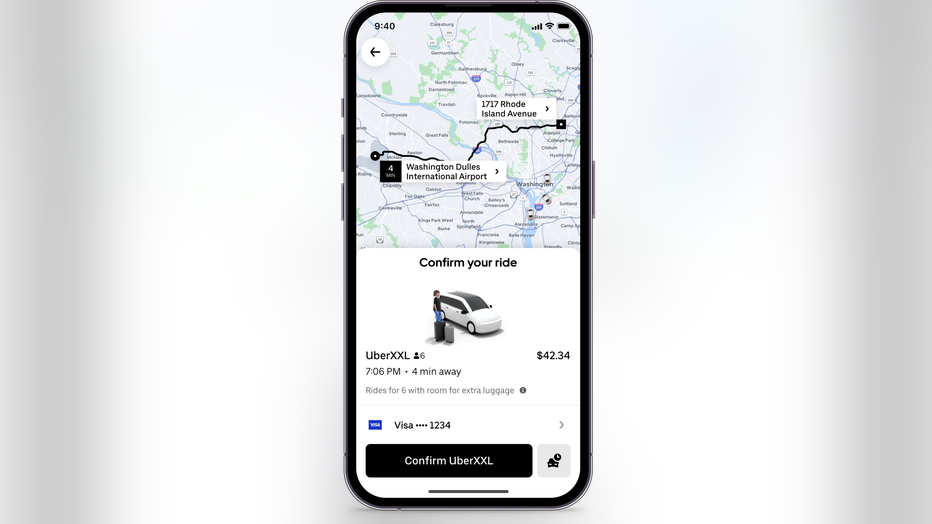
Meet UberXXL - Uber's newest airport-only service that gives riders access to more trunk space - perfect for all your extra baggage this holiday season.

UberXXL is available now for rides to and from more than 60 airports worldwide, including 40 in the U.S.

uberxxl.png


California airports offering UberXXL service are: LAX (Los Angeles), LGB (Long Beach), SNA (John Wayne Airport), PSP (Palm Springs), and SFO (San Francisco).

Officials said UberXXL will cost somewhere in between the price point of UberXL and Uber Black. Riders will receive upfront pricing in the app before requesting a trip.

Other expanded offerings for holiday travelers include "Uber Reserve," which makes it easy to schedule your airport ride with features made for travel planning, and "Multi stop," which allows riders to add multiple stops when reserving a ride.

You can see more of Uber's latest new offerings by tapping or clicking here.
 

Uber, Lucid partner on new robotaxi service, taking on Waymo and Tesla​


Uber will purchase 20,000 Lucid EVs and use Nuro's self-driving software to power its service.

Uber (UBER) is betting big on robotaxis, with pure-play electric vehicle maker Lucid (LCID) as its partner.

The two companies, along with autonomous tech firm Nuro (NURO.PVT), announced on Thursday morning a "next-generation premium global robotaxi program" exclusively for the Uber platform.

The new robotaxi program would outfit the Lucid Gravity SUV with Nuro Driver Level 4 autonomous software, deployed on Uber's platform and fleet management systems. Uber said the goal is to deploy 20,000 or more Lucid EVs equipped with Nuro Driver over the next six years.

The Lucid EVs will be owned and operated by Uber or its third-party fleet partners. The service is expected to launch next year in a "major US city." A Lucid robotaxi prototype using Nuro software is already being tested at Nuro's Las Vegas proving grounds.

Lucid stock soared nearly 40% on news of the deal.

As part of the deal, Uber said it will invest $300 million in Lucid, and a similar "multi-hundred-million-dollar" investment in Nuro.

"We're thrilled to partner with Nuro and Lucid on this new robotaxi program, purpose-built just for the Uber platform, to safely bring the magic of autonomous driving to more people across the world," Uber CEO Dara Khosrowshahi said in a statement.

"This investment from Uber further validates Lucid's fully redundant zonal architecture and highly capable platform as ideal for autonomous vehicles," Lucid interim CEO Marc Winterhoff said. "This is the start of our path to extend our innovation and technology leadership into this multi-trillion-dollar market."

Lucid, Nuro, and Uber are partnering on a next-generation autonomous robotaxi program.


The Uber-Lucid-Nuro robotaxi program is the latest bet on robotaxi services in the US, following Waymo's leadership in the space as the only true operator. Uber has also partnered with Alphabet's (GOOG) Waymo on deployments in Austin, Texas, and Atlanta.

And just this week, Tesla (TSLA) expanded its robotaxi testing in Austin, and Musk said the company would expand testing to the San Francisco Bay Area. However, reports suggest those applications for those state permits have not been submitted.

Uber once had its own robotaxi operations, but the company pulled its efforts following a high-profile accident in Tempe, Arizona, in 2018.

As for Lucid, the California-based company announced a strong second quarter of deliveries, with the new Lucid Gravity SUV arriving in showrooms. Lucid's goal to deliver 20,000 Air sedans and Gravity SUVs in 2025 seems ambitious, but the orders coming from Uber will help meet that goal, assuming Lucid ramps up Gravity production.
Uber and Lucid, respectively, are top holdings in Saudi Arabia's Public Investment Fund's (PIF), which may shed some light on why the companies are partnering up. Per PIF's latest 13F statement, noting the fund's holdings as of March 31, the fund owns a $5.31 billion stake in Uber and a $4.29 billion stake in Lucid, though PIF's stake in Lucid makes it the majority owner.

To view this content we will need your consent to set third party cookies.
For more detailed information, see our cookies page.


The company was founded by engineers of Google's self-driving car project, Waymo.
 
Uber eats, indirectly allows non citizens to work illegally, in the UK.

All delivery drivers I seen have a foreign accent. But since it is a US company it gets a pass.


You still need a valid drivers license to apply as a deliveryman.
So if they are using fraudulent documents it serves them right to get kicked out of the country.

But you have hit on a quick way to work. I used a food delivery service (Instacart) for the first time when I was in Texas a few weeks ago and anybody could have delivered it.
 
Last edited:
Uber Tries to Block Independent Tesla and Waymo Robotaxis


As autonomous ride-hailing expands across the U.S. with Tela’s Robotaxi service and Alphabet’s Waymo, traditional gig platforms are working to protect their turf. Rather than focusing solely on vehicle development, legacy ride-hailing networks are turning toward legislative channels to keep driverless fleets tied to their existing apps.

According to a report from the Financial Times, Uber has been actively lobbying state and federal policymakers to enforce mandatory hybrid networks, where human drivers and autonomous vehicles operate on the same platform.

The Push for 85% Human Drivers in New Jersey​

In New Jersey, state lawmakers are evaluating a three-year pilot program designed to establish an official regulatory framework for testing and deploying driverless vehicles. However, Uber lobbyists are proposing a major add-on to the legislation: requiring any platform offering robotaxi services to have human drivers handle at least 85% of all rides during the pilot program.

If adopted, this rule would force companies like Tesla and Waymo that already have dedicated autonomous rideshare apps to route their rides through Uber and similar third-party platforms that maintain large human driver pools.

For Tesla, this proposal comes on top of existing hurdles in the legislation that would essentially ban its Robotaxi vehicles from New Jersey unless it adds more sensors to them. In its current form, the draft requires commercial driverless vehicles to be equipped with at least two distinct sensor modalities (like LiDAR and radar) alongside cameras, effectively ruling out Tesla’s camera-only.

Beyond sensor demands, the bill requires operators to:

  • Complete 50,000 miles of supervised in-state testing with a human safety driver.
  • Submit complete safety certifications, proof of insurance, and law enforcement interaction plans.
  • Report all vehicle collisions directly to the New Jersey Department of Transportation within five days.
Tacking on a requirement to operate exclusively on a hybrid network would present a major obstacle for direct-to-consumer models. Tesla has historically resisted third-party platforms, deciding against operating its Robotaxi vehicles on Uber in favor of running rides through its own native app.

Growing Friction Between Waymo and Uber​

Uber’s legislative push is also causing strain with its current partners. The Financial Times report revealed that Waymo is exploring options to exit its operating deal with Uber. Waymo has notified Uber that it intends to launch independently, complete with its own app, in key markets like Austin and Atlanta when its contract permits in January 2028.

The relationship between the two companies has deteriorated over service quality and routing disputes. Waymo questioned Uber’s vehicle cleanliness and routing management after dozens of cars clogged an Atlanta cul-de-sac. Uber, meanwhile, has raised concerns over weather-related vehicle unavailability and safety incidents, including instances where Waymo’s autonomous cars passed stopped school buses in Austin.

Standing Ground Against Regulatory Pressure​

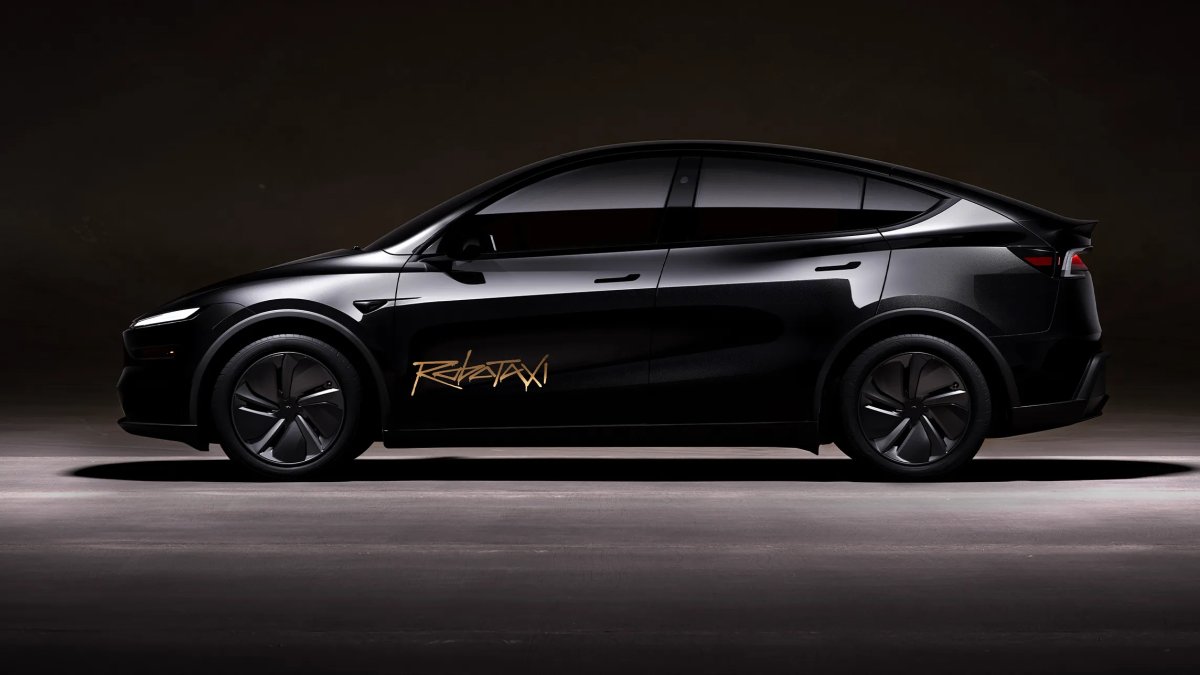
These regulatory battles come as Tesla accelerates its own autonomous vehicle deployment, recently crossing 380,000 unsupervised Robotaxi miles. It has also announced expansion plans into new states following recent commercial launches. Tesla’s Robotaxi network began offering fully unsupervised rides in three new cities just this month — first in Miami, and more recently in Orlando and Tampa.

While Tesla’s overall autonomous fleet is only a fraction of Waymo’s, its camera-only Model Y robotaxis are already offering paid rides with no safety drivers or monitors onboard in at least six markets and expanding fast. Meanwhile, Tesla has also started publicly testing the steering wheel-less Cybercabs that will replace the Model Y as the workhorse of its Robotaxi service. As purpose-built autonomous vehicles prepare for mass production and public deployment, navigating state-level legislative hurdles will remain a central focus for Tesla’s direct-to-consumer Robotaxi network.
 

Users who are viewing this thread

Latest Posts

Back
Top