United Arab Emirates to quit oil cartel Opec

I feel UAE has been given some concrete assurances from Tel Aviv and Washington DC, they know that Arabs were practically useless against Iran attacks, and all the countries such as Bahrain and Kuwait and KSA were using American systems and possibly American operators to use those systems, UAE is small and have little to no local population so they want to align themselves with powerful players which are America and Israel.
How many assurances were given to how many before them for how many times! Do you hear anything from them now?!?
 
How many assurances were given to how many before them for how many times! Do you hear anything from them now?!?
Unfortunately Muslims lacks long term strategy, hence these "Assurances" works in case of ME. Pakistan learned this lesson long time ago after the 1965 war, hence we went for Nukes regardless of America offering aid and F-16's. As Zia said, " Freedom has no price ".
 
The multi state talks with Saudi, Egypt, Turkey, Pakistan are all dealing with this and Iran as a vital state needs to be bought in and any past issues dealt with so we can defend the region

While the UAE has every right to leave the OPEC 'cartel', but by stationing the Israeli troops on its soil and by being even closer with India recently, on top of UAE's butting heads over Yemen and Sudan suggests this OPEC move is not simply about the economics.

So the kind of alignment of the forces you mention is more than possible--it is even likely. And PDF has been buzzing with such alignments. PDF is often ahead of many analysts out there, it seems to me, despite all the noise we see here. We can be sure that that West Asia will not be the same due to the war on Iran and I think Pakistan is being pulled into being a part of West Asia more than being a part of South Asia now.
 
looks like UAE v Saudi rivalry is now almost at it's end game, next move will be by the Saudis. I think both Iran and Saudi realise if they can make a deal and some sort of peace with each other UAE can be carved up.....

And while at that, Iraq gets Kuwait... And maybe KSA also gets Bahrain.
 
While the UAE has every right to leave the OPEC 'cartel', but by stationing the Israeli troops on its soil and by being even closer with India recently, on top of UAE's butting heads over Yemen and Sudan suggests this OPEC move is not simply about the economics.

So the kind of alignment of the forces you mention is more than possible--it is even likely. And PDF has been buzzing with such alignments. PDF is often ahead of many analysts out there, it seems to me, despite all the noise we see here. We can be sure that that West Asia will not be the same due to the war on Iran and I think Pakistan is being pulled into being a part of West Asia more than being a part of South Asia now.
You're right 100% here. Oil prices will fluctuate wildly, as will profitability for UAE, but ultimately this does seem to be a political move first and foremost. UAE is desperate to find some allies whom it can please with some independently negotiated deals, free from OPEC oversight. At the same time, they will extort some nations. Russia has shown us all how energy starved nations can be extorted for plenty of cash in this post-Ukraine + post-Iran wars situation.
 
While the UAE has every right to leave the OPEC 'cartel', but by stationing the Israeli troops on its soil and by being even closer with India recently, on top of UAE's butting heads over Yemen and Sudan suggests this OPEC move is not simply about the economics.

So the kind of alignment of the forces you mention is more than possible--it is even likely. And PDF has been buzzing with such alignments. PDF is often ahead of many analysts out there, it seems to me, despite all the noise we see here. We can be sure that that West Asia will not be the same due to the war on Iran and I think Pakistan is being pulled into being a part of West Asia more than being a part of South Asia now.

India is turning into old news for Pakistan, we have no trade, no relations and gradually our link with India is dissipating

We need to continue to support independence of Kashmir and Muslims of South Asia away from a hindutva enemy, but outside of that Pakistan has more important things to deal with then the monkeys from the east

We always talked about when the Muslim world would awaken from it's slumber, events are occurring and the start of the process has begun

What our countries do now is vital for our future and collective region

Its a shame we have TRAITORS like the em-rats
 
Crude oil prices are expected to fluctuate within a broader range because the United Arab Emirates is inclined to produce quantities exceeding the OPEC quota and to sell at prices aligned with the UAE's interests rather than those of OPEC and OPEC+.

The UAE is positioning for a pricing war with regional producers, and fired the first shot.

This could come back to bite the UAE and be seen as an insubordinate child.
 
While the UAE has every right to leave the OPEC 'cartel', but by stationing the Israeli troops on its soil and by being even closer with India recently, on top of UAE's butting heads over Yemen and Sudan suggests this OPEC move is not simply about the economics.

So the kind of alignment of the forces you mention is more than possible--it is even likely. And PDF has been buzzing with such alignments. PDF is often ahead of many analysts out there, it seems to me, despite all the noise we see here. We can be sure that that West Asia will not be the same due to the war on Iran and I think Pakistan is being pulled into being a part of West Asia more than being a part of South Asia now.

I will say, PDF has been pretty well on the mark, but that's also because we have people with prior military experience and in-house knowledge to correct our thesis midway.
 
Big brother Saudis need to sit down and talk to nasty UAE is confused, offer them a bail out package their economy is in free fall of US & iran conflict. there is no hope for UAE aligning with America & Israel , they simply can’t read the tea leaves! Iran can ensure that they won’t be able to do OIL for decades, and then where will they be? Basically the UAE withdrew from OPEC in exchange is rumoured $20 billion from the US … sounds like blackmail from US to me .. LOL
 
Big brother Saudis need to sit down and talk to nasty UAE is confused, offer them a bail out package their economy is in free fall of US & iran conflict. there is no hope for UAE aligning with America & Israel , they simply can’t read the tea leaves! Iran can ensure that they won’t be able to do OIL for decades, and then where will they be? Basically the UAE withdrew from OPEC in exchange is rumoured $20 billion from the US … sounds like blackmail from US to me .. LOL

It is too late now. The UAE has been behaving like a renegade child ever since it signed the Abraham Accords. The signs were always there. During the genocide of the Palestinians things became clearer. Epstein ties made it even more so clearer. The UAE is inherently a rebellious little strip of land. The Saudis can try as much as they like. It won't make an iota of difference. I say good riddance. The Saudis should rebuild the GCC bloc excluding the UAE.
 
It is too late now. The UAE has been behaving like a renegade child ever since it signed the Abraham Accords. The signs were always there. During the genocide of the Palestinians things became clearer. Epstein ties made it even more so clearer. The UAE is inherently a rebellious little strip of land. The Saudis can try as much as they like. It won't make an iota of difference. I say good riddance. The Saudis should rebuild the GCC bloc excluding the UAE.


I’m with you on this bro, Abu Dhabi has been playing with fire for a long time they were over due good smack down , danger with that is they're gonna get burnt and burn every one to if Saudis don’t stop them. This out of control petulant crass Emirates people If let loose will become even more pro Israel and India cause more problems for everyone.
 
'Empowered': UAE's exit from Opec appeases Trump, delivers blow to Saudi Arabia

By leaving Opec amid the blockade of Hormuz, the UAE is positioning itself to be a long-term disruptor to Saudi-led energy bloc
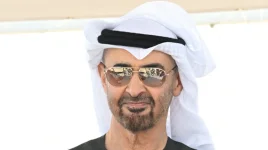
MBZ-headshot-AFP-.jpg.webp

By Sean Mathews in Washington
Published date: 28 April 2026

The UAE’s exit from Opec next month is a shot across the bows to Saudi Arabia and a potential offering to US President Donald Trump, in the latest sign the war on Iran is exacerbating old tensions in the Gulf instead of uniting the region.

On the surface, the UAE’s exit from the Organization of Petroleum Exporting Countries (Opec) is a culmination of its long-running spat with Saudi Arabia over how much oil member states should be allowed to pump.

Until recently, Riyadh wanted to limit supply to support prices while the UAE favoured looser production.

“The UAE has always been on the side of volume strategy, and the Saudis have been on the side of price strategy,” Arne Lohmann Rasmussen, chief analyst and head of research at Global Risk Management, told Middle East Eye.

This difference goes back to how the economies of Saudi Arabia and the UAE function. The former is home to 35 million people and holds more than double the UAE’s proven oil reserves.

The UAE has only one million citizens, and therefore fewer nationals share the oil profits pie. Meanwhile, the UAE has invested heavily in infrastructure that will allow it to pump and export more oil, which analysts call boosting production capacity.

“The UAE is the Opec country with the largest amount of spare capacity compared to production,” Rasmussen said. “You can argue that this is the right economic calculus because what's inside the ground might not have the same value that it will in five or ten years".

But experts say that before the US-Israeli war on Iran, Saudi Arabia had actually moved closer to the UAE’s position.

Riyadh, which once warned oil traders they would be “ouching like hell” if they doubted the kingdom’s dedication to curb oil supplies, threw in the towel and backed massive increases in production.

'This is political'​

“The policy differences between the UAE and Saudi Arabia have been there for a long time, but Saudi Arabia has pivoted to taking back market share, and the war has actually made their old argument less salient. This exit is much more political,” Greg Priddy, a senior fellow for the Middle East at the Center for the National Interest, told MEE.

The departure of Opec’s third-largest producer comes at a time when Abu Dhabi is lobbying the US to continue its war on Iran and nudging closer to Israel.

Axios reported this week that Israel sent an Iron Dome air-defence system and technicians to the UAE, when the small Gulf state was under Iranian drone and missile attack.

The Gulf states are home to thousands of US troops and are joined at the hip to US weapons systems. The region has generally rallied behind the US despite frustration that it ignored their pleas not to attack Iran.

Saudi Arabia has helped the US wage war on Iran by providing enhanced basing access and overflights, but it has also backstopped mediation efforts by its close partner, Pakistan.

In contrast, the UAE has lobbied publicly and privately for the US to continue attacking Iran and tried to prevent Pakistan from bringing the US and Iran together for talks.

Leaving Opec for a US defence deal?​

Leaving Opec as the US weighs whether to cut a deal with Iran or continue the war could be seen as a bid to court Trump, who long accused the Opec cartel of “ripping off the rest of the world”.

"It is possible that this break could also be [the] result of some sort of ‘deal’ between [the] UAE and Israel [and the] US, wherein they helped defend the UAE from Iran in exchange for delivering a major blow to Opec, which Trump has long sought,” Ellen Wald, a senior fellow at the Atlantic Council and author of Saudi Inc, a history of Aramco, wrote in a LinkedIn post.

“I would not be surprised if we see some sort of defense agreement announced in the near future,” Wald said.

There are signs that the UAE is hedging for a long spell of volatility and doubling down on its partnership with the US.

MEE previously reported that UAE Foreign Minister Sheikh Abdullah bin Zayed told US Secretary of State Marco Rubio that Abu Dhabi is prepared for the war to last up to nine months.

Earlier this month, the UAE approached the Trump administration for a currency swap line, which would ensure the Emirates' access to US dollars if its reserves run dry.

The UAE’s decision to leave Opec is part of its wider rivalry with Saudi Arabia, analysts say. The Saudis dominate the group, and a looser cartel that includes Russia, dubbed Opec+.

“This will piss off the Saudis,” a western diplomat in the region told MEE. “It seems like the UAE has something bigger in mind.”

Saudi Arabia is the largest country in the region, and like the UAE, it has ambitions to project power abroad. In fact, Saudi Arabia attacked the UAE’s allies in Yemen just before the war on Iran erupted. The two countries are backing opposing sides in Sudan’s civil war.

Iran’s attacks on the Gulf sparked some speculation that the war would bring the region’s two erstwhile friends back together, but as the conflict drags on, it appears that Abu Dhabi and Riyadh are accelerating their competition.

For example, MEE revealed that weapons shipments from Pakistan paid for by Saudi Arabia started arriving in eastern Libya to Khalifa Haftar in March, whose army Riyadh is trying to pull away from the UAE.

'The UAE empowered'​

UAE Energy Minister Suhail al-Mazrouei said in an interview that leaving Opec, a long-term UAE objective, was actually made easier by the conflict: “The timing in our view is right because it has a minimum impact on all of the producers."

“The UAE has a profoundly different view on energy production than Saudi Arabia, and this means they no longer have to listen to the Saudis, who set the terms in Opec,” Bernard Haykel, a professor of Near Eastern studies at Princeton University, told MEE, who added that the UAE has weighed leaving Opec for years.

“They finally did it, probably because of the war. Everything is up in the air, and there is an opportunity to make dramatic decisions,” Haykel added.

“In practical terms, the Emiratis have very considerable spare capacity. If they want to play the role of market regulator like the Saudis have, they can do it. This empowers them in a big way.”

Energy analysts agree that the move is well-timed.

Iran and the US’s competing blockades over the Strait of Hormuz mean energy flows through the Gulf have all but ceased. The UAE, which was exporting around 3.5 million barrels per day (bpd) of oil before the war, is now sending around 1.9 million bpd via a pipeline terminating at Fujairah port, bypassing the Strait of Hormuz.

Theoretically, the UAE has around one million spare bpd of capacity.

“If the UAE exited Opec before the war, it would have been a big deal,” Priddy, at the Center for the National Interest, said.

“But any extra capacity is not going to come onto the market right now because of the war. Even if the war ends, there is going to be enough of a hole in global inventory levels that their higher exports can be absorbed," he added.

But longer term, experts say, the UAE will be sounding a death knell to the 65-year-old energy alliance started by Iran, Iraq, Kuwait, Saudi Arabia, and Venezuela.

“This is a big blow to Opec,” Rasmussen said. “We could be writing its obituary.”

 
View attachment 194605

The United Arab Emirates (UAE) is quitting the Opec and Opec+ groups of major oil producing nations next month after nearly 60 years of membership.

The UAE said its decision would help it meet growing global energy demand in the long term after recent investments to boost its production capacity.

It is seen as a blow to the cartel, with one analyst describing the exit as "the beginning of the end of Opec".

The Gulf state's energy minister said being a country with no obligation under the groups would give it more flexibility.

Opec was formed in 1960 by five countries - Iran, Iraq, Kuwait, Saudi Arabia and Venezuela - and its aim has been to co-ordinate production to provide steady revenue for its members.

The number of countries in the cartel has fluctuated over the years, but in addition to the five founding members it also includes Algeria, Equatorial Guinea, Gabon, Libya, Nigeria and the Republic of the Congo.

The UAE joined in 1967, and its departure will leave the cartel with 11 members. There are an additional 10 non-Opec members in the wider Opec+ alliance.

Saul Kavonic, head of energy research at MST Financial, said it was "the beginning of the end of Opec".

"With the UAE leaving, Opec loses about 15% of its capacity and one of its most compliant members."

The UAE's decision came as the World Bank warned the war in the Middle East has caused the biggest loss of oil supply on record.

Energy prices will rise by about a quarter on average as a result this year, it said, while it could take six months for shipping through the key Strait of Hormuz to return to pre-war levels.

"The poorest people, who spend the highest share of their income on food and fuels, will be hit the hardest," said the World Bank's chief economist Indermit Gill.

The UAE's decision to leave Opec will not have an immediate impact on global energy supply, due to the ongoing closure of the Strait of Hormuz, but could lead to a longer-term boost in output.

The country has invested heavily in boosting its production capacity and has wanted for a long time to pump more oil, economists said.

David Oxley, chief climate and commodities economist at Capital Economics, said its departure could lead to lower oil prices but higher volatility on the market in the coming decades.

He added that while the UAE is small, the implications could be major if other member states leave, or countries such as Russia and Saudi Arabia decide to ramp up production as a result.
Dr Carole Nakhle, chief executive of Crystol Energy and secretary general of the Arab Energy Club, told the BBC the UAE's decision "has been a long time in the making".

"Abu Dhabi has pursued ambitious production capacity growth, yet often felt constrained by group quotas, especially amid uneven compliance by some members," she said.

Nakhle added that Iran's actions as an Opec member were likely to have reinforced the UAE's decision.

According to the latest figures from Opec, UAE produces 2.9 million barrels of oil a day. Saudi Arabia, the de facto leader of Opec, produces nine million barrels of oil.

"Saudi Arabia will struggle to keep the rest of Opec together, and effectively have to do most of the heavy lifting regarding internal compliance and market management on its own," Kavonic said, adding other Opec members could follow suit.

"This present a fundamental geopolitical reshaping of the Middle East and oil markets," he added.
Already posted elsewhere
 
With all this, it is very obvious that the main target of all these evil countries is the KSA. The enemies of islam sure trying their best to target the KSA.
little do they realize that no matter what they try, they will NEVER hurt the Holy Cities of Makkah and Madinah. Almighty Allah's will overcomes all and nobody can challenge HIM
these evil/enemies shall bite the dust soon and will be finished
 
US wants to end the OPEC monopoly and UAE is 15 percent shared holder of OPEC. Now OPEC will be a dead organization.
Also, US and UAE, I am sure Israel also, they are raising army in Congo to takeover the rare mineral resources'. As you know Congo is the most richest country but...............
Bahrain and Kuwait also analyzing if its worth to stay in OPEC or will of US. If OPEC breaks, then price control will be gone.
 
Last edited:

Users who are viewing this thread

Pakistan Defence Latest

Back
Top