US Defence related thread

JUST IN: US Air Force Insufficient to Counter China, Report Finds​

4/9/2026
By Tabitha Reeves

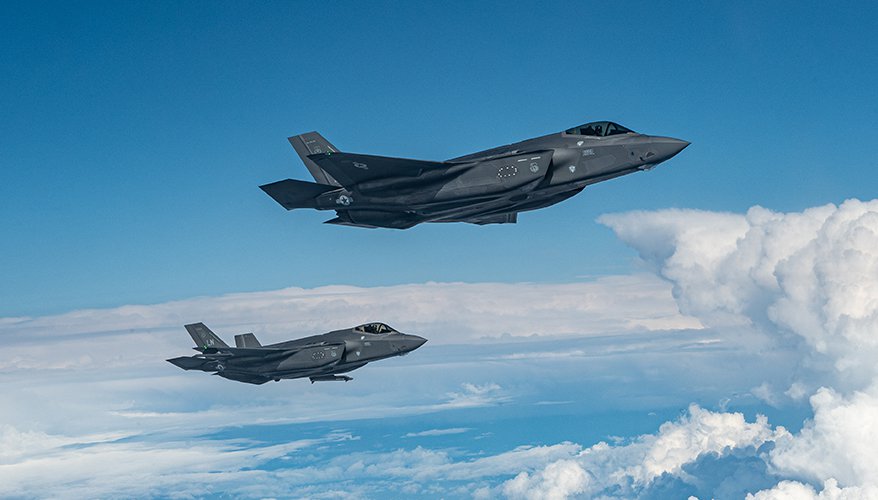
two-us-air-force-f35a-lightning-ii.jpg

Two Air Force F-35A Lightning II fighters

The Air Force’s capabilities and capacity are currently insufficient to counter China in combat, necessitating a steady funding surge to expand and modernize the service, according to a report released April 9 by the Mitchell Institute for Aerospace Studies.

“Decades of divestment and deferred recapitalization have yielded a U.S. Air Force fighter force that does not have enough capacity, range and survivability to achieve air superiority, nor can it provide the strike density required to defeat peer aggression,” said the report, “Rebuilding American Airpower: Balancing the Air Force’s Combat Forces for Peer Conflict.”

The report was based on a wargame experiment led by the Mitchell Institute in June 2025 that tested two theoretical Air Forces acting in defense of Taiwan in 2035. One of the imagined forces received partial modernizations in the decade leading up to 2035, while the other gained consistent additional resources over the same time period, resulting in a more fully recapitalized force.

The first version — undersized and only somewhat modernized — had to pick between missions to complete and “could not generate enough maritime strikes and other combat sorties to prevent the [People’s Liberation Army] from achieving an irreversible lodgment on Taiwan,” the report said.

The other, meanwhile, carried out a greater number of strategic attacks, successfully degraded the adversary and possessed more overall advantages compared with its alternative. However, even the more modernized Air Force faced capacity challenges.

“Neither team had enough forces and other resources to fight a protracted war with China, and that's the direct legacy of downsizing the Air Force's combat inventories year after year over the last 30 years,” said Mark Gunzinger, director of future concepts and capability assessments at the Mitchell Institute for Aerospace Studies and co-author of the report, during a report rollout event April 9.

The report outlined 12 recommendations to rebuild and strengthen the service to meet growing operational demands and win future wars.

Of the recommendations, Gunzinger highlighted that the Air Force must grow in size to avoid pulsing its offensive strikes during combat, since infrequent pulsing leaves gaps for China to advance and regenerate its strength.

Additionally, the Pentagon must accelerate the development and fielding of the Boeing F-47 and the Northrop Grumman B-21 Raider as much as possible. Congress should fund the acquisition of at least 300 F-47s and 200 B-21s, as the lack of such aircraft is one of the nation’s primary shortcomings, the report said.

The Defense Department and Congress should also embrace the Air Force’s Collaborative Combat Aircraft program, which develops autonomous, AI-driven systems to fly alongside piloted fighters, the report said.

Importantly, uncrewed systems should operate in complimentary roles as force multipliers — not replacements for piloted aircraft, Gunzinger said.

While a future China conflict would be a joint fight, it would “predominantly occur in the air, space, cyberspace and maritime domains,” Gunzinger said. “And that fact should inform our nation's defense budget allocations across the services.”

Attacking deep into adversary territory and achieving air superiority requires a balanced mix of enough F-47s, B-21s and uncrewed aircraft, he added.

The most significant difference between the two theoretical forces during the wargame experiment was the first version’s lack of long-range penetrating counter air strikes. That force consumed its long-range munitions stockpiles rapidly, illustrating a real-world need “for the Air Force to continue to develop and field a family of affordable mass munitions for long- and short-range kill chains,” Gunzinger said.

Acquiring low-cost effectors is crucial, “and expanding the vendor base would also drive munitions inventory sizes and replenishment timing,” he said.

The United States has recently expended significant munitions in the war in Ukraine, as well as in Operation Epic Fury in Iran, noted David Deptula, dean of the Mitchell Institute, during the event.

Secretary of War Pete Hegseth has said the United States possesses enough weapons to pursue its goals in Iran for as long as necessary, while analysts have expressed concerns about the conflict’s rapid rate of costly missile consumption and the defense industrial base’s ability to replenish stockpiles.

“I want to stress very clearly three things: munitions, munitions, munitions,” Gunzinger said. “The Air Force is developing some incredible next-gen weapons, but it must have enough of them to fight a war with China and maintain stockpiles in other theaters to deter opportunistic aggressors.”

To do so, the industrial base’s munitions production ability must expand significantly, as even the most advanced aircraft fall short when there are not enough weapons for war, he said.

“An Air Force that cannot achieve air superiority, conduct strategic attacks and provide the needed combat mass over long ranges — which no other service can bring to the fight — threatens America’s credibility as a global power,” the report said.

“Allowing the Air Force to continue its decline is a choice that incurs serious risks to U.S. national security — but it must be reversed,” it added.
 
The United States Air Force is second to none. Full stop...
 

The US Air Force's small, aging fleet is losing its edge over China

By Chris Panella
Sep 10, 2025, 5:17 PM GMT+8

A US Air Force F-22 Raptor, soon to be replaced by the Next Generation Air Dominance fighter.


The Air Force faces a number of problems that raise questions on its readiness for a possible future war. US Air Force photo by Staff Sgt. Stefan Alvarez

  • The US Air Force's fleet is continuing to shrink and age with newer fighters delayed or still in development.
  • A new Mitchell Institute report examines decades-old challenges facing the service.
  • US military leaders are concerned about potential airpower challenges in a near-peer conflict.
The US Air Force's fleet of aircraft is steadily shrinking and aging, raising concerns as pressure mounts for American airpower to be ready for future wars.

Budget cuts, decades of heavy combat use, aircraft losses to retirement, and slow or stalled modernization programs have left the Air Force with a fleet that is smaller and older than it once was. These are problems leaders acknowledge as they confront China's expanding military and the possibility of conflict.

A new report from the Mitchell Institute for Aerospace Studies, authored by retired Air Force Col. John Venable and analyst Joshua Baker, traces how decades of changes have shrunk the Air Force's fleet from its Cold War strength, while also warning that the US now faces a tougher threat environment from China, Russia, Iran, and North Korea with growing gaps in readiness.

"While capacity, capability, and readiness deficiencies exist in the Army, Navy, Marine Corps, and Space Force," the authors note, "shortfalls are particularly acute in the US Air Force, which is now the smallest, arguably the oldest, and unquestionably the least ready in its history."

US Air Force aircraft line up on the flight line for an elephant walk during a routine readiness exercise at Kadena Air Base.


The Air Force's fleet size will continue to shrink in the coming years. US Air Force photo by Airman 1st Class Amy Kelley

Since the end of the Cold War, the number of fighter jets and other aircraft ready to fly has decreased severely. In 1987, the US had around 4,253 fighters, 393 bombers, and 309 intelligence, surveillance, and reconnaissance aircraft. There were 1,941 combat-ready fighters in 81 active-duty squadrons either based in the European theater or capable of rapidly deploying there were a fight ever to break out.

As of 2024, those numbers are just a fraction of Cold War sizes. Over three decades, the Air Force's inventory has dropped to 2,026 fighters, 140 bombers, and 297 ISR platforms.

This sharp decline has come even as Air Force leaders argue its mission sets have expanded. "While these missions have been growing, our Air Force has been getting smaller," said Gen. Dave Goldfein, then-Air Force Chief of Staff, in February 2017. "We're actually the smallest Air Force we've ever been."

Decades of wars have worn down the Air Force's aircraft, and pilots today get fewer flight hours than before, even as their training increasingly focuses on a possible fight with China.

"The bottom line," the authors of the Mitchell Institute report wrote, "is that the Air Force has sustained a high level of operational demand with fewer aircraft and crews to carry the load for decades, pushing the force ever closer to burnout."

Making matters worse, "modernization programs to backfill aging aircraft were delayed, truncated, or canceled. Older aircraft with extended service lives break more frequently, costing more to sustain," they said, adding that "this reduces their availability and further stresses the force."

Last year, the Government Accountability Office, a watchdog agency, said that continuous deployments over the previous two decades had notably reduced Air Force readiness, personnel, equipment, and aircraft.

And, at a think tank event last February, Lt. Gen. Richard G. Moore, deputy chief of staff for plans and programs for the Air Force, addressed how these problems affect service efforts to shift focus to great-power competition and conflict after decades of counterinsurgency and counterterrorism fights.

"As we come out of counterinsurgency warfare and look to pivot towards peer competition or peer conflict with a very different adversary," he said, "we have not 4,000 fighters but 2,000. They average not 8 years old but 28 years old. Our pilots are flying not 18 to 20 hours a month but six to eight hours a month. And we're ready not for great-power competition but for counterinsurgency warfare."

US Air Force F-35 pilot cockpit


The F-35 program has been muddled with budget, timeline, and readiness challenges. (US Air Force photo/Staff Sgt. Jensen Stidham)

After the Cold War, US defense budgets fell, with Air Force procurement funding dropping 52% between 1989 and 2001. Cuts to the fleet meant to sustain remaining aircraft instead fueled what the report's authors call a "capacity death spiral."

Some aircraft programs ultimately delivered far fewer planes than initially planned. The B-2 stealth bomber dropped from 132 to 21, while the F-22 fighter was cut from 750 to just 187 amid rising costs, economic pressures, and other priorities.

With the newer F-35 Joint Strike Fighter, deliveries are falling behind amid reductions in purchases caused by delayed upgrades. These challenges come amid soaring sustainment costs, even as aircraft are flying less with insufficient mission readiness rates.

In its 2026 budget, the Air Force plans to buy just 24 F-35s — half the original target — while retiring the entire A-10 Warthog fleet two years early. Production of the new B-21 stealth bomber is ramping up, but overall fleet numbers are still headed down.

The strain isn't limited to fighters and bombers. The Air Force's tanker, airlift, and intelligence fleets are also aging, with recapitalization programs facing similar delays and cost pressures.

The Air Force expects its aircraft fleet to keep shrinking amid budget uncertainty; however, leaders argue that new stealth, strike, and electronic warfare capabilities could partly make up for fewer planes.

US air power problems come as rival China's air force is expanding rapidly, building new aircraft, modernizing its fleet, and investing heavily in uncrewed systems.

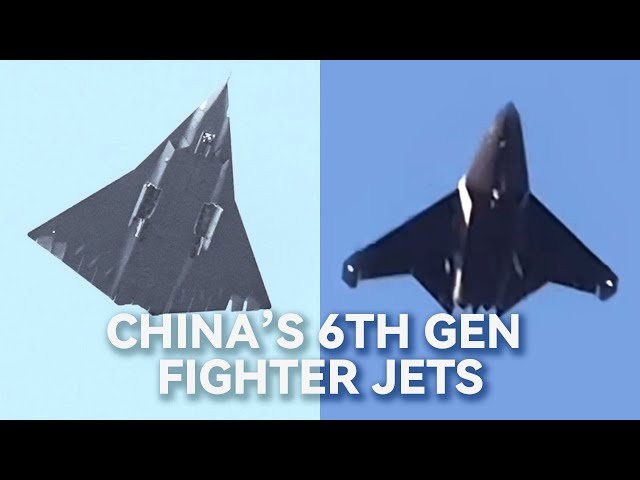
According to the Pentagon's 2024 report on China's military, the People's Liberation Army Air Force (PLAAF) and Navy together field about 2,400 combat aircraft, including fighters and bombers. Most are fourth-generation planes, like the US, but Beijing is also fielding fifth-generation J-20 stealth fighters, upgrading them, and developing at least two sixth-generation designs expected in the early 2030s. The US is, likewise, pursuing a sixth-gen fighter on top of efforts to upgrade its advanced fifth-gen jets. There's a clear capability race underway.

The growing numbers and capabilities of China's air force have long troubled US military leaders.

In April Adm. Samuel Paparo, the head of US Indo-Pacific Command, told Congress that China is making fighters at a rate of 1.2 to 1 over the US. He also gave China "high marks" in its ability to prevent the US from achieving air superiority within the first island chain, a strategic arc of territory stretching from Japan through Taiwan to the Philippines.

In a conflict, neither side would likely be able to dominate the skies completely. Experts and former Air Force leaders have said that future fights are more likely to be defined by short windows of air control, with space, cyber, electronic warfare, and information operations playing a decisive role, a far cry from the uncontested air dominance the US once enjoyed.


Top Commander: China 'Outproducing' US in Fighter Jets

Wednesday, 23 April 2025 10:33 AM EDT

The U.S. military must refocus priorities to counter China's higher production in air, maritime and missile capability, according to a senior Navy admiral.

While testifying before the Senate Armed Services Committee, the commander of the United States Indo-Pacific Command (USINDOPACOM) offered ominous news on China's military.

"As the most consequential opponent, China poses real and serious challenges to our military superiority," Adm. Samuel Paparo said in his statement to the committee on April 10. "However, these challenges also present opportunities for reform and establishing enduring advantage.

"While USINDOPACOM faces significant challenges, I remain confident in our deterrence posture and ability to defend U.S. interests and maintain regional stability — but the trajectory must change. China is outproducing the United States in air, maritime, and missile capability."

Paparo told the committee that China, after building the world's largest naval force, is rapidly developing its air combat capabilities.

He said Beijing is investing heavily in modern combat aircraft and currently has 2,100 fighters and 200 H-6 bombers. The admiral warned that China is "producing fighters at a rate of 1.2 to 1 over the United States."

Paparo added that China "has an air force that is capable of denying the U.S. air superiority in the First Island Chain," the strategic archipelagos in East Asia comprising Taiwan, Japan, and the Philippines.

He warned that China's "advanced long-range air-to-air missiles also present a tremendous threat."

"If you do not hold the high ground along the first island chain, you are vastly limited in your ability to operate," Paparo said. "I think everybody knows the importance of the high ground. So ceding air superiority is not an option if we intend to maintain capability against our adversaries and the ability to support our allies."

Paparo added that neither side would earn complete "air supremacy" in a U.S.-China conflict.

"Air supremacy is the complete mastery of the air. Neither side will enjoy that," he said. "But it will be my job to contest air superiority, to protect those forces that are on the first island chain, such as the 3rd Marine Expeditionary Force, and also to provide windows of air superiority in order to achieve our effects."

Republican and Democrat lawmakers made their first trip to Taiwan under the new Trump administration last week. The bipartisan effort aimed to show Taiwan and China that U.S. support for Taiwan's defense remains broad, despite recent tensions in trade relations.

https://www.newsmax.com/newsfront/us-china-military/2025/04/23/id/1208002/
 

China's air force has technology that rivals the US's and it could be pivotal in any conflict over Taiwan​

Wed 21 JanWednesday 21 January
Six fighter jets fly in formation in the sky with a Chinese flag in the foreground

China could have 1,000 aircraft in service by 2030. (Reuters: Tingshu Wang)

In short:​

China's rapid military advancement is continuing, with key technologies now rivalling those of the US and other Western countries, a new report has said.

Beijing has also improved its domestic production of fighter jets, building more per year than the US purchases of a similar model.

Experts say the improvements could prove pivotal in any conflict over Taiwan.

China's air force now seriously threatens the US and Western counterparts in key areas, representing "a potentially revolutionary challenge" to the Indo-Pacific region, a new report says.

It has long been assumed that the US had a superior air force to China and would comfortably handle any aerial battle in any conflict involving Taiwan.

China claims Taiwan as its own territory and Beijing has not ruled out taking it by force.

Experts have told the ABC that China's modernising military technology would make it harder for other countries to intervene in any conflict over Taiwan.

"The PLA (People's Liberation Army) now fields a range of capabilities that can threaten US air force aerial refuelling tankers, US navy carrier groups and forward air bases at 1,000 kilometres or more," the new report from the Royal United Services Institute (RUSI) said.

The London-based defence and security think-tank report added the weapons included "thousands of long-range ground-based, air-launched and maritime ballistic and cruise missiles, as well as long-range ground-based surface-to-air missiles and long-range air-to-air weapons carried by hundreds of advanced fifth-generation fighters".

A jet plane flies through the air against a blue sky

China's production of J-20 stealth fighter jets has steadily grown in recent years. (China Daily via Reuters)

China's domestic production of the J-20A stealth fighter jet has now exceeded 120 planes per year, the report said, more than double the number of US purchases of the similar F-35 aircraft.

Combined with other aircraft the PLA Air Force (PLAAF) is acquiring, the report's author, Justin Bronk, has estimated there would be 1,000 jets operating in the Chinese fleet by 2030.

Dr William Matthews, an independent researcher and consultant specialising in China, said this was significant.

"China … is modernising its fleet at a faster pace than the US is advancing its own capabilities, including through indigenising the production of components including advanced engines," Dr Matthews told the ABC.
"This means the potential is there for China to overtake the US as the world's leader in advanced combat aircraft, and there is a very real possibility that it becomes the first country to deploy a sixth-generation aircraft.

"This would mark an unprecedented milestone in China–US military competition."

Fifth-generation planes are the most technologically advanced in the world currently, flying in highly contested environments against the most modern air and ground threats.

The RUSI report found that the US could use its existing air force assets to achieve "localised and temporary windows of air superiority in a potential conflict".

Despite Beijing's efforts and that assessment, the top US jets are still technically more advanced than China's, according to Dr Williams.

One example of the US's capability was the mission to bomb Iran's nuclear facilities last year, which saw two B-2 stealth bombers fly from Missouri to Iran and back again to drop bunker-busting bombs.

China's modernising missile inventory​

Further underlining the modernisation of the Chinese military under President Xi Jinping, China now has two air-to-air missiles, the PL-15 and PL-17, that "significantly out-range not just Russian but also American and European equivalents", according to Dr Bronk.

A recent example came during the battle between Pakistani and Indian air forces last year.

In fighting that broke out after 26 civilians were killed in Indian-controlled Kashmir, a Chinese-built PL-15 shot down a French-made Rafael jet being flown by the Indian air force.

Sources told Reuters that India underestimated the range of the missile, which was reportedly built for international buyers.

Chinese media has previously reported on efforts to develop and test ultra-long-range missiles with ranges of 2,000 kilometres or more.

This effort was likely referenced by the US Department of the Air Force in a report to Congress in 2024.

"Counterair weapons with ranges out to over 1,000 miles [1,609 kilometres] and supported by space-based sensors will place aircraft, such as tankers, that have traditionally operated with impunity, at risk," it said.

Daniel Shats, China analyst at the Institute for the Study of War, said, however, that the US deployed the AIM-174B "gunslinger" missile to the Indo-Pacific in 2025, which has a confirmed range of 150 miles (241 kilometres) but "may be able to hit targets at ranges up to 300 miles [482 kilometres]".

He said if the extended range was confirmed, it would put the US on a par with China's PL-15 and PL-17 missiles.

Combat experience also critical​

However, Dr Matthews cautioned that technology was just one element of any possible war over Taiwan.

He said the US Air Force (USAF) had plenty of real combat experience, whereas the PLAAF had none.

"There are various reports of declining US pilot flight hours relative to their Chinese counterparts. Couple this with the fact that USAF combat experience, while extensive, has not been against a peer-level great power competitor since WWII. The picture is complicated," he said.

"However, in the event of a conflict, the balance is increasingly tipping away from the US … because the PLAAF would be committing most of its resources to such a conflict, whereas the USAF would be allocating part of its resources to the region and it would take time for further resources to be diverted from elsewhere, giving China a distinct advantage."

He said that China's growing domestic industrial capability would mean Beijing could replenish military losses much more quickly than the US, even if its planes were not quite as advanced.

China's near-global control of the rare earth minerals market, which are critical for making some high-end military equipment, could also see the US struggle to replenish lost stocks, he added.

While the PLA has achieved significant technological milestones in recent years, it has also been dogged by a corruption scandal in its ranks.

A number of senior officials have been purged, raising questions about how ready the PLA is to fight a war from a leadership perspective.

What does this mean for Taiwan?​

Daniel Shats said in any attempt to take Taiwain, Beijing would focus on protecting ships taking troops to the island and hitting targets that threaten its operation.

He said that the PLA's new inventory would "make it more difficult for US and allied forces to enter and operate in the theatre of war, and especially to get close enough to attack PLA Navy ships — or ground targets in China such as launch sites and command centres".

"Weapons with a range of 200 kilometres or more are sufficient to strike anywhere on or above Taiwan, assuming they're positioned on China's coastline or are air-launched," Mr Shats said.

"Advances in China's ability to destroy or hold at bay enemy aircraft will in turn increase the number of troops it can land on Taiwan, and the speed at which it can do so — the most critical capability to actually seize the island."

An image showing Taiwan surrounded.

China has released this graphic showing the locations of its military drill surrounding Taiwan last month. (Credit: Chinese People's Liberation Army)
William Yang, senior analyst for north-east Asia at think-tank Crisis Group, said China could also use drones to exhaust Taiwan's air defence systems.

"In general, the PLAAF's enhanced combat capabilities mean Beijing would be able to paralyse Taiwan's defence capabilities, key infrastructure, and combat forces more effectively in the early stage of a potential attack on the island, while making any external attempt to intervene more difficult to accomplish," Mr Yang said.

Last year, Taiwan's President Lai Ching-te unveiled plans for a "T-Dome" air defence system, similar to Israel's Iron Dome, to counter Beijing's aerial threat.

Mr Shats said that plan, coupled with the proposal to increase defence spending to 5 per cent of GDP, was promising but warned that political gridlock was "a major obstacle to funding necessary defence spending".

Indo-Pacific efforts admirable but slow​

Other nations in the Indo-Pacific region, including Australia, Japan and South Korea, have taken significant steps to improve their air forces in recent years.

Combined, the three countries have 159 fifth-generation jets available to them, with Japan expecting delivery of 120 more F-35s in the near future.

The US has 600 fifth-generation aircraft at its disposal.

Both the US and Australia can also deploy dozens of specialty aircraft with early warning and enemy air defence suppression technology, which Mr Shats said was "essential for enabling combat aircraft to operate in a contested environment, such as the People's Republic of China's air defence bubble".

He said the US was also moving to enhance its detection technology so it could pick up aircraft like China's J-20 earlier.

"The US continues to invest billions of dollars into strengthening its regional bases, early warning systems, and the integration with allied forces across the [Indo-Pacific] region," Mr Yang said.

"Meanwhile, a major part of Japan's recent defence modernisation focuses on enhancing the self-defence forces' long-range strike capabilities and their interoperability with American forces."

He said Taiwan was continuing to focus on asymmetric defence capabilities, like drones and other technologies that are more manoeuvrable and cheaper than traditional military hardware.

"Overall, while these efforts are all in the right direction, they are still lagging behind the pace of the PLA's modernisation efforts," he said.


China outbuilding America in sky, sea, and space: US commander sounds alarm

Story by TOI World Desk


China outbuilding America in sky, sea, and space: US commander sounds alarm

China outbuilding America in sky, sea, and space: US commander sounds alarm

Admiral Samuel Paparo, head of the US Indo-Pacific Command, raised alarms on Thursday about China’s intensified military presence around Taiwan, suggesting that recent maneuvers are far more serious than standard drills.

"With military pressure against Taiwan increasing by 300%, China's increasingly aggressive actions near Taiwan are not just exercises, they are rehearsals," Paparo said while addressing the Senate Armed Services Committee. He described China’s strategic shift as part of a broader modernization effort that threatens not only Taiwan but also US interests and allies across the region.

"China's unprecedented aggression and military modernization poses a serious threat to the homeland, our allies and our partners," he emphasized, calling attention to the growing regional instability provoked by Beijing’s actions.

While Taiwan considers itself an independent, sovereign nation, it is still officially recognized as part of China under the "One China" policy — a stance maintained by the United Nations, the US, and China itself. However, tensions continue to rise as Beijing steps up efforts to "reunify" Taiwan with the mainland, a goal that both Washington and Taipei have warned would upset the balance in the Indo-Pacific.

Beyond the Taiwan Strait, Paparo also cautioned lawmakers about the broader implications of China’s accelerating military production. “China's outproducing the United States in air missile, maritime and space capability and accelerating these," he stated.

He offered a stark comparison, noting that the Chinese military is building fighter jets at a rate 1.2 times that of the United States and is also outpacing the US in the production of naval vessels, advanced missiles, and space technologies. “I remain confident in our deterrence posture, but the trajectory must change,” Paparo concluded, signaling an urgent call for US defense innovation and readiness.

 
What the Yanks are crying for ? I thought they brag often that the top three air forces in the world, not just the top one, are all American by large margins, China's air force only ranks number 6 in the world.
 
What the Yanks are crying for ? I thought they brag often that the top three air forces in the world, not just the top one, are all American by large margins, China's air force only ranks number 6 in the world.
LOL, good enough to overpower Iran?
 
  • Haha
Reactions: ety
To view this content we will need your consent to set third party cookies.
For more detailed information, see our cookies page.


DDG 124 has been commissioned into service
 
To view this content we will need your consent to set third party cookies.
For more detailed information, see our cookies page.
 

Users who are viewing this thread

Back
Top