US Defence related thread

Bro , forget the wonder weapons analogy or call it red herring .... platforms evolve then they reach a stage where laws of diminishing returns set in.... for decades even American csg were wonder weapons , there was no effective counter to them...new carriers cost around 15 billion dollars , one hit by a missile ( you may call it a lucky hit ) and it's gone ... You launch a salvo 50 missiles and one of them hits the target it's game over my friend...
US CBG was never a wonder weapon, not ever since WW2, when we had the strongest CBG, and to be frank, ask any historian, and they will tell you the Japanese Carrier is a lot better than the American. The reason why we won is that we built more than the Japanese, and we didn't lose crew over a sunken ship (well, not that much). The same can be said when you compare the Sherman and the Tiger tank.

The majority of US military might comes from numbers; yes, technology plays a role, but numbers are the reason why we are ahead. We had 11 CBG (not counting the Assault Group, which is basically a mini-carrier) when the rest of the world can at most come up with 2 or 3; that's where the edge comes from.

On the other hand, when you talk about being hit and rendering it useless, that is a more complex concept than just saying "1 missile, call it a lucky hit or what, and it's gone". If you apply the same standard to literally everything else, then all war will come down to is just a dude picking up a $2000 a piece RPG because one hit of that, and your $4.5 million tank goes down in flames. If this is the case, why don't we just arm 20,000 soldiers with $2000 a pop RPG instead of getting a single Tank? You need to understand the concept of kill chain, and it's ALWAYS in favor of the defender than the attacker, regardless of what kind of kill vehicle you are talking about, be it a $2000 RPG against a multi-million dollar tank or a million dollar a pop cruise missile against a milti-billions Carrier, simply because there are 3 to 5 for everypart of a kill chain while you need all those to be green to hit something, you only need to counter one for the factor in the kill chain to fail.

On the other hand, the entire Joint Operation Concept is to make that kill chain easier to break (Or harder to break, depending on your stance). Where different parts of the equation play a different role for you to break that kill chain, not too familiar with how the Navy works, but let's use the RPG vs Tank example, when you add different platforms into the mix, it increases your "survival matrix" because that's when things operate with each other. Let's start with you have an RPG Team, and I have a tank, and you are attacking, that's the base, it ALREADY favors me to begin with, what if I add a squad of soldiers patrolling around my tank? It makes your RPG team even harder to hit me, and what if I add a helicopter flying ahead? It now makes it even harder for you to put that lucky strike on me. And that's how war works, whether or not you are talking about tanks or aircraft carriers. That's the same; if you are running an Aircraft Carrier, the strength is not from the carrier itself, that's just the objective outcome, the strength of that CBG is from a combined level of Destroyer, Cruiser, Submarine and Naval Aviation, because when you add that, it makes your cruise missile a lot harder to penetrate and hit me.
 
Didn't want to start a new thread, but during my visit to MegaCon Orlando there was a US Army booth, I went there to find out what was that about, they were basically recruiting, played some Video games there, and had a very interesting Talk with one of the US Army personnel.

Some of the questions, I asked were if I (35) years old on Green-card can join Army, and Answer was yes. He even said it would take less than a year before you become US citizen if you joined. They say the age has now raised to 42.

He suggest If I don't want to be deployed or be part of active warzone you can join as Reservists, and also keep your current job, and its by law the companies have to give days off to reservists for drills and training, Also Army reserves get priority when it comes to job promotions.

He said given you have a Masters Degree you can bypass to Officers level/Rank.

He mentioned lots of people are avoiding joining because of the narrative that America is fighting on behalf of Israel, which I was kinda shocked to hear from him because I was not expecting it.

He said he can connect me to a recruiter who I've also talk briefly, he also gave me his card if I ever decide to join.

I did mentioned about my Pakistani background, and living in US for 6 years now, he said it don't matter once you joined regular Army or reservists.

He said drills are off various nature including shooting, and other combat drills, for the time you stay on base your expenses are provided.

He asked if I ever worked for or any job related to military in Pakistan, which i didn't.
He asked if i have any medical or mental condition ,which I don't lol Thank God

Not gonna lie I did left very impressed, I mean given the length US army goes to protect its soldiers with systems which are unmatched, its a very tempting offer with handsome pay, awesome incentives, and path to citizenship (which i can take on my own). And if i had any student loans, Army help pays too.
While there is a path for a Direct Entry Officer, but I don't think you qualify for it, because it would require Citizenship, and of the 8 years I was in the Army, knowing hundreds, if not thousands of Officers, only 1 that join the rank as a non-Citizens but he is Australian and was a serving RAN officer and he went to Senate and got confirmed with a 3 star admiral backing


And even if you can join up as an officer, the pay wasn't really that good


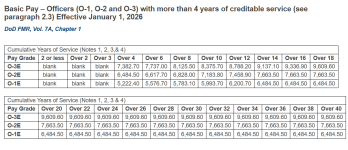
1774421388195.png
With 4 years TIG, you are looking at $5200 a month as a 2LT. And if you enlist instead of going Officer, it's half that much

And finally, the "Joining Reserve or National Guard and you won't get deployed" is BS, the KC-135 that crashed in Iraq was staffed with Reservists and Air National Guardsmen from Ohio.


I see that people are still BSing you and trying to have people join lol, probably nothing is going to change.
 
The US Army suspends the IFPC-HEL system and revises its laser missile defense strategy
High-energy lasers are back in the spotlight following the March 9 decision reported by the Congressional Research Service. The U.S. Army will no longer develop the 300-kilowatt system into a formal program and is reducing the effort to a single prototype for testing in New Jersey and then at Dugway, Utah. This prototype will subsequently be abandoned as a deployment candidate in favor of the Joint Laser Combat System, outlined in the fiscal year 2026 budget request.

This pivot, following the end of the SHiELD program and the difficulties of the DE M-SHORAD Guardian, reopens the question of the operational feasibility of directed energy weapons and high-energy lasers outside the laboratory.

The SHiELD program reveals insufficient maturity for airborne employment.​

The U.S. Air Force launched the SHiELD program in 2016 to integrate high-energy lasers onto fighter jets and support aircraft to counter air-to-air missiles and air defenses. The program has since been completed, with no further testing planned. "The SHiELD program is finished, and there are no plans for further testing and evaluation," said Dr. Ted Ortiz of the U.S. Air Force Research Laboratory. This initial signal confirmed that the technology is still not mature enough for airborne use.
On the ground, the US Army pursued a tactical approach with the DE M-SHORAD Guardian system. Initial operational trials began in mid-2021 to validate integration and performance in real-world conditions. Test systems were delivered to Fort Sill in September 2022 for evaluation by operational units. This shift from laboratory to field testing aimed to assess the effects on slow-moving targets and unmanned aircraft, within a framework representative of tactical constraints.
The schedule quickly slipped due to recurring technical difficulties. The US Army has delayed entry into service by at least a year, indicated Lieutenant General Rasch, who commands the Rapid Capabilities and Critical Technologies Office. The trajectory was extended to address performance and reliability gaps, revealing a high sensitivity to availability requirements and maintaining operational readiness outside of heavy infrastructure.
The Guardian prototypes deployed for trials in operational theaters, particularly in Africa, revealed significant heat generation, fragility in harsh environments, and a high level of technical support. Performance fell short of expectations, to the point that the future of the program was deemed seriously threatened. These findings raised fundamental questions about the environmental robustness of ground-based lasers and their ability to reproduce the effects observed in the test environment.
In parallel, the HELSI initiative delivered a 300-kilowatt demonstrator in September 2022. A contract authority signed in July 2023 initially targeted four IFPC-HEL prototypes. This ramp-up addressed a clear need to counter faster and more formidable targets than lightweight drones. In 2025, the Defense Intelligence Agency highlighted a significant gap in the US domestic defense against cruise missiles launched from Russian aircraft or Chinese naval assets, which shifted priorities toward more ambitious architectures.
The adjustments made to Guardian are reflected in the decision to recalibrate the IFPC-HEL (main illustration). A Congressional Research Service report published on March 9 revealed that the US Army no longer plans to transition its 300-kilowatt IFPC-HEL system, nicknamed Valkyrie, into a formal program.


Are they actually shelving HEL programs or just focusing on the DOD JLWS ?
 
Lockheed Martin Answers The Nation's Call And Quadruples Precision Strike Missile Production

DALLAS, March 25, 2026 /PRNewswire/ -- In a decisive move to guarantee American overmatch against any adversary, Lockheed Martin (NYSE: LMT) and the Department of War (DoW) announced a framework agreement to accelerate the production of Precision Strike Missiles (PrSM). The agreement builds on a previous $4.94 billioncontract award from the U.S. Army last year and together, these actions will quadruple PrSM production capacity.


Lockheed Martin is mobilizing the full might of its industrial and technological power to build the Arsenal of Freedom by dramatically accelerating production of this critical munition, leveraging next-generation technologies to build faster and better.

This initiative directly supports the national imperative to build a more lethal, resilient and ready fighting force, backed by a stronger, advanced industrial base. The agreement includes the ability to negotiate a multi-year contract up to seven years, should Congress grant multi-year authority, contingent upon future congressional authorization.

The agreement marks the latest commitment Lockheed Martin has made to expand and strengthen the Arsenal of Freedom, creating high-paying, highly skilled jobs that will secure peace through strength for generations to come.

WHY IT MATTERS

On March 4, U.S. Central Commandconfirmed that long-range PrSM was used in combat for the first time during Operation Epic Fury, marking the system's operational debut and demonstrating expanded deep-strike capability.

Designed to succeed the legacy Army Tactical Missile System (ATACMS), PrSM delivers extended range, improved lethality and platform versatility. The system is enabled by mission integration and digital engineering across industry and government. In July 2025, the Army granted Milestone C approval for PrSM, signaling readiness for full production and deployment.

EXPERT PERSPECTIVE

"Lockheed Martin delivers the advanced precision fires capabilities the warfighter needs, including the Precision Strike Missile (PrSM), which expands deep-strike capability," said Lockheed Martin Chairman, President and CEO Jim Taiclet. "We are working closely with the Department of War and the U.S. Army to scale production to meet operational demand and ensure the joint force has the capabilities needed to deter and defeat emerging threats."

ADDITIONAL CONTEXT

  • Multibillion-Dollar Investment:Lockheed Martin has invested more than $7 billion since President Donald Trump's first term to expand capacity for priority systems, including approximately $2 billion dedicated to accelerating munitions production. These investments in facilities, tooling, suppliers and workforce are enabling higher production rates at speed and scale.
  • Acquisition Transformation Strategy: Lockheed Martin was the first in the industry to announce a framework agreement for munitions acceleration under the DoW's Acquisition Transformation Strategy, tripling production capacity of the combat-proven PAC-3® Missile Segment Enhancement (MSE) interceptor and a second agreement to quadruple the production capacity of Terminal High Altitude Area Defense (THAAD) interceptors.
  • Manufacturing Details: Lockheed Martin has more than 115,000 square feet of dedicated operations space in the United States for PrSM, with more than 400 U.S. employees supporting the program currently.
  • American Job Growth: To meet growing demand, Lockheed Martin continues to expand its workforce, creating tens of thousands of high-quality American jobs across manufacturing, engineering and skilled trades.
 
Lockheed Martin Answers The Nation's Call And Quadruples Precision Strike Missile Production

DALLAS, March 25, 2026 /PRNewswire/ -- In a decisive move to guarantee American overmatch against any adversary, Lockheed Martin (NYSE: LMT) and the Department of War (DoW) announced a framework agreement to accelerate the production of Precision Strike Missiles (PrSM). The agreement builds on a previous $4.94 billioncontract award from the U.S. Army last year and together, these actions will quadruple PrSM production capacity.


Lockheed Martin is mobilizing the full might of its industrial and technological power to build the Arsenal of Freedom by dramatically accelerating production of this critical munition, leveraging next-generation technologies to build faster and better.

This initiative directly supports the national imperative to build a more lethal, resilient and ready fighting force, backed by a stronger, advanced industrial base. The agreement includes the ability to negotiate a multi-year contract up to seven years, should Congress grant multi-year authority, contingent upon future congressional authorization.

The agreement marks the latest commitment Lockheed Martin has made to expand and strengthen the Arsenal of Freedom, creating high-paying, highly skilled jobs that will secure peace through strength for generations to come.

WHY IT MATTERS

On March 4, U.S. Central Commandconfirmed that long-range PrSM was used in combat for the first time during Operation Epic Fury, marking the system's operational debut and demonstrating expanded deep-strike capability.

Designed to succeed the legacy Army Tactical Missile System (ATACMS), PrSM delivers extended range, improved lethality and platform versatility. The system is enabled by mission integration and digital engineering across industry and government. In July 2025, the Army granted Milestone C approval for PrSM, signaling readiness for full production and deployment.

EXPERT PERSPECTIVE

"Lockheed Martin delivers the advanced precision fires capabilities the warfighter needs, including the Precision Strike Missile (PrSM), which expands deep-strike capability," said Lockheed Martin Chairman, President and CEO Jim Taiclet. "We are working closely with the Department of War and the U.S. Army to scale production to meet operational demand and ensure the joint force has the capabilities needed to deter and defeat emerging threats."

ADDITIONAL CONTEXT

  • Multibillion-Dollar Investment:Lockheed Martin has invested more than $7 billion since President Donald Trump's first term to expand capacity for priority systems, including approximately $2 billion dedicated to accelerating munitions production. These investments in facilities, tooling, suppliers and workforce are enabling higher production rates at speed and scale.
  • Acquisition Transformation Strategy: Lockheed Martin was the first in the industry to announce a framework agreement for munitions acceleration under the DoW's Acquisition Transformation Strategy, tripling production capacity of the combat-proven PAC-3® Missile Segment Enhancement (MSE) interceptor and a second agreement to quadruple the production capacity of Terminal High Altitude Area Defense (THAAD) interceptors.
  • Manufacturing Details: Lockheed Martin has more than 115,000 square feet of dedicated operations space in the United States for PrSM, with more than 400 U.S. employees supporting the program currently.
  • American Job Growth: To meet growing demand, Lockheed Martin continues to expand its workforce, creating tens of thousands of high-quality American jobs across manufacturing, engineering and skilled trades.

Current PrSM missile production is 400/year. This will increase production to 1,600+/year.
 
To view this content we will need your consent to set third party cookies.
For more detailed information, see our cookies page.
 
@LeGenD

You are vastly overrating the Iranian regime's role in relation to the Houthis in North Yemen. The Houthis - courtesy of elements of the Yemeni military defecting to them initially and afterwards - gained access to the Yemeni army missile stockpile - which was quite extensive for regional standards. Including local Yemeni missile experts who received their education in USSR/Russia. The only thing that Iran has done is help with drones and some missile components. The Houthis are the least reliant and most autonomous of Iran's few remaining proxies in the region.

Also it is worth noticing that North Yemenis (as other Arabians) have a famed military history when it comes to defeating their adversaries whether Ethiopians (in antiquity), Romans/Greek attempts of invasion of Arabia Felix (includes modern-day Southern KSA and Yemen), Ottomans on numerous occasions


and more recently the British Empire only managed to control South Yemen (Aden) and not the North Yemen kingdom.

More related to this thread:

@AZ_HighCountry @F-22Raptor @SolarWarden @Hamartia Antidote other American users

Do we know when the first batch of the Saudi Arabian F-35 will arrive in KSA? Also is it true that the first Saudi Arabian pilots are already undergoing training in the US as some rumors claim?

Also is it true that the annual production number of THAAD missiles has increased to 400?


Also will the current conflict impact deals like those below that have recently been signed? How long will such deliveries take - do we have any estimates or is it a secret?

To view this content we will need your consent to set third party cookies.
For more detailed information, see our cookies page.


To view this content we will need your consent to set third party cookies.
For more detailed information, see our cookies page.
 
Last edited:
Your entire post gives credence to what BW said.....if America has to work her ass off to contain the likes of houthis and Iran then what chances her carriers have against peer equals ?
Experience for one thing. The Chinese are relative newcomers to the carrier arena.
 
@LeGenD

You are vastly overrating the Iranian regime's role in relation to the Houthis in North Yemen. The Houthis - courtesy of elements of the Yemeni military defecting to them initially and afterwards - gained access to the Yemeni army missile stockpile - which was quite extensive for regional standards. Including local Yemeni missile experts who received their education in USSR/Russia. The only thing that Iran has done is help with drones and some missile components. The Houthis are the least reliant and most autonomous of Iran's few remaining proxies in the region.

Also it is worth noticing that North Yemenis (as other Arabians) have a famed military history when it comes to defeating their adversaries whether Ethiopians (in antiquity), Romans/Greek attempts of invasion of Arabia Felix (includes modern-day Southern KSA and Yemen), Ottomans on numerous occasions


and more recently the British Empire only managed to control South Yemen (Aden) and not the North Yemen kingdom.

More related to this thread:

@AZ_HighCountry @F-22Raptor @SolarWarden @Hamartia Antidote other American users

Do we know when the first batch of the Saudi Arabian F-35 will arrive in KSA? Also is it true that the first Saudi Arabian pilots are already undergoing training in the US as some rumors claim?

Also is it true that the annual production number of THAAD missiles has increased to 400?


Also will the current conflict impact deals like those below that have recently been signed? How long will such deliveries take - do we have any estimates or is it a secret?

To view this content we will need your consent to set third party cookies.
For more detailed information, see our cookies page.


To view this content we will need your consent to set third party cookies.
For more detailed information, see our cookies page.

I've no idea when the first F-35s will be delivered. There should be no doubt Saudi pilots are in the US undergoing training. KSA is also scheduled to receive the latest variant of the F-15. They may already be taking deliveries.

THAAD production needs to be increased by 4 or 5X what it currently is. If not more. Not to mention the need for a low cost solution to address drone threats. That is an area IMO where the US lacks.
 
To view this content we will need your consent to set third party cookies.
For more detailed information, see our cookies page.
 
From a production standpoint, anything at the current time isn't enough fast enough.

These type of production increases were needed years ago, but at least it’s now being addressed. It will be another 5 years to get to where we need to be on critical munitions production. There’s near term risk, but medium term we will be in a much better position.
 
I've no idea when the first F-35s will be delivered. There should be no doubt Saudi pilots are in the US undergoing training. KSA is also scheduled to receive the latest variant of the F-15. They may already be taking deliveries.

THAAD production needs to be increased by 4 or 5X what it currently is. If not more. Not to mention the need for a low cost solution to address drone threats. That is an area IMO where the US lacks.
I am raising this point because I have seen fairly reliable Saudi Arabian military experts claim that Saudi Arabian pilots had already begun training on the F-35 prior to the deal becoming official in November 2025. There have also been various indirect indications supporting this.

However, no official timeline has been announced for the delivery of F-35s to KSA. Given the ongoing conflict, delays may unfortunately occur.

The same uncertainty applies to the Patriot deal and other potential agreements. There is limited publicly available information on these matters, so my "concerns" may ultimately prove unfounded.

This article provides a thorough overview of the situation:

https://aerospaceglobalnews.com/news/us-approves-3bn-sustainment-package-for-saudi-f-15-fleet/

Regarding force capacity, a figure such as 400 appears far too low for a country the size of the US particularly considering its global military presence. The US industrial base could likely expand that number significantly—potentially by a factor of five to ten—if required.

On a related note, Ukrainian forces appear to be at the forefront of recent developments in this area. Their innovations have been particularly impressive.

Ukraine has demonstrated exceptional capability in this domain, and its operational experience, along with intelligence-sharing, is highly valuable. KSA has maintained positive relations with Ukraine and is regarded as a trusted partner.

There are also reports suggesting that Ukrainian operators may be present in KSA and elsewhere in the GCC to assist with training local personnel while we speak.

To view this content we will need your consent to set third party cookies.
For more detailed information, see our cookies page.


Additionally, Faisal Abbas, the director of Arab News, has frequently appeared on American and Western media platforms throughout the conflict.

Most interesting he reported that the Ukrainian military has achieved considerable success in countering Russian drones using low-cost drones costing approximately $1,000 to produce. KSA will seek to acquire similar technology while providing economic support to Ukraine in return.

To view this content we will need your consent to set third party cookies.
For more detailed information, see our cookies page.


The US might adopt the Ukrainian playbook if necessary. This entire problem (how to counter drones in an effective and cheap manner) is a significant concern for KSA, given the vast territory and the regional environment. I believe it is only a matter of time before an effective solution is developed at an industrial scale.
 
Speaking of the F-35, do we know how many F-35s Lockheed Martin plans to produce annually in the future?

2025 was a record year of 191 deliveries.


Will this number increase this year and next year given the current state of affairs of the world?
 
Speaking of the F-35, do we know how many F-35s Lockheed Martin plans to produce annually in the future?

2025 was a record year of 191 deliveries.


Will this number increase this year and next year given the current state of affairs of the world?
Generally depends on the number of orders. This isn't like automobiles. That said, Lockheed;s backlog is normally public information.
 

Users who are viewing this thread

Back
Top