US Defence related thread

To view this content we will need your consent to set third party cookies.
For more detailed information, see our cookies page.
 
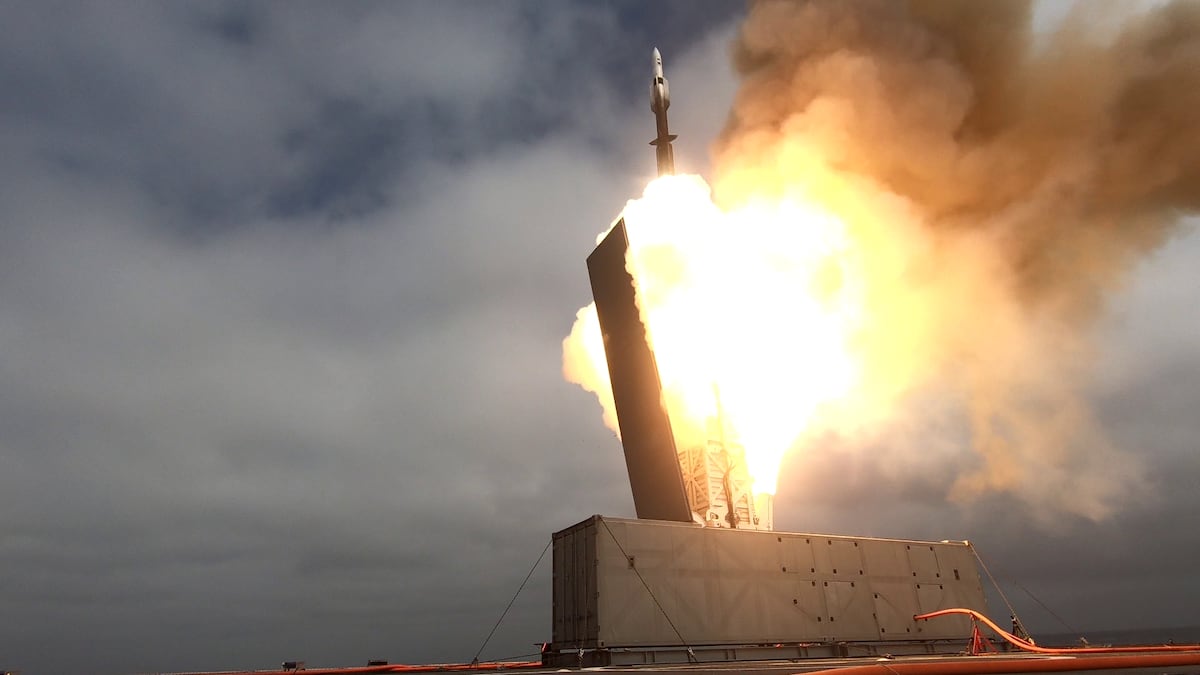
Odd deployment given that at most the USA has 2 dozen missiles as of now ( according to Scott Rittler, not sure how true that is ).

The USA may want to test it under combat conditions.
Anything reported by Scott Ritter should be taken with a grain of salt.
 
It will not be built or built in sufficient numbers. The project will fail and will be cancelled after spending a lot of money.
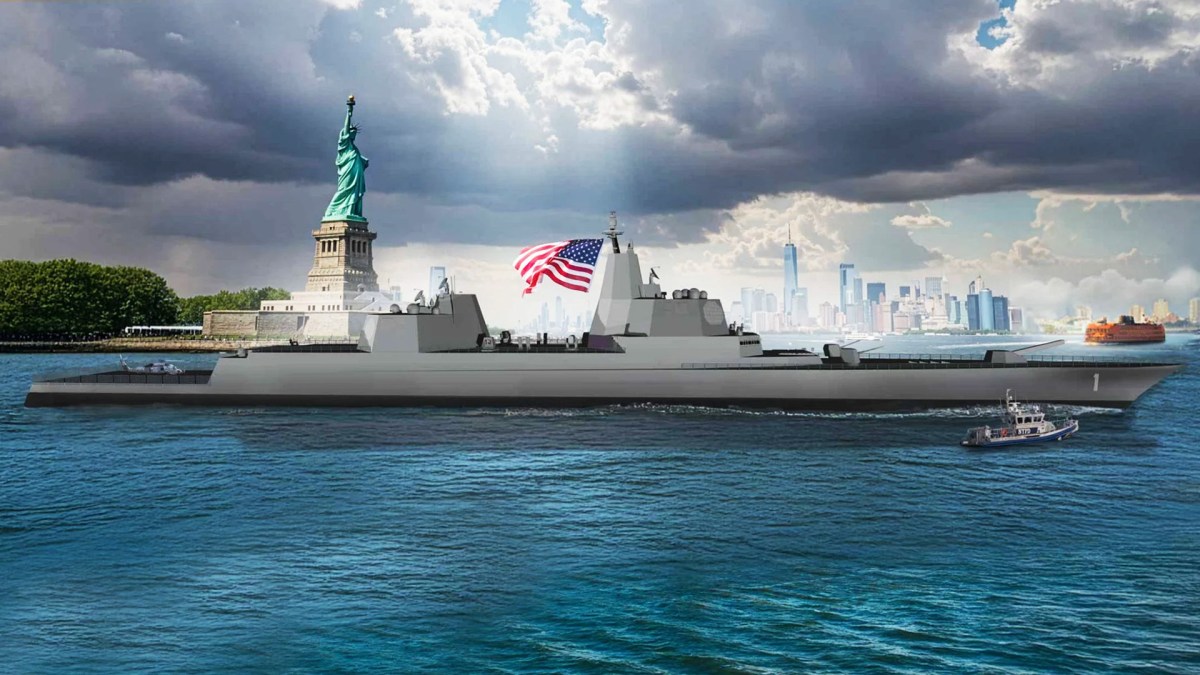
The only purpose this project serves is to stroke an ego or two. There is no need to resurrect the "battleship".
 
To view this content we will need your consent to set third party cookies.
For more detailed information, see our cookies page.
 
To view this content we will need your consent to set third party cookies.
For more detailed information, see our cookies page.


Each one to cost $17 billion !!! More than what some countries pay for an aircraft carrier.

Madness!
 
Each one to cost $17 billion !!! More than what some countries pay for an aircraft carrier.

Madness!
The US wants to keep the upper hand on the seas..the price doesn't matter to them..their next military budget is set to be 1.5 trillion dollars..
 
The only purpose this project serves is to stroke an ego or two. There is no need to resurrect the "battleship".
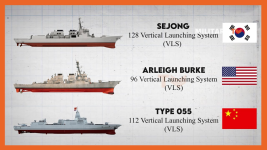
It's a missile carrier but yeah it's a vanity project. Personally I think they should continue with what works and that is Burkes! Burkes! Burkes! Modify VLS on the new ones to accept new weapons or built a bigger Burke version like the ROK navy Sejong the great-class destroyer/cruiser.
1778603632901.png
It's a Tico-class on steroids.
 
To view this content we will need your consent to set third party cookies.
For more detailed information, see our cookies page.


AGM-183 ARRW hypersonic missile now getting a new seeker to target moving ships
 
The only purpose this project serves is to stroke an ego or two. There is no need to resurrect the "battleship".
the ship may not be the most ideal for modern naval battles but many aspects of its design (firepower density, being nuclear powered for long deployments, ample amount of anti drone capabilities, etc) indicate it can be a great offshore counterinsurgency weapon, which is perfectly in line with Trump's vision for the US: an old fashioned colonial empire over the two American continent (and things were clearly heading that way until Iran). I can totally see the Trump class patrolling the coast of south America, one single ship packs enough firepower to suppress rebel groups or even a small army at coastal areas (large portion of south American population live close to shore, more so than any other continents)

few of Trump‘s ideas make actual sense, but I would say the battleship is one of them
 

Pentagon reaches agreements with defense firms on containerized missiles​


The Pentagon is set to announce on Wednesday framework agreements that position it to potentially acquire over 10,000 low-cost, containerized missiles over three years starting in 2027.

A statement seen by Reuters ahead of its release said that the Pentagon’s agreements are with Anduril, CoAspire, Leidos and Zone 5, and will together launch the “Low‑Cost Containerized Munitions (LCCM) program.”

The assessment phase of the program will involve purchasing test missiles from all four companies starting in June 2026. The statement did not provide a cost or specify the weapons systems from the four firms, but said the agreements established the terms for future firm-fixed-price production contracts.

The Army has long touted containerized weapons systems as a low-cost, mobile way to deploy missiles in standard shipping containers.

A separate agreement with defense startup Castelion lays out a plan to award a two-year contract for a minimum annual purchase of 500 Blackbeard missiles, which are Castelion’s first hypersonic strike weapon, once Castelion achieves testing and validation, the statement said.

It said the Pentagon was seeking authorizations and appropriations to purchase over 12,000 Blackbeard missiles over five years.

Michael Duffey, who as under secretary of defense for acquisition and sustainment is the Pentagon’s chief weapons buyer, said in the statement that the agreements show how the U.S. is moving beyond traditional “prime” contractors to expand the industrial base.

The agreements, he added, send “a clear, long-term demand signal to innovative new entrants.”

Emil Michael, under secretary of defense for research and engineering, said the agreements commit the firms to on-time, on-cost delivery.

“We will deliver affordable mass for our warfighters at unprecedented speed,” Michael said in the statement.

The Pentagon is ramping up its requests from Congress for funding for munitions, which are in high demand with the ongoing war in Iran.

General Dan Caine, chairman of the Joint Chiefs of Staff, said in written testimony this week that the Pentagon’s fiscal 2027 budget would fund over $26 billion for multi-year procurement contracts for critical munitions.

 
$1.5 trillion for hegemony: How does the Pentagon plan to modernize the "nuclear triad" in preparation for all-out war scenarios?

1778703045619.png

The Pentagon has unveiled a historic $1.5 trillion defense budget proposal for fiscal year 2027. The proposal, which Defense Secretary Pete Hegseth reviewed before the Senate Armed Services Committee, is fundamentally focused on modernizing the United States' nuclear deterrent arsenal.

Hegseth explained that the plan proposes allocating about $71 billion to develop the main components of the “nuclear triad,” which includes strategic bombers, intercontinental ballistic missiles, and nuclear submarines, in addition to modernizing the associated command and control systems to ensure effective deterrence.

At the Air Force level, the proposed budget allocates $6.1 billion for the advanced stealth bomber program "B-21 Raider" (B-21 Raider). This aircraft is expected to represent the backbone of long-range air strike capabilities, in light of ambitious plans to acquire at least 100 bombers of this type. $4.6 billion was also allocated to the "Sentinel" program (Sentinel), which aims to replace the obsolete "Minuteman 3" (Minuteman III) missiles with a more advanced ballistic system, as part of efforts to modernize ground-based missile capabilities. In addition, the plan includes pumping about $1.5 billion into developing a new generation of air-launched cruise missiles, with the aim of retiring old systems and enhancing the accuracy of long-range strikes.

In the maritime sector, the proposal included directing $16.2 billion to the Columbia-class nuclear submarine program (Columbia). This advanced class will take over the tasks of the current Ohio submarines (Ohio), marking a qualitative shift in modernizing the US naval nuclear deterrence arm.

At the end of his presentation, Hegseth stressed that these billion investments are an absolute necessity to ensure the superiority of America's deterrence capabilities in the face of escalating threats. At the same time, he stressed the utmost importance of strengthening the defense industrial base, in order to support the wheel of military production and develop future systems with high efficiency.
 
Anduril signs agreement with DoW to deliver 1000+ missiles per year

Long-range precision fires and stand-off strike weapons are fundamental to America’s ability to deter our adversaries, but existing solutions are too expensive, too exquisite, and too hard to produce at scale.

Anduril is prepared to deliver. On May 13, 2026, the U.S. Department of War announced a framework agreement with Anduril Industries to rapidly scale production of a new, affordable and mass-producible cruise missile solution to the long-range precision fires and stand-off strike problem: surface-launched Barracuda-500M (SLB-500M).

The framework agreement signed between Anduril and the Office of the Undersecretary of War for Research and Engineering (OSW(R&E)) covers the procurement and delivery of a minimum of 3,000 all-up SLB-500M systems to the Army’s Program Acquisition Executive FIRES (PAE FIRES) across three years as part of the Ground-Launched Low-Cost Containerized Munition program, with ability to increase that number based on evolving DoW requirements. Under the agreement, Anduril will scale production to deliver a minimum of 1,000 all-up rounds per year, with the first tranche of deliveries taking place in the first half of 2027, just one year after contract award. Anduril will also deliver the associated containerized launch system for SLB-500M, starting with more than 60 launchers in 2027.

The agreement represents a departure from the traditional approach to munitions procurement that has resulted in buys of critical munitions that peak in the low hundreds of rounds per year. Together, OSW(R&E) and Anduril have established a new precedent for munitions procurement that emphasizes rapid, large-scale production of affordable munitions, forging a new path to rebuild America’s munitions inventories that is directly aligned with the Department’s focus on acquisition transformation. By establishing a framework for large-scale procurement of SLB-500M across several years, the Department has energized the non-traditional industrial base, capitalizing on Anduril’s complementary investments to dramatically increase production capacity for critical munitions.

A new approach to long-range precision fires

SLB-500M is a highly-capable and affordable munition that enables high-volume, coordinated, long range strikes. Equipped with a 100 pound munition payload and offering 500+ nautical miles of range, SLB-500M is a stand-off strike capability that is designed to be effective against a wide range of land and maritime targets. Optionally, integrating the system with Anduril’s Lattice for Mission Autonomy software makes it capable of novel autonomous and collaborative behaviors that increase survivability and effectiveness against large target sets in contested environments.

We designed SLB-500M to offer disruptive capability without adding additional infrastructure to support large-scale fielding. Built in a standard 20-foot ISO container, the containerized launcher can be loaded with up to 16 all-up rounds at a munition storage facility, then transported and emplaced at the desired launch point. When ready, an operator will use Lattice or other existing fire control software to select targets, pick the right combination of SLB-500M munitions based on those targets, and initiate launch. The missile is also designed to be deployable independent of the 20-foot container to support a variety of operational scenarios.

Production-ready

The entire Barracuda family of systems was designed from their first blueprints to be ready for hyper-scale production. Our SLB-500 variant is no different. Made up of 70% commodity components, with the remaining 30% de-risked by competing open-architecture designs among multiple vendors, Anduril designed SLB-500M to hedge against supply chain disruptions. Similarly, SLB-500M’s simple design means that it can be assembled in just 30 hours with only ten common hand tools, ensuring that production can be rapidly scaled to meet urgent demand.

Over the last year, Anduril has invested more than $40 million to build a dedicated 115,000+ square foot production facility in Southern California to meet short-term demand for the Barracuda family of systems. That facility opened earlier this year and we have already begun producing Barracuda variants at that facility. Ultimately, production for SLB-500 and other Barracuda variants will shift to Arsenal-1 - Anduril’s nearly $1 billion, 5 million square foot hyper-scale production facility in Columbus, Ohio - to further scale production capacity and meet additional surges in demand.

Producing the air vehicle is only half of the battle. In parallel, Anduril and the Department of War have deployed significant capital to expand the solid rocket motor industrial base, ensuring that Anduril will be able to produce the boosters required to launch SLB-500M airborne. To date, Anduril has deployed $75 million in private capital and $58 million in Defense Production Act (DPA) Title III funding to build and expand Anduril’s full-rate solid rocket motor production facility in Mississippi, establishing Anduril as the third U.S. supplier of solid rocket motors.

By combining SLB-500M’s highly producible design and commoditized supply chain with Anduril’s significant and ongoing investments to scale production capacity for Barracuda air vehicles and SRM boosters, we have the facilities and infrastructure to support ramping production to high single-digit thousands of Barracuda-500s by the end of this year.

SLB-500M is specifically designed to expand the United States’ long-range precision fires and stand-off strike capability. By augmenting existing critical munitions inventories with a more affordable, producible, and flexible option, Anduril is rebuilding America’s arsenal of munitions, ensuring that we have the capability required to deter our adversaries. We look forward to working with the Army to deliver surface-launched Barracuda-500M at scale.
To view this content we will need your consent to set third party cookies.
For more detailed information, see our cookies page.
 
To view this content we will need your consent to set third party cookies.
For more detailed information, see our cookies page.
 

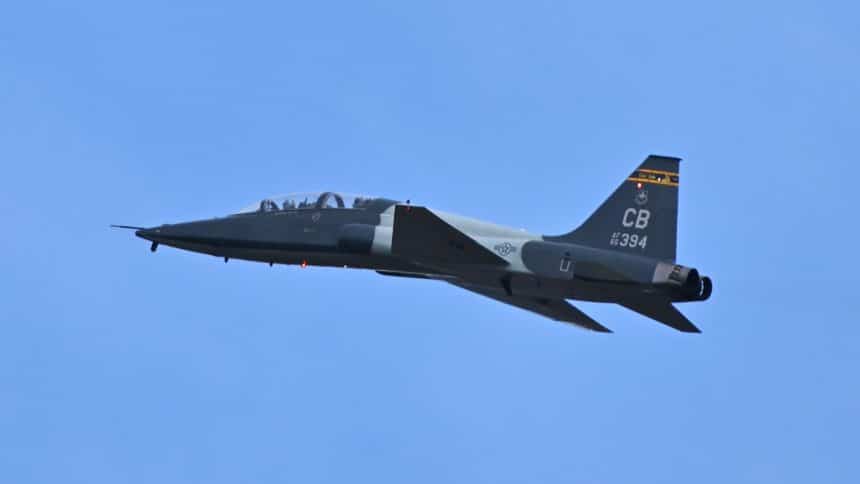
U.S. Air Force T-38C Trainer Crashes in Alabama, Pilots Safe​

Published on: May 12, 2026 at 11:34 PM
Stefano D'Urso

T-38 crashed Columbus

A T-38 C flies over the flightline on January 7, 2022, at Columbus Air Force Base, Miss. (Image credit: U.S. Air Force photo by Senior Airman Davis Donaldson)

A U.S. Air Force.​


Users who are viewing this thread

Latest Posts

Back
Top