冖_冖
Registered Member

United States Overtakes China to Become Germany’s Top Trading Partner
Story by Rahul Kumar. 1d
The evolving dynamics in international trade, particularly the shifting relationship between Germany and its major trading partners, present a nuanced narrative of economic interdependence and geopolitical recalibration. Over recent years, the United States has quietly but decisively emerged as Germany’s foremost trading partner, surpassing China in both exports and imports. This transition underscores a multifaceted interplay of economic, political, and strategic factors reshaping global commerce.
At the heart of this transformation lies the robust economic performance of the United States, which has stimulated demand for German goods and services. The strength of the U.S. economy, buoyed by factors such as robust consumer spending, business investment, and fiscal stimulus measures, has propelled trade volumes between the two nations to unprecedented levels. Concurrently, shifts in global supply chains and manufacturing capabilities have enabled the U.S. to absorb goods that were previously sourced from China, thereby bolstering bilateral trade ties with Germany.
Conversely, China’s role as Germany’s longstanding primary trading partner has undergone a recalibration. A combination of factors, including a moderation in Chinese economic growth, changing consumption patterns, and intensified competition from domestic firms, has dampened demand for German exports in the Chinese market. Furthermore, concerns surrounding intellectual property rights, market access barriers, and state subsidies have complicated trade relations between Germany and China, prompting German policymakers to reassess their approach to bilateral economic engagement.
In response to these dynamics, Germany has embarked on a recalibrated China strategy, advocating for diversification and risk mitigation in trade relationships. While emphasizing the importance of maintaining economic ties with China, German authorities have underscored the need to address systemic challenges and promote fair and reciprocal trade practices. This strategic realignment reflects broader geopolitical shifts characterized by a nuanced balance between cooperation and competition in economic relations.
Moreover, the evolving trade landscape has not been confined to bilateral relations alone but has also manifested in broader regional and multilateral dynamics. The European Union’s assertive stance on trade issues, including investigations into Chinese trade practices and the threat of retaliatory tariffs, underscores a collective effort to safeguard European interests and promote a level playing field in global trade.
A notable indicator of changing trade patterns is the declining dependence of German companies on China, as evidenced by the findings of the Ifo survey. This trend reflects a broader sentiment among businesses to diversify supply chains, reduce exposure to geopolitical risks, and adapt to evolving market dynamics. As such, the emergence of the United States as Germany’s largest trading partner signifies a broader paradigm shift in global trade architecture, characterized by resilience, adaptability, and strategic recalibration in response to evolving economic and geopolitical realities.
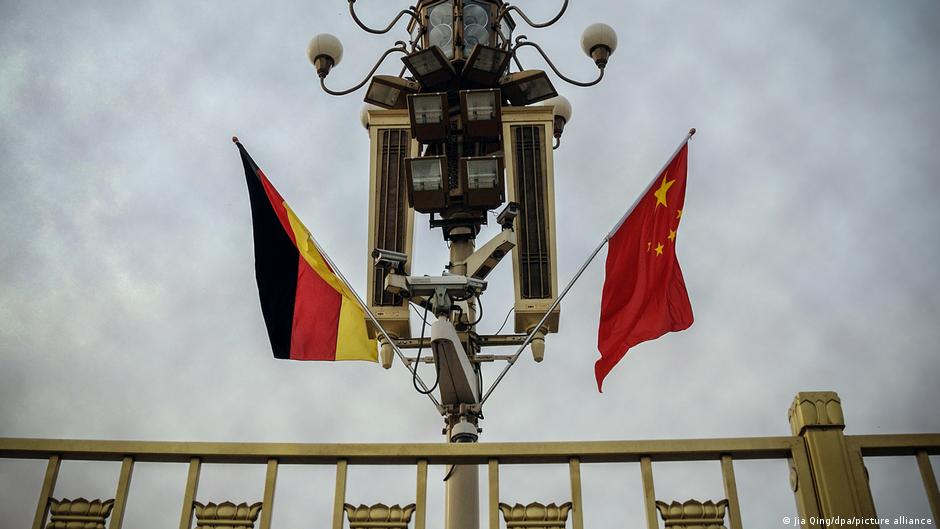
China overtakes US to become Germany's top trading partner
China replaces US as Germany's top trading partner, reclaiming a position it held from 2016 to 2023. German Chancellor Friedrich Merz is set to visit China next week.
 www.dw.com
China overtakes US to become Germany's top trading partner
17 hours agoChina replaces US as Germany's top trading partner, reclaiming a position it held from 2016 to 2023. In 2024, the US briefly held the title. German Chancellor Friedrich Merz is set to visit China next week.
China has overtaken the US as Germany's most important trading partner, according to figures released by Germany's Federal Statistical Office (Destatis) on Friday.
The sum of exports and imports between the two countries last year totaled €251.8 billion ($296.6 billion), a 2.1% increase, according to Destatis.
China was Germany's most important trading partner from 2016 all the way through to 2023. In 2024, the US briefly held the title.
German Chancellor Friedrich Merz is also set to visit China next week, where he is set to discuss trade and other topics.
China replaces US as Germany's top trading partner
Germany last year imported goods worth €170.6 billion from China, an 8.8% increase from the year earlier. Chinese imports to Germany were mainly data processing equipment, electrical equipment and machinery.Meanwhile, German exports to China last year totaled €81.3 billion, down 9.7% from the year earlier.
The US was Germany's next top business partner last year, with a foreign trade turnover of €240.5 billion, a 5% drop from the year before.
German exports to the US fell last year, after US President Donald Trump introduced tariffs on imported goods from many countries, including Germany.
German companies sold goods worth €146.2 billion to the US last year, a 9.4% drop from the 12 months earlier. Among the most affected sectors were cars and car parts, with losses of 17.8%.
Last edited: