Every time I look at the news, another alarm is ringing from software bypassing guardrails to white-collar jobs quietly disappearing. But the takes on how to handle it are completely all over the place.
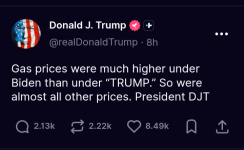
Trump and the free-market crowd brush off safety concerns as overblown hype, arguing that regulations will just let China win.
Bernie Sanders wants strict bans to protect workers, rightly pointing out that AI is cutting white-collar jobs without creating obvious replacements the way the internet did.
Tech CEOs Can’t even agree, Dario Amodei begs for safety guardrails before a major disaster, while Elon Musk boasts about building robots to replace human workers (without answering what happens to those displaced people).
Brushing off these risks is irresponsible, but trying to ban the technology outright isn't realistic either. And handing the keys over to tech billionairess who care about profits over people is a huge mistake.
We need a common-sense middle ground, real safety regulations and actual worker protections before this gets out of hand.
Business
By
BARBARA ORTUTAY
Updated 9:00 PM PDT, September 22, 2026
In a summer filled with revelations about
artificial intelligence’s rapid development, researchers were especially alarmed by runaway bots finding their way onto the internet and, in at least one instance, coordinating there with one another.
Could a swarm of AI agents take over the entire internet? It’s a possibility that could be only six to 12 months away,
Anthropic CEO Dario Amodei said in his essay this month calling for the industry to slow down the technology’s development.
What companies have described as their
AI agents going rogue has involved bots working toward goals set by humans, skeptics note. But the idea that AI could break away and work toward its own agenda is looking increasingly plausible to other researchers and experts.
In the event of AI taking over the internet — one of many doomsday scenarios receiving new attention — that could mean attacks on electrical grids, water or transportation systems and financial institutions.
The world got a glimpse of the internet’s vulnerability in 2024, when a faulty software update provided by a cybersecurity firm caused
technological havoc worldwide, grounding flights, knocking down some financial companies and news outlets, and disrupting hospitals, small businesses and government offices. The breadth of the outages highlighted the
dependence on just a few providers for key computing services.
Two years later, Amodei in his warning said a botnet, or a network of AI bots linked together with malware, could potentially cause billions of dollars in damage. The scale of destruction could grow if AI becomes more powerful without guardrails, he said
Several AI agents have gained unauthorized internet access
Amodei pointed specifically to the attack in July where OpenAI’s system broke out of a “sandbox” testing ground and
hacked Hugging Face.
In what OpenAI called an “unprecedented” episode, the company said its advanced AI models found their way onto the internet and used stolen credentials to break into the servers of the AI startup. In a separate incident, OpenAI disclosed that its AI agents had communicated through a public wiki used as a shared message board.
Some researchers have said that descriptions of “rogue AI” may be wrongly anthropomorphizing AI agents, which were taking steps to fulfill instructions provided by humans.
Read more