US - Pakistan relationship

On the economic front, the meeting with Secretary Rubio followed Pakistan’s high-level participation in the inaugural Critical Minerals Ministerial. The US-led forum aims to diversify global supply chains for essential minerals like lithium, copper, and rare earth elements.

Pakistan has emerged as a key interest for the Trump administration’s "Project Vault"—a $10 billion strategic reserve initiative. With untapped mineral wealth estimated at over $6 billion in annual export potential, Islamabad is positioning itself as a vital node in the global energy transition.

Discussions centered on fast-tracking American private sector investment in the Reko Diq project and other mining ventures, shifting the bilateral narrative from aid to strategic trade.
 

Mixed messages from Trump leave more questions than answers over war's end​


Anthony Zurcher
BBC North America correspondent

p0n5m4lx.jpg


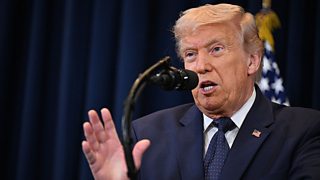
Trump says Iran war will be over "very soon", but not this week

President Donald Trump and his administration have so far offered mixed messages and contradictory explanations on the joint US-Israeli military campaign against Iran. And Monday - the 10th day of an operation that has rattled allies and shaken markets - typified this confusion around the war's timeline and ultimate goals.

After a tumultuous morning during which US shares indices dropped and oil prices surged, the American president began speed-dialling reporters in an apparent effort to soothe nerves. His comments, however, were lacking in clarity even when he was pushed for more detail.

"I have a plan for everything, OK?" he told a reporter from the New York Post when asked about spiking oil prices. "I have a plan for everything. You'll be very happy."

To CBS News, he said the war "is very complete, pretty much".

"We're very far ahead of schedule," he added. When asked whether the operation could therefore end soon, Trump said: "I don't know, it depends. Wrapping up is all in my mind, nobody else's."

His telephone spree, at least in an economic sense, had the desired effect. Stock markets rallied, and the price of a barrel of oil – which had reached $120 earlier in the day - dropped below $90.
 
Just days ago, Trump said that he would not stop the war until Iran's "unconditional surrender". But after his comments on Monday, it appeared as though an end to a military operation that has roiled the Middle East and led to the near complete shutdown of shipping traffic through the Straits of Hormuz could be in sight.

Why the price of oil matters more than you might think
In maps: Ten days of strikes across the Middle East
Iran's new leader has never been tested. He now faces an existential battle

By evening, however, Trump was walking back those comments.

"We could call it a tremendous success right now," he said. "Or we could go further. And we're going to go further."

He said the US was "very close to finishing" what he called an "excursion", but warned that the US would intensify its strikes if Iran continued to threaten oil tankers exiting the Persian Gulf.

"We will hit them so hard that it will not be possible for them or anybody else helping them to recover that section of the world," he said.

Trump also laid out an expansive mission for the war. His goal, he said, was to ensure that Iran could not develop weaponry to target the US, Israel or any American allies "for a very long time".
 
In a CBS interview on Sunday, Defence Secretary Pete Hegseth outlined a next phase of the US-Israeli operation that included using more powerful ordnance.

"The ability for us to be up over the top and hunting with more conventional munitions, gravity bombs, 500lb, 1,000lb, 2,000lb bombs on military targets," he said, "we haven't even really begun to start that effort of the campaign."

When Trump was asked on Monday about the apparent contradiction between his statements that the war was "very complete" and Hegseth's comments, he replied: "I think you could say both."

"It's the beginning of building a new country," he said.
 

US and Iran trade threats as Hegseth promises 'most intense' day of strikes so far

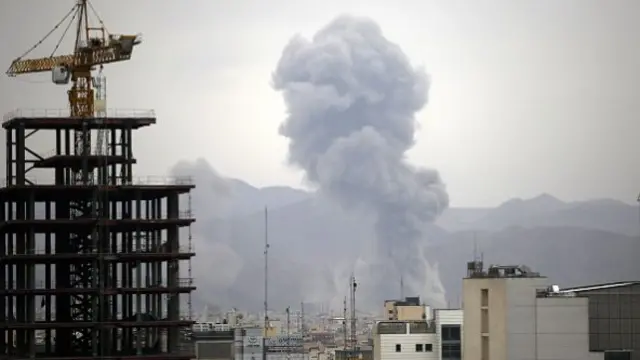
Smoke rises above an area of Tehran following a strike


Israel is continuing its strikes on Tehran on Tuesday

The US says it will ramp up strikes against Iran, as attacks continue across the Middle East. Here's what you need to know:


'Be careful so that you won't get eliminated', Iranian security official tells Trump

BBC

Ali Larijani, Iran's top security official, has been responding to the US in a series of posts on X.

He says that Iran is not scared of Trump's "worthless threats", adding that "even those bigger than you couldn’t eliminate Iranian nation".

"Be careful, so that you won’t get eliminated," he concludes.

It comes after the US president warned on TruthSocial that Iran would be hit "TWENTY TIMES HARDER" if the flow of oil through the Strait of Hormuz is stopped.
 

US Navy tells shipping industry Hormuz escorts not possible for now​

Iran's Revolutionary Guards have threatened to target any ship trying to pass through key waterway

Reuters
March 11, 2026

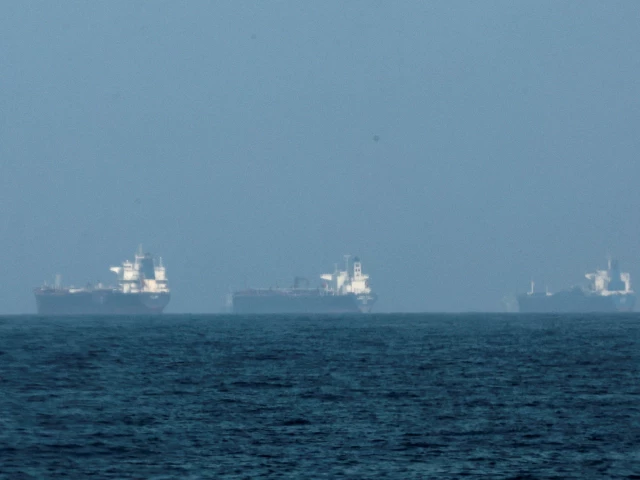
tankers are seen off the coast of fujairah as iran vows to fire on ships transiting the strait of hormuz amid the u s  israel conflict with iran in fujairah united arab emirates march 3 2026 photo reuters


Tankers are seen off the coast of Fujairah, as Iran vows to fire on ships transiting the Strait of Hormuz, amid the U.S.-Israel conflict with Iran, in Fujairah, United Arab Emirates, March 3, 2026. PHOTO: REUTERS

The US Navy has refused near-daily requests from the shipping industry for military escorts through the Strait of Hormuz since the start of the war on Iran, saying the risk of attacks is too high for now, according to sources familiar with the matter.

The Navy's assessments spell continued disruption to Middle East oil exports and reflect a divergence from President Donald Trump’s statements that the US is prepared to provide naval escorts whenever needed to restart regular shipments along the key waterway.

Shipping along the narrow strait has all but halted since the start of the US-Israeli war on Iran more than a week ago, preventing exports of around a fifth of the world’s oil supply and sending global oil prices surging to highs not seen since 2022.
 

US military plane crashes in Iraq

An US aircraft has crashed in Iraq, the American military has confirmed.

A military KC-135 refuelling plane went down after an "incident" involving two aircraft, with "hostile fire or friendly fire" not involved.

US Central Command says "rescue efforts are ongoing" in western Iraq - what the military describes as "friendly airspace".

The second aircraft involved in the incident landed safely, a statement adds.
 

New US ambassador to South Africa summoned over 'undiplomatic remarks'​


Ed Habershon
Johannesburg

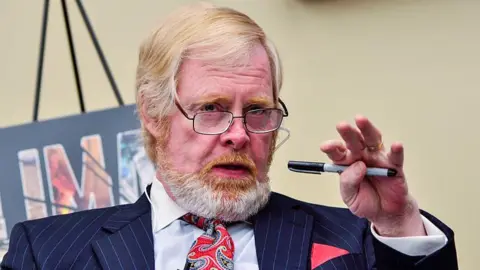
Getty Images A person in a dark pinstripe suit holding a pen, with a colourful paisley-patterned tie and a pocket square visible.


Bozell's comments about a contentious racial issue have been criticised as ''undiplomatic''by the government

The South African government has summoned the new US ambassador after he made what they called "undiplomatic" comments about an anti-apartheid chant.

Leo Brent Bozell III, who started in the role last month, caused offence by disagreeing with a legal ruling about the chant Kill The Boer. Some say the chant amounts to hate speech, although the Constitutional Court has ruled previously that it does not.

A formal protest was issued - known as a demarche - by the government, which said it took Bozell's comments "with a very dim view".

He issued a clarification on Wednesday and a representative of the foreign ministry later said the ambassador had expressed regret and apologised for the remarks.

On Tuesday, Bozell addressed a business meeting in the coastal town of Hermanus, presenting five issues he said South Africa needed to fix.

One was an argument over the chant. Bozell said he did not care what the courts said - comments that were taken as showing a lack of regard for the country's legal system.
 

US inflation stable ahead of Iran shock​


Natalie Sherman
Business reporter

Bloomberg via Getty Images A shopper carries a bag in the SoHo neighborhood of New York, US, on Friday, Feb. 13, 2026.


Bloomberg via Getty Images


Inflation in the US was stable in February, ahead of the shock to energy prices triggered by the US and Israel war in Iran.

Consumer prices rose 2.4% over the 12 months to February, the same pace as the prior month, as rising food and housing costs were offset by falling prices for other items, such as used cars.

The figures reflect prices gathered in the weeks leading up to the start of the US-Israel war in Iran, which has triggered a sharp rise in oil prices that is starting to feed into other areas.
 
To view this content we will need your consent to set third party cookies.
For more detailed information, see our cookies page.
 

Pakistan among 60 countries facing US forced labour investigations

Sophiya Rafi
March 13, 2026

The United States Trade Representative (USTR) has initiated investigations into what it considers unfair trade practices in 60 economies, including Pakistan, according to a press release issued by the USTR on March 12.

According to the statement, the investigations will focus on whether governments have failed to impose and effectively enforce bans on the importation of goods produced with forced labour.

The economies subject to the investigations include many major US trading partners including the European Union, China, Japan, India, Mexico, South Korea, Singapore, Switzerland, Taiwan, Pakistan, and Vietnam.

This comes as Pakistan and the US expressed a desire to enhance economic cooperation last month during a meeting in Washington between Finance Minister Muhammad Aurangzeb and US Commerce Secretary Howard A. Lutnick.
 

US easing sanctions on Russian oil 'does not help peace', Zelensky says

BBC

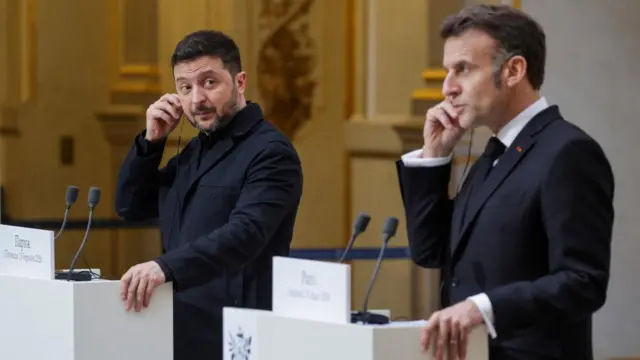
Ukraine's President Volodymyr Zelensky (L) and France's President Emmanuel Macron (R) put on a earpiece as they deliver a speech during a joint press conference


Image source, Reuters

During a visit to France, Ukrainian President Volodymyr Zelensky says the US decision to ease sanctions on Russian oil "does not help peace".

Speaking at a news conference alongside French President Emmanuel Macron, he says it could provide Russia with about $10bn (£7.4bn) to fund its full-scale invasion of Ukraine.

Macron says Russia is "mistaken" if it believes the US-Israel war with Iran would "offer it a respite".

He also says that the G7 reaffirmed during a meeting on Wednesday that rising oil costs "must in no way lead us to reconsider our sanctions policy toward Russia".
 

The key lines from the Pentagon news conference

BBC

We can now bring you a quick recap of news conference which took place in the Pentagon a short while ago (scroll back through our posts from 12:06 GMT for our full coverage).

  • Defence Secretary Pete Hegseth said the US would launch its highest volume of strikes over Iran, as it continued "decimating" Iran's military
  • He said Iran has no functioning air force, air defence or navy, and that its missile volume is down 90%. He later said Iran would be incapable of building more weapons and soon all of their defence companies "will be destroyed"
  • On the Strait of Hormuz, Hegseth accused Iran of "sheer desperation" - but claimed the US was "dealing with" it
  • He said Iran's new Supreme Leader, Mojtaba Khamenei, was "wounded" and "likely disfigured"
  • Military chief General Dan Caine said the US priority was targeting Iran's mine laying enterprise in the Strait of Hormuz
  • Asked about the fatal strike on a girls' primary school in Iran, Hegseth said the US was investigating and the US-Israel operation "never target civilians" in the war with Iran
 

Users who are viewing this thread

Latest Posts

Back
Top