US - Pakistan relationship

Kushner has been one of the administration’s top diplomats for nearly every major foreign policy issue — from the war in Ukraine to Gaza to Iran.


Kushner breaks pledge, seeks $5 billion more from foreign governments​

Judd Legum
Mar 16, 2026

1773695820807.jpeg
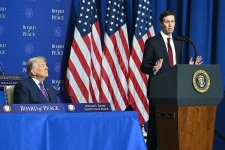
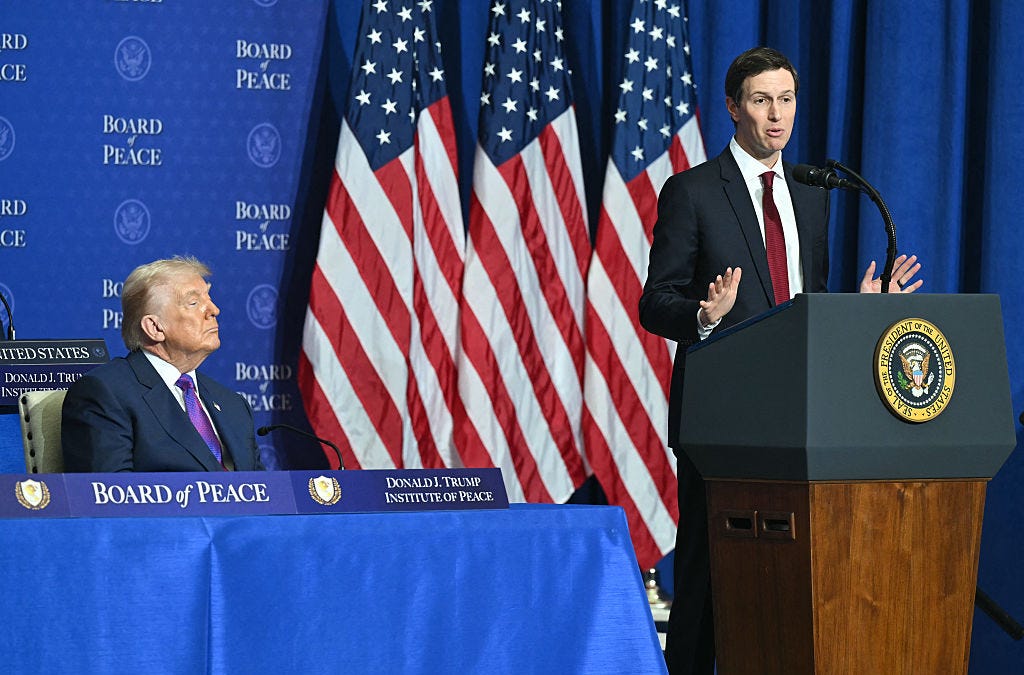
President Donald Trump looks on as his son-in-law Jared Kushner speaks during the inaugural meeting of the "Board of Peace" in Washington, DC, on February 19, 2026. (SAUL LOEB / AFP via Getty Images)

After Donald Trump won the presidency in 2024, Jared Kushner, his son-in-law, dismissed concerns that his private equity firm would be a vehicle to buy foreign influence.

In December 2024, Kushner said that he “preemptively” raised $1.5 billion earlier that year. The $1.5 billion came from Qatar’s sovereign wealth fund and Lunate, an investment fund linked to the UAE government.

The influx of cash, Kushner said, would allow his firm “to avoid any conflicts” and ensure “we don’t have to raise capital for the next four years.” Kushner made the comments on the December 20, 2024, edition of “Invest Like The Best,” a podcast hosted by Patrick O’Shaughnessy.

Kushner’s claim that he would not raise additional money during Trump’s presidency to avoid conflicts turned out to be a lie.

On Friday, the New York Times reported that Kushner “has spoken with potential investors in recent weeks about raising $5 billion or more for Affinity Partners.” Kushner’s team has “already met with Saudi Arabia’s Public Investment Fund [PIF].” PIF, Kushner’s biggest client, invested $2 billion with Affinity Partners in 2021. According to the report, Kushner is also seeking additional funds from Qatar and the UAE.

Kushner’s dual role and the Constitution

Is it permissible for Kushner to hold a key position in the Trump administration while simultaneously accepting tens of millions in fees from foreign governments? Not according to the Foreign Emoluments Clause of the Constitution, which prohibits someone “holding any Office of Profit or Trust” from the federal government from accepting “any present, Emolument, Office, or Title, of any kind whatever, from any King, Prince, or foreign State.”

Previously, the Trump administration claimed that Kushner had no “office” and was simply acting as a volunteer. This argument was unlikely to withstand scrutiny, since the legal test is an individual’s actions, not the label assigned. Kushner is conducting high-level diplomacy on behalf of the Trump administration.

But all doubt was eliminated on February 19, when Trump named Kushner a Special Envoy for Peace. That designation formalized his role with the Trump administration and triggered a requirement to file a public financial disclosure within 30 days. Steve Witkoff, who participates in most negotiations, is also a Special Envoy and has filed his financial disclosure.

Citizens for Responsibility and Ethics in Washington (CREW), a government watchdog group, sent a letter to White House Counsel David Warrington last week highlighting this requirement. “As you know, collecting Mr. Kushner’s disclosure report is a critical first step, potentially followed by any needed divestment, changes to trust arrangements, or other steps as required by OGE to ensure that he is in compliance with federal law and the Constitution,” CREW wrote.

Kushner has five days left to comply.
 
Last edited:
To view this content we will need your consent to set third party cookies.
For more detailed information, see our cookies page.
 

US, Iran officials make first direct contact since war, say US media

Anwar Iqbal
March 17, 2026

WASHINGTON: US President Donald Trump’s special envoy, Steve Witkoff, and Iranian Foreign Minister Abbas Araghchi have reportedly resumed direct communication in recent days, Axios reported, citing a US official and a source familiar with the matter.

Both officials had previously managed negotiations between Washington and Tehran before Israel and the United States launched an attack on Iran.

Axios noted that it is unclear how substantive the messages exchanged were, but the contacts mark the first known direct communication between the parties since the conflict began. According to the US official and the source, Araghchi sent text messages to Witkoff focused on ending the war.

However, Drop Site News reported on Monday that Witkoff had sent messages to Araghchi, quoting Iranian officials who said the foreign minister was ignoring the White House envoy’s messages.

The US official told Axios that it was Araghchi who was attempting to engage, but the US “is not talking” to Iran. Neither source provided details on the number of texts exchanged or their content.

However, in a post on X, the Iranian foreign minister denied any recent contact with the US envoy and said his last contact with Witkoff “was prior to his employer’s decision to kill diplomacy with another illegal military attack on Iran”.

“Any claim to the contrary appears geared solely to mislead oil traders and the public.”
 

‘Iran posed no imminent threat to our nation’: Senior US counter-terrorism official resigns to protest Mideast war

AFP | Reuters
March 17, 2026

1773761312533.png

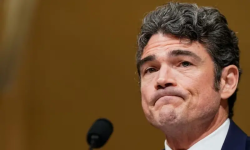
A senior US counter-terrorism official resigned on Tuesday to protest the US-Israeli war against Iran and said the Islamic Republic posed no imminent threat to the United States.

“I cannot in good conscience support the ongoing war in Iran,” Joseph Kent, the director of the National Counterterrorism Centre, said in his resignation letter to President Donald Trump.
 
To view this content we will need your consent to set third party cookies.
For more detailed information, see our cookies page.
 
“Early in this administration, high-ranking Israeli officials and influential members of the American media deployed a misinformation campaign that wholly undermined your America First platform and sowed pro-war sentiments to encourage a war with Iran,” he said.

“This echo chamber was used to deceive you into believing that Iran posed an imminent threat to the United States, and that should you strike now, there was a clear path to a swift victory,” he said.

“This was a lie and is the same tactic the Israelis used to draw us into the disastrous Iraq war that cost our nation the lives of thousands of our best men and women,” Kent said.

“I cannot support sending the next generation off to fight and die in a war that serves no benefit to the American people nor justifies the cost of American lives,” he added.

Some experts have said an imminent threat would be required for the United States to launch a war under current law.

‌The ⁠White House did not immediately respond to a request for comment. The Office of the Director of National Intelligence also did not immediately respond.
 
Intelligence officials were caught off guard by the ⁠news. Kent is close with Director of National Intelligence Tulsi Gabbard, who has kept a low profile since the Iran war began.

⁠Gabbard has not issued any public statements and has only appeared in public during the dignified transfer of American ⁠soldiers killed earlier this month during the conflict with Iran.
 

White House hints at delay in Xi-Trump meeting

Agencies
March 17, 2026

1773761925430.png


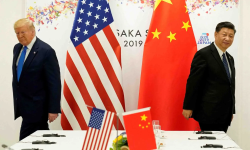
WASHINGTON/PARIS: Donald Trump’s highly anticipated meeting with Chinese President Xi Jinping could be postponed as the US president remains focused on the Iran war, the White House said on Monday. Any delay in Trump’s scheduled March 31 to April 2 China trip risks magnifying tensions between Washington and Beijing, as the Iran crisis has joined trade and Taiwan among the spectrum of issues separating the world’s two biggest economies.

Iran has responded to joint US-Israeli attacks on that nation by threatening to fire on vessels moving through the strait, even as its own ships continue to transit the strait at near-normal rates. Trump has called on numerous nations, including China, to help ships safely transit the key Strait of Hormuz, where one-fifth of the world’s oil transits on a daily basis. Trump’s request for assistance so far has largely been rebuffed.

China, which imported around 12 million barrels of oil daily in the first two months of 2026, most in the world, has not directly responded to Trump’s request. “The president looks forward to visiting China,” spokeswoman Karoline Leavitt told reporters.

“The dates may be moved. As commander-in-chief, it’s his number-one priority right now to ensure the continued success of this operation, Epic Fury. So we’ll keep you posted on the dates as soon as we can.” Trump told the Financial Times on Sunday he might postpone the meeting if China did not help to unblock the Strait of Hormuz.
 

Trump says Nato allies making 'foolish mistake'

BBC

Trump responds to a question about getting America's allies to help with escorting oil tankers through the Strait of Hormuz.

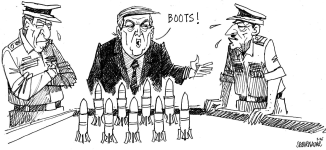
"Well we don't need any help," Trump begins, saying Nato allies had been in favour of what the US did - saying it was very important that they take out the nuclear threat from Iran.

The US has done that "very strongly", he says, adding that they have wiped out Iran's military, navy and air force.

On Nato - Trump says they are making "a foolish mistake".

"We don't need them but they should've been there."

Asked a follow up question on Macron's comments that France won't join a taskforce in Hormuz until the hostilities finish, Trump says he will be out of office soon.
 

US lifts sanctions on some Iranian oil as energy prices soar​


Fiona Nimoni
BBC

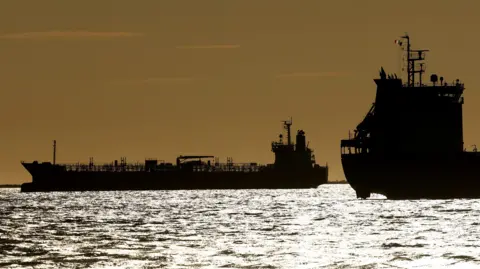
EPA Silhouettes of two tankers on silver ocean water against a golden sunset


EPA

The US has lifted sanctions on some Iranian oil, as it scrambles to contain the impact of its war in Iran on energy markets.

Treasury Secretary Scott Bessent announced the issuing of a narrowly tailored, short-term authorisation permitting the sale of Iranian oil currently stranded at sea.

The move marks a stunning reversal of longstanding American policy - and one with highly uncertain pay-off.

Oil and gas prices have risen sharply since the war began. The price of Brent crude oil is holding around $112 a barrel, up 53% on the past year. UK gas, which was trading at 80p per therm before the crisis, is now at around 151p per therm.

Experts said it was likely to have a limited effect on prices, and could boost funds going to the Iranian regime that the US is attacking.

On Friday Bessent said the permit was applicable to the sale of crude oil and petroleum products of Iranian origin currently loaded on vessels.

The authorisation will last until 19 April, the treasury department added.

The treasury secretary said the move would quickly bring about 140m barrels of oil to global markets.

Before the war, China was the primary buyer of the oil coming out of Iran, scooping up the barrels at a steep discount due to sanctions imposed by the US and other countries.

In an interview with Fox Business on Thursday, Bessent said a waiver on sales restrictions could help divert more of those supplies to other countries in need of oil, such as India, Japan and Malaysia, while forcing China to pay "market price".
 
Writing on X, Bessent said Iran would have difficulty accessing any revenue generated from the purchase of Iranian oil and that the US would "continue to maintain maximum pressure on Iran".

However, David Tannenbaum, director of Blackstone Compliance Services, a consultancy specialising in maritime sanctions, told the BBC on Thursday that the idea was "bananas".

"Essentially we're allowing Iran to sell oil, which could then be used to fund the war effort," he said.

The waiver would not have much impact on prices, experts warned.

"I don't think it's a game changer and it raises a whole lot of questions," said Rachel Ziemba, an adjunct senior fellow at the Center for a New American Security, a think tank, on Thursday.

Ziemba said she did not think the US would want money from oil sales to go to Iran's government - but it could be hard to prevent in practice.

"The US government is definitely in an every-barrel-counts situation because of the scale of the supply shock," she added. "They're looking to find additional oil wherever they can."

There has also been some positive reaction from financial experts to the Trump administration's temporary reversal of sanctions on Iranian oil.

David Malpass, the former president of the World Bank, said the move was a "narrow action that should cause downward pressure on oil prices outside China" and "should also reduce Iran's oil revenue and undercut its military".

Writing on X, he added: "This is one in a number of steps last week (including the Jones Act waivers, opening pipelines and building refineries) that will benefit the U.S. and add to long-term energy supplies."
 
The US has already undertaken other efforts to boost supply, including the release of millions of barrels of oil reserves and the suspension of some sanctions on Russian oil last week.

That second decision sparked significant blowback from leaders in Europe, who said it would strengthen President Vladimir Putin's regime and prolong the war in Ukraine.

About a fifth of the 100m barrels of oil that the world consumes every day usually travels via the Strait of Hormuz, which runs along part of Iran's coast. But since the war began at the end of February, shipping in the channel has come to a halt.

While some of the barrels being transported through the strait have been successfully re-routed, experts still estimate that the war has knocked about a tenth of the world's supply out of the market.

Concerns about the situation have increased, as damaging tit-for-tat attacks on a key gas field operated by Iran and Qatar raise the risk that capacity for providing fossil fuels could be constrained for years, even if the conflict is resolved relatively quickly.
 

Iranian strikes on bases used by US caused $800m in damage, new analysis shows​


Daniel Bush,
Washington correspondent and
Paul Brown & Alex Murray
,BBC Verify

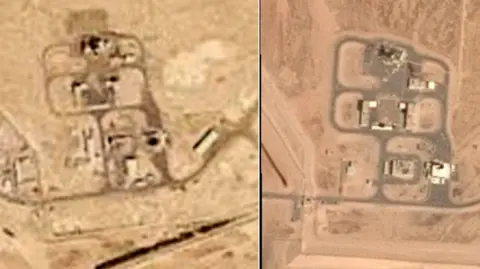
Planet labs PBC and Airbus Damage to radar sites at Al Sader and Al Ruwais (UAE)


Planet labs PBC and Airbus

Damage to radar sites at Al Sader and Al Ruwais (UAE)

Iranian strikes on military bases used by the US in the Middle East caused about $800m (£600m) in damage in the first two weeks of the war, a new analysis shows.

Much of the damage was caused in initial retaliatory strikes by Iran in the week after the US and Israel launched the war, according to a report by the Center for Strategic & International Studies (CSIS) and an analysis by the BBC.

The full extent of the damage caused by Iranian strikes on US assets in the region is not clear.

But the $800m in estimated damage to US military infrastructure - a figure that's higher than has been previously reported - offers a picture of the steep costs to the US as the conflict drags on.

"The damage to US bases in the region has been underreported," said Mark Cancian, a CSIS senior adviser and co-author of the think tank study. "Although that appears to be extensive, the full amount won't be known until more information is available."
 

Trump threatens Iran with power plant strikes over Hormuz oil blockade

Reuters
March 22, 2026

US President Donald Trump on Saturday threatened to “obliterate” Iran’s power plants if Tehran does not fully reopen the Strait of Hormuz within 48 hours, a significant escalation barely a day after he talked about “winding down” the war.

“If Iran doesn’t fully open, without threat, the Strait of Hormuz, within 48 hours from this exact point in time, the United States of America will hit and obliterate their various power plants, starting with the biggest one first!” Trump said on social media.

Trump’s ultimatum would expand the scope of US strikes to infrastructure that affects daily civilian life in Iran.

The threat of Iranian attacks has kept most ships from getting through the strait, a narrow waterway that serves as the conduit for around a fifth of global oil and liquefied natural gas supplies, threatening a global energy shock.

Its near-closure sent European gas prices surging as much as 35 per cent last week.

Iran’s Khatam al-Anbiya military command headquarters said on Sunday that if the US attacks Iran’s fuel and energy infrastructure, then Iran would target all US energy, information technology and desalination infrastructure in the region.
 

Users who are viewing this thread

Pakistan Defence Latest

Latest Posts

Back
Top