US - Pakistan relationship

Trump sends mixed signals​

Trump and his administration have sent mixed messages about US goals throughout the war, now in its fourth week, leaving US allies struggling to respond.

Trump’s ultimatum on Saturday was the most abrupt shift yet. Trump’s rhetoric pivoted from a drawdown to an explicit 48-hour countdown to strike Iran’s power infrastructure, even as US Marines and heavy landing craft continue heading to the region.

Iran’s largest power plants include the Damavand power plant near Tehran (2,868 megawatts of capacity), the Kerman plant in southeastern Iran (1,910MW), and the Ramin steam power plant in Khuzestan province (1,890MW), according to industry and energy databases.

The country’s sole nuclear plant at Bushehr on Iran’s southern coast produces about 1,000MW.

Earlier this month, Trump raised the idea of destroying Iran’s power grid even while downplaying the notion.
 

Trump at a crossroads as US weighs tough options in Iran​


Anthony Zurcher
North America correspondent, travelling with the US president in Florida

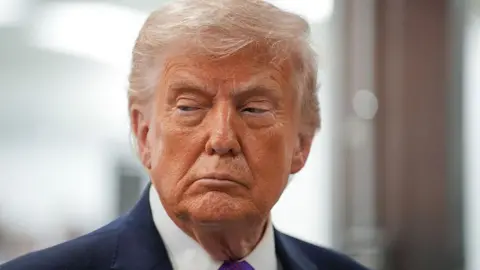
Getty Images close-up of Donald Trump's face, looking off to the side


Getty Images

Three weeks after the joint US-Israeli war against Iran began, the conflict has reached a fuzzy state of mixed messages and uncertainty, with Donald Trump's public comments often seemingly contradicted by realities on the ground.

The war is "very complete, pretty much", the US president has said, but new American ground forces – including a Marine expeditionary unit – are moving into the region. It is "winding down", but US and Israeli bombing and missile strikes on Iranian targets continue unabated.

Opening the Strait of Hormuz, the geographic choke point through which 20% of the world's oil export travels, is a "simple military manoeuvre", but for now only Iranian-approved ships are transiting the waters. The Iranian military is "gone", but drones and missiles are still striking targets in the region and targets have extended as far as the joint US-UK base in Diego Garcia.

In a Saturday evening post on Truth Social, Trump threatened an escalation, warning that if Iran didn't "fully open, without threat" Hormuz in 48 hours, the US military would begin targeting Iranian power plants, "starting with the biggest".
 
The day before, however, he had used his social media website to provide a numbered list of American military objectives for the Iran war, which he said the US was "getting really close" to fulfilling.

The items, comprising his most detailed statement on the subject since the war began, included degrading or destroying Iran's military, its defence infrastructure and its nuclear weapons programme, as well as protecting American allies in the region.

Not included was the goal of securing the Strait of Hormuz, which Trump said should be the responsibility of other nations that are more dependent on oil exports from the Gulf.

The president has frequently noted that the US is a net exporter of energy and does not rely on oil from the Middle East – although such a view glosses over the global nature of the fossil fuel market, where price fluctuations directly impact the price at American petrol pumps.
 
Don't laugh, probably more spot on than many commentators....

To view this content we will need your consent to set third party cookies.
For more detailed information, see our cookies page.
 
Last edited:

Summary​

  • Donald Trump says the US and Iran have held talks on the "complete and total resolution of hostilities" in the Middle East
  • He says that, as a result of the talks, he has postponed threatened strikes on Iranian power plants
  • On Saturday night, Trump gave Iran a 48-hour deadline to reopen the Strait of Hormuz - or, he said, the US would "obliterate" Iranian power plants, "starting with the biggest one first"
  • Earlier, UK Prime Minister Keir Starmer and US President Donald Trump agreed that reopening the Strait of Hormuz is "essential to resume global shipping" during a call late on Sunday
  • The call - which came on the day Trump shared a satirical clip about the PM - lasted 20 minutes and was "constructive", Downing Street says
  • Meanwhile, the Israel Defense Forces (IDF) says it expects to face "several more weeks of fighting" against Iran and Hezbollah
 

Trump says talks held on 'complete and total resolution of hostilities' with Iran

Donald Trump says there have been "productive conversations" about a "complete and total resolution" to the conflict in the Middle East.

He says he will "postpone any and all strikes against Iranian power plants and energy infrastructure" for a five day period.

In a post on TruthSocial all in capital letters he says: "I AM PLEASE TO REPORT THAT THE UNITED STATES OF AMERICA, AND THE COUNTRY OF IRAN, HAVE HAD, OVER THE LAST TWO DAYS, VERY GOOD AND PRODUCTIVE CONVERSATIONS REGARDING A COMPLETE AND TOTAL RESOLUTION OF OUR HOSTILITIES IN THE MIDDLE EAST.

"BASED ON THE TENOR AND TONE OF THESE IN DEPTH, DETAILED, AND CONSTRUCTIVE CONVERSATIONS, WITCH WILL CONTINUE THROUGHOUT THE WEEK, I HAVE INSTRUCTED THE DEPARTMENT OF WAR TO POSTPONE ANY AND ALL MILITARY STRIKES AGAINST IRANIAN POWER PLANTS AND ENERGY INFRASTRUCTURE FOR A FIVE DAY PERIOD, SUBJECT TO THE SUCCESS OF THE ONGOING MEETINGS AND DISCUSSIONS. THANK YOU FOR YOUR ATTENTION TO THIS MATTER! PRESIDENT DONALD J. TRUMP"


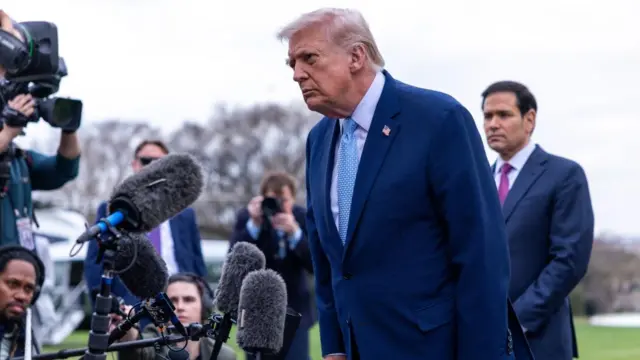
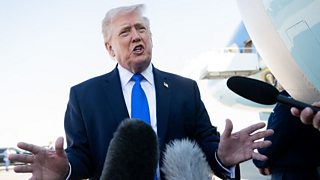
Trump pictured on Friday


Trump pictured on Friday
 

Trump's 48-hour deadline on Strait of Hormuz looms

BBC

Donald Trump's deadline for Iran to open the Strait of Hormuz is due to expire shortly before midnight UK time.

On Saturday evening, the US president said that if the shipping channel was not opened "without threat" in 48 hours then the US would "obliterate" Iran's power plants.

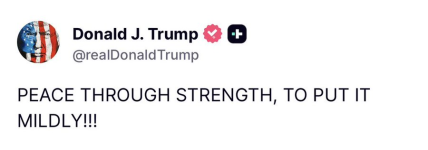
In the post, shared at 23:44 GMT (19:44 ET) on Saturday, Trump said: "If Iran doesn't FULLY OPEN, WITHOUT THREAT, the Strait of Hormuz, within 48 hours from this exact point in time, the United States of America will hit and obliterate their various POWER PLANTS, STARTING WITH THE BIGGEST ONE FIRST!

"Thank you for your attention to this matter. President DONALD J. TRUMP."
 

Trump-Starmer call lasted 20 minutes and was 'constructive', Downing Street says
BBC

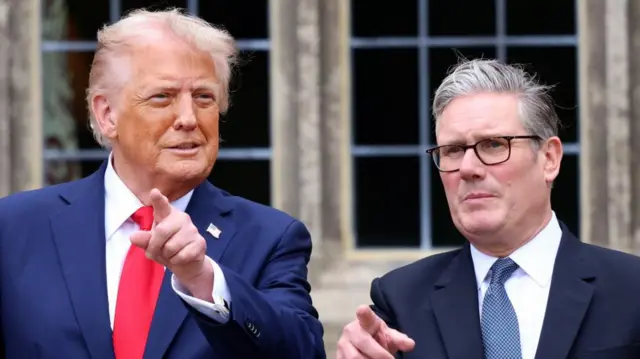
Trump and Starmer, pictured during the president's state visit to the UK last September
Image source, EPA
Trump and Starmer, pictured during the president's state visit to the UK last September
As we reported earlier, UK PM Keir Starmer and US President Donald Trump spoke on the phone yesterday evening.

The call lasted 20 minutes and was "constructive", Downing Street says.

A Downing Street spokesperson said the two discussed the situation in the Middle East and, "in particular, the need to reopen the Strait of Hormuz to resume global shipping".

"They agreed that reopening the Strait of Hormuz was essential to ensure stability in the global energy market," the spokesperson said, adding that they "agreed to speak again soon".

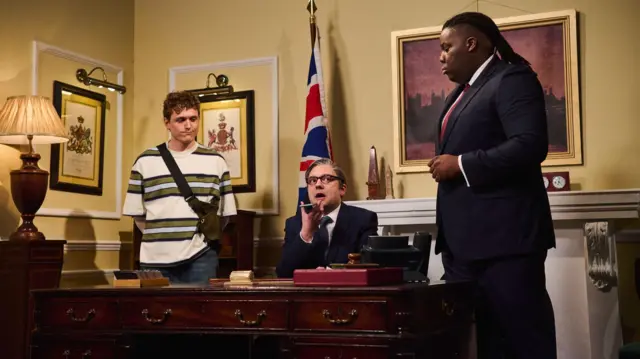
Yesterday, Donald Trump also re-shared a satirical SNL sketch on Truth Social, in which actors playing Starmer and Deputy PM David Lammy talk about an imminent phone call with the US president.

"Oh golly, what if Donald shouts at me? What do I say, Lammy?" the actor playing Starmer says, before adding: "I'm out of my depth here, Lammy. How did Liz Truss make this job look so easy?"

George Fouracres as Prime Minister Sir Keir Starmer and Hammed Animashaun as Deputy Prime Minister and Justice Secretary David Lammy during the first episode of Saturday Night Live UK


Image source, PA Media
Trump shared the SNL UK clip without comment on Sunday
 

Trump delays planned strikes on Iran energy sites for five days after ‘productive’ talks​


US pauses military action as Tehran warns of retaliation and negotiations continue through the week

AFP/REUTERS
March 23, 2026

us president donald trump gestures as he speaks during a women s month history event in the east room of the white house in washington dc on march 12 2026 photo afp


US President Donald Trump gestures as he speaks during a Women's Month History event in the East Room of the White House in Washington, DC, on March 12, 2026.PHOTO: AFP

US President Donald Trump said on Monday he had given instructions to postpone any military strikes against Iranian power plants for five days, just hours ahead of a deadline that threatened further escalation in the conflict now in its fourth week.

Trump said in a post on Truth Social that the US and Iran have had "VERY GOOD AND PRODUCTIVE" conversations with Iran over the past two days about a "COMPLETE AND TOTAL RESOLUTION OF HOSTILITIES IN THE MIDDLE EAST".

In his message, written entirely in capital letters, he said he had instructed the defence department to postpone the strikes pending the outcome of current talks.

The price of the Brent crude oil benchmark LCOc1 was down around 7% near $104 at 1127 GMT.

On Saturday, Trump had warned that Iranian power plants would be destroyed if Tehran failed to "fully open" the Strait of Hormuz to all shipping within 48 hours. Trump set a deadline of around 7:44pm EDT (2344 GMT) on Monday.
 
His comments sparked threats of retaliation from Iran's Revolutionary Guards, which said in a statement on Monday they would attack Israel's power plants and those supplying US bases across the Gulf region if Trump followed through with his threat to "obliterate" Iran's power network.

More than 2,000 people have been killed in the war the US and Israel launched on February 28, which has upended markets, driven up fuel costs, fueled global inflation fears and convulsed the postwar Western alliance.

The threat of strikes on Gulf electricity grids raised fears of mass disruption to desalination for drinking water, and further rattled oil markets.

Trump on Saturday threatened to "obliterate" Iran's power plants if it did not, within 48 hours, end its partial blockade of the Strait of Hormuz, the narrow waterway into the Gulf through which one-fifth of the world's oil flows.
 
The deadline, based on the time of his social media posting, would be 23:44 GMT, early morning Tuesday in Iran and Monday evening in Washington.

Iran's military command responded defiantly, saying that if Trump goes ahead, it would strike Israel's "power plants, energy, information and communications technology infrastructure" — along with power plants in regional countries hosting US bases and companies with American shareholders.

The statement seemingly retracted earlier threats to desalination plants in the region, which are crucial for providing drinking water in Gulf countries.

"The lying ... US President has claimed that the Revolutionary Guards intend to attack the water desalination plants and cause hardship to the people of the countries in the region," the statement shared on state media said.

On Saturday, US President Donald Trump warned that Iranian power plants would be targeted if Tehran failed to "fully open" the Strait of Hormuz to all shipping within 48 hours.

"We are determined to respond to any threat at the same level as it creates in terms of deterrence ... If you hit electricity, we hit electricity," the Revolutionary Guards said.

"If the United States' threats regarding Iran's power plants are carried out... the Strait of Hormuz will be completely closed, and it will not be reopened until our destroyed power plants are rebuilt," a process that could take years, the operational command warned.
 
IMG-20260323-WA0028(1).jpg

EDITORIAL: Donald Trump has changed the US in significant ways — particularly during his current stint at the White House. While the American president’s foreign warmongering is today being discussed across the globe, he has also eroded democratic norms at home, according to many independent observers.

For example, Sweden’s V-Dem Institute, regarded as one of the world’s leading monitors of the health of democracy in nations, says that the US can no longer be described as a “liberal democracy”, and is undergoing the process of “autocratisation”. US-based NGO Freedom House has reached similar conclusions, observing that “freedom” in the US has dropped to its lowest levels since the organisation began assessments in 2002. Both institutes have zeroed in on the same issues: executive overreach, attacks on freedom of expression and lack of checks and balances on presidential powers.

Read more: https://www.dawn.com/news/1984510/land-of-the-free

#DawnToday
 

Ultimatums, diplomacy and a trip to Graceland as Trump eyes a deal with Iran

Anthony Zurcher
North America correspondent


p0n8czsh.jpg


Trump: "We'll just keep bombing our little hearts out" if no deal with Iran

America may be a nation at war, but President Donald Trump's activities over the past few days have been a mix of diplomacy and diversions - with the occasional swing towards the surreal.

On Friday, he said the US war against Iran was "winding down". By Saturday night, he had given Iran a 48-hour deadline to reopen the Strait of Hormuz or face withering new American airstrikes.

The next day, he golfed and spent the afternoon at his Mar-a-Lago resort in Florida.
By Monday morning, with global markets swooning, he said the Iranians were engaging in "constructive" talks with the US. Then he flew to Memphis, Tennessee, gave a speech and visited Graceland, music legend Elvis Presley's historic home.
Meanwhile, US and Israeli airstrikes on Iranian targets are ongoing. The Iranians continue to fire missiles and launch drones against US forces and its Middle East allies. Traffic through Hormuz remains limited.
At the time, Trump's Saturday-night ultimatum seemed clear: if Iran didn't allow full access to Hormuz for international shipping, the US would plunge the nation into darkness by targeting its energy production infrastructure.
It was a stark warning. Iran replied that it would, in turn, target regional energy and water infrastructure. A new escalation of the three-week war, with potentially dire consequences for civilians, appeared imminent.
By Monday morning, however, Trump had called off the strikes – at least temporarily.
US contact with an unnamed Iranian leader - contact not confirmed by Iran - was enough to merit a five-day stay of the threatened attacks, the president said.
He struck an optimistic tone over the course of the day, as he flew to Tennessee for a visit he said had been planned weeks earlier.
The US and Iran have "major points of agreement," he said from the tarmac before his departure.
"They want very much to make a deal," he said. "We'd like to make a deal, too."
A few hours later, speaking to gathered US National Guard personnel in Memphis, he said the US was having "very, very good discussions" with Iran.
"Iran has one more opportunity to end its threats to America and our allies," he said. "We hope they take it."
Then Trump headed to Graceland, Memphis's most famous tourist attraction, to tout a drop in the city's crime rate, which he attributed to his deployment of National Guard soldiers to its streets.
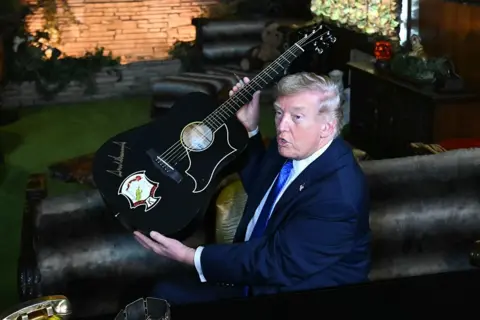
AFP via Getty Images US President Donald Trump holds up a guitar with his signature on it during a visit to Elvis Presley's former home, Graceland, in Memphis, Tennessee, USA.
FP via Getty Images

The president signed a replica of one of Elvis Presley's guitars during his visit to Graceland

As Trump walked through Elvis's home, observing the fashion and design tastes of the "king of rock'n'roll", reports continued to filter in of a presidential phone call to Israeli Prime Minister Benjamin Netanyahu and potential direct talks with Iranian officials later in the week.
Diplomatic wheels, it seemed, were in motion, even as the lack of detail left many around the world with suspicious minds, as Elvis once crooned.
 
Last edited:

US bans new foreign-made consumer internet routers​


Kali Hays
Technology reporter

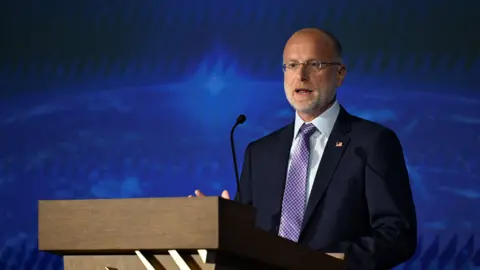
Reuters FCC chairman Brendan Carr speaking at a wooden podium wearing a navy suit, white shirt and red and blue checked tie.


Reuters
FCC chairman Brendan Carr

The US has banned new foreign-made consumer internet routers over national security concerns.

In an update on Monday to a list of equipment seen as not secure enough for use, the Federal Communications Commission (FCC) added all consumer-grade routers made outside the US.

It puts routers - which are used widely in homes and businesses to connect computers, phones, TVs and other devices to the internet - on a par with foreign-made drones, which were banned at the end of last year.

"Malicious actors have exploited security gaps in foreign-made routers to attack American households, disrupt networks, enable espionage, and facilitate intellectual property theft," the FCC said.

While people will still be able to use foreign-made routers they already own, the ban applies to all "new device models."
The ban stems from growing concern over the last year that routers were a point of easy-access for malicious actors.
 

Users who are viewing this thread

Latest Posts

Back
Top