and what really happens after the 72 hours? another 72 hours

Ah I am so glad you asked... So Back in May 2025 during Pakistan India crisis I made a series of posts helping people get ready incase the conflict expanded part of these posts was on how to make a "bug out bag or a grab bag"
Now you will see in my post too I mentioned 72 hours as the minimum, so why do people recommend 72 hours are the magic number for survival you ask? Without making it a boring lecture lets talk emergency management for a second:
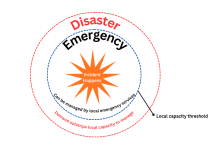
Incidents occur everyday and majority of them never make headlines, this is because they are able to be managed at a local level within the capacity of the local emergency services such as a car crash or a house fire...
Now when a situation has the ability to generate demand that would overwhelm the local capacity it is considered a Disaster.
For instance, an Earthquake happens, the earthquake causes buildings to collapse, power and gas lines to be damaged, phone lines break down, roads may become damaged, water and sanitation services may be impacted (this is the initial impact).
People panic and start calling emergency service numbers, and calling friends and family members to get information, this quickly clogs the telephone system and increasing demand on emergency services means that there simply aren't enough ambulances and fire engines to attend every call.
Furthermore the sudden peak in telephone traffic may clog the telecommunication networks entirely resulting in those desperately needing emergency services being unable to contact them.
People rushing on the roads cause traffic jams and overwhelm the traffic management system, this create a strain on the local police service. Hospitals may become inundated with wounded and injured, and may need to prioritize the most seriously wounded first, this is known as medical triage.
Well wishing people may rush to the scene to spectate or to volunteer, this create a crowd control situation, further straining the limited resources that the local police service may have.
Now whilst the people living in the city are concerned about their own loved ones in the city, news comes in that the earthquake has hit multiple cities and remote parts of the country potentially affecting hundreds of thousands of people.
Now there are reports of people coming to collapsed buildings pretending to be family members and looting anything they can find, this now become a law and order situation. (yes this actually happens)
The government of the country put their national crisis/disaster management plan in place, services such as the military/search and rescue etc. are called in. But the military etc aren't immune, chances are their personnel, equipment and buildings have also been affected by the disaster and they need time to organize and mobilize.
During this time as one day passes into the next, people who were enjoying their lives realize they don't have enough food, so they try to go to the shops to buy food...
But guess what? The market owners have decided to A) hoard goods B) Jack up prices or C) there is panic buying and now there is no way to get the basics you need during the initial phase of the disaster whilst the government grapples with the crisis.
In another remote part of the country, the local government decide that the area is simply too hazardous for residents to remind in their houses and decide to evacuate houses and move people into a football stadium which has been designated as an emergency shelter.
But people weren't ready, they weren't prepared, so they bundle what little items they have with them and move into the evacuation center, when they arrive the soon realize that there is inadequate shelter, inadequate water and food and little to no "comfort" items needs for daily life such as hygiene and sanitation.
Now according to people much smarter than me at agencies such as FEMA who studied how nations responded to mass disasters in Japan and Mexico and Turkey discovered that the average "rubber banding" reaction time for aid workers, and relief to reach victims is approximately 48-72 hours.
Hence the 72 hour kit was born, it is not a panacea, it is the bare minimum you should have for you and your family, meaning 1 x72 hour kit
for each member of your family, so should you need to evacuate your home due to a disaster or an unexploded bomb or a gas leak or any other crisis, you have the minimum essentials to keep you moderately comfortable whilst the all clear is issued or you can obtain further support.
---
But remember a bag with batteries and water and first aid kits is useless if you don't have a plan on what to do as a family or an individual should the worst happen. This is where your personal emergency plan comes into play... Don't worry old Uncle Rescue ranger has you covered here too:
Emergency Plan
One of the most important tools you and your family can have to protect yourself in possible emergencies is a family emergency plan.
It is important that you plan ahead as a family for all types of emergencies and responses. Everyone in the family should understand what to do, where to go and what to take in the event of an emergency.
Be Informed
• Find out what disasters are most likely to happen in your area and the history of their occurrence.
• Stay informed of any specific instructions or information you may need to know regarding these specific...
... being prepared is not an act reserved to certain people, just remember that it wasn't raining when Hazrat Nuh build the arc.
---
Netfilx made a wonderful series called Japan Sinks which highlights the importance of the stains on a modern country facing a large scale disaster as it tracks the story of a young girl and her brother as they struggle to make sense of and survive the aftermath.
If you are serious about being ready - I highly recommend you give this series a watch
Further resources on how to plan and prepare are available here on PDF or you can check your local government website about preparing for emergencies.
...