US Perspective on the Iran - Israel / US War

This is how I see the arguments and debates happening on the forum between the Western based Iranian hope propagandists and a handful of Americans.

Iranian theorists: Iran has loads of oil and gas, and it can fight a forever war with the US on empty stomachs. We only need air to survive, not food.

Americans: We are the largest producer of oil in the world, not iran. We are not begging for $300 billion from anyone.

Iranian theorists: We are fighting a war of survival so our will is stronger. Every UK and US based Iranian has proven this.

Americans: We are involved in multiple wars all over the world at any one time. This has been our history for the last 80-years. We are Military Globetrotters and have forced many to fight their last war of survival. Some survive, and some die.

Iranian theorists: But, but, but increase in gas prices by $10-$20 will kill the US economy. We are really concerned about gas prices in the US.

Americans: We are continuing to produce gas uninterrupted, Iranians are not.

Iranian theorists: Too bad, Americans won't survive inflation of 4.25% for too long.

Americans: Highest recorded US inflation rate of 29.78% was in 1778. Inflation in Iran is 69% today. Billions of people from around the world including Iranians dream of migrating to the US, not Iran.

Iranian theorists: Still, Iran is and will win like Superpower Cuba, Superpower Vietnam, Superpower Soviet Union, Superpower Somalia, Superpower Serbia, Superpower Iraq and Super-Hyperpower Afghanistan did. Every single international conspiracy theorist has confirmed this.

Americans: Good luck.
Brilliant. Love it.
 
To view this content we will need your consent to set third party cookies.
For more detailed information, see our cookies page.
 
Last edited:
Poll : 60% of Americans say Iran war not worth the cost.


  • Trump’s war with Iran has been unnecessary, dangerous, and expensive: we have spent billions of dollars on another foreign conflict instead of lowering costs and helping Americans at home (Raises doubts for 61%)
  • Because of the war, oil and gas prices will remain high for months, if not years, hurting American consumers and businesses long-term (Raises doubts for 62%)
  • America’s image and standing abroad have been badly damaged by Trump’s war, with fewer people viewing the U.S. as strong militarily or a reliable ally (Raises doubts for 57%)
I was criticized for saying Americans don't oppose the war on any moral grounds and are just upset that prices have risen. Another way of reading this is that 40% of Americans think the costs have been worth it to blow up children and hospitals.
When asked to select the two most concerning aspects of Trump’s recent deal with Iran, Americans are most concerned by costs, Trump’s deal with Iran being worse than the 2015 agreement, and the looming possibility war could resume.
If anything they would be happy if Trump killed more Iranian civilians to try to get a better deal. There is no distinction between the US regime and 99% of US citizens.
 

Iran Failed Trump's Test

by Ahmed Charai
July 10, 2026 at 4:00 am

  • Trump... gave the remnants of the regime a final chance: step back, accept restraint, and choose coexistence over confrontation. Iran failed that test.
  • The regime did not moderate. It did not reassure its neighbors. It did not abandon its hostility toward Israel. It did not choose prosperity for the Iranian people. It returned to its usual methods: missiles, drones, threats, blackmail, and violence. Trump did not abandon diplomacy. Iran destroyed it.
  • When Iran threatens Hormuz, it threatens Washington, Jerusalem, Manama, Abu Dhabi, Kuwait City, Riyadh, Doha, and Muscat. It also threatens Paris, Berlin, Rome, London, and every capital that depends on global commerce. Maritime security is a collective responsibility.
  • The question of the Iranian regime itself is different. That has now become a matter of American national security.
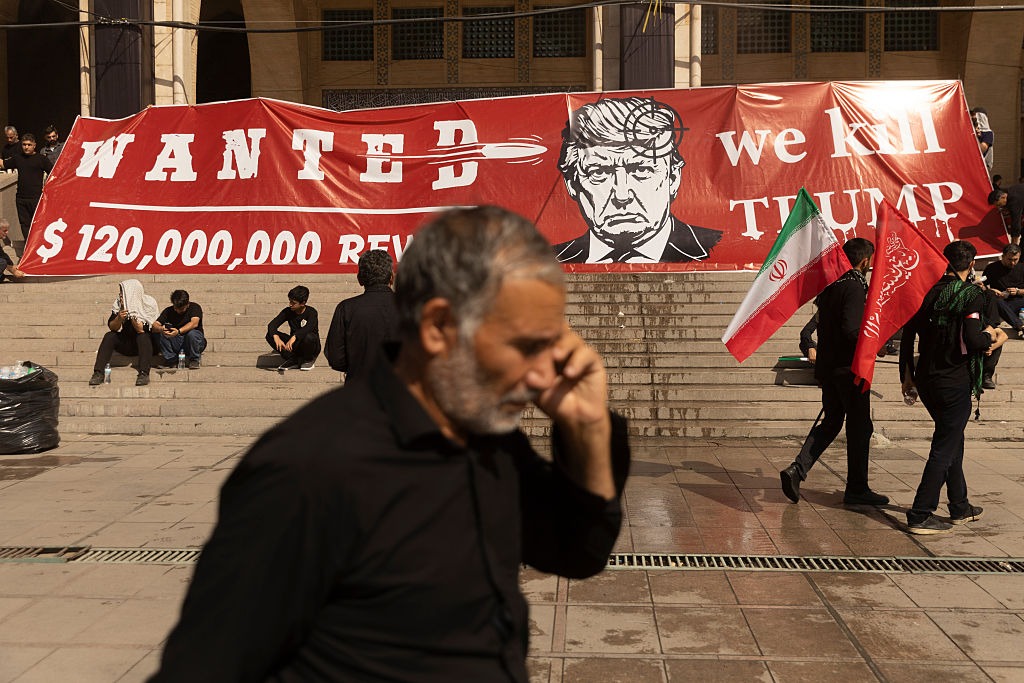
  • A dictatorial regime that publicly tolerates calls for the assassination of the president of the United States cannot be treated as just another difficult adversary. A red line has been crossed. No dictator, militia leader, or revolutionary movement should believe that threatening an American president and his family can be dismissed...
  • The survival of this regime, in its current form, is incompatible with regional peace, nuclear restraint, freedom of navigation, Israel's security, Gulf stability, and American interests. A political transition in Iran is no longer a radical idea. It is the most reasonable strategic outcome.
  • Trump gave Tehran a chance. Tehran failed. Now he must finish what he began.
  • Every dictatorship is watching. If Iran can threaten an American president, attack American partners, endanger international trade, and survive with limited consequences, others will draw the wrong lesson.
  • Every dictatorship is watching. If Iran can threaten an American president, attack American partners, endanger international trade, and survive with limited consequences, others will draw the wrong lesson
  • He has already shown the courage to begin. Now he must show the resolve to finish.

5737.jpg
A dictatorial regime that publicly tolerates calls for the assassination of the president of the United States cannot be treated as just another difficult adversary. A red line has been crossed. No dictator, militia leader, or revolutionary movement should believe that threatening an American president and his family can be dismissed. Pictured: A large banner offering a reward for the assassination of US President Donald Trump, in Tehran on July 5, 2026. (Photo by Majid Saeedi/Getty Images)

President Donald Trump's intransigence on Iran should not be underestimated.

From the beginning, his approach followed a clear sequence: strike, weaken, test, and enforce. American power changed the balance of force. Diplomacy then tested whether what remained of the Iranian regime could recognize reality and choose restraint. Tehran answered with escalation. Enforcement became unavoidable.

Trump weakened Iran's military confidence and damaged key elements of its nuclear and strategic infrastructure. Then he gave the remnants of the regime a final chance: step back, accept restraint, and choose coexistence over confrontation. Iran failed that test.

The resumption of American strikes against Iranian military targets is not a contradiction of diplomacy. It is the consequence of diplomacy being betrayed.

Several weeks ago, I argued that Trump's opening to Tehran should be understood neither as naïveté nor as surrender. It was a test. It was designed to determine whether a weakened regime still had enough strategic sense to stop before destroying itself.

The answer is now clear.

The regime did not moderate. It did not reassure its neighbors. It did not abandon its hostility toward Israel. It did not choose prosperity for the Iranian people. It returned to its usual methods: missiles, drones, threats, blackmail, and violence. Trump did not abandon diplomacy. Iran destroyed it.

Iran's renewed aggression in the Gulf is part of the same strategic pattern: pressure the Gulf, threaten Israel, intimidate international trade, and test American resolve. The United Arab Emirates, Bahrain and Kuwait have faced direct attacks, but the entire Gulf remains under Iranian threat.

In such moments, leadership matters. Some leaders have responded with clarity, courage, and dignity. The United Arab Emirates has shown that firmness and composure can go together. Others continue to rely on ambiguity, hoping that caution will protect them from a regime that respects only strength. That illusion has failed many times before.

The regime was offered a way out. It chose escalation.

The Strait of Hormuz now makes this a matter far beyond the Gulf. Protecting Gulf states, freedom of navigation, and international trade cannot be left to the United States alone. These are European interests. They are NATO interests. They are the interests of every economy that depends on the movement of energy, goods, and commerce through one of the world's most important waterways.

Europe and NATO must maintain a serious military presence alongside the United States to secure the Gulf and protect maritime trade. When Iran threatens Hormuz, it threatens Washington, Jerusalem, Manama, Abu Dhabi, Kuwait City, Riyadh, Doha, and Muscat. It also threatens Paris, Berlin, Rome, London, and every capital that depends on global commerce. Maritime security is a collective responsibility.

The question of the Iranian regime itself is different. That has now become a matter of American national security.

A dictatorial regime that publicly tolerates calls for the assassination of the president of the United States cannot be treated as just another difficult adversary. A red line has been crossed. No dictator, militia leader, or revolutionary movement should believe that threatening an American president and his family can be dismissed as propaganda or answered with another warning. This is deterrence.

The United States must send a clear message to every dictatorship watching: America may negotiate. America may show restraint. America may offer a path away from confrontation. But if a regime mistakes restraint for weakness, attacks American allies, threatens global trade, and incites violence against the president of the United States, it will face consequences beyond temporary strikes.

That is why the objective cannot be another pause before the next crisis. It cannot be another memorandum, another negotiation, or another diplomatic photo that allows Tehran to regroup. The objective must be to ensure that this regime can no longer threaten Israel, the Gulf, Europe, or the United States with impunity.

Trump understood this. He used force. He opened a diplomatic door. He waited to see whether Iran's remaining leadership had the judgment to step back. They did not.

The survival of this regime, in its current form, is incompatible with regional peace, nuclear restraint, freedom of navigation, Israel's security, Gulf stability, and American interests. A political transition in Iran is no longer a radical idea. It is the most reasonable strategic outcome.

This does not require occupation. It does not require nation-building. It does not require repeating past mistakes. It requires pressure, clarity, and political will.

The United States has options. It can continue to degrade the regime's military capabilities. It can isolate the Islamic Revolutionary Guard Corps. It can intensify pressure on the financial networks that sustain repression and proxy warfare. It can support the Iranian people's access to information. It can work with allies to protect Gulf states from missile and drone attacks. And it can make clear that threats against American leaders and their families will be treated as acts of strategic hostility, not slogans.

Trump gave Tehran a chance. Tehran failed. Now he must finish what he began.
Trump broke that psychological barrier. He proved that American power can be used directly against the regime's military machine when American interests and allies are threatened.
That achievement should not be wasted.

This is now about the security of the United States, the safety of its allies, the protection of global trade, and the credibility of American deterrence. Every dictatorship is watching. If Iran can threaten an American president, attack American partners, endanger international trade, and survive with limited consequences, others will draw the wrong lesson.

Trump has reached a defining moment. He can be remembered as the leader who temporarily contained Iran, or as the president who broke the regime's ability to threaten the region and America itself.

He has already shown the courage to begin. Now he must show the resolve to finish.
Ahmed Charai is the Chairman and CEO of World Herald Tribune, Inc., and the publisher of the Jerusalem Strategic Tribune, TV Abraham, and Radio Abraham. He serves on the boards of several prominent institutions, including the Atlantic Council, the Center for the National Interest, the Foreign Policy Research Institute, and the International Crisis Group. He is also an International Councilor and a member of the Advisory Board at the Center for Strategic and International Studies.
This article was originally published in the Jerusalem Strategic Tribune. It is reprinted here by the kind permission of the author.
 
Opinion
Marc A. Thiessen

How young MAGA voters view America’s role in the world

From Ukraine to Iran to Taiwan, Trump supporters under 30 favor engagement over isolation.

July 9, 2026 at 7:00 a.m. EDT Yesterday at 7:00 a.m. EDT


Regular readers know that I have been debunking the myth of MAGA isolationism for a while, citing a series of polls from the Ronald Reagan Institute and others that have consistently shown MAGA Republicans are more hawkish and less isolationist than any other segment of the American electorate.

The isolationist right has dismissed those results as “Zombie Reaganism” — a dying “baby boomer supernova” driven by older Republicans with gauzy memories of a bygone era of 1980s GOP world leadership. Younger MAGA voters are far less supportive of bold U.S. leadership on the global stage, critics insist, and the future of MAGA is isolationist.

To see if that’s correct, the Reagan Institute decided to drill down on the foreign policy views of MAGA voters under 30. Well, the results are in — and the news is not good for the isolationist right. Young MAGA voters don’t want America to pull back from the world; they want to lead it.

A 72 percent supermajority of young MAGA voters believe the United States should be “more engaged and take the lead” on foreign policy, while just 19 percent say it should be “less engaged and react to events” — a 53-point spread in favor of U.S. global leadership. The institute surveyed more than 1,500 respondents nationwide in late May and early June, including a statistically significant sample of MAGA Republicans under 30.

Young MAGA voters not only want the U.S. to lead, they want that leadership to be driven by American values: 74 percent agree that “the U.S. has a moral obligation to stand up for human rights and democracy whenever possible in international affairs.” Almost 80 percent agree that “promoting freedom and democracy in authoritarian countries” should be a focus of U.S. foreign policy and that “defending people facing religious persecution in other countries” should be a U.S. priority. And 64 percent said they support “funding programs and organizations designed to advance freedom and democracy abroad,” while just 31 percent said the programs were “not worth the expense.”

This commitment to America’s moral mission in the world is evident in their views on Iran: 59 percent of Gen Z MAGA voters say “supporting the Iranian people in their efforts to secure freedom and democracy” is important (as did 67 percent of MAGA voters over 30), while just 13 percent say it’s not. Asked if they approve or disapprove of the military actions President Donald Trump has taken against Iran this year, 73 percent of MAGA voters under 30 approve, as did 89 percent of older ones.

Perhaps most important, 61 percent of under-30 MAGA voters want to see the Iranian regime either removed or weakened, while just 35 percent say they prefer a “negotiated settlement” in which “Iran’s current government remains in exchange for verifiable limits on its nuclear and missile programs.”

Young MAGA voters support the “Donroe Doctrine” in the Western Hemisphere: 64 percent agree with Trump’s decision to remove Nicolás Maduro from power in Venezuela, and 60 percent would support using military force to remove the current Cuban government from power.

Many polls have shown that support for Israel has collapsed among Gen Z Democrats. Though younger MAGA voters are less supportive than older ones, solid majorities still back the Jewish state: 60 percent of MAGA voters under 30 approve of sending U.S. weapons to Israel, compared with 72 percent of older MAGA voters — far above the paltry 37 percent of Democrats who do. And 63 percent say that the security of Israel “matters to U.S. security and prosperity.” While young MAGA voters are not immune to the decline in support for Israel, they are among the least affected by this trend.

Younger MAGA voters overwhelmingly believe in peace through strength: An 85 percent supermajority agree that “a strong U.S. military is essential to maintaining peace and prosperity, both at home and abroad,” compared with 93 percent of older MAGA Republicans. And they are significantly more supportive of the NATO alliance than older MAGA voters are: 62 percent of MAGA voters under 30 have a favorable view of NATO, compared with just 47 percent of those over 30. And 65 percent of both older and younger MAGA voters said they would be more likely to support continued U.S. participation in NATO after learning that “NATO members have recently increased their own defense spending in response to U.S. insistence.”

Young MAGA voters also stand with the people of Ukraine: 64 percent say the outcome of the war between Russia and Ukraine matters to U.S. security and prosperity — almost indistinguishable from the 69 percent of older MAGA voters who hold this view. Only 35 percent support “conceding territory to Russia” as part of a peace deal, while 57 percent say the U.S. should either support Ukraine “until all Russian-occupied territory is liberated” or a “ceasefire along current front lines” is reached “without formally recognizing Russian control of annexed territories.”

On China, they are less hawkish than older MAGA voters: 65 percent say that the security of Taiwan matters to U.S. security and prosperity, compared with 78 percent of older MAGA voters, and 79 percent say that countering Chinese military power should be a focus of U.S. foreign policy (90 percent of older MAGA feel this way). But they also want U.S. policy toward China to be driven by principle: 53 percent say that “publicly pressuring China to release political prisoners, even if it increases tensions with China” should be a higher priority for the U.S. than “avoiding public criticism of China in order to preserve cooperation on other issues.” The gap between older and younger MAGA voters on China is concerning, but solid majorities still want to take a hard line with Beijing.

Finally, when asked whether America remains the “shining city upon a hill because its freedom, prosperity, and democratic ideals serve as an example to the world,” 76 percent of under-30 MAGA believe it does. Somewhere up there, those results brought a smile to the Gipper’s face.

Bottom line: The isolationists are out of step with Trump and the “America First” movement writ large — and there is no help on the way from the Gen Z right.


By Marc A. Thiessen
Marc Thiessen writes a column for The Post on foreign and domestic policy. He is a fellow at the American Enterprise Institute, and the former chief speechwriter for President George W. Bush.follow on X@marcthiessen
 
To view this content we will need your consent to set third party cookies.
For more detailed information, see our cookies page.

Well..... at least we're talking?


"It is good to talk", as the old advert tag line went. :D
 

Users who are viewing this thread

  • Pakistan Defence Latest

    Back
    Top