Navigation
Install the app
How to install the app on iOS
Follow along with the video below to see how to install our site as a web app on your home screen.
Note: This feature may not be available in some browsers.
More options
Style variation
You are using an out of date browser. It may not display this or other websites correctly.
You should upgrade or use an alternative browser.
You should upgrade or use an alternative browser.
US Political News and Trump’s China visit
- Thread starter RabzonKhan
- Start date
More options
Who Replied?

Davey Crockett
Elite Member

Davey Crockett
Elite Member
Davey Crockett
Elite Member

Feroze
Trusted Member


CIA agents reported killed in Mexico were not authorised to operate: Gov’t
Mexican government says it is seeking details after incident raises questions about US activities on its territory.
Listen (3 mins)
Save
Click here to share on social media
Share
Add Al Jazeera on Google

Mexico's President Claudia Sheinbaum arrives for her morning news conference at the National Palace in Mexico City [Marco Gonzalez/AFP]

By Brian Osgood, AFP and Reuters
Published On 25 Apr 202625 Apr 2026
The Mexican government has said two federal agents from the United States killed in a car crash in connection with an anti-narcotics raid – widely reported to be CIA officers – were not authorised to operate on Mexican territory.
Mexico’s security cabinet said in a statement on Saturday that one of the US citizens had entered the country as a visitor and the other on a diplomatic passport.
Recommended Stories
list of 3 items- list 1 of 3Two CIA agents reportedly killed in car crash in Mexican state of Chihuahua
- list 2 of 3Decapitating cartels? Mexico leans into ‘kingpin strategy’ but at a cost
- list 3 of 3Mexico arrests suspected Hungarian drug trafficker amid crime crackdown
US authorities have not confirmed a slate of reports that the individuals were agents with the CIA, Washington’s top international intelligence agency, in Mexico as part of a wider operation against drug trafficking.
“Neither had formal accreditation to participate in operational activities within national territory,” the statement said, stressing the need for “absolute respect” for Mexican sovereignty in the realm of international cooperation.
Mexican President Claudia Sheinbaum, who has had to balance US demands for more aggressive steps against drug trafficking with a firm insistence on national sovereignty, said earlier this week that her government would probe whether the country’s national security law had been violated.
Under the law, foreign agents must receive federal authorisation to operate in the country and cannot work directly with local officials without approval.
“Evidently, the military didn’t know there were people participating who weren’t Mexican citizens … that there were foreigners participating in the operation,” Sheinbaum told reporters earlier this week.
“This is something that Mexicans shouldn’t take lightly.”
This is a modal window.
The Playback API request failed for an unknown reason
Error Code: VIDEO_CLOUD_ERR_UNKNOWNTechnical details :
Unknown catalog request error.
Session ID: 2026-04-25:bd8565361022f02cbfeeb6e4 Player Element ID: vjs_video_2866
OK
Close Modal Dialog
1:00
Questions have swirled about the death of the two US agents, in what authorities have said was a car crash in the northern state of Chihuahua, last Sunday, in connection with a drug raid.
Advertisement
Following the deaths, US Ambassador Ronald Johnson described the two individuals as “embassy personnel”. The attorney general of Chihuahua, meanwhile, described the pair as “instructor officers” from the embassy carrying out regular training work.
Get instant alerts and updates based on your interests. Be the first to know when big stories happen.
Yes, keep me updated
In a statement, Johnson said the incident “strengthens our resolve to continue their mission and advance our shared commitment to security and justice, to protect our people”.
Two Mexican officials were also killed in the crash, which has raised questions about the extent of US participation in activities on Mexican soil and whether the country’s government has full knowledge of such operations.
The Trump administration has pledged to take a militaristic approach to Latin America to stifle drug trafficking. It has sought to reframe criminal organisations as “narco-terrorists” seeking to destabilise the US, designating several as “foreign terrorist organisations”.
Criminal drug trafficking has historically been outside of the purview of the CIA, which has focused on intelligence gathering related to national security.
Under Trump, the US has unilaterally launched strikes on alleged drug smuggling boats in the Caribbean and abducted Venezuelan leader Nicolas Maduro, campaigns that have been condemned as blatant violations of international rights.
Play Video
21:48
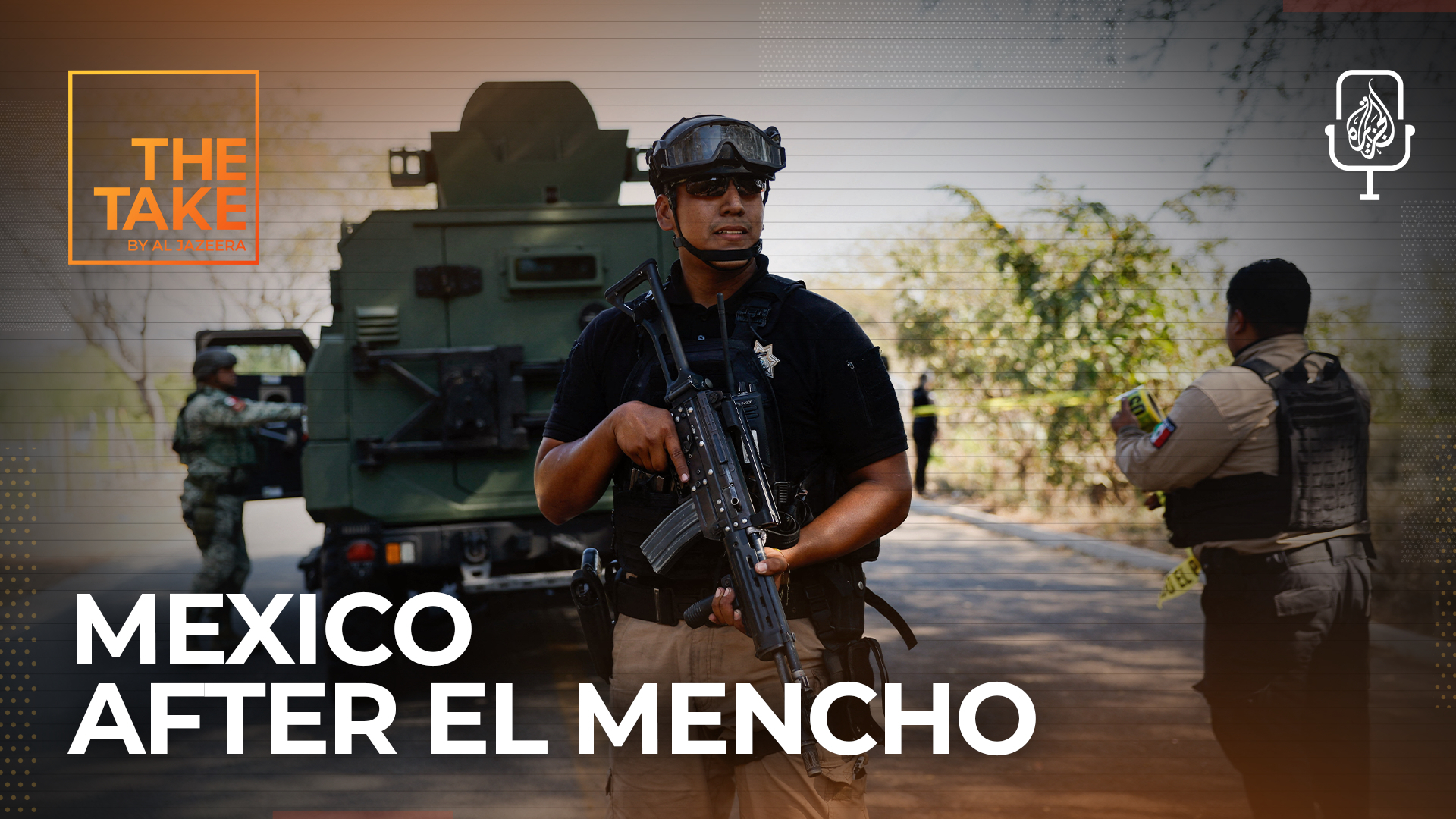
What El Mencho’s death means for Mexico’s cartels
In March, the US military also launched a joint attack with the government of Ecuador against a cartel in the country.
Sheinbaum has ruled out any US military presence in Mexico.
On Saturday, Mexico’s security cabinet said it welcomes coordination with the US in the form of intelligence sharing, institutional coordination, and technical collaboration.
It added that cooperation must proceed from a place of mutual trust.

CIA agents reported killed in Mexico were not authorised to operate: Gov’t
Mexican government says it is seeking details after incident raises questions about US activities on its territory.

Hamartia Antidote
Elite Member
CIA Agents Among 4 Dead In Mexico Crash After Major Anti-Drug Operation
A car crash in northern Mexico killed four officials, including two CIA officers, following a counternarcotics operation targeting a clandestine drug lab, according to authorities and multiple reports.
The crash occurred Sunday, April 19, in Chihuahua, as the group was returning from the operation, according to The Washington Post in a story published on Tuesday morning, April 21.
The victims included two US embassy officials who were later identified as CIA agents and two Mexican officials: the director of Chihuahua’s State Investigation Agency and an officer, The Post reports.
Chihuahua’s attorney general, César Jáuregui Moreno, told El Universal that the operation was "one of the biggest finds in the country, where chemical drugs were produced."
The crash reportedly happened when the vehicle skidded off a remote road, fell into a ravine, and exploded.
Mexican President Claudia Sheinbaum said on Monday, April 20, that her government would investigate whether the operation violated Mexico’s national security laws. She emphasized that the inquiry would focus on the Americans’ involvement in the operation, not the cause of the crash.
The CIA declined to comment on the incident, according to The Post.
The operation comes amid heightened pressure from President Donald Trump on Mexico to crack down on cartels. Under CIA Director John Ratcliffe, the agency has expanded its counternarcotics efforts in Mexico and across Latin America.
The crash has raised questions about the risks faced by officials involved in anti-drug operations.
US Ambassador to Mexico Ronald Johnson said on social media, “This tragedy is a solemn reminder of the risks faced by those Mexican and US officials who are dedicated to protecting our communities, and it strengthens our determination to continue their mission and advance our shared commitment to security and justice, to protect our people."
Davey Crockett
Elite Member

K2RULEZ
Elite Member

The White House is considering punishing European countries that have failed to assist Donald Trump wage his war in Iran, according to an official within the Pentagon. Keir Starmer, once described as “very nice”, is now routinely said by the US president to be a “coward” and “no Churchill”. It is claimed that Trump could go further and withdraw American support for Britain’s sovereignty of the Falkland Islands over which the UK and Argentina went to war in 1982. The proposal is said to be contained in an internal Pentagon email.
What does the Pentagon email say?
The memo’s contents have only been briefed out but it is claimed the White House is looking at how to puncture the Europeans’ “sense of entitlement”. Trump has expressed his frustration at the reluctance or refusal of some Nato allies to grant the US access to bases and overflight rights. One punitive measure being considered is the suspension of Spain from Nato, although it is unclear how this would be achieved. The memo is also reported to include an option to consider reassessing US diplomatic support for longstanding European “imperial possessions”, such as the Falkland Islands, a British overseas territory in the South Atlantic.
What is the current US position on the Falklands?
The UK’s claim to sovereignty over the Falkland Islands, known in Argentina as Islas Malvinas, is based on the argument that with the “exception of two months of illegal occupation in 1982”, Britain has “continuously, peacefully and effectively inhabited and administered” them since 1833. The British government further claims that it is up to the people of the Falklands to choose their own future and status. The US does not currently take a position on the sovereignty of the islands. According to the US state department, the matter is a bilateral issue between the UK and Argentina. It says: “We encourage both parties to resolve their differences through dialogue in normal diplomatic channels. We recognise de facto United Kingdom administration of the islands but take no position regarding sovereignty.”
What would it mean for the US to withdraw ‘diplomatic support’ on the issue?
Argentina claims that it inherited the Falklands from Spain when it gained independence and that the principle of self-determination is not applicable to the inhabitants of the islands. There are regular attempts by Argentina to gain support for resolutions at the UN which supports its claim. While the US does not take a formal position on the sovereignty, and did seek to find a diplomatic solution at the start of the 1982 conflict, the White House ultimately came to the UK’s aid militarily through the provision of intelligence and advanced missiles when those efforts to find a settlement failed. Since then, the US has helped water down or block resolutions in favour of Argentina’s claim. The Falkland Islands are considered by the UN to be a “non-self-governing territory” and are subject to continuing discussion by the “Special Committee on Decolonization”. The UK has been encouraged to open up negotiations with Argentina, but this has been resisted by the British government on the grounds that the Falklanders have the right to self-determination. Should the US shift to support Argentina, or be vocal about the need for the UK to open talks, the British government would be left isolated.
What is likely to happen?
Nothing. King Charles is on a state visit to the US next week. Trump has appeared utterly enamoured of the British royal family and has said the king’s visit might well “fix” relations after a rocky period. Trump has developed a rapport with Argentina’s president, Javier Milei, who recently reasserted his country’s claim to the islands, but it seems highly unlikely Trump would want to dedicate any time at all – or that of his officials in the UN – on the issue. There are deep security ties between the UK and the US, and such a pivot would be heavily resisted within the system.
 www.theguardian.com
What does the Pentagon email say?
The memo’s contents have only been briefed out but it is claimed the White House is looking at how to puncture the Europeans’ “sense of entitlement”. Trump has expressed his frustration at the reluctance or refusal of some Nato allies to grant the US access to bases and overflight rights. One punitive measure being considered is the suspension of Spain from Nato, although it is unclear how this would be achieved. The memo is also reported to include an option to consider reassessing US diplomatic support for longstanding European “imperial possessions”, such as the Falkland Islands, a British overseas territory in the South Atlantic.
What is the current US position on the Falklands?
The UK’s claim to sovereignty over the Falkland Islands, known in Argentina as Islas Malvinas, is based on the argument that with the “exception of two months of illegal occupation in 1982”, Britain has “continuously, peacefully and effectively inhabited and administered” them since 1833. The British government further claims that it is up to the people of the Falklands to choose their own future and status. The US does not currently take a position on the sovereignty of the islands. According to the US state department, the matter is a bilateral issue between the UK and Argentina. It says: “We encourage both parties to resolve their differences through dialogue in normal diplomatic channels. We recognise de facto United Kingdom administration of the islands but take no position regarding sovereignty.”
What would it mean for the US to withdraw ‘diplomatic support’ on the issue?
Argentina claims that it inherited the Falklands from Spain when it gained independence and that the principle of self-determination is not applicable to the inhabitants of the islands. There are regular attempts by Argentina to gain support for resolutions at the UN which supports its claim. While the US does not take a formal position on the sovereignty, and did seek to find a diplomatic solution at the start of the 1982 conflict, the White House ultimately came to the UK’s aid militarily through the provision of intelligence and advanced missiles when those efforts to find a settlement failed. Since then, the US has helped water down or block resolutions in favour of Argentina’s claim. The Falkland Islands are considered by the UN to be a “non-self-governing territory” and are subject to continuing discussion by the “Special Committee on Decolonization”. The UK has been encouraged to open up negotiations with Argentina, but this has been resisted by the British government on the grounds that the Falklanders have the right to self-determination. Should the US shift to support Argentina, or be vocal about the need for the UK to open talks, the British government would be left isolated.
What is likely to happen?
Nothing. King Charles is on a state visit to the US next week. Trump has appeared utterly enamoured of the British royal family and has said the king’s visit might well “fix” relations after a rocky period. Trump has developed a rapport with Argentina’s president, Javier Milei, who recently reasserted his country’s claim to the islands, but it seems highly unlikely Trump would want to dedicate any time at all – or that of his officials in the UN – on the issue. There are deep security ties between the UK and the US, and such a pivot would be heavily resisted within the system.
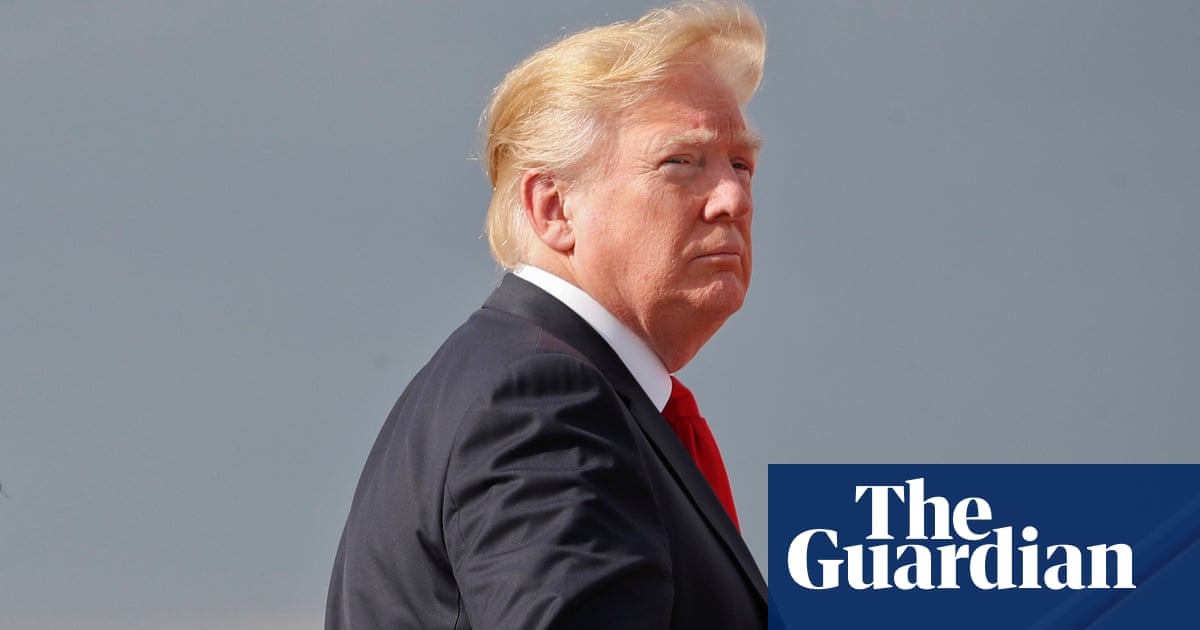
Could Trump withdraw US support for UK sovereignty of Falklands?
Proposal said to be contained in internal Pentagon email is thought to be bid to punish European countries for failing to assist in war in Iran
www.theguardian.com

Ali_Baba
VIP Member

The White House is considering punishing European countries that have failed to assist Donald Trump wage his war in Iran, according to an official within the Pentagon. Keir Starmer, once described as “very nice”, is now routinely said by the US president to be a “coward” and “no Churchill”. It is claimed that Trump could go further and withdraw American support for Britain’s sovereignty of the Falkland Islands over which the UK and Argentina went to war in 1982. The proposal is said to be contained in an internal Pentagon email.
What does the Pentagon email say?
The memo’s contents have only been briefed out but it is claimed the White House is looking at how to puncture the Europeans’ “sense of entitlement”. Trump has expressed his frustration at the reluctance or refusal of some Nato allies to grant the US access to bases and overflight rights. One punitive measure being considered is the suspension of Spain from Nato, although it is unclear how this would be achieved. The memo is also reported to include an option to consider reassessing US diplomatic support for longstanding European “imperial possessions”, such as the Falkland Islands, a British overseas territory in the South Atlantic.
What is the current US position on the Falklands?
The UK’s claim to sovereignty over the Falkland Islands, known in Argentina as Islas Malvinas, is based on the argument that with the “exception of two months of illegal occupation in 1982”, Britain has “continuously, peacefully and effectively inhabited and administered” them since 1833. The British government further claims that it is up to the people of the Falklands to choose their own future and status. The US does not currently take a position on the sovereignty of the islands. According to the US state department, the matter is a bilateral issue between the UK and Argentina. It says: “We encourage both parties to resolve their differences through dialogue in normal diplomatic channels. We recognise de facto United Kingdom administration of the islands but take no position regarding sovereignty.”
What would it mean for the US to withdraw ‘diplomatic support’ on the issue?
Argentina claims that it inherited the Falklands from Spain when it gained independence and that the principle of self-determination is not applicable to the inhabitants of the islands. There are regular attempts by Argentina to gain support for resolutions at the UN which supports its claim. While the US does not take a formal position on the sovereignty, and did seek to find a diplomatic solution at the start of the 1982 conflict, the White House ultimately came to the UK’s aid militarily through the provision of intelligence and advanced missiles when those efforts to find a settlement failed. Since then, the US has helped water down or block resolutions in favour of Argentina’s claim. The Falkland Islands are considered by the UN to be a “non-self-governing territory” and are subject to continuing discussion by the “Special Committee on Decolonization”. The UK has been encouraged to open up negotiations with Argentina, but this has been resisted by the British government on the grounds that the Falklanders have the right to self-determination. Should the US shift to support Argentina, or be vocal about the need for the UK to open talks, the British government would be left isolated.
What is likely to happen?
Nothing. King Charles is on a state visit to the US next week. Trump has appeared utterly enamoured of the British royal family and has said the king’s visit might well “fix” relations after a rocky period. Trump has developed a rapport with Argentina’s president, Javier Milei, who recently reasserted his country’s claim to the islands, but it seems highly unlikely Trump would want to dedicate any time at all – or that of his officials in the UN – on the issue. There are deep security ties between the UK and the US, and such a pivot would be heavily resisted within the system.
Could Trump withdraw US support for UK sovereignty of Falklands?
Proposal said to be contained in internal Pentagon email is thought to be bid to punish European countries for failing to assist in war in Iran
And the UK can with the use of all British bases across the globe to US forces in return.
EugeneP
Trusted Member
What happens if U.S. ignores the request? I am certain U.K. knows there is no mouse willing to bell the cat.And the UK can with the use of all British bases across the globe to US forces in return.
ety
Trusted Member
That's really something if Trump in support of his good buddy Milei ditches UK's claim on the islands instead in favor of Argentina's claim. That would mean the start of breakup of their special relationship. But, Argentina is on the very outer layer of American centered white spectrum.

KAL-EL
VIP Member
Most likely not going to happen. Once again it's all bluster on his part.And the UK can with the use of all British bases across the globe to US forces in return.

Hakwa Nadro
Trusted Member

not going to happen, Argentina or Milei is a useful idiot. they have played their part in verbally supporting donald duck and pedoland in their war against Iran, that's it. If milei thinks USA will dump UK for a broke and penniless and may I add completely useless militarily and diplomatically Argentina then I think he is the most dumbass person in the whole wide world. Trumps diatribe against the UK is nothing but the bewailing of a jilted lover (USA) who flirts with the opponent of his lover (Argentina) to cause jealousy in the hope of winning his love (in this case UK) back.

Beijingwalker
VIP Member

Users who are viewing this thread
Total: 3 (members: 0, guests: 3)


