Bangladesh Economy

@LeonBlack08

So essentially, there is and will be no correction of the (allegedly) inflated GDP numbers. Btw, I too do think the BD GDP numbers are a bit inflated although not to the extent suggested by the detractors of SHW.

Regards

Bangladesh have started work on new GDP rebasing.

BBS begins GDP rebasing to reflect changing economy​


The Bangladesh Bureau of Statistics (BBS) has begun the process of rebasing the country’s gross domestic product (GDP), a major statistical overhaul aimed at capturing the rapidly evolving economy by incorporating new sectors, updating economic weights, and aligning national accounts with the latest international standards.

Officials at the country's national statistical agency say the exercise would adopt the fiscal year 2025-26 as the new base year, replacing the current 2015-16 benchmark.

The revision is expected to provide a more accurate measure of the size and structure of the economy, which has undergone significant transformation over the past decade.

"We have launched the GDP rebasing work," a senior BBS official told The Financial Express on Thursday.

The official said field surveys and data collection had already begun in several key sectors, including real estate, residential housing, and non-residential buildings.

More than 20 additional surveys will be required before the statistical agency can compile the revised national accounts.


The BBS has yet to announce when the revised GDP series will be published, as the exercise will require the completion of extensive nationwide surveys, data validation, and methodological reviews before the new estimates are finalised.

But the official said the rebasing adjustments would be seen in the 2028-29 fiscal year, adding, "Actually, at least two years are needed to complete the rebasing works."

GDP rebasing is a routine statistical exercise undertaken roughly every 10 years to ensure that national accounts reflect changes in production patterns, consumer behaviour, and the emergence of new industries.

The process updates the relative importance - or weights - of different sectors in the economy while incorporating economic activities that may have been previously undercounted or excluded.

The exercise will follow the internationally recognised System of National Accounts (SNA 2025), developed jointly by the International Monetary Fund (IMF), the United Nations (UN), the World Bank (WB), the Organisation for Economic Co-operation and Development (OECD), and the European Commission.
 
Bangladesh have started work on new GDP rebasing.

BBS begins GDP rebasing to reflect changing economy​


The Bangladesh Bureau of Statistics (BBS) has begun the process of rebasing the country’s gross domestic product (GDP), a major statistical overhaul aimed at capturing the rapidly evolving economy by incorporating new sectors, updating economic weights, and aligning national accounts with the latest international standards.

Officials at the country's national statistical agency say the exercise would adopt the fiscal year 2025-26 as the new base year, replacing the current 2015-16 benchmark.

The revision is expected to provide a more accurate measure of the size and structure of the economy, which has undergone significant transformation over the past decade.

"We have launched the GDP rebasing work," a senior BBS official told The Financial Express on Thursday.

The official said field surveys and data collection had already begun in several key sectors, including real estate, residential housing, and non-residential buildings.

More than 20 additional surveys will be required before the statistical agency can compile the revised national accounts.


The BBS has yet to announce when the revised GDP series will be published, as the exercise will require the completion of extensive nationwide surveys, data validation, and methodological reviews before the new estimates are finalised.

But the official said the rebasing adjustments would be seen in the 2028-29 fiscal year, adding, "Actually, at least two years are needed to complete the rebasing works."

GDP rebasing is a routine statistical exercise undertaken roughly every 10 years to ensure that national accounts reflect changes in production patterns, consumer behaviour, and the emergence of new industries.

The process updates the relative importance - or weights - of different sectors in the economy while incorporating economic activities that may have been previously undercounted or excluded.

The exercise will follow the internationally recognised System of National Accounts (SNA 2025), developed jointly by the International Monetary Fund (IMF), the United Nations (UN), the World Bank (WB), the Organisation for Economic Co-operation and Development (OECD), and the European Commission.

This is excellent news.

Given how quickly Bangladesh has transitioned to an export led economy, under Hasina.

It’s important to reflect the changing parameters.

It should also take out the unhinged poison towards the GDP numbers from some unhinged quarters.
 
@LeonBlack08

Good initiative on part of the BNP govt to promote domestic semiconductor industry.

S&P cuts Bangladesh outlook to negative on growth concerns​


S&P's rating on BD was BB- (stable) till June 2024. So obviously, the Yunus govt didn't do anything good to the BD economy.

Regards

Both of these were my worries for BNP.

1. BNP Governments have been characterised by low growth mainly because of anti India policies and excessive role of military in the political and economic sphere.

2. The second problem is hubristic and nationalistic industrial policies.

E.g. wasting money on low jobs semiconductor industry.

Bangladesh needs jobs.

And that can only come from low tech manufacturing.

Scarce resource needs to be directed at building supply chains and vocational training.

Bangladesh needs to stick to the economic and geopolitical strategy of Hasina.

Otherwise, BD will be back to low growth.
 
So I am not really too harsh on them for messing up the economy
What exactly they messed up?
.
Did the IG Yunus administration went to IMF with begging bowl? Nope. It was the deposed awami terrorists who went to IMF with begging bowl for pennies after they finished eating our banking sector and siphoned ~250 billions.
.
Nobody begs to IMF with a super duper economy. IG inherited a destroyed economy and they almost fixed our destroyed banking sector. The main source of our economic slowdown...
 
What exactly they messed up?
.
Did the IG Yunus administration went to IMF with begging bowl? Nope. It was the deposed awami terrorists who went to IMF with begging bowl for pennies after they finished eating our banking sector and siphoned ~250 billions.
.
Nobody begs to IMF with a super duper economy. IG inherited a destroyed economy and they almost fixed our destroyed banking sector. The main source of our economic slowdown...

True. They inherited a rotten economy in the first place.

"Messed up" is wrong choice of words, probably did not manage it well would be more appropriate. Either way - their main job was to ensure the transition happen. Not really lead the country. That's the responsibility of an elected government.
 
True. They inherited a rotten economy in the first place.

"Messed up" is wrong choice of words, probably did not manage it well would be more appropriate. Either way - their main job was to ensure the transition happen. Not really lead the country. That's the responsibility of an elected government.
Actually IG managed it very well. "Fabulous economic management" are the words we are missing here.
 

Green chilli import begins through Benapole, first consignment brings 9 tonnes​

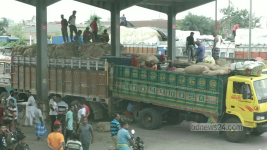
Imports of green chillies from India have begun through the Benapole Land Port amid an unusual surge in green chilli prices in Dhaka and other markets across Bangladesh.

On Monday, the first consignment—9.2 metric tonnes—entered Bangladesh on an Indian truck through Benapole.

After completing all port formalities, the imported chilies were dispatched to Dhaka the same night. The consignment was imported by Shimu Enterprise, while customs clearance was handled by the C&F agent Shimu Shipping Lines.

Shamim Hossain, director (traffic) of the Benapole Land Port, said: "As soon as the truck carrying the chillies arrived at the port, we completed the necessary documentation quickly and arranged for its release. Several more trucks loaded with green chillies are waiting on the other side of the border to enter Bangladesh."

Green chilies, a cooking staple in Bangladesh, are currently selling for Tk 320 to Tk 360 per kilogram in various markets in the capital. Just last week, the same quality of chilies was selling for around Tk 200 per kilogram.

According to traders, the sharp price increase is due to continuous rainfall, waterlogging, and flooding in different parts of the country, which have disrupted production and reduced supplies to wholesale markets.


Agriculture Minister Amin Ur Rashid said that the government has reduced the existing import duty on green chillies and granted permission for their import.

Importer Shahjahan said that his total import cost is approximately Tk 135 per kilogram.

"If imports increase, the market price of green chillies will come down. However, harassment at customs and complications in the clearance process are forcing us to pay higher duties," he said.

He also alleged that importers are suffering financial losses because the increased customs-related costs are raising the overall import expenses.

On Monday, green chillies were selling for Tk 300 per kilogram at the Benapole wholesale vegetable market.

1785821357796.png
 

Bangladesh rejects Indian rice shipments over quality concerns, exporters seek resolution​


Row over Bangladesh rejecting Indian rice consignments on quality issues​

The shipment was initially found ‘fit for human consumption’ when samples were drawn soon after landing, but was subsequently found to have ‘quality issues’​

By Subramani Ra Mancombu

Updated - August 03, 2026 at 06:46 PM.
| Chennai

The entire shipment is now being returned to India,” said the first trader, discounting any impact of the rejection of this consignment (file photo) | Photo Credit: bl-online Administrator

A controversy has broken out over Bangladesh’s rejection of an 11,500-tonne consignment of non-basmati parboiled rice from India. The trade sees politics behind the rejection after the Tarique Rehman government came to power in the neighbouring country.

The consignment that reached the Chittagong port on July 21 ran into quality issues. This was despite samples, which were drawn on July 22 from the shipment that was part of a government-to-government (G2G) agreement, being found to be “fit for human consumption.

Following the certification, the ship was permitted to offload the consignment. A portion of the shipment was unloaded on July 23 and 24. The offloaded portion was then transported to central storage depots (CSD) in Tejgaon, Halishahar and Dewanhat. Besides, some volume was sent to the Joydebpur local storage depot.

Shipping agent denial​

On July 25, officials at Tejgaon and Halishahar reported that the rice was of low quality and unfit for human consumption. The Secretary of the Food Ministry and the Director-General of the Food Department were informed about the quality, local media reported.

However, the shipping agent has denied that the quality of rice was bad. He said it was “a little reddish” in colour.

Trade sources here wonder how suddenly Bangladesh has problems with Indian rice. “We have been supplying rice for years. Late last year, when Bangladesh turned to Pakistan rice and found it costly, it came back to us. Now, they are playing games,” said a trader.

Only 3,500 t offloaded​

Another trader said such “political” games will continue for sometime. “But during an El Nino year, which is now projected to last longer, Bangladesh may have to pay a heavy price for such politics,” he said.

Traders were unwilling to be quoted given the sensitivity of the issue.

Reports said only 3,500 tonnes had been offloaded from the ship “MV HT Pioneer," and the rest had not been permitted to be unloaded.

“The entire shipment is now being returned to India,” said the first trader, discounting any impact of the rejection of this consignment.

The G2G rice deal was signed after a global tender was floated in 2025. An Indian exporter had sourced the rice from a multinational company’s stocks.

A third trader said the controversy was sparked off by some agencies that held a monopoly in the Food Department during the Sheikh Hasina government. Opponents of the firm have now joined hands to end the monopoly, and Indian rice was an indirect victim.

India exported 1.36 million tonnes (mt) of non-basmati rice, most of it parboiled, in the 2025-26 financial year, valued at $545 million, against 0.809 mt, valued at $359 million, in 2024-25. During April-June this fiscal, 0.16 mt of rice valued at $8.19 million has been shipped out.


Users who are viewing this thread

Back
Top