
Zarvan
Elite Member

Uzbekistan shows off armored vehicles designed by its own engineers
NewsArmy
ByDylan Malyasov
Jul 26, 2026
Modified date: Jul 26, 2026
Key Points
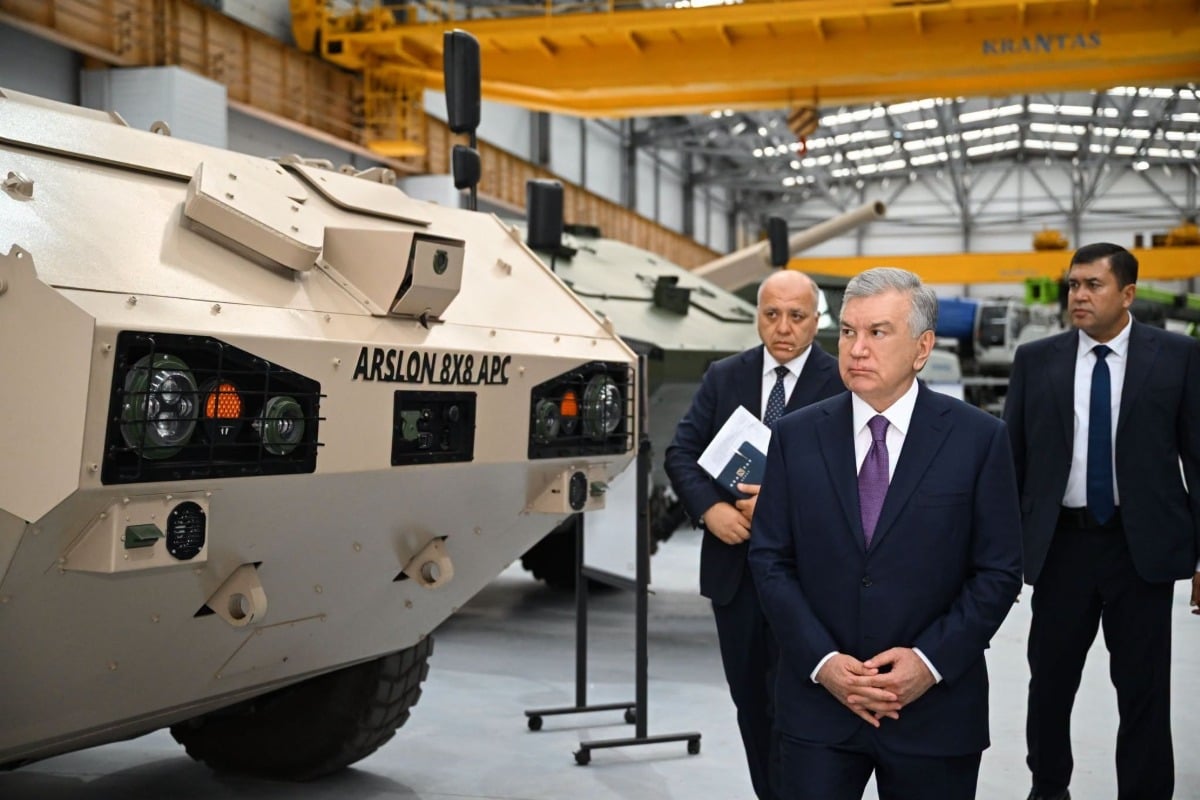
- Uzbekistan's President Shavkat Mirziyoyev visited the Nurafshon Makhsus Tekhnika plant in Nurafshan, Uzbekistan, on July 22, 2026.
- The KRANTAS-brand facility, built with a $50 million investment, unveiled 6x6 and 8x8 armored carriers, a To'fon howitzer, and an upgraded T-64 tank.
President Shavkat Mirziyoyev toured the Nurafshon Makhsus Tekhnika enterprise in the city of Nurafshan, a manufacturer that produces special-purpose vehicles and military equipment under the brand name KRANTAS, and the products on display ranged from wheeled troop carriers to a Cold War tank getting a modern engine transplant.
The facility itself represents a deliberate, well-funded bet on domestic defense manufacturing. Built on a 25.8-hectare site (63.8 acres) as part of a $50 million investment project, the plant now employs more than 300 qualified specialists and runs on machinery and technology sourced from a genuinely global supply chain, including the United States, Germany, Italy, Sweden, Russia, China and Türkiye, according to officials who briefed Mirziyoyev during the visit. Since operations began, the enterprise has produced roughly 2,500 tonnes (2,756 tons) of steel structures, more than 300 vehicle bodies, over 200 chassis, and 20 tractors, and last year alone it supplied machinery and equipment worth the equivalent of roughly $21 million to customers.
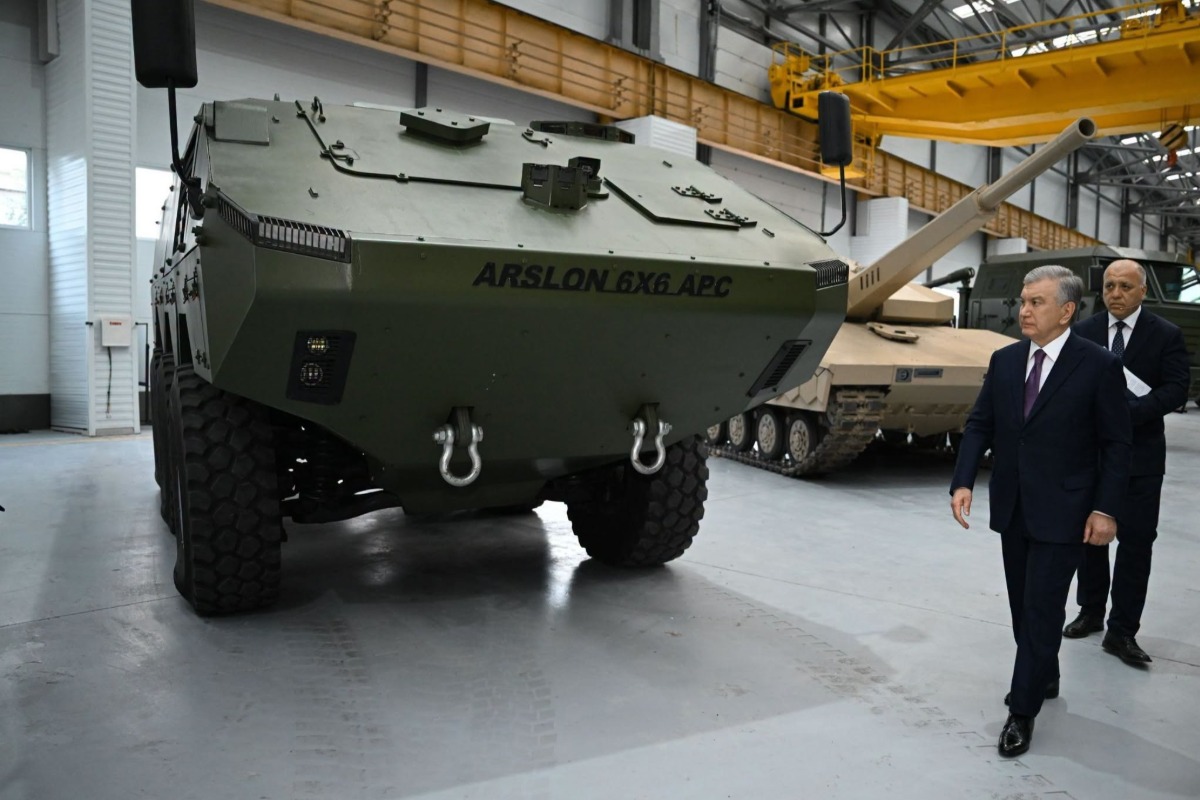
What makes this visit newsworthy beyond the factory tour numbers is the armored hardware the company unveiled alongside it. Nurafshon Makhsus Tekhnika presented 6×6 and 8×8 armored personnel carriers, wheeled vehicles designed to transport troops under armor protection with six or eight drive wheels respectively for better mobility over rough terrain, along with a 155mm self-propelled howitzer called To’fon, a large-caliber artillery piece mounted on a mobile chassis so it can fire and relocate quickly, and a modernized T-64 tank, a Soviet-designed main battle tank that first entered service in the 1960s and has been used by multiple former Soviet states since independence.
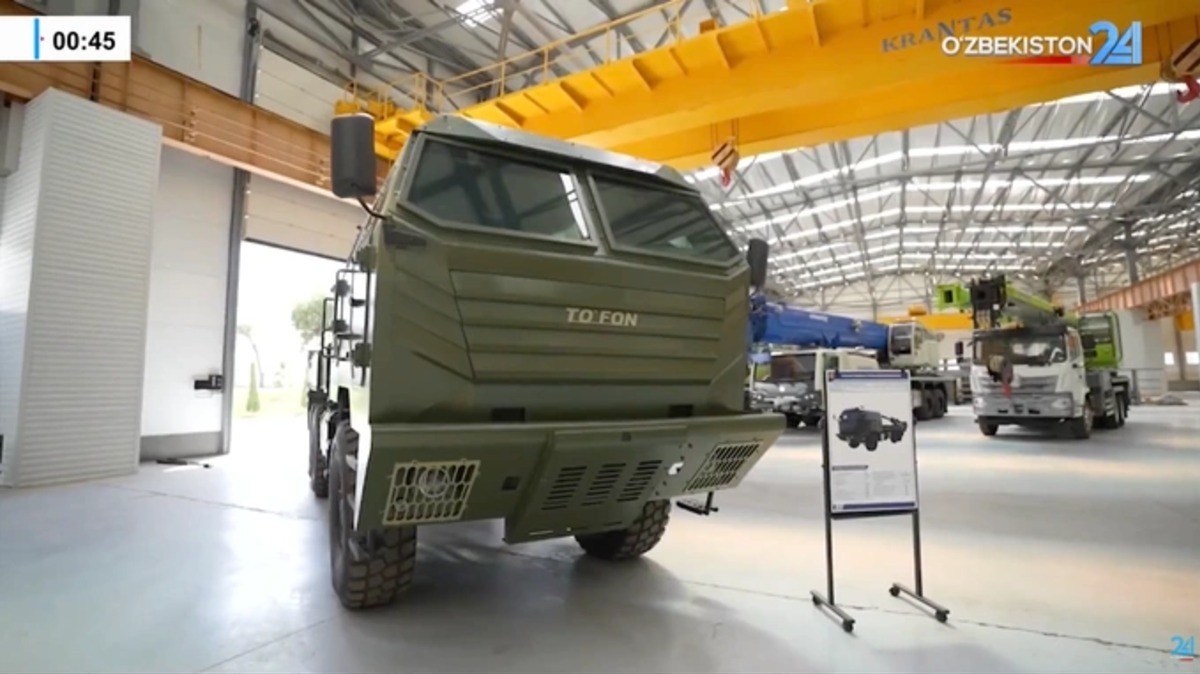
The armored personnel carriers have already completed state trials, the formal testing process governments require before certifying a military vehicle for production, and are being prepared for serial production on a factory conveyor line, according to the company.
The T-64 upgrade tells its own story about how militaries stretch the life of aging Soviet-era hardware rather than replacing it outright. The tank’s original 5TDF engine, a five-cylinder diesel powerplant that dates to the original Soviet design, has been swapped for a South Korean-made DP222LC engine produced by Doosan Infracore, rated at 950 horsepower, a significant power upgrade that modernizes the tank’s mobility and reliability without the far greater cost of building an entirely new platform from the ground up.
Behind the hardware is a company built by two co-founders, one of whom, Akmal Karimov, described the origins of the armored vehicle program in an interview with the Uzbekistan 24 television channel. Karimov said the company first designed and produced an armored vehicle five years ago, a project that marked the company’s entry into military manufacturing.
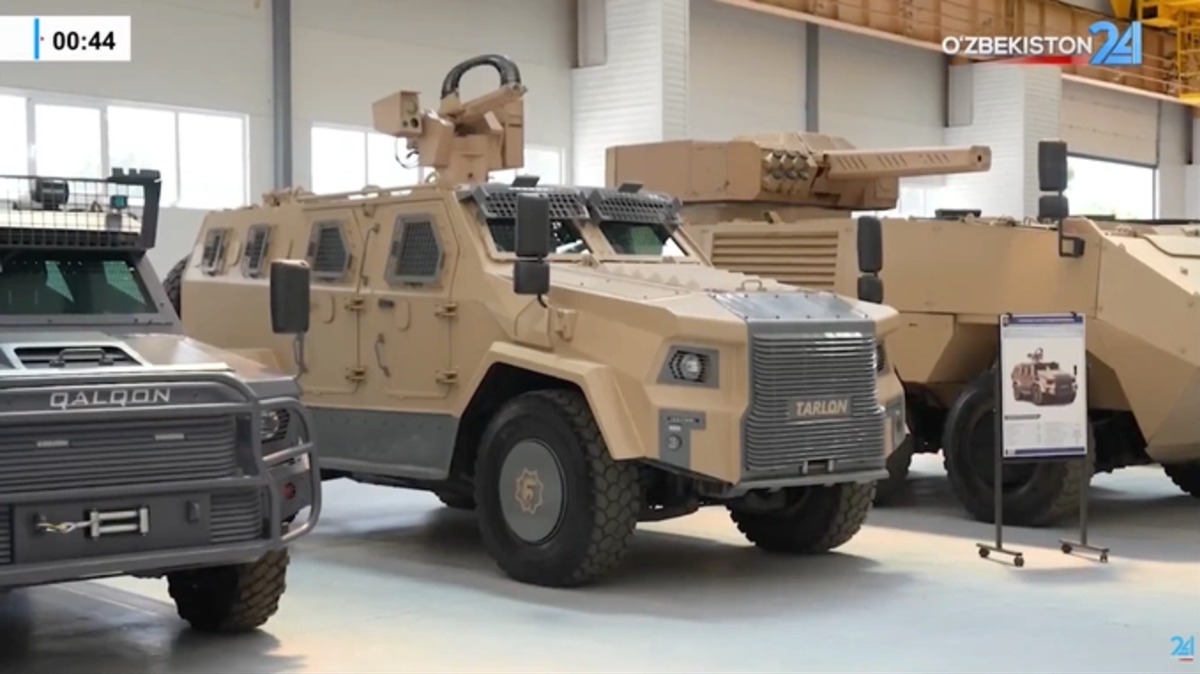
“Five years ago, our enterprise developed and produced an armored vehicle for the first time. The first model was the armored vehicle Tarlon,” said Akmal Karimov, co-founder of Nurafshon Makhsus Tekhnika.
According to Karimov, that vehicle was built for Uzbekistan’s Armed Forces, its National Guard, and its Ministry of Internal Affairs, giving the company customers across the country’s military and security services from the outset. He said the Tarlon carries fifth-class ballistic protection, a rating denoting a relatively high level of armor protection against small arms and light weapons fire, and is assembled using European-manufactured components, a detail that speaks to the same international supply chain visible throughout the broader KRANTAS operation.
Karimov was explicit about the vehicle’s engineering pedigree, distinguishing it from the licensed-production arrangements common among smaller defense manufacturers that build foreign-designed vehicles under contract rather than developing their own platforms.
“The design and blueprints for the vehicle were developed by specialists at our enterprise’s design bureau. This means the vehicle is not produced under license from a foreign brand, nor based on a project purchased abroad. The project was developed and created from scratch by Uzbek engineers,” said Karimov.
That claim of homegrown engineering matters for a country positioning itself as a serious regional defense manufacturer rather than an assembly point for foreign designs, and it fits into a broader growth plan the company laid out during the presidential visit. The enterprise is expanding production of import-substituting products, meaning goods it can manufacture domestically instead of importing, and plans to build a new plant on a 10-hectare site (24.7 acres) in Tashkent’s Yangihayot district. That expansion is expected to localize production worth between $15 million and $18 million annually, and separately, the company plans to ramp up output of trucks and pickups to as many as 10,000 vehicles a year, a civilian production line that would run alongside its military manufacturing.
During his visit, Mirziyoyev reviewed the production process, inspected finished products, and was briefed on the technological solutions used throughout the facility, with discussions between the president, company executives, and engineers focusing on expanding localization, strengthening industrial cooperation, and increasing output of high value-added products, according to officials present at the meeting.
For a country that spent decades relying on hardware inherited from the Soviet military machine, a domestically designed armored vehicle rolling off an assembly line built with equipment from seven different countries is less a single factory milestone than a marker of where Uzbekistan’s defense ambitions are headed next.


